Monthly Archives: May 2009

FREEDY JOHNSTON VENERATES ‘BLUE DAYS, BLACK NIGHTS’

FOREWORD: In the late ‘90s, I got to meet Freedy Johnston several times at small clubs in Manhattan. He was almost a fixture, attending shows when he wasn’t doing gigs at Brownies on Avenue A or Mercury Lounge at nearby Houston Street. But after this interview promoting ‘99s Blue Days, Black Nights, he has kept a rather low profile. ‘01 Right Between The Promises went unnoticed and ’07s covers album, My Favorite Waste Of Time, barely made a sound, except at Fordham’s WFUV, where I heard the Marshall Crenshaw-written title track once. Happily, ‘99s Rain On The City gave Freedy a rebirth of sorts. This article originally appeared in Aquarian Weekly.


Talented singer-songwriters Elliott Smith, Ron Sexsmith, Will Oldham, Bill Callahan, Lou Barlow, and Mike ‘Sport’ Murphy could be considered ‘sensitive ‘90s males.’ Generally taking an acoustic storyteller approach similar to ’60 folk-pop progenitors Tim Hardin and Leonard Cohen, they convey conflicting emotions, revealing painful romantic disappointment alongside the intimate hopefulness which lies just beyond the gray skies.

Likewise, one of he most melodic, reflective, and abstract of these soul-bearing bards happens to be Kansas-raised New York-based Freedy Johnston. By working his aching, majestic, ascending tenor through bleak, fleshed-out arrangements, Johnston’s somber soundscapes capture the quiet resolve and private intimacy of an experienced troubadour.

Since ‘90s plaintive The Trouble Tree, Johnston has released the markedly improved Can You Fly, the sarcastically titled gem, This Perfect World, and the nearly lost-in-the-shuffle Never home.
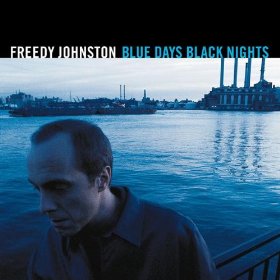
With the help of seasoned producer (and acclaimed recording artist0 T-Bone Burnett, Blue Days, Black Nights may be his most fully realized work yet.

The alluring melodicism of the balmy “Underwater Life,” the summery effervescence of “Change Your Mind,” and the delicate flow of “Until The Sun Comes Back Again” contrast beautifully with the introspective downhearted lament, “The Farthest Lights,” and the sad, slow moving “Emily.” All told, Blue Days, Black Nights cements Johnston’s reputation as a genuine, well-focused pop craftsman.

Who were some of your early influences?

FREEDY: I don’t put myself in the company of Elvis Costello and Neil Young, but I’d cite them as people whose shoulders I stand on. Neil Young’s an archetypal singer-songwriter who invented a cool melding of Country to rock in a very unpretentious way.

Although you’ve lived in New York City for many years, your songs seem to have a rural flavor.
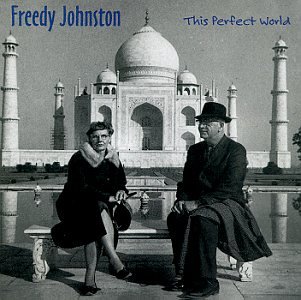
FREEDY: Each record for me is a project. Some of the songs tend to have familiar themes, but This Perfect World’s images were about New York City. Can You Fly may have rural images, but I don’t know if you could find any rural influences on the new record. The opening song is set at sea and the others are set in city streets, although I don’t give much detail as to what time or place the songs were in, Each song has its own vocabulary and rules. Some lines are out in leftfield on the new record because I had this constant battle in my mind between making sense and trying to give a pleasing sound to the line – which often means not making sense and balancing the two. Often, I have to go with my own interpretations of words. Some people write from diaries. I don’t. I make melancholy songs that don’t reflect my life.

What affect did producer T-Bone Burnett have on Blue Days, Black Nights?

FREEDY: T-Bone helped me sharpen the lyrics and shape them down. A point in our conversation was how much sense should I make without giving away a song’s mystery. If a line sounds beautiful and sets off mind associations’ leave it. That’s hard for me to do. I consider myself closer to a furniture maker or craftsman sometimes. T-Bone is such a mature, spiritual guy. Like most older artists, he gives the same advice: listen to your gut and trust yourself. He comes from a looser, almost painter-like attitude of ‘throw it up and see what it looks like. His impetus on trying to get a live performance sound in the studio really made the album happen. I wanted to get a live vocal on these songs, like Frank Sinatra. I was a big Sinatra fan. So T-Bone said, ‘let’s try it.’ We set up the studio with the mike right in the middle of the room. Several takes resulted in original vocals being used. There’s something you can’t create when you overdub a vocal. And we tried to pull it off as best as we could.

So you didn’t over-rehearse the songs, because they may have come out too stiff.

FREEDY: Maybe. What happens in the studio is, I get a little conservative and too critical. So, the first two takes will often have mistakes I’d pass over. While working on this record, T-Bone would say, ‘listen to how we really swung on the first take, even though the band didn’t know the song so well. It really had a life to it.’ I was often wrong and my opinion overruled. But I learned a lot about the real value of the freshness found on a first take. I’ve heard Elvis Costello talking about it with a record he did with T-Bone called King Of America. They did most of it live, and the musicians didn’t know the songs beforehand. That’s like how Bob Dylan worked for a long time. I’m amazed how loose and sloppy you could be in the studio. But by the end of the mix, the songs sound great. In a nutshell, I’m less afraid of mistakes.

Your albums seem very uniform in approach. How does each differ?

FREEDY: As far as uniformity, I can’t escape that. It’s best to stick to your strength. I remember Pete Townshend saying all songwriters compose two or three songs over and over again. His songs are all over the map and his personality comes out. So my goal is to develop compositional ability. My song structures won’t get more complex. But that subtle marriage between melody and lyric, who knows how it works? I try to get better at it. It’s difficult writing lyrics and matching them to melodies. But I’m happy with the sense the new songs make, even though they’re not simple-minded lyrically. It’s the Midwestern mindset of trying your best. I hope I don’t have too many boring cliches. I’m not gonna do hip-hop, swing, or a Sugar Ray reggae-pop song. I take my records very seriously. I grew up in the ‘70s. So I believe albums are where the songs live forever. I can’t imagine hearing Led Zeppelin’s Physical Graffiti and David Bowie’s Ziggy Stardust any other way. Each record has its own signature sound.
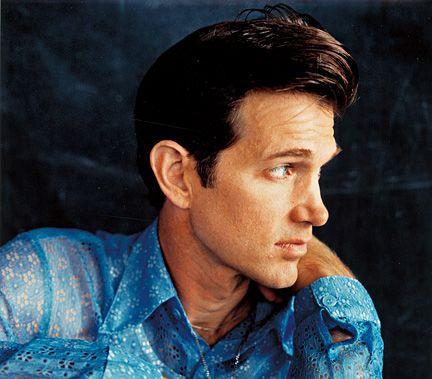
‘SPEAK OF THE DEVIL,’ IT’S CHRIS ISAAK

FOREWORD: Before Chris Isaak became a multifaceted media star with his own talk show and parts in Hollywood movies, the California native got popular creating soft-toned rockabilly-influenced surf-twanged communiqués. He was already on the way up when I met at the set for the stupidly popular TV show, The View. He was charmingly friendly and answered as many questions as I could throw at him an hour before his TV appearance. Damn nice guy. Deserves his aboveground fame.

After this ‘99 interview promoting one of his best discs, Speak Of The Devil, Isaak put out ‘02s Always Got Tonight before taking a studio break for TV/ movie fame. Happily, 09s Mr. Lucky didn’t suffer from commercial considerations. This article originally appeared in Aquarian Weekly.


At New York City’s WABC studios, humble, self-effacing musical heartthrob Chris Isaak waits patiently, eating fresh fruits prior to a scheduled appearance on The View. After casually shooting the breeze with one of the shows’ hosts, he performs “Flying,” a delicate song about yearning from his seventh album, Speak Of The Devil.

Displaying a fuller range of deeply felt emotions, Speak Of The Devil consistently surpasses Isaak’s previous works. In a honey-toned baritone, he desperately pleads for sympathy on “Please.” He quivers through the heartbreaking “Walk Slow”; expresses anxiety and satisfaction on the silvery title track.

Over the course of nearly fifteen years , Isaak has purged heartbreak and celebrated romance, refining a brooding , soft, cuddly surf-rockabilly style heavily reliant on twangin’ guitar vibrato. On his ’85 Silvertone debut, the coil-y “Livin’ For Your Lover,” stuck out like a sore thumb. And the pop-operatic “Western Stars” recalled Roy Orbison (to whom Isaak is often compared). ‘89s Heart Shaped World included the belated hit single, “Wicked Game,” a gauzy love-struck ballad made even more popular when its steamy, sexy beach video featuring supermodel Helena Christensen invaded MTV. The Baja Sessions, his next effort, was a spare, gentle retreat.

During breaks from recording, touring, and surfing, Isaak enjoys taking on small roles in renowned films such as Silence Of The Lambs, Married To The Mob, Little Buddha, and That Thing You Do. Slowly but surely gaining popularity and respect as an actor, Isaak will continue to pursue this second career.

I spoke to Isaak before his segment on The View.

Would you consider yourself a hopeless romantic?

CHRIS: I’m a hopeful romantic. I can’t imagine anyone would want to hang out just with the guys. What a horrible world. If all the women are gone, I sure as hell wouldn’t want to be in a band. There would be nothing but hardware shops and no one to impress.

Would it be fair to say “Flying” is a sentimental song about a one-time affair?

CHRIS: “Flying” is about spending time on the road, finding someone, and thinking about them all the time, waiting to see them again. It always cracks me up when people get the idea you’re traveling around, meeting somebody, and then you’re never going to think of them again. A lot of people I met over the years I met on the road. That’s where I live. It would be lonely without them. I’ve got lots of frequent flyer miles piling up.

With each successive studio recording the dynamic range of the songs has improved.

CHRIS: When I started out, I was using better studios than I could afford. I went in this time to a separate studio for legitimate mixing – which everybody else in the business had done while I had been doing that in my backyard. We’ve always as a band, done things in non-standard ways.

You use a lot of vibrating affects.

CHRIS: That sounds kind of sexual, doesn’t it? Little vibrating affects. You get two of these vibrating affects and connect it to a wire for your discretion.

(Laughter) Well. There’s a wider range of moods and emotions brought forth on Speak Of The Devil.

CHRIS: This album was a little more rocking than stuff we’ve done before. The last album, The Baja Sessions, was very mellow. It drove the record company nuts to see we were doing Hawaiian tunes. This LP has most of my band rocking, along with a fair amount of ballads, as usual.

Besides Roy Orbison and Elvis Presley, which artists intrigued you as a kid?

CHRIS: My older brother played guitar and harmonica. So I heard him all the time. We’d listen to Hank Williams and Slim Whitman. I used to listen to Simon & Garfunkle. One day I tried to fingerpick like Simon & Garfunkle, and I asked my brother if he wanted to learn their songs. He said, ‘What for.’ That’s when I realized there are different camps in music. I was always interested in mixing pop with other types of music.

So you’d consider yourself a pop artist as opposed to a rocker?

CHRIS: I don’t know. I like pop music unless it’s Menudo or some pretty boy or girl band – though some of that is all right, like the Lennon Sisters.

You’ve covered “Diddley Daddy” on Heart Shaped World. I’ve always felt some of your songs have that Bo Diddley beat.

CHRIS: That’s the Bo Diddley shuffle beat. Bo Diddley gave me an autograph and I can’t make out one letter of what he wrote. He just scribbled on my record. But I’m glad I have it.

Do you enjoy listening to Frank Sinatra, Dean Martin, and Tony Bennett?

CHRIS: I’m a singer, so I like good vocalists. When I’m record shopping, I always go to the vocalists section. I never liked Sinatra as much as Dean Martin. And I thought Sinatra got more credit even though Dean Martin was a better singer. Sinatra, though, was more than just a singer. The personality that comes from his records really hooks me. He’s a great actor and that makes his songs really come through. There’s that believability. But Dean’s voice takes me on a trip. It’s funny how people don’t remember lots of great songs. Radio doesn’t play them, like “Open The Door To Your Heart.”

Could you make a direct correlation between your acting and recording careers?

CHRIS: I don’t even think of mixing and matching. If I had a truck, it would say on the side, ‘roofing, tar paper, and siding.’ It’s just different work. If I can act in something, fine. If someone wants to hire me to write a song, great. I just wrote a theme for the Late Late Show hosted by Craig Kilborn.

But you’re not a sellout. Your recent work is more credible and thought-provoking than the earlier records were.

CHRIS: The more work you have, the more you’re allowed to do what you want to do. Instead of relying on one thing when you’re stuck in a corner.

How do you generally assemble a song?

CHRIS: Most of the vocal parts come pretty quickly. That’s the fun part. The arrangements and the songwriting is the hard part. In my house, it looks like I’m buried in notes. Ninety percent of the work I do people don’t even realize gets done. Very quickly I’ll write the heart of the song, but the revisions take forever.

Are there any artists with whom you’d like to work?

CHRIS: There are a lot of people I’d love to work with. That girl from Portishead is a wonderful singer, and I think it would be fun working with her. I’d like to work with Tom Waits. He has a great voice that’s very different than mine. I met him once. He is really smart – and a nice guy.

What type of movie roles will you try to get in the future?

CHRIS: I can’t imagine myself being in a big Hollywood movie with things blowing up and the government is behind everything. I’d rather be in some smaller budget film that’s one director’s vision. A lot of the more interesting movies I’ve seen have been done outside Hollywood. It seems people would rather watch HBO with things blowing up. It’s either that or there are a bunch of stars in a movie. I understand that brings people into the theatre to make money, but if none of the actors in film could work anymore? There’d be new actors in a day that would be just as good. I really think there’s tons of people who could do those jobs. It’s like if the radio wasn’t allowed to play Madonna and Chris Isaak. There would be all those acts being discovered constantly.

What are your goals for the immediate future?

CHRIS: I’d like to make some nice film and try new things musically. I don’t want to cause anyone else any grief.

To whom are you giving grief?

CHRIS: I don’t know. You just gotta be careful you don’t. That sounds strange. But that’s the business side of it. The art side of it I love doing, and I hope it just stays fun. So many artists take themselves too seriously. So I balance it with surfing.

JESUS & MARY CHAIN SURVIVE ERUPTIVE WHITE NOISE PARADE

Image result for jesus and mary chain

FOREWORD: Seminal feedback-glazed white noise addicts, Jesus & Mary Chain, was led by Scottish brothers’ Jim and William Reid. Inspired by punk, Iggy & The Stooges, and Velvet Underground, their amphetamine-fueled shows became so violent part of an ’85 tour was canceled.

Ear-wrenchingly hard-candied guitar reverb throbbed inside the Reid’s clamorous pop-mangling crew, inspiring the equally loud and profound My Bloody Valentine as well as the entire late ‘80s shoegazer scene and ‘90s grunge grinders alike. Of course, the ancient half-hearted dip-shits that run the Rock & Roll Hall of Fame will pass them up for induction, but that’ll never stop young bands from discovering Jesus & Mary Chain’s unshakable hair-raising sonic rock.

Four years evaporated before they got together and came up with a follow-up to their decent fifth album, Stoned & Dethroned. ‘98s spotty Munki had some promise, but ultimately paled in comparison to courageously jolting ’85 debut, Psychocandy, ‘87s nearly-as-good Darklands, and ‘89s less thrilling Automatic. Jesus & Mary Chain broke up after Munki and both Reid’s went on to obscure bands I don’t even recall. This article originally appeared in Aqaurian Weekly.


As the guiding light for noise-pop, Jesus & Mary Chain debuted in ’85 with the critically acclaimed Psychocandy, which served as a viaduct connecting Sonic Youth’s distorto-feedback creations to Nirvana’s crassest grunge ancestors. Hailing from Glasgow, Scotland, sibling mainstays Jim and William Reid became popular anti-conformists in Britain and underground legends in America, smashing equipment onstage and exposing drug culture through frank directives like “Some Candy Talking.”

After a nearly four-year studio hiatus, Jesus & Mary Chain make their triumphant return with the exuberant Munki, their sixth studio album (discounting singles collections and overseas compilations). Like punk rocker, Joan Jett, they’ve composed an anthemic life-affirming declaration titled “I Love Rock And Roll,” and they’ve rediscovered glorious youthfulness in the semi-autobiographical “Stardust Remedy,” offering ‘I was a teenage Jesus freak/ got drunk on punk/ and then I found my feet.’

For a slight changeup, Mazzy Star’s Hope Sandoval purrs through the bleak sedative “Perfume” after Linda Reid (Jim and William’s sister) takes on the carefree “Moe Tucker” (a direct reference to the Velvet Underground’s legendary drummer).

I spoke to Jim Reid May, 1998. He sounded positively ecstatic with the results of Munki, a project finished in the summer of ’97.

Munki’s thematic context, if any, seems to juxtapose your mixed feelings about the rock and roll lifestyle.

JIM: Yeah. Most songs are about what we do for aliving. “I Hate Rock And Roll” concerns the record business while “I Love Rock And Roll” is about our appreciation for the incredibly privileged existence we live.

As a kid, what type of music did you enjoy most?

JIM: I was into glam-rock – Sweet, Slade, T. Rex, and David Bowie. William’s a little older and likes that stuff, but we came together with punk rock. It make us both get into music. We picked up a guitar that was gathering dust. Previously, we didn’t have the confidence to do that. In ’80, I heard Velvet Underground’s “Waiting For The Man” and it all made sense as to what I wanted to do with my life.

You’ve named a song after Velvet Underground drummer, Moe Tucker. She’s living near Atlanta now. I got to know her after an interview and live shows at Tramps and Maxwells. She’s been sending Christmas cards ever since.

JIM: It’s not about Moe. We just had a song I preferred a woman to sing. Since my sister Linda was in town, we got her to sing. She said it sounded like Moe Tucker, so it stuck. To me, Moe Tucker was the backbone and soul of Velvet Underground. Tell her we’re fans of hers.

I will. She recently released a single, “Grl-Grup,” four lovable Phil Spector songs including “Be My Baby” and “The He Kissed Me.” Jesus & Mary Chain also seem to be interested in and influenced by Spector’s rhythm-heavy ‘wall of sound.’

JIM: Funny enough, a lot of people who are big Spector fans have said that, but it’s not a really big part of what we’re doing. It’s just that huge reverb sound we put out that subconsciously reminds them of him.

Some critics claim Jesus & Mary Chain’s lyrics are obsessed with self-destructiveness. But I think those people are missing your dark sense of humor.

JIM: You’re definitely right. It’s not all doom and gloom. Some of the lyrics are incredibly humorous. But people don’t pick up on it.

In the past, you’ve done evil onstage antics. Where does that attitude come from?

JIM: As a band, you have to put on a show. It’s something to do besides playing the songs. Early on, we got nervous about that and basically trashed stuff. Some was unnecessary and dumb, but some was heartfelt. Sometimes you go on speeding out of your head and there’s a guitar and a floor to smash it on. But it started to become too expected. It dawned on us that what’s good about the Mary Chain is it’s not about glitzy showbiz stuff. Now we push the music to the front and let the music do the talking. It’s not showbiz, but instead music as art.

Do you push the melodies above the exhilarating noisy din more often on recent albums?

JIM: All the ingredients count. It’s not balanced so people can’t hone in on one aspect. Like the Velvet Underground sang about “Heroin” on the same album they did “I’ll Be Your Mirror.” There’s so many lessons to be learned there. It disappoints me when artists make a noisy racket from start to finish with no melodies. Music should be more than that; the best music is.

Does “Stardust Remedy” relate back to T. Rex and Slade and your own carefree teen years?

JIM: That particular song is more about hearing the Sex Pistols and suddenly life having meaning. They were the squeaky wheel. Before them, everything was geared towards popular taste until punk happened and we were saved.

Do you feel the music scene has expanded exponentially since recording Psychocandy in ’85?

JIM: I’m not sure it ahs expanded. But there’s more bands. My philosophy is, if you don’t like the music you hear, make some yourself. That’s how the Mary Chain started. We didn’t particularly like what we heard so we made music ourselves.

Did you listen to early ‘80s underground rock like the Replacements, Husker Du, or the Minutemen?

JIM: I liked the Replacements. They played great trashy punk. Isaw them at the Roxy in L.A. in ’85.

Was ‘92s Stoned & Dethroned title a reaction to grunge overthrowing noisy pop?

JIM: No.It was jst a general feeling of not being appreciated. Grunge mad a lot of sense. The early stuff by Nirvana made it big. I thought grunge would change music overnight and there’d be a revolution because people would see music didn’t have to be wishy washy throwaway shit. When Nirvana hit number one, I thought they’d expand people’s minds, and it would never be the same again. After Nirvana, bands like Bush turned my stomach. It was Nirvana-by-the-numbers. I honest to God thought Nirvana were incredibly important.

Songs like “Candy Talking” have definite drug references. Do you enjoy teasing fans with narcotic innuendos?

JIM: Sometimes people see drug references that aren’t there. I’m not saying there’s none at all, but some fans go over our lyrics with a fine-tooth comb. I don’t want to make a fuss over it because when you talk good old-fashion common sense and say you don’t recommend drugs, people get hysterical. There’s no reasoning with people who have preconceived notions. I know drugs fuck people up. People should take responsibility for their own lives. If someone in a band says, ‘yeah, I took smack,’ then some fan takes it because of that, they’re just idiots. If I take drugs to get through the day, it’s my business.

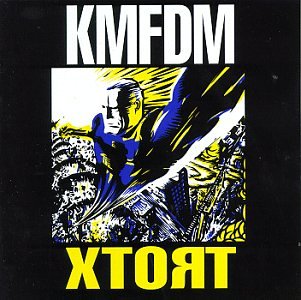
KMFDM READY TO ‘XTORT’

FOREWORD: KMFDM is the alias of Sascha Konietzko, who began his long-running Industrial dance rock troupe in Paris before heading to Germany – a Bavarian country they probably thought would be more receptive to such frazzled electronic machinations. Founded in 1984, KMFDM have released at least another half-dozen full-length recordings since this ’96 interview promoting Xtort. It became my first front cover story for Aquarian. For the record, my first cover story was on then-hot trio, the Presidents Of The United States Of America, for Brad Balfour’s defunct New Review Of Records, a year earlier. This article was my first front page piece for Aquarian Weekly.

Versatile German techno-Industrial wizards, KMFDM, admirably bridge the gap between early ‘80s electronic explorers (Cabaret Voltaire, Throbbing Gristle, Kraut,d Einsturzende Neubauten) and railing techno-metal ‘90s rattlers (Nine Inch Nails, Rage Against The Machine, Stabbing Westward).

Incorporating found sounds, rumbling syncopated rhythms, and well-places percussive noise into well developed mechanical song structures, these abrasive knob-tweaking shamans shake the fundamental boundaries of modern music. Sascha Konietzko began his career doing performance art, but met guitarist En Esch in the mid-‘80s and formed KMFDM. The initials translate from German as “No Pity For The Majority.”

Beginning with ‘86s homeland snubbing, What Do You Know Deutschland?, and ‘88s variable contemporary Industrial grab bag, Don’t Blow Your Top, KMFDM constructed a grim, pulverizing electro-dance groove which dug deeper than counterparts Depeche Mode could ever hope for.

KMFDM’s ’89 release, UAIOE, had more up-front spoken sections and an eclectic dancehall reggae obsession brought forward by guest mixers Adrian Sherwood and Nick Head. Its racially integrated political overhaul, “Rip The System,” and the hazy weed indulgence, “Ganja Rock,” put anarchism alongside euphoric resilience.

In 1990, the remixed smorgasbord, Naïve, appeared, followed in rapid succession by ‘92s brutal Money, ‘93s compromising Angst, and ‘94s KMFDM Vs. Pig disc, Sin Sex & Salvation. Best of all, in ’95, KMFDM released the astoundingly seething razor-sharp traipse, Nihil, a restlessly anarchistic thematic contortion. But while Konietzko and Esch made strides in the US, German acceptance was relegated to a handful of dedicated fans, initiating a change of citizenship for the duo.

“Germany seemed like a dead end road for us. It was not really the place where industrial music would land on fertile ground. Nine Inch Nails are just now starting to get popular in Germany. They’re way behind. They picked up on Elvis Presley and all that ‘50s hullabaloo in the ‘60s. Then, in the ‘70s, the Beatles and Rolling Stones were finally recognized. In the early ‘80s, Germany finally accepted punk rock,” Konietzko complains. “Worst of all, every time the Germans develop something, like Can or Kraftwerk, a neverending supply of imitative crap gets put out. When techno got popular, all of a sudden there was smurf-techno and t.v. cartoon techno.”

By building an ever-increasing fan base, KMFDM solidified both its clubland status and indie rock credibility. Remixed maxi-singles, a track for the Mortal Combat movie, and remix projects for White Zombie and Living Colour helped their cause over the years.

“We’ve progressed in a smooth line which leads directly to Xtort. But not at any point did we make drastic changes to let it all come together,” declares Konietzko. “I think Xtort takes a lot of chances, leaving the somewhat safe path we had been on previously. It was important to stay true to the way we view things, but also to go farther into new territory – which interested me composition-wise. Not many bands would tackle material this diverse.”

Recorded with Ministry’s William Rieflin, Revolting Cocks’ Chris Connelly, and Einsturzende Neubauten’s FM Einheit, Xtort incorporates fierce blasts of sonic aggression with self-effacing lyrical snippets. Living in Seattle, Rieflin has maintained a close friendship with Konietzko through the years, touring with KMFDM in ’89. They had always wanted to record together, but busy schedules had prevented that from happening.

As for Chris Connelly, he continues to be a chameleon figure, supporting innumerable artists.

“His Shipwrecked solo album is one of my favorites. It’s highly composed and unusual,” Konietzko explains. “Chris has always been able to keep the continuation of his musical tradition alive.”

Although the Seattle scene has produced superstars Nirvana, Soundgarden, and Pearl Jam, Konietzko says his adopted hometown lacks a local radio station that’ll tackle techno-Industrial acts. But he credits Paul Aleinikoff of noncommercial station 89.5 with keeping the hopes and dreams of obscure bands alive. He believes the public should explore different music on their own since narrowcasting continues to haunt and halt artistic development.

“All I’m saying is, think for yourself. Don’t take shit for granted. Information is power. People should be trusted to educate themselves. But in order to utilize the power of education, you’ve got to put it to work. There’s a lot more than self-mutilation and sticking needles in your arm when it comes to artistic creativity,” Konietzko maintains.

Though he says artists should probably be exempt from politics, in a literal sense, his keen awareness of worldly concerns cannot be denied. Because of the chasm created by the tacky Republican and Democratic agenda, and the relatively insignificant accomplishments therein, Konietzko prefers to remain unaligned.

“I probably lean more to the left on many issues, but it doesn’t matter. The extreme left and extreme right are relatively the same. I think politics are effectively dogmatic dinner table propaganda. The core problem is information relayed to people is false. These so-called Revolutionary Capitalists prove they cannot be trusted because they’re so full of shit. On a local level, if you empower an alderman, he usually does a good job. But nationally, we’re not ruled by the people. It’s disturbing,” he says.

Perhaps the liner notes to the re-sequenced Naïve/ Hell To Go disc best spells out Konietzko ‘s and En Esch’s belief in artistic expression and individual freedom: KMFDM stands up against patronization, glorification, and propagation of ignorance and the prohibition of any content labeled ‘unsuitable’ by authorities as dubious and questionable as PMRC or MTV.

New York spoken word artist Nicole Blackman provides KMFDM with their sharpest indictment on Xtort. Her jarringly confrontational lyrics venomously rip phony pop idols and political frauds on the metal-edged “Dogma.”

“Nicole was my publicist. I took her on the road and found out she could do fast and furious spoken word. She needed to be forced to join me onstage because she was playing shy, saying, ‘I don’t know if I could do this.’ I picked out the highlights of her 10-minute rampage and worked them into song,” Konietzko remembers.

Infested with wry assertions such as ‘America gets the celebrities we deserve,’ the pungent lyrics to “Dogma” were written on a Saturday night when Blackman’s friends abandoned her.

“The quickest barometer to see where we’re at as a nation is to look at what posters are up on kids’ bedroom walls,” Blackman explains. “You could size up culture by the musicians and sports figures we put on a pedestal. In America, we’re even putting Richard Nixon on a stamp, even though he was impeached in a horrific manner. At least France tries to reward its cultural heroes with their stamps. America does it after they die of overdoses.”

“When we recorded “Dogma,” I took all the pop culture references out because I never wanted it to sound dated. I wanted it to be an eternal evergreen track,” Konietzko advises.

Possibly the most contagiously danceable song in KMFDM’s catalogue, “Power” simplifies the political implications.

“Wax Trax Records wanted a promo-only track to pitch to radio, but I hear radio doesn’t like big female choruses. Cheryl Wilson, a famous voiceover commercial singer, helped out. It’s just dumb and catchy. But it was never geared towards commercial alternative or MTV,” Konietzko insists.

The blistering blitzkrieg, “Craze,” came about when KMFDM toured Germany last November.

Konietzko shares, “It’s an homage to Atari Teenage Riot, a band with two guys, one girl, a couple TR90S drum machines and a bass machine. They do impressively fast 240 beat-per-minute hardcore.”

“Blame,” a strange rhythmic song with a Beatlesque swirl, features brass-led Oakland, CA conglomerate, Tower Of Power, who recorded meritorious ‘70s top 10 soul nuggets “So Very Hard To Go” and You’re Still A Young Man.”

“I think overall it has a Frank Zappa quality. It’s controlled and orchestrated, but also very wild. Tower Of Power added a high caliber musicality and we had real run conducting the brass section,” Konietzko concedes.

No tour is scheduled to support Xtort. Instead, Konietzko plans to gear up for the production of heavy metal blasters, Treponem Pal, before another new KMFDM album arrives.


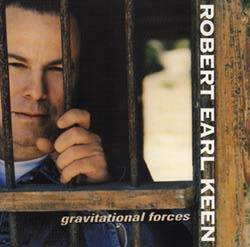
ROBERT EARL KEEN WORKING AGAINST ‘GRAVITATIONAL FORCES’

FOREWORD: Houston-born singer-songwriter Robert Earl Keen was one of the most significant independent Country & Western finds in the ‘80s. He made good on that promise with several ambitious albums, leading to ’01s delightful Gravitational Forces. Slowing down on recording sessions thereafter, Keen continues to live off his solid rep in concert, releasing occasional studio albums (‘03s Farm Fresh Onions and ‘05s What I Really Mean). This article originally appeared in Aquarian Weekly.


Reputable singer-songwriter Robert Earl Keen began playing music while attending Texas A & M with fellow Country & Western artist Lyle Lovett, penning “This Old Porch” for his yet-to-be-famous college friends’ eponymous debut. After graduating, Keen settled in Austin, became a solo act, then drifted off to Nashville when fellow Texas troubadour, Steve Earle, convinced him it was the right move.

After ‘84s formative No Kind Of Dancer and its delayed follow-up, ‘88s The Live Album, produced by seasoned knob-twiddler, Jim Rooney (Townes Van Zandt/ Nancy Griffith), he hired a booking agent and moved back to the Lone Star State.

Featuring the live staple, “The Road Goes On Forever,” which has been covered by Willie Nelson, the Highwaymen, Johnny Cash, Waylon Jennings, Joe Ely, and Kris Kristofferson, ‘89s West Textures brought onboard a number of newly impressed Dallas and Austin fans.

But by ’93, Keen felt ‘stuck in nowhere land’ waiting for national exposure and recorded his most diverse, consistent record to date. A Bigger Piece Of The Sky, with bassist Gary Tallent (from Bruce Springsteen’s E Street Band) and guitarist George Maranelli (Bruce Hornsby/ Bonnie Raitt), secured small-scale national attention.

When ‘94s Gringo Honeymoon dropped, he went from selling out New York’s smaller Bottom Line to getting gigs at larger venues such as the now-defunct Tramps and Irving Plaza. ‘96s live No. 2 Diner neatly captured Keen’s concert excitement, boasting a great repertoire, including the catchy fish tale, “Five Pound Bass,” the Flying Burrito Brothers-by-way-of-Dylan country-rocker, “Think It Over One Time,” and the high-rollin’ barroom stomp, Amarillo Highway,” along with tidbits of funny ‘tween song dialogue.

A stint at Arista Records produced two fine albums, ‘97s Picnic and the follow-up, Walking Distance. But obtaining aboveground Country and folk fame was out of reach.

Since being let go by that major label, Keen has continued to please sold-out audiences. And recently, he unleashed the mighty fine, Gravitational Forces. Helped out by a tight touring band and former Small Faces keyboardist Ian McLagan (on acoustic lullaby “Not A Drop Of Rain” and somber “Goin’ Nowhere Blues”), his ninth album collects a ‘colorful, shimmering’ version of Townes Van Zandt’s pretty “Snowin’ On Raton,” Johnny Cash’s longing “I Still Miss Someone,” and the traditional folk standard, “Walkin’ Cane.” Originals such as the sweepingly sentimental “Fallin’ Out” (which has the same delicate tension as John Prine’s best material), the lonely steel guitar weeper, “Wild Wind,” and the Texas boogie hoedown, “High Plains Jamboree,” round out the ambrosial long-player perfectly.

At a packed Bowery Ballroom show earlier this year, there were more hard drinkin’ Texans over six-feet-tall gathered North of the Confederate Border to witness Keen perform than possibly imaginable. So it goes without saying that his fabulously successful Texas Uprising series is a must see. This year, Keen’s concert cohorts included established acts such as Los Lobos, Kelly Willis, Slaid Cleaves, and Todd Snider, along with local upstarts Nickel Creek, Beaver Nelson, and Reckless Kelly.

I spoke to Keen a few weeks before his latest Irving Plaza jaunt.

Though you didn’t pen it, Joe Dolce’s (the author of Italian parody, “Shaddap You Face”) “Hall Of Fame” was ironic with its stanza, ‘my home ain’t in the hall of fame/ you can go there but you won’t find my name,’ definitely struck a nerve. Here you are, a respected cross-country concert attraction and an accomplished songwriter covered by George Strait, Lyle Lovett, Nanci Griffith, Dar Williams, and Joe Ely, yet watered down contemporary Top 40 Country radio remains stuck in a rut and will not acknowledge your roots-based music.

KEEN: I got that song off a Jonathan Edwards record (Bluegrass Staple). J.D. Crowe also did it. It’s one of those songs I never did onstage, but it was perfect while drunk at a campfire. It’s my kind of song.

Then comes the acoustic affectation, “Hello New Orleans.” That must fit in well with the party crowd down on Bourbon Street.

KEEN: Right. The only problem with New Orleans is they always want you to go on at midnight. I’ve got people who go to bed at 12. (laughter)

Are your songs usually fictional?

KEEN: It goes from completely absurd to real straight-on accounts. My barometer or litmus test is ‘does it feel true?’ That’s what I count on. When I write sentimental songs, I’m just trying to please myself. If that stops, I don’t have the heart to go on. I like performing onstage. I’m not any kind of singer and a mediocre guitarist, but I write good songs.

Give me some of your current bands’ background.

KEEN: Marty Muse (pedal steel0 moved in from Spokane, Washington, ten years ago. He played with the Derailers and Rick Trevino. He’s tasteful; not flashy. I always tell him we need more purple sunsets here or there. Bassist Bill Whitback is a musicologist. Before he played with me, he did Country covers at local dancehalls. Guitarist Rich Brotherton I’ve been with for eight years. He’s originally from Augusta, Georgia. His main gig was Toni Price. Drummer Tom Van Schaik left the Dixie Chicks before they exploded because he thought that would be too crazy.

Your career neatly parallels that of Canadian troubadour Fred Eaglesmith. You both put out lots of independent albums and remain under-appreciated by mainstream audiences.

KEEN: I did a lot of shows with him for five years. He’s a killer. He packages his cassettes in wooden boxes which is an odd marketing idea and weird format. Fred writes interesting songs about great topics. He’s also truly a great, intense conversationalist.

I’m proud of Country artists like Eaglesmith, Lucinda Williams, and you, who’ve bypassed Country radio and succeeded on their own terms.

KEEN: I had my problems getting Picnic and Walking Distance promoted to radio. Arista Records wasn’t interested. They signed me to keep me off the street. (laughter) I was floored by what indie labels offered so I sat back and enjoyed that. I decided to start Gravitational Forces before I signed with anyone, People were breathing down my neck before Lost Highway signed me.

Does the title, Gravitational Forces, refer to the forces which have kept you from being accepted by mainstream Country formats and corporate hacks?

KEEN: I think I came back and landed where I was drawn to. Some of my friends say this is more like my early records. My favorite is Bigger Piece Of The Sky. It’s all over the map and lyrically it’s really colorful.

What’s on your CD player these days?

KEEN: In my pickup truck there’s The Good The Bad And The Ugly soundtrack, Joe Buck, Kasey Chambers. My favorite new Texas artist is Beaver Nelson, a loopy neo-hippie with stream of conscious lyrics – which is something I usually don’t like.

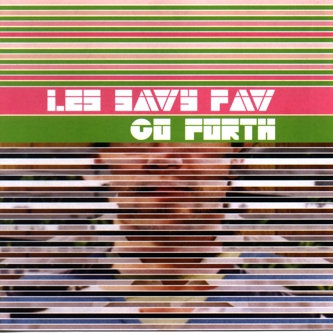
LES SAVY FAV READY TO ‘GO FORTH’

FOREWORD: Les Savy Fav began in ’95 when Rhode Island School of Design student, Tim Harrington, and some pals, decided to try their hand making music. Bearded theatrical singer, Harrington, who wore makeup and defied male sexuality, got his first break when ‘99s The Cat & The Cobra received lots of college and underground airplay for Les Savy Fav. By ’01, they’d completed Go Forth.

I caught up with Harrington at Brooklyn club, Warsaw, where his frenzied agit-pop group tore it up onstage. After a long period of silence, Les Savy Fav returned in fine form for ‘07s Let’s Stay Friends. This article originally appeared in Aquarian Weekly.


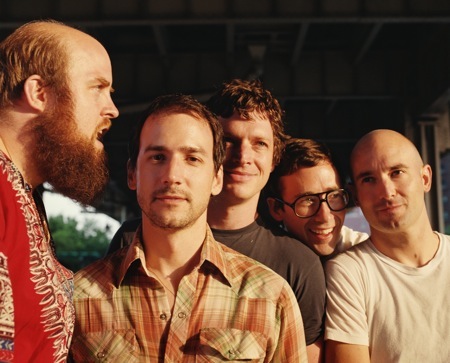
Originally formed as a quintet, the members of Les Savy Fav met while attending Rhode Island School of Design. By tinkering around in a basement on weekends, they soon got serious, wrote songs, and began playing local venues. After graduation, the now heavily-bearded redheaded frontman, Tim Harrington (incipiently from Central Jersey), and former drummer, Pat Mahoney, moved to Brooklyn and cheaply rented a 3,000 square foot Knights Of Columbus hall with antique wood bar, building a studio and practice space inside its comfy confines.

With the ’97 debut, 3/5, Les Savy Fav sought to combine the kinetic energy of art-rock with the raw intensity of boiled-down-to-its-essence hardcore. But ‘99s The Cat & The Cobra found these artful dodgers intellectualizing the strategy, bringing a visceral edge to what could loosely be coined left-of-center emo-core. Its follow-up EP, Rome (spelt upside down on its cover), worked skirts with exuberantly danceable new wave confections.

During their tenure, the one truly idiosyncratic link remains Harrington, who enthusiastically yelps lyrics like some possessed cross between Jane’s Addiction-era Perry Farrell and a wet-behind-the-ears Bono (with the Edge in tow). The latter comparison arises frequently on ’01s Go Forth, as the post-punk chants and angular guitar flurry of the demonic “Reprobate’s Resume” and the feverish “No Sleeves” compare favorably to U2’s early ‘80s material. Meanwhile, the released tension and spare percussion of “The Slip” sparks instant memories of amateur-and-proud-of-it NYC minimalists Delta 5 and the Bush Tetras.

Harrington oft-times bangs on people’s insecurities and expounds on topical themes with specific lyrics, using dry wit and cracked humor to get the songs over. He drills the opening stanza, ‘what we don’t know could fill a truck/ what we don’t know cannot hurt us’ (from the searing Gun Club-like overture, “Tragic Monsters”) into the skull. Then, he wryly warns ‘don’t place your bets on me yet’ (during the sleepy-headed “One To Three”) before haggling down kidnappers on squirmy tease “Adopduction” (its shaggy electronic poetry reminiscent of King Missile mainliner John S. Hall) and awakening apocalyptic visions on the pepped-up “Pills.” Throughout, bassist Syd Butler and drummer Harrison Haynes provide protean rhythmic punch to Seth Jabour’s sturdy guitar hooks.

Onstage at Williamsburg’s hottest and newest underground rock venue, Warsaw, Harrington prances around like he just don’t care in a far less flamboyant manner than when Les Savy Fav opened for Modest mouse at Bowery Ballroom in 2000. Wearing a blue business suit and pink tie at the top of the set, he keeps the full house happy with crowd favorites and offers goofy banter as two ‘dudes’ mocking desperate single Wall Street males searching for pussy in this Brooklyn community hop onstage to play the fools mid-set.

I spoke to the band backstage a few hours prior to its exhilarating Warsaw gig.

Was Les Savy Fav initially influenced by ‘80s post-punk by Bad Brains and Minor Threat?

SYD: We come from rock backgrounds and we could reference the same bands.

TIM: We were all probably in high school during the hardcore days. But by the time we formed the band in college our tastes were in a lot of different subcategories and we weren’t listening to that anymore. The first music we were all into besides hardcore was by Michael Jackson.

SYD: When I was 12, someone handed me a copy of Grey Matter and it changed my life. We’ve all had that moment in life where someone hands you a tape that’s alternative and not commercial radio stuff. Wow! That’s exciting.

SETH: My older cousin gave me Michael Jackson’s Thriller. That was the first thing in life I could listen to more than once.

TIM: I didn’t understand how any kid could start an amateur band. I thought you had to be an expert. I think expertly executed music is interesting and undeniably good. But music that made me go ‘wow’ was music that’s good and not too hard. The fact that I sit there and watch my band do it behind me is fantastic when it’s unveiled. If there’s no mystery, there’s no magic. When I listened to Michael Jackson, I thought, how does that happen?

SETH: Yeah. It’s like how does that happen. It’ll never happen to me. But when you listen to Minor Threat and learn the guitar chords, you realize the possibilities.

Tim’s eccentric behavior, goofball humor, and full-on confidence really prop up Les Savy Fav’s stage show.

TIM: We like the shoestring extravaganza. We don’t do really elaborate stage shows. It’s just spontaneous gestures. We don’t usually plan things out or have any preconceived notions. It keeps our live performance fresh when we play 5-year-old songs.

SETH: It keeps us excited and takes us to new places. We’re always rediscovering our songs. The energy allows us to shoot from the hip and the pressure spawns a certain creativity from us.

TIM: We love playing live.

SYD: We miss our friends and our home on the road. But we get to go to places and have experiences and stories we wouldn’t otherwise be able to relate to as old men.

How has Les Savy Fav’s sound expanded since the 3/5 debut?

SYD: With 3/5 and The Cat & the Cobra, we were uptight. We’d practice the songs a lot and were focused, but towards the end of The Cat & The Cobra, there was this experimentation, then, we took time and when we recorded the Rome EP, we didn’t have songs – only sketches. That became our most successful venture because there was a sense of rawness and energy that had been missed when we practiced songs.

TIM: We had played our songs eight months to a year before that and by the time we recorded them we knew everything about them. There was no playfulness or as much life as there could’ve been.

SETH: That was a time when we lacked the kind of experience where we could go into the studio and do a little panache. Rome’s songs were more sketched out then the ones on Go Forth, which were built on riffs we’d go through for two seconds. The more we worked on it in the studio, the more it gave birth to pliable songs instead of beating them to death for two years.

Tim’s voice sticks out more on Go Forth.

SYD: One of the complaints we’ve had is that Tim has a fantastic voice buried in the mix. On Go Forth, his voice had time to breathe and rise to the surface. His lyrics are great.

TIM: Stripping down to a 4-piece let us rethink how we work and gave everyone the chance to do more individually and create new dynamics. When we were a five-piece, it was like a puzzle trying to get two guitarists who want to play a lot. Now, each member has more power.

“Tragic Monsters” raises some serious issues about understanding.

TIM: To me, that’s about seasoned full-grown ignorance of people. I feel bad for the metaphoric Frankenstein, the monster everyone hates, but you somehow feel sorry for. It’s like criminals. What motivates them? Are they evil or the devil or is it deeper? People usually live with their weird convictions. They’ll do something terrible, like murder someone, but they didn’t do it ‘cause it was fucking fun. They did it because of whatever hideous demons are inside them. Can you struggle to understand and analyze these things?

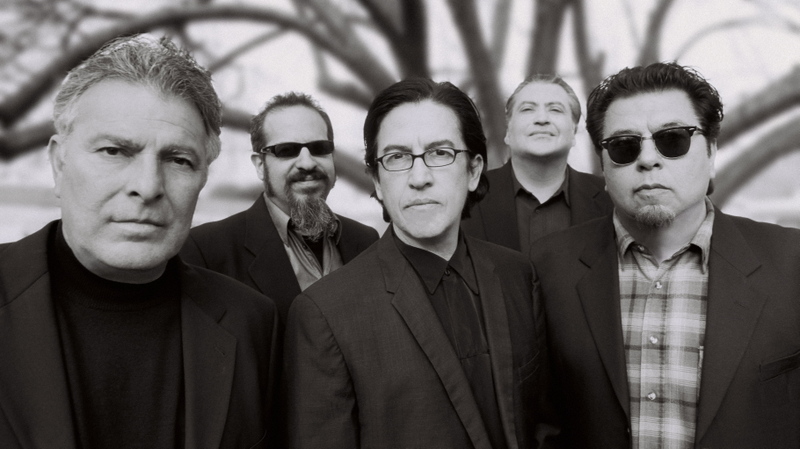
LOS LOBOS CONTINUE BUILDING LEGACY ‘THIS TIME’

FOREWORD: If it weren’t for La Bamba, the movie based on popular Latin-American ‘50s rocker, Ritchie Valens, Los Lobos would’ve never gained aboveground attention. Thanks to that lucky break, they’ve been able to expand their musical horizons in many varied directions, brushing back mainstream success to concentrate on roots-based musings.
 
Strewn across a dozen albums, Los Lobos’ folk-y Tex-Mex-designed Rhythm & Blues-sidled boleros, rancheros, and nortenos deserve the same widespread attention garnered by the #1 La Bamba soundtrack.
 
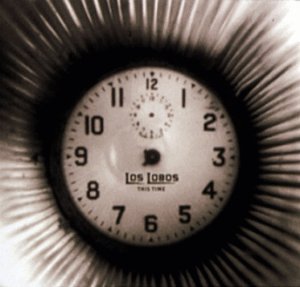
After this interview with bassist Conrad Lozano supporting ‘99s This Time, they scored with ‘02s Chicano-inspired Good Morning Aztlan, ‘04s preferable The Ride, and ‘06s trusty The Town And The City, but it’s questionable whether those works equaled or bettered their earlier albums. This article originally appeared in Aquarian Weekly.

Before gaining underground national attention with 1983’s mini-LP, And A Time To Dance, Los Lobos had released the formative Just Another Band From East L.A., a hard-to-find indie album from ’78 on New Vista Records featuring down home boleros and rancheros. Their festive Mexican-American ethnicity paved the way for future endeavors.

Partially inspired by ‘60s underground Chicano rockers, the Premiers and the Midniters, guitarist-accordionist-singer David Hidalgo, guitarist-vocalist Cesar Rosas, bassist Conrad Lozano, and percussionist Louis Perez (joined by ex-Blasters saxophonist-keyboardist Steve Berlin in ’84) hit paydirt in ’87 when they recorded several Ritchie Valens compositions for the La Bamba soundtrack.

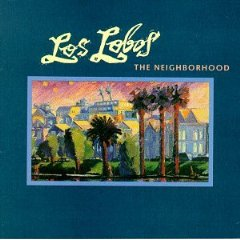
After 1988’s Mexican-rooted sidestep, La Pistola y el Corazon, Los Lobos settled into the cozy rural country-blues of ‘90’s The Neighborhood and the sublime folkloric Tex-Mex intrigue of ‘92s Kiko. Thanks to producer/ multi-instrumentalists Mitchell Froom and Tchad Blake, ‘96s avant-experimental Colossal Head leaned closer to the loose minimalist explorations and evocative sketches of Perze/ Rosas’ offshoot band, the Latin Playboys.

Continuing to fortify and expand an unchallenged legacy, these musically democratic practitioners have just dropped This Time, arguably their most satisfying and diverse set yet.

The title tracks’ relaxed Summer soulfulness gets leavened by Berlin’s sultry Into The Mystic sax while drifting pipe-like bells linger in the distance of “Oh Yeah’s” dark rhythmic groove (reminiscent of War’s ominous ’71 pop-soul hit, “Slippin’ Into Darkness”). Following the funked-up ZZ Top-inspired guitar bluster of the distortion-laden “Viking,” and the psychedelicized “High Places,” the Latino-cultured “Cumbia Raza” (a Colombian dance), “Corazon” (a Cuban guajira), and “La Playa” (an African funk number steeped in South of the Border tradition) surround the static Delta blues antiquity of “Runaway With You” and the sax-blurted easy pop of “Turn Around.”

Just like Hank Williams introduced Country & Western to a massive popular audience, Bob Dylan revived folk music for a new generation, and the Byrds gave life to folk-rock, Los Lobos has integrated Chicano culture into regular American lifestyle. Vintage songs like “One Time, One Night,” “How Will The Wolf Survive,” “Shakin’ Shakin’ Shakes,” and “Set Me Free (Rosa Lee)” may not be as deeply connected to Western heritage as “Jambalaya,” “Blowin’ In The Wind,” and “Mr. Tambourine Man,” but they’re no slouches.

I spoke to founding member, Conrad Lozano, one hot August morning.

Give me a little background on This Time.

CONRAD: We elaborated on our ideas and this is what came out. Those songs gave us a good mix of what we enjoy playing. There’s such a diversity of tastes within the band and it all comes out on our records. That’s why we always have a few traditional Spanish language songs. This Time has three Spanish songs, which we haven’t done since La Pistolas and the debut in the ‘70s.

Originally, when we left our rock and roll bands, we put down the electric guitars and learned about our Mexican roots through music by playing traditional acoustic instruments in traditional form. Mexico has many different regions. Each has its own music and instrumentation. We went out and learned how to play correctly. We’ve been playing dance songs and weddings for 25 years now.

How did the arrangements for the songs come together?

CONRAD: The songs fell together. We tried to get each done before moving on. We try ideas out and 90% of the time we keep the arrangements. We work out bridges and parts during a couple days. When we feel comfortable with the song, we keep it.

How has the East L.A. culture expanded over the years? Are the living conditions in that area any better?

CONRAD: Living conditions aren’t better. When we were kids growing up in Los Angeles, there was a gang element. But there are so many more people here now. Back then, as kids we could play baseball in the street on any summer day. Now, it’s too crowded. It’s still a hard-working community. There’s just more disrespect among some of the kids now. I think anti-gang activity starts at home. But so many programs have been cut.

Has Los Lobos evolved from their Chicano rock auspices?

CONRAD: We wouldn’t consider ourselves a Chicano rock band. Band like El Chicano fit that description better. We were a Mexican-American folk band playing rock and roll. In the late ‘70s, we played norteno when we were involved in the L.A. punk scene with X and the Blasters. The good thing happening now is, even though it’s a real pop market, the doors have been opened up for Ozomatli and other Mexican music. It’s healthy.

What initial goals have Los Lobos achieved?

CONRAD: We overachieved and did stuff we never could do. Through La Bamba , we got people to know who Ritchie Valens was. That was a goal of ours. Before we even got to know his family, and before the movie came out, we were doing four of his songs live. When we were in Singapore, the owner of a club asked where our outfits were. He thought we were some kind of show band because of La Bamba.

Los Lobos spent an enormous amount of time on The Neighborhood, but This Time was conceived in mere weeks. How did that affect each album’s final results?

CONRAD: The Neighborhood took a long time because the producer was also our engineer. He wanted to beat things up a little and wanted to do everything again. But usually, first or second takes were best. After that, the band starts to get burned out. We learned our lessons from those days. You could beat the feeling out of a song. Now we save a lot of time.

What instrumentalists inspired you as a kid?

CONRAD: My cousin was a surf fanatic who loved the Ventures and the Beach Boys. That’s when I really got into music. I thought he was really cool. Then Motown, the Beatles, the Animals, and the Stones made all hell break loose. Paul Samwell-Smith of the Yardbirds was my hero. That’s why I learned bass at fifteen. I played with a pick because that’s how Paul played.

Unlike the rest of Los Lobos, you’re not involved in any side projects.

CONRAD: I don’t want to do any side projects because I hate being away from home more than I have to be. My son is 25 and works for the band, War, as stage manager and fill-in drummer. He made me a grandpa. I also have a daughter who’s 21.

-John Fortunato

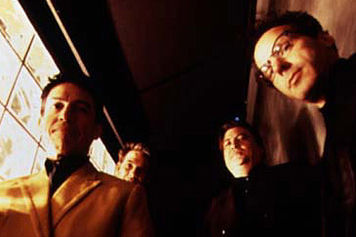
LATIN PLAYBOYS RETURN TO FOLD FOR SECOND ‘DOSE’

FOREWORD: Latin Playboys were an excellent side project merging two Los Lobos members with a duo of heralded soundboard session men. Both albums they released in the ‘90s are well worth investigating. This article originally appeared in Aquarian Weekly.


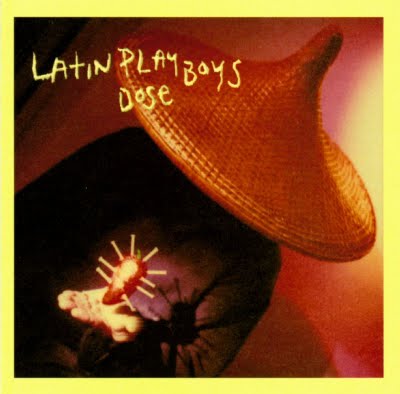
Los Lobos guitarist David Hidalgo and percussionist Louie Perez teamed up with their producer/ sound manipulator Mitch Froom and engineer-bassist Tchad Blake to explore experimental ethnic music as the Latin Playboys in ‘94. Their second album, Dose, a brave belated follow-up to its eponymous debut, hearkens back to simpler times. It goes South of the Border on several festive Mexican-rooted dance mutations and returns to East L.A. for a few delightful Latin-tinged Chicano rockers.

Along with a new Los Lobos album (including, of course, Cesar Rosas, whose solo debut, Soul Disguise, recently dropped, the Latin Playboys have been busy with a few worthy side projects since ’98. Hidalgo and Rosas hooked up with veteran Tex-Mex icons Freddy Fender, Joe Ely, and Flaco Jiminez as Los Super Seven and received a Grammy nomination. Mitch Froom made his solo debut with Dopamine,and Hidalgo just released a duo set with Canned Heat multi-instrumentalist Mike Halby under the guise of Houndog.

With occasional assistance from singer-violinist Lisa Germano (the opening act on an American tour), the Latin Playboys pleased an eager Tramps audience in Manhattan that knew no generational boundaries in April. A few days after enjoying their exhilaratingly warm and heavily percussive set, I spoke candidly with Perez and Froom.

Does Dose pick up where the self-titled debut left off?

FROOM: There’s no agenda. We do what we like. I’ve known the guys in Los Lobos since their first single, “Will The Wolf Survive?”

How’d you initially get to do production work for Los Lobos?

FROOM: I think the record company suggested we get together.

After Los Lobos received mass appeal with the La Bamba soundtrack, the Kiko and Colossal Head albums were experimental sets that didn’t gain commercial radio exposure. Was it difficult to have a smaller audience again?

PEREZ: It took awhile for people to get over it. La Bamba threw us off quite a bit. We even did a Mexican folkloric album, La Pistola y el Corazon, which threw a wrench in the works. We had to derail La Bamba somehow. Mitch and Tchad came in the studio. Dave and I set some time aside, and we were ready to go into the Latin Playboys phase.

As a kid, what kind of music affected you most?

FROOM: There were several records that had a huge impact on me. One was Miles Davis’ Sketches Of Spain and another was The Genius Of Ray Charles. Then I completely fell for the Beach Boys and Beatles pop music. Then, the whole psychedelic phase hooked me. Also, I have a real strong emotional reaction to Gil Evans’ cool Jazz arrangements.

PEREZ: I grew up in a Mexican-American working class area listening to the music that was around the house like ethnic Mexican music which was popular in East L.A.

A lot of Latin Playboys songs are working class based.

PEREZ: Yeah. I started writing a bunch of stuff when I heard the music Dave gave me. I found myself inspired by the music’s visually arresting images. It made me revisit where I grew up as a kid. This album really gave me the opportunity to make these day-to-day sketches. It’s not about oppression or being Mexican-American in any social context or glorifying anything. It’s about everyday people.

Would you like to exploit the Rock En Espanol audience?

PEREZ: I can see our music crossing over into that market. There’s been a cross-collateralization which has been recently taking place. The edges are getting fuzzy. I don’t like this compartmentalizing of stuff. I think that audiences can find real cool things In the Latin Playboys.

Do you like the fact more bands are exploring multi-ethnic music?

FROOM: There’s a band called the Roots that blend elements well. The people interested in bringing a hybrid mentality to their music I like better than those who are appropriating music and figuring out how to sing over the top of it or just doing a bad version of something. The Latin Playboys various ethnic influences have depth to them. It’s hybrid music, but with a firm understanding.

“Ironsides” seems to capture the essence of the Latin Playboys best.

PEREZ: It started with a traditional rhythm and cranks up like an electric band, which is similar to border music, using whatever instruments are available. It reminded me of listening to Mexican radio coming from a little speaker from a pickup truck. And I ran with that idea.

FROOM: “Ironsides’ is one of my favorites because of its general concept. There’s a band coming out of one speaker, a truck coming out of the other speaker, and Louie’s doing the voices of a family going to the movies, without changing inflection. Sometimes our sounds aren’t overly reverberant, but there’s contrast.

Where’s the idea for “Cuca’s Blues” come from?

PEREZ: Cuca’s a common woman’s name. I drew this little picture of some woman who might be someone’s grandma revisited when she was young. It’s a time capsule of Los Angeles when it was still very young in the ‘30s. A red trolley car connected downtown with East L.A. Lots of Mexican people were crossing the river. There’s some mysterious things that may have happened in her life that the lyrics don’t really resolve – which is cool.

Is there currently a vibrant Latin music scene in L.A.?

PEREZ: When I was growing up in the ‘60s, there was a whole scene happening with the Midniters, Blondells, and the Premiers. They used to wear uniforms, blazers, and turtlenecks. The East L.A. sound was Mexican-Americans’ version of R & B. Then it went away. Maybe it was because of Viet Nam War. A lot of musicians were gone. Then disco took over and whatever musicians were left got day jobs and had kids. Then Los Lobos started doing things in the late ‘70s. We expected bands to follow through, but it didn’t happen. For years, we’ve been the only East L.A. band that’s gone this far. Finally, the scene has been picking up for Latinos in general. There’s a group, Ozomatli, that has an unusual blend. There’s an Asian, a black rapper. My son’s group, Villains, are recording now. I’m not just about being Latin. They’re taking in a lot of influences while retaining cultural integrity.


ASS PONYS READY TO ROCK ‘LOHIO’

FOREWORD: Ass Ponys singer-guitarist, Chuck Cleaver (now co-fronting hard pop combo, Wussy), may not be a household name, but I dare you to find a straightforward rock band as consistently good as his equine-christened quartet. The Ass Ponys did get that pie-in-the-sky major label deal for ‘94s excellent Electric Rock Music and ‘96s sturdy The Known Universe, but aboveground airplay was not forthcoming so they returned with little fanfare to welcomed indie-dom. As for Cleaver, he’s a husky composer whose resourceful allegoric sketches enjoin basic melodic folk, rock, and country-blues arrangements. I saw the Ass Ponys play twice (Mercury Lounge and the defunct Brownies) before they unfortunately called it a day ‘round ‘05. But their tunes will live on just as long as anyone wants to pick up any of their ‘90s discs. On a few occasions, I’ve spoken to Cleaver about long-lost small label artists, since both of us have tremendous knowledge concerning Anglo-American music. I’ve also done a piece on his ensuing band, Wussy. This article originally appeared in Aquarian Weekly.


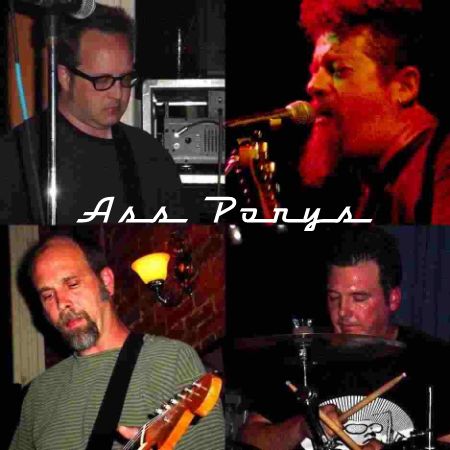
Cincinnati’s Ass Ponys spread roots-y heartland folk-rock across pop melodies with the greatest of ease. Leader Chuck Cleaver’s reflective tales of twisted accounts from life’s underside contain a wryly broken-hearted wittiness second to none.

With clever metaphorical dalliance, Cleaver’s quivering nasal tenor spits out bizarre absurdities like ‘I wanna be the pilot of a kamikaze airplane’ (from the super-catchy “Butterfly”) plus ‘look beyond the dead end summer/ there’s a haze hanging over the town’ and ‘do I exist in the bottomless pit of your heart’ (from the fiddle-laden “Calendar Days”). The grim Day Of The Locust time warp, “Donald Sutherland,” torturously quips, ‘you could be the gun that blows out the back of my skull.’

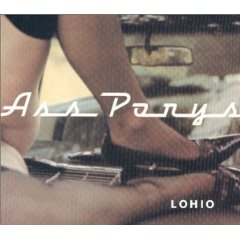
Signed to A & M Records following a few locally distributed records, the Ass Ponys released ‘94s eye-opening Electric Rock Music (featuring the novel mini-hit, “Little Bastard”) and ‘96s nearly as good The Known Universe. After getting dropped by A & M, they borrowed a dumbfounded line from Deep Purple’s classic “Smoke On The Water” for the title of the small-labeled Checkered Past re-entry, Some Stupid With A Flare Gun, then hit the studio a year later for ‘01s even better Lohio.

While fast food ode, “Only,” and disjointed swamp water country-Blues elegy, “Baby In Jar,” hearken back to acid-folk jug band, the Holy Modal Rounders, sweet acoustic fare such as the lonesome, “Dollar A Day,” and dirge-y “(Baby) I Love You (Baby),” bring to mind Neil Young’s more contemplative moments.

Alongside Cleaver, the Ass Ponys include fellow original member, bassist Randy Cheek, drummer Dave Morrison (who came aboard for ‘92s little-known indie-released Grim), and banjo playing guitarist Bill Alletzhauser (the youngest of the group).

I spoke to Cleaver over the phone as he watched from his porch as a hell-bent northerly thunderstorm settled in.

Some of the Ass Ponys stranger material reminds me of the Holy Modal Rounders. Do you even know who they are?

CHUCK: Yeah. “Baby In A Jar’ is very much in that mode. I collected the ESP label for awhile. There’s stuff that makes the Holy Modal Rounders seem regular. There’s a band called the Godz. Then, there’s Erica Polmeranz, a mystical hippie with witchy sounding stuff. I think they re-released some of their stuff on CD. There’s an underground cartoonist, Gilbert Shelton, who came out of Texas. There’s actually a 45 on ESP with a picture sleeve by the Gilbert Shelton Ensemble that’s really hard to find. It’s absolutely terrible, but worth having. There’s some screwed-up Jazz by Albert Ayler. There was an ESP distributor in the late ‘60s, and that’s how I found most of the stuff.

So you collect a lot of obscure memorabilia.

CHUCK: I’ve collected records since I was thirteen years old. I mostly collect weird old stuff from a certain genre, like obscure ‘60s garage bands and surf-type instrumentals. I used to have a friend in L.A. who found me a lot of California stuff.

Lohio seems very reflective of backwoods Ohio or rural living.

CHUCK: I like that. It’s a fairly ambiguous title. It juxtaposes low and high and up and down. There was a band called Lohio that changed their name, and I called them up to see if I could use their name. They said, ‘Sure.’

I thought the album might be loosely thematic. The opener, “Last Night It Snowed,” ends in dramatic orchestral fashion.

CHUCK: It moves in a thematic way. There’s a thread running through it, but I don’t know if it was intended. Our songs just come about. We never preconceive them or take a lot of time in the studio.

What’s with the ‘pot lick limp dick’ “Butterfly”?

CHUCK: That’s basically about this guy that’s all talk and no action. He yaks and talks big. Like these guys trying to jump the canyon that have inverse peckers and don’t do anything. They sit in front of the t.v.

How’s life on the road?

CHUCK: We played Twangfest recently. I was so drunk. It’s fun to look like a moron sometimes. But the shoegazers don’t dig that shit. You’re supposed to be intent and look at the floor, and instead, we’re all over the place. Anyway, we felt like the turds in a punchbowl at Twangfest. There were all these country bands, and I was just really paranoid and the bartendress was really nice, pouring Jagermeister like it was creek water. I was drinking the hell out of it. Pretty soon, I couldn’t stand up. That was a bad thing. I got testy with my words and mocked out cowboy hats. But it went over well. We did fine.

STEPHIN MERRITT’S MAGNETIC FIELDS, 6THS, AND FUTURE BIBLE HEROES

FOREWORD: Reserved singer-songwriter, Stephin Merritt, may indeed be as reclusive and shy as the press indicates. Suffering from an ear disease that prohibits loud music and now living in Los Angeles (after a long spell in the Big Apple), Merritt puts his despair-riddled life experiences into depressive canticles and facetious missives. First time I met him in person, the Magnetic Fields were playing Maxwells and Merritt had his tiny chihuahua named Irving in his pocket prior to their retro-fit neo-Classically vaudevillian art pop confections. This was two years before ‘99s highly respected triple-album, 69 Love Songs, put Magnetic Fields at the top of Village Voice’s Pazz & Jop poll.

Merritt, an oft-times sad gay man, expresses his inner most feelings with satirical aplomb and snickering asides. When I caught up with the nostalgically inclined post-modern bass-baritone icon, October 2000, he was promoting his ancillary band, the 6ths, whose Hyacinths And Thistles arguably bettered fine ’96 debut, Wasp’s Nest. He has since released three fair solo albums, two more fine Magnetic Fields projects (‘04s i and ‘08s Distortion), and a few tertiary albums as goth-bubblegum rogues, the Gothic Archies. This article originally appeared in Aquarian Weekly.


Soft-spoken musical mastermind, Stephin Merritt, is undoubtedly one of the most prolific and engaging songwriters on the current pop scene. Along with co-conspirators Claudia Gonson (drums-piano-management), John Woo (guitar-banjo), and Sam Davol (cello-flute), he heads Magnetic Fields, a fascinating Lower East Side combo that recorded much fine material over the past decade, culminating with 1999’s sprawling, critically acclaimed 69 Love Songs.

Recorded before that monumental masterpiece, but only recently released, the 6ths lispy-titled Hyacinths And Thistles involves a revolving cast of stylistically diverse singers assembled by Gonson to perform Merritt compositions. On the 6ths versatile ’95 debut, Wasp’s Nest, underground luminaries such as Sebadoh’s lou Barlow, Heavenly’s Amelia Fletcher, Helium’s Mary Timony, Unrest’s Mark Robinson, and Yo La Tengo’s Georgia Hubley were brought onboard.

On many of Hyacinths And Thistles confessional love trinkets and innocent romantic paeans, a varied cluster of female vocalists take hold. Sally Timms of the Mekons wraps her velvety contralto around the percussive techno-pop of “Give Me Back My Dreams.” Dippy aged-in-the-wool hippie Melanie resurfaces on the chiming, desolate “I’ve Got New York,” dripping honeyed lyrics atop Margaret Leng-Tan’s classically inspired toy piano.

Sarah Cracknell of St. Etienne, croons softly through the echo-fied “Kissing Things.” Cibo Matto’s Miho Hatori coos sweetly on the “Guantanemera” knockoff, “Lindy Lou.” Ex-Altered Images vocalist Clare Grogan provides delicate restraint to “Night Falls Like A Grand Piano.” Folk renegade Odetta sings operatically on the accordion-laced “Waltzing Me All The Way Home.” And Squirrel Nut Zippers’ Katharine Whalen purrs her way through the elegant acoustic lullaby, “You You You You You.”

Though Merritt denied the charges (“you think they sound like I do?”), two well-respected indie rock legends sing in deep baritones not dissimilar to his own. First, ex-Husker Du post-punk maven, Bob Mould, does a severe turnabout, fervently crooning above the longing piano ballad, “He Didn’t.” Then Divine Comedy frontman Neil Hannon takes on the snippy cabaret ditty, “The Dead Only Quickly Decay.” New wave holdover Gary Numan goes intergalactic on bouncy synth-charged “The Sailor In Love With The Sea” while another link to that androgynous post-punk era, Mark Almond (ex-Soft Cell), caterwauls across the tropical Tahitian warmth of the exotic “Volcana!” Experimental instrumentalist Brian Dewan lends delicate zither to the Momus-sung “As You Turn To Go.”

But wait, there’s more! In partnership with synth-pop composer, Christopher Ewen, (founder of ‘80s new wavers Figures On The Beach), Merritt and Gonson also have a dun-loving side project, Future Bible Heroes. Following the full length Memories Of Love, they reconvened for the recent five-song dance floor percolator, I’m Lonely (And I Love It), a title that hopefully reflects Merritt’s current state as a not-so-misanthropic loner.

The following is my conversation with Merritt.

You’ve been casually lumped in with lo-fi or indie rock artists, but I wouldn’t classify your music as either.

STEPHIN: it’s common to get locked in with things that don’t fit you very well. I think it’s because most musicians could be labeled easily. People who can’t are subjected to the habits of critics who find it easy to label people. The record industry is split intopeople who buy records the week they come out and people who don’t. The people who don’t in the end, actually buy more. The best selling record in the US is the Eagles Greatest Hits and Michael Jackson’s Thriller. Both are catalogue albums that are not necessarily teen driven. Th Eagles, in particular, are self-conscious adult rock.

Do you think today’s teenybopper trends compare favorably to the Teen Beat generation of the ‘60s and ‘70s?

STEPHIN: The Kasenetz-Katz groups were as phony as they could be. (Editors note: Kasenetz-Katz were responsible for ‘68/’69 top sellers such as “Quick Joey Small,” the Ohio Express’ “Chewy Chewy” and “Yummy Yummy Yummy,” and 1910 Fruitgum Co.’s “1 2 3 Red Light” and “Simon Says”) But the Backstreet Boys sing, which wasn’t true of the Kasenetz-Katz groups. So actually they’re less synthetic than the Monkees or the Ohio Express – who had no members.

But the new teenyboppers seem to sacrifice innocence and naïve sexuality for wimpy pre-chewed neo-orchestrations.

STEPHIN: I wouldn’t want to generalize, but the albums by the Kasenetz-Katz groups were putrid. The singles we remember kindly. There were about fifteen great ones. You may find fifteen great ones in the last five years. Video changed a lot. Milli Vanilli didn’t sing their own songs. That probably changed the industry too. Now you can’t be Kasenetz-Katz anymore.

Do you think modern teen pop will stand the test of time?

STEPHIN: I think song-wise, this is a pretty wretched period, but recording-wise, it’s quite wonderful. There’s a huge variety of productions. I really like the new Madonna record, Music. As a song, it’s terrible. As a record, it’s really fantastic. That’s the first thing in ten years that she has done that I like – since “Vogue.”

You’ve been compared to the greatest songwriters of the 20th century such as Cole Porter, Jerome Kern, and Irving Berlin.

STEPHIN: I take comparisons with a grain of salt. I don’t have a lot in common with Guided By Voices or Cole Porter.

How does New York City inspire you?

STEPHIN: There’s three airports, so it’s easy to get out of the country quick. There’s easy access to all kinds of culture. There’s a wide variety of gay bars, which is helpful to my work. It’s open all night, which is indispensable to me and my work. It’s easy to get around.

On Hyacinths And Thistles, you show a great affinity for choosing interesting female singers from wide ranging musical backgrounds.

STEPHIN: I write songs I think are for a particular singer and have Claudia track them down to try to sing them.

How does the new Future Bible Heroes EP compare to the first LP? The EP seems inspired by ‘80s new wave.

STEPHIN: It’s more of the same. We wanted to put out everything we’d done in that style before going onto a new album with a different theme.

GREG DULLI’S TWILIGHT SINGERS GET WHIGGED OUT

FOREWORD: Capable Cincinnati singer-guitarist, Greg Dulli, slowly gained prominence, first as the leader of the Afghan Whigs, then under the pseudonymous Twilight Singers banner, and finally, as wily collaborator in the Gutter Twins. Getting back to the Whigs – I’m still curious to find their formative ’88 debut, Big Top Halloween (pictured below). ’00s Up In It and ’02s Congregation easily sufficed. And ‘93s Gentlemen, released in the heat of grunge’s populist surge, found a wider international audience due to its snippy title track. ‘96s Black Love found Dulli displaying a seedier soul side with no loss in musical quality. ‘98s well-received 1965 hearkened back to the British Invasion with genuine nostalgic enthusiasm.


Image result for HILLTOP HALLOWEEN AFGHAN WHIGS

Before the Whigs disbanded, Dulli moonlighted as the Twilight Singers.

Under this moniker, he kept quite active, recording ‘03s superb Blackberry Belle, ‘04s covers LP, She Loves You, and ‘06s consistently pleasurable Powder Burns. On top of that, he has been involved in one fantastic collaboration with former Screaming Trees front man, Mark Lanegan, releasing ‘08s remarkably cohesive Saturnalia.

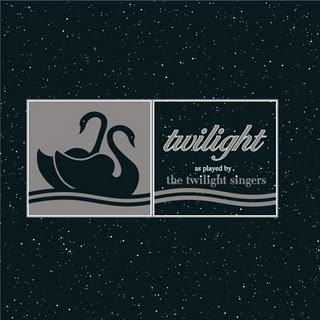
I caught up with the good-natured Dulli at Bowery Ballroom in 2000, when he was touring as the Twilight Singers for magical debut, Twilight As Played By The Twilight Singers. He was only too glad to cook up some herb at the club’s basement level as High Times’ cameraman took pix. I had fun joining him. He had a cool, calm demeanor and was seemingly game for anything. This article originally appeared in High Times.


“I’ve always liked High Times,” claims Afghan Whigs/ Twilight Singers frontman, Greg Dulli. “They’re a big fuck-you to the establishment.”

A native of Cincinnati and now a resident of Los Angeles, Dulli grew up listening to his parents’ Motown, Stax, and Philadelphia soul records.

“When I was a kid, I sold marijuana,” he reveals, “but didn’t smoke it. Don’t get high on your own supply. I bought a car with the money.”

While majoring in history and film at the University of Cincinnati, Dulli decided to play drums in a few local bands. So at the height of the grunge explosion, he assembled the Afghan Whigs, a highly respected underground band that skirted typical indie rock fare for a more soulful, lyrically expressive style.

Seattle-based Sup Pop Records released three Whigs albums before the band moved to a major label.

“When we were signed to Sup Pop around 1990, we knew we were never going to be Mudhoney or Nirvana,” Dulli recalls. “We weren’t from Seattle. We were from Cincinnati, where a lot of funk bands started. Bootsy Collins came from there. And the Ohio Players, Zapp, and Lakeside are from just up the road.”

During the recording of the Afghan Whigs celebratory 1965 album in ’98, Dulli also wrote what he describes as “a down-tempo mood piece to rock yourself to sleep to.” At the same time, he was temporarily living in New Orleans’ French Quarter with only a bicycle for transportation. The result, Twilight As Played By The Twilight Singers, is a lovelorn, despair-ridden record enhanced by the electronica/ acid Jazz-remix duo Fila Brazilia. Two of Dulli’s long time friends, Shawn Smith of Pigeonhead and Harold Chichester of Howlin’ Maggie, provide background harmonies throughout.

A warm, hypnotic aphrodisiac, Twilight compares favorably to Van Morrison’s symphonic epic, Astral Weeks, and Roxy Music’s lush Avalon. Though most of Twilight’s moody reflections depict the loneliness and sorrow Dulli felt after a courtship painfully concluded, the softly flowing acoustic ballad, “Clyde,” finds him seeking bohemian solace as he coos ‘baby doll, why you leavin’?/ come upstairs and get high with me/ the time is nigh for us to fly.’

Twilight is my version of New Orleans,” Dulli observes. “I’d already used a big brass section, boogie woogie piano and steel drums on 1965. Twilight’s more inspired by the ancient atmosphere of literary New Orleans rather than its musical one.”

Though the Crescent City may be the birthplace of marijuana-smoking in America, it’s still a long way from Amsterdam.

Dulli declares, “To me, it’s a fucking joke that you can’t smoke pot freely in America. Look no further than Holland. They have one of the lowest crime rates in the world and prostitution is legal. They’re legally allowed to grow marijuana. And it’s a harmonious society.”

As he continues to puff on a joint, he continues. “The tobacco and alcohol industries lobby against it. They don’t want anyone impeding their turf. I’ve never seen any one get into a fight who was stoned. But you see a lot of drunk people start fights. I’ve gotten to the point where I’d rather smoke a joint than drink a beer.”

Dulli usually refrains from getting stoned during the day.

“I want to make sure I have a productive day,” he says. “If I have to meet people for business, I don’t want to get too stoned. I don’t want to get distracted and concentrate on something else. The sun has to be down.”

However, he does make a few concessions.

“If I have a day off, I’ll wake and bake, especially if I’m on the beach,” Dulli admits. “I play in a six-foot-and-under basketball league. We all smoke a joint before we play. I’m an outside shooter. We went eight and two last year.”

BEAUTIFUL SOUTH RISE AGAIN… THAT IS, OVERSEAS

FOREWORD: It’s a shame the Beautiful South never made it in the US. Perhaps their singers’ British accent was too strong for mainstream American tastes. But singer Paul Heaton (ex-Housemartins) and guitarist David Rotheray formed a truly melodic partnership that rewarded true pop fans of all stripes. When they came to Manhattan to promote ’97s Blue is The Colour, I got to share many drinks with them at their hotel bar and then joined them at WABC’s East Side studio and watched them perform a short in-studio acoustic set and answer intermittient questions. Heaton’s satirical comments were precious. When asked about his sense of humor, he jokingly quipped, “I have no humor.” What was really exciting was getting to see the old soundboards and turntables used at the old 77 WABC – once the biggest pop station in New York City (lasting at the top from ’69 to ’78). Christ, I used to listen to those top 15 countdowns on Tuesday’s from ’71 to ’75, so those turntables really meant something to an avid music listener such as myself. Anyway, Beautiful South never had a US hit, but continued to roll along as superstars across the pond. ‘98s Quench and ‘06s Superbi I’m not the least bit familiar with. However, ‘00s Painting It Red was up to snuff and ‘03s Gaze wasn’t bad. This article originally appeared in HITS magazine.


Formerly a pub band from Hull, England, the Beautiful South write cynical folk-rooted songs that balance refined soulfulness with stoic neo-Classical arrangements. Singer Paul Heaton, formerly of the Housemartins (best known for the quirky liquor-ish anthem “Happy Hour”), and guitarist David Rotheray melt delicate imagery on top of soft, introspective compositions for their latest compelling work, Blues Is The Colour.

Although the Beautiful South gained superstar status in England with excellent singles compilation, Carry On Up The Charts, stateside attention has thus far been difficult to attain. Recorded in Holland, Blue Is The Colour features their 17th British pop hit, the pristine “Don’t Marry Her.” A seductive come-on sung by newest member, Jacqueline Abbott, it tests the boundaries of radio as she gently caresses the concubine sentiment, ‘Don’t marry her, fuck me.’

If Heaton and Rotheray’s wry humor was sometimes too British too comprehend, I was at least able to make it through the twisted colloquialisms. So it’s time to go to Hull and back with the Beautiful South.

Give me some background about your hometown of Hull.

DAVID: The best thing about Hull is it’s a backwater town that doesn’t pretend to be anything more. It’s a one-horse town and the horse has only three legs.

How do you explain the massive success of Carry On Up The Charts in Britain?

DAVID: There’s an electoral system in the Republic of Ireland that allows you to convert your party affiliation through a single transferable vote. That’s the same thing that happened to the Beautiful South. We always finished second to all these vogue-ish bands. Then, from the momentum of all our previous records, we finished first with the compilation. Instead of getting this silver medal again.

Do you think it’s difficult for the Beautiful South to get American airplay because the music cannot be easily pigeonholed?

DAVID: Possibly. It’s political. And non-exposure may be due to the white rascists who praise the ‘60s, ‘70s and ‘80s pop bands without altering the culture. But it’s not the fault of the listeners.

The elegant, delicately imbued first single, “Don’t Marry Him (Fuck Me)’” seems a bit extreme lyrically. Are you hoping that conservative American radio gods won’t be able to understand Jacqueline Abbott’s thick Brit-accented lyrics?

DAVID: It’s not a very acceptable word for a song, is it? Oh wait, I was thinking about our next single, “Big Daft Cunt.” (laughs) The danger in arranged marriages is you could fancy someone else and be stuck with this bitch forever. What Jacqueline is saying in the song is, ‘before you get into a life that sucks, fella, have a good time and party a little.

How does Blues Is The Colour differ from previous albums?

DAVID: It’s a bit bluesier. You can hear the vocals and guitar more. Instrumentally, we went into the studio and tried to make sounds we never did before.

Paul, how does your previous band, the Housemartins, compare to Beautiful South?

PAUL: To me, the Housemartins were always under pressure to complete an album. But with the Beautiful South, we had time to spend in the studio. Both bands are completely different entities with completely different sounds. I can’t remember what inspired me to write the Housemartins tunes the way I did. But I’d always say music was something that came naturally to me. I was comfortable with what I was recording and didn’t let someone else pull the strings to our production. You just stick to what you know and not try to be so conservative. Soundwise, my music may be conservative, but not lyrically.

You look more like the typical English bloke who’d hang out at the pub guzzling whiskey rather than a sensitive lyricist.

PAUL: Don’t you think that’s a typical American attitude of what a guy should look like? I mean, all a poet like Bob Dylan needed was a pen. Dylan means a lot to me. Fortunately, he had a great talent to write and that’s what he got judged on. It didn’t matter what he looked like. The people who rebel against the rural agricultural lifestyle take on the establishment and set the pace for those who come afterwards.

Why did you decide to record the new album in Holland?

PAUL: We did most of the writing in Holland, too. We went to different smaller towns to write songs. We woke up fresh in the morning with no hassles from the night before. It was very comforting. But the lyrics are so down and moody. It wasn’t like there were 600 girls waiting for us to finish up.

What artists do you think are taking risks making innovative music nowadays?

PAUL: I think some of the new English dance music is brave. Much braver than us. They take risks in the studio. They’re middle class kids who realize this is their chance. That’s why white working class music in Britain is much more conservative compared to these black American artists. The working class black people take risks and show their soul. When you look at the Country/ Western market, it’s so conservative. But the black market is so hip to taking further steps. That’s why rap’s short history is so amazing. Outside of ‘60s artists like Joe Tex and Taj Mahal, few people ever rapped to their music before rap came along. It has taken so many more steps. America is brought up on the music of the ghetto communities. We don’t have that in Britain.

Should Britain get rid of the royal family?

PAUL: Absolutely. To have a king and a queen in Britain is like having a fuhrer run Germany. What have they ever done except hang people, cut their heads off and invade half the world? But they act real quaint now. We should get rid of them. Why would somebody decent like Princess Diana marry into that family? You’re not given a chance to speak out.