MARK KOZELEK’S SUN KIL MOON MAKES ‘GHOSTS’ APPEAR

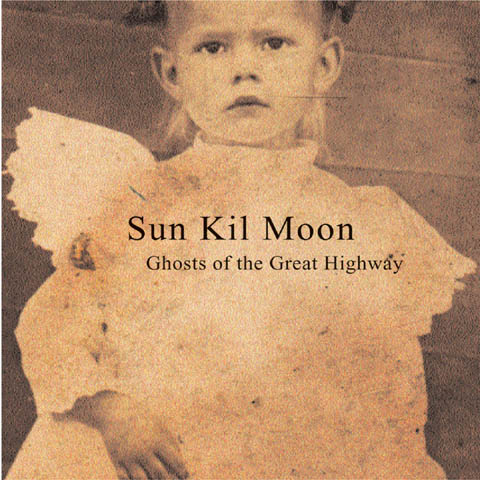
FOREWORD: Melancholy San Francisco-based singer-songwriter Mark Kozelek achieved a modicum of underground fame fronting the illuminating Red House Painters from ’92 to ’01. His revelatory autobiographical anecdotes also endeared a few solo projects as well as ‘03s Ghosts Of The Great Highway, a highly ambitious boxing saga credited to Sun Kil Moon (an appellation taken from a Korean bantamweight fighter). Kozelek has made appearances in a few films, including Cameron Crowe’s Almost Famous, and Steve Martin comedy, Shopgirl. His ’08 Sun Kil Moon undertaking, April, featured vocals by contemporaries Will Oldham and Ben Gibbard (Death Cab For Cutie). This article originally appeared in Aquarian Weekly.


Mark Kozelek’s distinguished acoustic-based meditations took hold when American Music Club’s like-minded Mark Eitzel discovered the lone Ohio-bred troubadour grappling to find acceptance. As Red House Painters’ mastermind, Kozelek began developing a reputation for writing protracted minimalist abstractions reflecting the misery, insecurity, and anguish of misspent youth. But don’t shed a tear for this laid-back singer-songwriter yet. A dreary low key hopefulness and compelling spirituality underline nearly every moody introspection he’s composed since ‘92s unvarnished Down Colorful Hill demos.

Living in mentor Eitzel’s hometown of San Francisco for more than a decade now, Kozelek sidestepped his band after ‘97s Old Ramon was reluctantly put on the backburner. In the meantime, he did a half-covers/ half-original solo EP, Rock ‘n’ Roll Singer, and used leftover AC/DC re-interpretations on the surprisingly heartfelt, What’s Next to the Moon.

“I enjoy surprising people by doing metal covers that make people cry,” Kozelek explains. “They say, ‘It’s such a sad song.’ I’m like, ‘Bon Scott wrote it.’ I’m not about wearing influences on my sleeve. I’d rather take a Kiss song, re-arrange it, and make it my own.”

Aided by new comrades, Kozelek’s latest endeavor, Sun Kil Moon, delivers the loosely thematic Ghosts Of The Great Highway, a grandiose dreamscape chock full of abstruse metaphoric allegories and unexpected boxing imagery mirroring true life experiences. His expressive monotone baritone drone effortlessly saddens haunted pastoral vistas, as he drowsily moans through the hypnotizing apologetic escapism of the pondering “Carry Me Ohio” and the relaxed six-string serendipity of the calm orchestral “Floating.” He slips into an elegantly mumbled falsetto whine on the tidy string-laden Spaghetti Western “Last Tide” and adapts Neil Young’s narcotic warble for the sleepy twin guitar sonic inducement “Lily And Parrots.”

Longtime Kozelek admirers won’t be disappointed by the melancholic longing hedging Sun Kil Moon’s solemn retreats. Just as Red House Painters’ brooding eponymous ’93 sets (the sprawling 75-minute rollercoaster-covered long-player and its less enthralling footbridge-cloaked follow-up) recalled deceased folk-rocker Tim Buckley – especially the graceful melodic seduction “Katy Song” and the pining lullaby “New Jersey” – the restrained nasal lyricism and lumbering atmospheric pace remain Kozelek’s trademark.

Moreover, ‘95s Ocean Beach flaunted naked blissful resolve while the subsequent pedal steel-adorned Songs For A Blue Guitar found our desolate hero going-it-alone on less expansive terrain such as the wispy “Have You Forgotten,” the distant title cut, and unanticipated slo-mo covers of Yes, Wings, and the Cars. Though delayed three years, the eloquent Old Ramon topped predecessors with its lithe tension, peaking on the arresting choral caress “Void” and the mellifluent guitar-ensconced shimmer “Between Days.”

Like the antique artwork and rustic home furnishings decorating his humble abode, wise sage Kozelek continually gains charm value.

Was it difficult making sullen songs sink in during the height of ‘90s grunge hype?

MARK: Before the Red House Painters records came out, I had difficulty developing an audience. I opened for Mark Eitzel’s acoustic band. But we were really slow so we had a major disadvantage when big bands were Primus, Jane’s Addiction, and Nirvana. I’d thought about working with producers, but they’d say, ‘What’s going on here?’ Interestingly, ten years later, incredible bands like Sigur Ros, Cat Power, and Low are doing extremely well. If they came out in ’92, they might’ve gone through the same struggle. But as an artist, I didn’t wanna do fast songs.

Is Neil Young an influence?

I definitely love Neil Young. I was introduced to music by neighborhood kids’ older siblings. My parents weren’t hip. They may have Bing Crosby records, but not Nick Drake or Pink Floyd. Bands like Led Zeppelin I got into at a young age.

While Red House Painters covered prog-rockers Yes, Sun Kil Moon’s opening track references Judas Priest guitarist Glenn Tipton.

There’s also references to Cassius Clay, Sonny Liston. “Glenn Tipton” was the scratch title. That came from being a kid arguing who the best guitarists were. You pick out the Scorpions, Iron Maiden, Judas Priest. Any band with two guitarists, you’d pick who’s better.

Many boxing allusions consume Sun Kil Moon. “Duk Koo Kim” was a Korean fighter accidentally killed by Boom Boom Mancini, leading to his mothers’ suicide.

The referee killed himself first, then the mom. I’m getting closer to knowing what that song is about. Partially, I wrote it on tour in South Korea. It’s more about things I was going through at the time. “Duk” is a metaphor for what I was worrying about in my personal life. Somehow deep down it made sense to use images of that fight.

You go South of the Border thrice. There’s “Salvador Sanchez.”

He was a fighter who died at 23 in a Mexico City car accident. His biggest fight was his last against Guyana’s Azuma Nelson. Sanchez had 42 wins, 1 loss, lived fast, died young.

Tell me about “Pancho Villa”?

The bizarre thing is there was a Mexican bandit, Pancho Villa, and also a Philippine boxer in the ‘20s named after him. He died in Oakland, 1925, from blood poisoning after getting teeth knocked out. After “Duk,” I heard Nina Simone’s “Four Women” and thought for the fuck of it I’d write a song about four men – four boxers – who died early, including Benny Parrett and Battling Shekee, who was shot to death in Hell’s Kitchen. All of them had hard, fast lives deserving tribute.

So that explains the title, Ghosts Of The Great Highway. Who, then, is Sun Kil Moon?

He was a Korean boxer who’s still alive. He was an ‘80s banterweight champ. Only in the last ten years did I get into boxing. You start watching as a series like The Sopranos. You get addicted. I’d wait for my girlfriend to get home from work to watch on cable.

Then, there’s the instrumental mariachi “St. Paloma.”

It’s just a folky acoustic song I recorded with Portuguese guitars. It’s like the Gypsy Kings. But that’s not how I expected it to turn out.

You played Almost Famous bassist Larry Fellows in the band Stillwater. Did director Cameron Crowe take their name from the ‘70s band that had a minor hit with “Mindbender”?

As far as I know, Cameron based it mostly, at least aesthetically and for the way Jason Leigh looked, on the band Free. The stuff in the movie happened to him (as a Rolling Stone reporter) with Zeppelin, Fleetwood Mac, and the Allman Brothers. We studied Free videos during rehearsals.

How’d the movie songs come about?

They were written by Cameron, Nance Wilson (Heart), and Peter Frampton. There were half a dozen with different people recording them. By the time I got down from San Francisco, they’d pieced it all together. They were going for authenticity and perfection. It didn’t take long to learn the bass parts.

You had a cameo in Vanilla Sky.

Now I’ve got a part in a Steve Martin movie. I hope I don’t get cut.

You served as producer for the John Denver tribute, Take Me Home.

Growing up, I didn’t listen to his stuff more than I did James Taylor, Cat Stevens, or Jim Croce. I felt when he died he deserved respect. It bummed me out no one acknowledged my borrowings from him. “Glenn Tipton” is a complete rip-off of his cover, “Darcy Farrell.” Consciously I didn’t steal it. But if you AB that with “Tipton,” it’s very similar. But he’s never been given credit as an influence. It’s always someone I don’t listen to. No one took him seriously so hopefully I showed people he wrote great songs by having Will Oldham, Innocence Mission, Rachel Haden, Tarnation, and Low cover him. Probably only a few thousand people bought the record, but now they know some new amazing songs.

You also seem inspired by your physical surroundings and nature – much like John Denver.

There are always references in my music, whether it’s parks, trails, ponds, lakes. As an artist you can’t help but be inspired by stuff around you.

ILLUMINATING ‘POT CULTURE’ GUIDE HITS STREETS 4-20

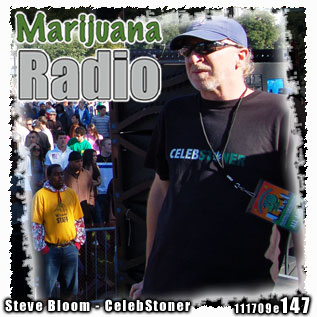
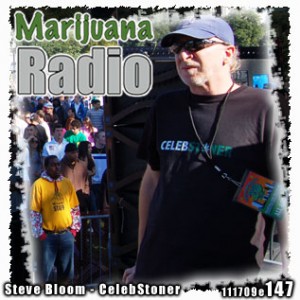
I first met Pot Culture author/ CelebStoner host Steve Bloom at, ironically enough, a 1st anniversary party for co-author Shirley Halperin’s now-defunct indie rag, Smug (one of my early writing gigs). It was a fortuitous night down in the Bowery at CB Gallery (an extension of illustrious dive, CBGB’s), since Bloom then hooked me up with High Times, the leading counterculture marijuana publication, a freelance job I’d only dreamt of. I took Bloom out for a bowl within minutes of meeting him, and my social life in the city, already topnotch, got elevated – more interviews with highlife celebs, better contacts, and softball with High Times’ infamous Bonghitters.

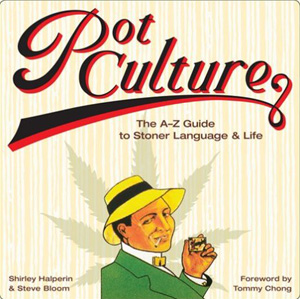
Alongside Bloom, Halperin, soon-to-be MTV editor Joe D’Angelo, and prominent photographer Dennis Kleiman, we essentially owned Roseland Ballroom at its indie rock height (‘93-’99), gathering at dozens of downtown shows, imbibing on-house drinks galore, smoking the best herb, and getting the freest tix. Halperin went on to prosper at Rolling Stone, US Weekly, and Enertainment Weekly, becoming a notarized celebrity hound frequently commentating for MTV, VH1, CNN, Fox, MSNBC, and E! I reminded her of a “long lost uncle.” She borrowed small amounts of cash, begged for late night rides back to Williamsburg, married renowned producer (and ex-Pernice Brothers bassist) Tom Monahan, moved to the Left Coast (boho hipster refuge, Silver Lake), and no doubt haunted Bloom to complete ‘joint’ endeavor, Pot Culture (Abrams Image). The tidy A to Z guide ‘to stoner language and life,’ readied for release April 20th (a.k.a. 4-20, the international time zone to toke up), is literally a Whole Earth catalog for fiendish weed demons and doobiously dawdling dabblers alike.

A fun read, Bloom and Halperin’s stony tome never directly snubs America’s antiquated marijuana laws, but indirectly encourages consenting adults to turn on, tune in, NOT drop out. Perhaps most easily palatable for skeptical dilettantes and casual readers are the purple-paged Pot Culture Picks, a nifty addendum encompassing favorite stoner movies, scenes, characters, and dialogue, plus druggy dramas, comedies, sci-fi, cartoons, slogans, and stony recipes –no to mention a handy section on best pot-influenced music!

Original onscreen stoner, Dennis Hopper (starring in summer of love flick, The Trip, and ‘69s preferred Easy Rider) is said to “embody the fear and loathing inside every pothead’s heart,” a re-contextualized phrase snatched from gonzo journalist Hunter S. Thompson’s exalted beat-styled treatise. Cheech & Chong are credited as the best pot comedic duo while Sean Penn’s Fast Times At Ridgemont High surfer dude and Carlito’s Way cocaine-inhaling mongrel afford him most famous solo pot act status.
Pot Culture should convince all but the most abstinent person to strike down ridiculously strict laws governing the friendly weed. Better yet, vote out the deadwood clogging our log-jammed congressional system. Free the weed and the mass will follow. (Download Charlie Daniels’ outspoken libertarian rally “Long Haired Country Boy” here for proper musical affect).

For the uninitiated, ‘pot’ unequivocally encourages and magnifies artistic ideas, enhancing all five senses. And let me add a vicious ‘fuck you!’ to wrongheaded androids denying marijuana medication to a bulky handcuffed populace. Only the most sober individual could validate an opinion against the cursed ‘evil weed’ since alcohol is dangerous while pot is, holy shit, probably not. Safer by a fuck-load than beer and wine, marijuana’s cautious harmlessness shames all legal drugs and habitual cigarettes. An unprocessed indigenous plant lacking negative long-term effects, marijuana guilelessly outshines alcohol, uppers, downers, nicotine, and recreational cocaine-heroin. Alcohol overdose kills 5,000 yearly while pot’s psychoactive intensification stimulates brain receptors and eschews toxins. Unlike alcohol, tobacco, and coke, its prenatal use does not, I insist, cause birth defects. So stuff that in your hashpipe during pregnancy!

As we indulge at former long-time High Times editor Steve Bloom’s spacious Brooklyn apartment, the Jewish redheaded Bronx-raised website publisher, movie reviewer, sports fan, Obama supporter, and conversational pot icon commences, “Pot Culture was Shirley’s idea. She lived in Jersey, went to Rutgers, started Smug, and came up with the stoner dictionary/ encyclopedia. While I was High Times editor in ’06, she contacted me and mentioned a proposal to collaborate on the book. She was still at Us Weekly. It’d been percolating in her mind since the ‘90s. Our combined experience as stoners – I represent the Baby Boomers, she reps the younger crowd – plus my professional experience as a marijuana journalist and her orientation with celebrities, combined for a tightly written Pot-o-pedia. We siphoned information and wanted an exciting book full of pictures like a magazine – full-page spreads, visual elements, and sidebars. My knowledge is deeper in marijuana history, science, and activism while Shirley takes on everyday stoners and how they speak and act.”

Before joining High Times in the early ‘90s, Bloom admits to being “a pretty average stoner oblivious to New York’s Washington Square Park rallies” and didn’t see himself as an activist. Coming up through the ranks, the future Central Park softball commish had broke into the biz writing for Downbeat, Soho Weekly, and Rolling Stone. He credits editors Jim Henke and Peter Occiograssi with giving him a break. Fortuitously, he enjoyed funk, soul, and disco, black music overshadowed by the ’77 punk explosion. He found his niche covering Kool & the Gang and Brothers Johnson (for $5) and kept the ball rolling. He interviewed James Brown for a Soho Weekly cover and became a lifetime friend of the Godfather of Soul. As video games took over local arcades, Bloom pitched an assignment then published his first book, Video Invaders. Music editor Henke allowed him to cover the coveted New Orleans Jazz Fest, Gladys Knight & the Pips, the Pretenders, and Eric Clapton.

“My peak piece for Rolling Stone was a feature on Wynton Marsalis. I was into the jazz scene and wrote for Downbeat early on. Wynton was a 19-year-old new on the scene. I pitched the story, called “Young Man With A Horn.” But I could never work my way into the Byzantine world of Village Voice. I didn’t like their stridently leftist view…and I’m a lefty,” he laughs.

Soon after, he got the gig that would define his bohemian lifestyle. As a High Times news editor, he became informed about the expanding marijuana community.

High Times was fun because it was advocacy journalism. I believed in the marijuana cause and wanted to change people’s opinion on legalization. I stress in Pot Culture how we don’t use negatives. The government spends billions convincing people marijuana’s bad. I didn’t want to play into that. We didn’t refer to pot as a vice or ‘lesser evil.’ It’s the opposite – within reason. Nobody should sit on a couch watching t.v. all day toking and being inactive. That’s the stereotypical perception – passive apathetic people with no life ambition. Be open for discussion. Pot may cause bronchial problems but is it causing cancer? No. And the THC in pot inhibits the expansion of tumors,” he insists.

The loquacious Bloom acknowledges modern marijuana is much stronger than the ‘70s stuff he used to toke. He admits marijuana was condensed, flattened out, seedy, brown, and came overseas from exotic countries back then. There wasn’t radiant green marijuana with flecks of red, orange, and purple covered by snowy oozing resin. Truly, today’s beautifully delicious plants with grown-out buds are spectacular.

Bloom goes on to explain the disparity between indica and sativa strains.

“There’s a genetic difference between tall, tropical, spindly sativa, an energetic, uplifting strain, compared to indica, shorter, bushier, tighter nuggets – sleep-inducing mountainous weed from Pakistan that withstands harsher weather conditions.” He swoons, “Most marijuana’s a combination now. Pure sativa is haze, but it’s been crossed. Indica is generally Northern Lights. I like mostly skunky, fruit-flavored indica with full taste that won’t make you gasp for breath strength-wise, but has a deep flavor you’d get from a Cabernet Sauvignon red. I love the fullness on the palate of a good strong smoke, the fruity bouquet and the nice heavy pull into your lungs that has a thick impact. From the second you smoke it, you think, ‘That’s good stuff!’”

Dutifully, Pot Culture advocates proper smoking etiquette. Lighting the corner of a bowl instead of passing a scorched pipe is an obligatory nicety. Childproof lighters are a no-no. And while pot smoking isn’t a replacement for nausea-inducing chemotherapy, according to singer-guitarist Melissa Etheridge’s 2-page scoop, it’ll ease the recuperative pain. Bloom encourages readers to move around the book instead of going front-to-back. The index quickly guides readers to subject matter. While lengthily discussing the stoner album covers illustrated, Bloom cites David Peel’s ’68 mandate, Have A Marijuana, as the first to feature the ‘good herb.’

Then my fifty-something buddy leads me on a journey through marijuana’s dark, glorious past.

“The book has a wide spectrum of data, dating back to the ‘30s Reefer Madness era. Actor Robert Mitchum and musicians Louis Armstrong and Gene Krupa’s marijuana arrests may go unrecognized as celebrities who took hits for being busted and suffering for their right to smoke. There was no NORML for protest. Following Jazz, the Beat’s in the ‘50s embraced marijuana. The Beats were influenced by jazz. Jack Kerouac was into Charlie Parker and be-bop. They were into pot – and Benzedrine, because they liked the upside of things. That was cool daddy-o!” Bloom continues, “They were puffing, drinking, traveling. The Beats led to the hippies’ ‘60s psychedelic era. Ken Kesey was part of the new generation coming off the Beats. He and Timothy Leary were the next players addressing the drug issue broadly. Kesey on the West Coast and Leary on the East were the first to proselytize LSD.”

Though Pot Culture focuses on natural narcotics (marijuana/ hashish/ mushrooms/ peyote), chemically altered drugs such as LSD and ecstasy, relatively safe if used properly, are discreetly endorsed while dangerous anodynes such as cocaine and heroin are shunned. The deaths of musicians Jerry Garcia, Rick James, and Gram Parsons are related to hard drug abuse, but none are traced back to non-addictive substances such as weed, schrooms, or cacti. Even Pink Floyd acid casualty Syd Barrett is listed as dying from “natural causes,” forty years after getting tossed from his acclaimed prog-rock band. Rightfully, college heads laughed at stupid government-aided anti-marijuana movies such as Reefer Madness upon its ‘70s re-release. Hypocritically, during World War II, the government actually sponsored brief film, Hemp For Victory.

“Jack Herer, author of pro-hemp scrapbook, The Emperor Wears No Clothes, and fellow activist, Maria Faro, traveled around during the ‘90s, selling t-shirts and going to DC’s Library of Congress, digging up Hemp For Victory, a 15-minute short patriotically saluting ten foot high hemp plants waving in the wind. The government wanted hemp for rope, parachutes, and ships. It’s strong, durable, and benefited our overseas effort. It became popular when Reefer Madness gained a cult following. Interestingly, NORML founder Keith Stroup discovered Reefer Madness, brought and released it in the ‘70s. Herer suffered a stroke recently but nonetheless has an initiative to legalize marijuana in Santa Barbara. He no longer travels to campuses.” Bloom continues, “I took on college tours to educate students while at High Times, discussing pot’s use beyond recreationally, as an industrial plant used for paper and rope or for medicinal purposes. The seed could be used for soap, shampoo, food items.”

Happily, the ‘90s decade was a boon for marijuana subsequent to the conservative ‘80s. Though decriminalized in some states during the ‘70s, the ensuing ‘Just Say No’ Reagan era had put a temporary crimp on the pro-pot movement. Presently, there’s a rebirth of activism ratified by California’s Proposition 215, legalizing marijuana for medicinal use. In fact, there are several worthy stoner inventions recently unveiled.

Bloom chimes in. “Indoor growing allowed American cultivation to expand. Kind bud is a stoner innovation. Many innovations don’t come from big corporations. It’s done through grassroots underground efforts. Glass pipes, grinders, and vaporizers were invented by reliable stoners. But if marijuana were legal, there wouldn’t be the pursuit for, and accentuation on, indoor growing. It’d be made available in many ways.”

Thankfully, Bloom’s CelebStoner site parallels veritable godsend, Pot Culture. The beliefs and travails of pro-pot dignitaries such as Willie Nelson and Tommy Chong are interspersed with ‘toking gun’ pot-related news stories. Top Ten Celebstoners, January ’08, included Snoop Dogg (number one), Bill Maher, Matthew Mc Conaughey, Cameron Diaz, Jack Black, and Woody Harrelson. Approximately one hundred pot-friendly celebs were recently listed supporting different ’08 presidential candidates.

Though he regularly samples high quality marijuana, Bloom contends the stronger stuff will allow people to smoke less and lead healthier lives. Just don’t mistake Bloom for a pro-cigarette espouser, since the harmful legal smoke, unlike marijuana, poses extreme health risks “poisoning the system.”

He exhorts, “Cigarette smoking is a plague that must be eradicated. I’m offended by laws that prosecute marijuana users when there are 400,000 people a year dying from legal tobacco. It’s a foul habit. It’s rude to see half-smoked cigarettes in the gutter. It’s gross. You may not like marijuana, but it’s not a despicable habit turning lungs black or affecting people around you. I steer away from cigarette smokers when walking down the street. Do it privately. If you can’t smoke joints in the street, why are cigarettes o.k.”

EAST BRUNSWICK HIGH GRAD FOREMOST BEHIND-THE-SCENES CELEBRITY EXPERT

Shirley Halperin, a diligent Israeli-American with a hard-working reputation enjoys the high-pressure life of a celeb reporter. The respected entertainment editor graduated East Brunswick High School, attended Rutgers University, then had the unmitigated nerve to drop out with one semester left to start Smug Magazine, New York’s best alternative rock source from ’93 to ’97. It was a ballsy move that earned her immediate indie cred, and subsequently, through US Weekly and Enertainment Weekly, aboveground notoriety. She’s consistently done television commentary, lending lucid content to Bravo’s 100 Funniest Movies, Britney Spears True Hollywood Story, American Idol Untold, and soon-to-be-revealed Pussycat Dolls True Hollywood Story.

Obsessed with popular culture and an admitted t.v. junkie, Halperin originally poo-poo’d reality shows, but now loves them too. Four years at Us Weekly befriending Hollywood stars prepared Halperin for more mainstream coverage at EW. Yet beyond the faddish reporting and hyped-up documentaries, the persevering lass decided to go back to her subterranean roots by anthologizing marijuana fun facts for Pot Culture.

“I’d been working on the book before I took the EW job. They’ve been supportive. As a woman in the corporate world, it’s difficult enough to battle. Luckily, I’m strong and independent. Some find that intimidating. But I also smoke pot,” Halperin affably permits.

Keeping up with Hollywood gossip while preparing for Pot Culture exposure, the industrious author used her L.A. connections to amp up mod marijuana coverage.

“I did a Rob Thomas ‘In The Studio’ piece for Rolling Stone. Within ten minutes he pulled out a bong. We became friends and he was the first person I called for a celebrity essay. The stoner bond is very strong. Once you smoke with someone, you’ve got common ground. On a certain level, we could relate strictly because of that,” she shares. “Adrianne Curry from America’s Top Model, who’s married to Christopher Knight (a.k.a. Peter Brady), is a huge pot head. It’s rare to find visible female celebs volunteering information. She talked about the troubles she went through hiding weed stench. She was very open. Not every stoner’s a lazy slacker that’s crunchy, dreadlocked, and tie-dyed.”

Unlike tobacco-averse Bloom, Halperin is an on-again off-again cigarette smoker (though Bloom smirks at the off-again part). She admits smoking cigs is hard to stop and agrees marijuana may not be addictive.

“Quitting cigarettes is tough. They’re extremely harmful and have become a great tragedy I still struggle with,” Halperin confirms.

However, unlike Bloom and I, she’s wearily unsure of marijuana’s dissenting quandaries. “Pot hasn’t been studied long enough to know if there’s physical and mental dependence. Are the carcinogens damaging? Are there any proven cases of lung cancer due to pot smoking? I don’t think so.”

One of Halperin’s favorite marijuana strains, Sour Diesel, has become increasingly common out West, where growers have seemingly perfected the once-indigenous East Coast bud. She understands there’s different smoke for different folk.

In step with Bloom, Halperin concludes, “I’ve learned from California Medical Law that certain strains are better for certain people. Sativa is lighter and gives most people more energy whereas an indica strain like Kush could put you to sleep. Some patients may need to be sedated to cope while others want to be invigorated and animated. So picking the right strain is important. People should be able to medicate for both common and uncommon ailments.”

No argument here.

In the future, the enterprising authors hope to publish updated Pot Culture guides, since technological advances, innovative methodology, and newfound material need amended ascertainment. One glaring omission may’ve been the exclusion of High School Confidential, an audaciously forward-thinking ’58 film featuring West Side Story ’Jet’ Russ Tamblyn and platinum blonde hottie, Mamie Van Doren. Brought to my attention by Bloom, the legendary drama is loaded with much of the jargon modern stoners still utilize. A fascinatingly sympathetic morality play informed by James Dean’s rebellious Rebel Without A Cause flick, it disses heroin but leaves open the argument against marijuana as a gateway drug.

JON SPENCER BLUES EXPLOSION BITE BACK WITH ‘PLASTIC FANG’

FOREWORD: The first time I saw Jon Spencer Blues Explosion, they played a brilliant two-hour set at CBGB’s. I had to piss halfway through but waited ‘til conclusion because I was pressed up against the right-hand speaker and could barely move. But that’s the kind of crazed adventure it is to watch these venerable Blues-punk denizens. I spoke to Spencer, second guitarist Judah Bauer, and drummer Russell Simins at Matador’s downtown New York office. Spencer was there first, so I got some tidy quotes off the rather shy front man. Then, the real fun started when his two co-conspirators showed up all loosey goosey. A sold-out Irving Plaza show followed a week later, where I hooked up with the trio backstage for some friendly debauchery afterwards. ‘04s Damaged, under the shortened moniker, Blues Explosion, was the last recorded outing for the threesome, as of ’09.

Currently, Spencer’s married to Boss Hog vocalist, Cristina Martinez. His ’05 side-project, Heavy Trash, benefited from eager spontaneity. Bauer backed Cat Power on an ’06 tour. And Simins was last seen at Bowery Ballroom in ’08 backing pre-teen brother-sister punk novelty, Tiny Masters Of Today. This article originally appeared in Aquarian Weekly.
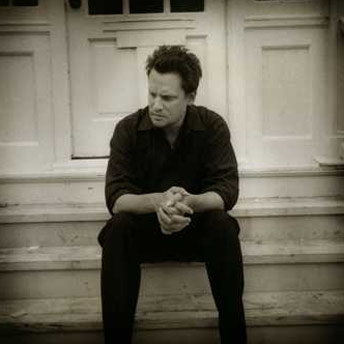
First and foremost, Jon Spencer Blues Explosion’s unbeatable live shows bring back the crazed excitement and frenzied sexuality of post-World War II Blues legends Muddy Waters and Howlin’ Wolf. Furthermore, skinny, jet black-haired frontman Jon Spencer’s gyrating pelvis and swiveling hips mutate early rocker Elvis Presley with Rhythm & Blues sensation James Brown. Finally, his spindly guitar mannerisms and rubber-legged duck walks imitate Chuck Berry and Pete Townshend to a tee.

New Hampshire-raised Spencer first gained ‘80s underground attention with New York scuzz-rockers Pussy Galore, which included Neil Haggerty (before hooking up with guitarist/ heroin chic model Jennifer Herrema as Royal Trux) and Cristina Martinez (Boss Hog leader whom Spencer married). After stints in the Gibson Brothers and Honeymoon Killers, Spencer borrowed the two guitar-one drum approach of raw-boned bluesrockin’ trio Hound Dog Taylor & the Houserockers and formed the New York-based Blues Explosion with like-minded Wisconsin-raised guitarist Judah Bauer and Long Island-based drummer Russell Simins.

Inspired by the unbridled amateurism of ‘60s garage rock compilation, Back From The Grave, ‘92s developmental Crypt Style! put this experimental blues-wracked combo on the map and ‘93s funkier Extra Width expanded their scope. But these deconstructive neo-Blues minimalists truly hit stride on ‘94s hip-hop-flavored Orange. From the Elvis-stoked title track and the soulful retro-fashion workout “Bellbottoms” to the name-checking boogie-shuffled chant “Sweat,” its rip-roaring appeal found an eager audience soon to be knocked out by the primitive Southern Blues of Fat Possum Records’ septuagenarians R.L. Burnside, Junior Kimbrough, and T-Model Ford.

One-off collaborations with Burnside and renowned funk soul brother Rufus Thomas (on the Stax-derived “Chicken Dog”) helped make ‘96s rural Blues-fried Now I Got Worry JSBX’s heaviest, hardest hitting set yet. Offering a more refined approach, ‘98s techno-infiltrated Acme (with additional remixes extracted for the arguably better Xtra Acme USA) depleted the scruffy shagginess of its predecessors for more structured uniformity. (Remix fans should check out indie rocker Calvin Johnson’s ancillary Dub Narcotic Sound System Meets JSBX)

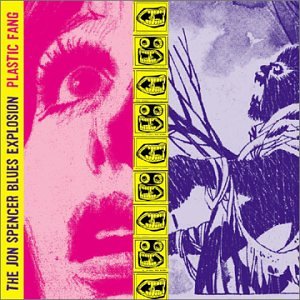
With their sleazy gutbucket ‘rawk’ still intact, ‘02s Plastic Fang chills with more consistent, persistent thrills. Spencer’s love of monster movies and scary beasts inform the demonic “Killer Wolf,” the blustery “Midnight Creep,” and the whiskey-bent “Down In The Beast” (where the ghosts of Screamin’ Jay Hawkins and Howlin’ Wolf meet Captain Beefheart in the backwoods). The wankering fuzz-distortion of “Shakin’ Rock ‘N’ Roll Tonight” recalls Keith Richards’ Exile On Main Street rhythm guitar work while “Over & Over” re-visits Chuck Berry circa ‘57. Big Easy pianist Dr. John and Funkadelic keyboardist Bernie Worrell punctuate the juke joint ditty “Hold On” and Spencer’s theremin blurts complement the icy “Point Of View.” Capturing Plastic Fang’s spontaneous energy and exhilarating performances was veteran producer Steve Jordan.

Last time I caught JSBX live was at CBGB’s around ’97. There was a line around the block waiting for tickets and then you proceeded to play for two straight hours. How’s the show changed?

JON: We just go out and do it and things happen on their own. The live show evolves in its own way. We’re playing all these new songs live for a year now.

How do you transform from a low key, shy guy off-stage to such a sexually gyrating extrovert on-stage?

JON: I don’t know. It’s crazy and puzzling. I’m sure it has something to do with where I’m from.

Did the thick, bushy moustache and beard you had last year influence the werewolf alter ego of Plastic Fang?

JON: Monsters and horror movies have always fascinated me. It’s fun for me. (At this point, Judah Bauer walks in and starts reading a copy of this publication)

What made you decide to work with a full-time producer for the first time?

JON: Steve Jordan, the producer, and Don Smith, who recorded and mixed it, are more traditional mainstream guys. They did a great job and are largely responsible for the way it sounds. We had a great time making Plastic Fang. It was hard work, but a pleasant experience. We were lucky to use really cool old equipment. Most vocals were done using incredibly rare, valuable, expensive microphones. We’re students of music and these producers showed us some of what goes on in the recording studio and how records are made. We just hit it off. It was nice to entrust someone else. They made small changes to a couple song arrangements.

Your vocals sound cleaner and more up-front.

JON: Don spent a lot of time with the vocals, going through specific syllables and words. For him to be able to hear the entire story was crucial. We had 19 songs, but mixed 17. We left some of those out so the album wouldn’t be super-long.

What influences affect your guitar playing, Judah?

JUDAH: I like the influence of open-string Delta Blues, like John Lee Hooker.

Besides JSBX, are there any current bands exploring the blues through rock music you enjoy?

JUDAH: There’s a bunch of bands influenced by the Blues. How ‘bout the White Stripes – one guitar and drums. The North Mississippi All-Stars are great Blues-influenced rockers. (The somewhat tardy Russell Simins now enters)

Is JSBX appreciated as much Down South where the Blues originated?

JUDAH: There’s a rock circuit we play. I don’t know if the small juke joints exist anymore. People down there don’t have the affinity for the Blues anymore. There’s more people up North into the Blues now. The kids Down South are now into hip-hop.

RUSSELL: I’m into DJ Shadow’s Brain Freeze with Cut Chemist. It was a series of cut-up 45’s with amazing funk and R & B sounds. They sampled these unknown 45’s and took ads like “milk is good for you” and made it sound new, fresh, and vicious.

JON: My favorite period of hip-hop was the early ‘90s with Public Enemy, Ice Cube’s Death Certificate, Dr. Dre, Snoop Dogg, the Geto Boys.

RUSSELL: There’s some great shit now, like Outkast. Their live show is unbelievable. On the Grammy’s, they were fuckin’ great. I also think that new Dead Prez record is cool.

Our conversation then slips into favorite t.v. shows such as The Sopranos, Family Guy, and Greg The Bunny. Then, the New York-based trio head out of Matador’s offices for some photography sessions.

-John Fortunato

JOHN VANDERSLICE & MOUNTAIN GOATS @ KNITTING FACTORY

John Vanderslice / Mountain Goats / Knitting Factory / Nov. 6, 2002

FOREWORD: Lyrical indie rock singer-songwriter John Vanderslice and Mountain Goats’ bard John Darnielle hooked up for this snug Tribeca concert during ’02. By ’04, Darnielle had hired Vanderslice to produce ‘04s We Shall All Be Healed. The next two Mountain Goats albums, ‘05s recommended The Sunset Tree, and ‘06s lesser Get Lonely, continued to unload hauntingly autobiographical retreats. I’m less familiar with ‘08s Heretic Pride.

As for Vanderslice, he went on to make several conceptualist albums, such as ‘04s Cellar Door, ‘05s instrumentally expansive Pixel Revolt, and Iraq War protestation, Emerald City. ‘09s Romanian Names is yet to be perused. This article originally appeared in Aquarian Weekly.
A polished cut above contemporary lo-fi bedroom recorders, San Francisco troubadour John Vanderslice and Iowa-based John Darnielle (Mountain Goats principal) sketch earnest minimalist folk for their growing minions. Looking dapper despite unkempt crops of dyed blonde hair, humble Vanderslice warmed up the sweaty, packed Knitting Factory with a reliable set of efficiently revelatory charmers.

Backed by former MK Ultra partner, bassist Dan Carr (Creeper Lagoon), drummer Christopher Mc Guire (Kid Dakota), and an off-stage sound booth sampler, Vanderslice alternated between acoustic and electric guitar. His flickering songs lost none of their emotional intensity, haunting anxiety, or conviction in live performance. He neatly contrasted ever-changing moods and abrupt tempo shifts, never getting overly sedate or conversely, too unsettled. In support of his critically acclaimed Life And Death Of An American Fourtracker, the veritable handyman brought an unerring honesty to bittersweet fare such as the neo-orchestral “Me And My 424,” the burbling earthy dreamscape “Under The Leaves,” and the reserved dirge “The Mansion” (with its nifty sampled South of the Border horns).

Bloomington, Indiana-born, California-raised Mountain Goats curator John Darnielle applied his expressive high-pitched baritone to Gaelic-tinged Anglo-acoustic songs, contributing whimsical between-song quips. His half-spoken vocal inflections straddled between urgent Billy Bragg insistence (minus the politics) and abstract Tim Buckley surrealism (sans weird eccentricities). Before bassist Peter Hughes came aboard to accompany the confident acoustic strummer, Darnielle broke out five resplendent postcard narratives full of everyday observations and imagery-laden vistas. With Hughes in tow, he spanned the Mountain Goats sprawling catalogue of terse trinkets going all the way back to ‘95s Sweden album. Some were thrifty openhearted love letters glimpsing into the artists’ fascinating trivialities and minor insecurities. He kept the audience in suspense with the solemn title track to his latest release, Tallahassee, then closed with another Florida-bound treasure, the UK-only single “See America Right,” a perilous post-jail fable about “driving up from Tampa.”

You could comfortably place these intelligent poet-lyricists next to convincing though less colorful, less charismatic, and drier DIY brethren Smog (Bill Callahan), Palace Music (Will Oldham), or Mark Eitzel. But I’d bet if you asked either one, ‘60s luminaries Bob Dylan, Leonard Cohen, and the above-mentioned Buckley inspired them more.

GARLAND JEFFREYS @ PARAMUS PICTURE SHOW

Garland Jeffreys / Paramus Picture Show / June 12, 2006

FOREWORD: Brooklyn-bred singer-songwriter Garland Jeffreys was a multi-cultured artist with an expansive stylistic range from soul to rock to reggae. His most popular competition became a semi-hit for unheralded rockers, the British Lions. In ’07, a year after this set at the now-defunct Paramus Picture Show, Jeffreys delivered respectful comeback, I’m Alive. This article originally appeared in Aquarian Weekly.

While inconspicuously walking down the aisle to the stage of this converted movie theatre for a criminally under-attended two-and-a-half hour Paramus Picture Show gig, biracial Brooklyn troubadour Garland Jeffreys politely quipped ‘how ya doing?’ before entertained adoring fans that hung on his every word. Alternately wearing several black and white fedoras that metaphorically matched the racial dichotomies of his mulatto ancestry, Jeffreys initially performed solo acoustic like he’d originally done in the early ‘70s at West Village coffeehouse Gerdes (where he paid to perform onstage).

Commendably working for goodwill charities when not rendering compensated performances, the sixtysomething Jeffreys’ voice held up fine, crackling only a tad at his upper register as his aching baritone dispatched vivid reflections and childhood confessionals. He brought up long-time partner Alan Friedman for the balladic lullaby, “New York Skyline,” before a full band consisting of veteran musicians (Mekons drummer Steve Goulding, bassist Bryan Stanley, electric guitarist Mark Bosch, and Zecca Esquibel) joined the close-knit duo for the scruffy “Rough And Ready,” danceably exuberant “Jump Jump,” and other ‘70s/’80s fare. The Gospel-derived anti-prejudicial “Don’t Call Me Buckwheat” got the crowd clapping along while “Matador” seemed eerily reminiscent of Van Morrison circa ’68.

After a short break, Jeffreys began the second set alone with two sullen down home acoustical Delta Blues. Then, he brought back his ‘Coney Island Playboys’ for the riveting rocker “Modern Lovers” and rootsy covers of Dylan’s “Don’t Look Back,” Muddy Waters’ machismo “King Bee,” and Jimmy Reed’s Bright Lights Big City.” His blisteringly nostalgic guitar anthem, “R.O.C.K.” and a perky version of ? & the Mysterians’ heartbroken garage classic “96 Tears” were saved for uproarious encores.

Jeffreys’ poignancy, grace, and dignity have only increased with age, as the multi-culti minstrel went through subtle Blues, contrapuntal reggae, and sociopolitical folk with relative ease (despite a few mike problems). A reluctant hero of the asphalt jungle, the Sheepshead Bay native asked for no quarter. He’s currently working on new material for indie release perhaps this summer.

JAYHAWKS LEAVE FANS WITH A ‘SMILE’

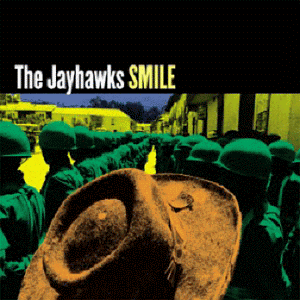
FOREWORD: At Maxwells in Hoboken (while my wife, Karen, ate hummus), I got to chat with Jayhawks main man, Gary Louris, prior to an enthusiastic set promoting ‘00’s demure Smile. One of the leading lights of the ‘90s alt-Country scene, Louris returned to the stripped down approach of earlier Jayhawks albums on ‘03s Rainy Day Music. Though his duo project with former Jayhawks partner, Marc Olson, Ready For The Flood, was subpar, Louris’ becalmed solo chestnut, Vagabonds, also released in ’08, proved to be highly inviting. And it was recorded in Laurel Canyon, the ‘70s singer-songwriter refuge for superstar troubadours such as James Taylor, Carole King, Joni Mitchell, and Crosby Stills Nash & Young. This article originally appeared in Aquarian Weekly.


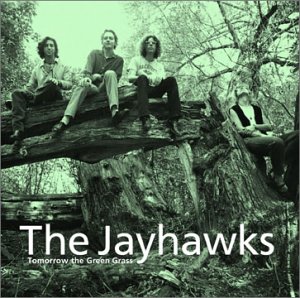
Along with the now defunct Uncle Tupelo (which splintered into Wilco and Son Volt), the Jayhawks were underground country-pop icons during the early ‘90s No Depression era. After ‘89s formative Blue Earth gained critical attention, their ‘92 classic Hollywood Town Hall refined lessons learned from influential country-rock legends Buffalo Springfield and the Flying Burrito Brothers while delving further into authentic, roots-based country-folk (best demonstrated by the timeless opener “Waiting For The Sun”).

Since co-founder Mark Olson left the Minneapolis combo after ‘95s well-received Tomorrow the Green Grass to marry singer/ songwriter Victoria Williams and live in the Arizona desert, vocalist/ guitarist Gary Louris has taken on the bulk of responsibilities. The re-configured Jayhawks (including bassist Marc Perlman, drummer Tim O’Reagan, guitarist Kraig Johnson, and organist Jen Gunderman) stretched into orchestral pop and sonic rock on ‘97s somber Sound Of Lies (which suffered from underexposure due to record label woes).

Without sacrificing their roots-y approach or leaving behind the deeply felt sadness of earlier works, the newly waxed and sarcastically titled Smile seeks instant pop accessibility.

The earnest love vow, “I’m Gonna Make You Love Me,” takes on the mainstream, balancing sweet, uplifting harmonies and rural mandolin earthiness with surging rock guitar energy. Low key ballads such as the tear-stained “Better Days,” the solemn, pedal steel injected Karen Grotberg – Gary Louris duet “A Break In The Clouds,” and the neo-Classical title cut counter blustery, feedback scorchers such as the implosive “Somewhere In Ohio,” the sturm and drang “Life Floats By,” and the wah wah-stricken “Pretty Thing.” Veteran producer Bob Ezrin (Alice Cooper/ Kiss/ Lou Reed) helped give Smile necessary guidance and direction.

How does Smile differ from Sound Of Lies?

GARY LOURIS: There’s a different emphasis. This album is more polished and thought-out. Two years ago, we went in the studio purposely unprepared just to see what would happen spontaneously. Good things came out of that. But there were some things I wish I spent more time on. We spent more time preparing, planning, arranging, and writing the new album.

“Life Floats By” and “Pretty Thing” go for a sonic rock bluster reminiscent of Neil Young and Crazy Horse. Are they a profound departure from your country-rooted auspices?

Growing up in the ‘60s and ‘70s, I listened to a lot of rock and roll on the radio. That’s the way it has been with the Jayhawks. It’s just that we had a different treatment. We like to play guitar and rock out. Most of what you hear on the new album has always been with us. It’s only coming out at this particular point.

How did Ed Ackerson’s mixing skills and Bob Ezrin’s production make Smile unique?

Ed is an interesting character who bridges the gap between Woody Guthrie and the Byrds and Stereolab and the Chemical Brothers with his band Polara. He listens and plays a lot of different music. He was respectful of our past, but was interested in experimenting. Bob likes to be a little mischievous and surprise people. He focused us and pushed us and told us to loosen up.

Do your country roots extend beyond Gram Parsons and his ilk to traditionalist forefathers George Jones, Hank Williams, and Lefty Frizzell?

When Mark Olson and I started the band, we listened to a lot of Dylan, Louvin Brothers, Merle Haggard, George Jones, and Porter Wagoner, plus weird ones like Tommy Collins. The bands Mark and I were in before the Jayhawks were rockabilly. They got us to listen to a lot of Americana and traditional music. At the time, we felt no one else was doing it and we were in a town that had Husker Du, the Replacements, and Soul Asylum. We wanted to find our own niche. So we fell into it.

Why didn’t country radio accept the Jayhawks, Uncle Tupelo, and the Bloodshot bands in the early ‘90s?

It’s very conservative. I don’t think we were a real country band like Merle Haggard’s Strangers or Buck Owens’ band. It’s really hard to play straight country. You have to have a really great country voice, which I don’t think we had. We put our own stamp on it. Country radio, by that time, was moving into a dull period and we never expected to get anywhere. We were a little too in between. We were traditional, yet non-purists, at the same time.

Did you mind getting lumped in as an “alt-country” band?

It was a mixed blessing. You have people who feel they’ve got you in a certain box. They don’t want you to change. After the last two or three records, we cleared the boards and said we’re flexible. We want to try different things. We may have alienated some people.

A major stylistic turnabout had to be “Somewhere In Ohio,” a song that seems to hearken back to your days living there. It has a syncopated dance beat and blustery guitar feedback.

Actually, Marc Perlman started writing a three-chord song with that drumbeat going. We had a drawing in our practice space that said “Somewhere In Ohio.” So Bob said, “You’ve got to make a modern folk song out of it.” Then we all got involved.

Many new songs rely on beautiful multi-harmonies.

When Mark Olson left, it changed the band. We didn’t want someone to step in and pretend Mark was never there. We didn’t want to show disrespect to Mark. So then we got Karen Grotberg involved, which gave the songs a whole different dynamic having a woman’s voice. Tim joined the band after the recording of Green Grass. So now we have three fine singers. We decided to do more creative vocal arrangements with this album. Plus, we were working on borrowed time since Karen was pregnant and it was hard for her to breathe. We had to go in short stints.

-John Fortunato

MARKY RAMONE’S INTRUDERS ANSWER ALL PROBLEMS

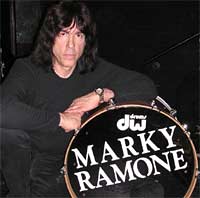
Marc Bell gained attention as drummer on Richard Hell & the Voidoids underground ’77 punk classic, Blank Generation. Shortly thereafter, he was invited to join the Ramones, the most influential rock band of the late ‘70s. In ’83, he was kicked out for alcoholism, but rejoined  in ’87. In ’96, when the Ramones finally parted, he kept the stage name, Marky Ramones, and formed fast and furious trio, the Intruders, with lead guitarist Ben Trokan and bassist Johnny Pisano.

While he may not be the best-known Ramone, and his new band hasn’t received much national exposure, Marky tells it straight, opining about punk’s denigration of prog-rock and Album Oriented Radio play lists, drug usage, and the untimely closure of cool St.Mark’s club, Coney Island High.

Following a self-titled debut on Thirsty Ear, they return with ‘99s stylishly diversified 14-song follow-up The Answer To All Your Problems? (Zoe Records). Lars Fredericksen of Rancid effectively updates Marky Ramone & the Intruders musical approach, providing dynamic production and a sonic hard rock crunch normally associated with West Coast punk bands.

While on tour, Marky engages the Intruders’ audiences with an interesting video slide presentation honoring the revolving punk scene his former band inspired. In his spare time, he plays with former band mate Dee Dee Ramone in the Ramainz.

How’d you initially hook up with punk icons the Ramones?

MARKY RAMONE: After being in Richard Hell & the Voidoids, Johnny and Dee Dee Ramone met me in Max’s Kansas City and decided they wanted me in the band. They knew I was not happy at that point because Richard and I had finished a tour with The Clash and when he came back home, he didn’t want to tour anymore. I did. So I got the offer from the Ramones.

To shift fast forward nearly two decades, many people never knew the Intruders recorded a ‘97 LP prior to The Answer To Your Problems?

The record companies thought the Intruders were just a whim and the Ramones were gonna get back together. Then they realized when I put out a second album that it wasn’t just for fun. It was a serious project.

How do the Intruders compare to the Ramones?

In the Ramones, it was basically a 4/4 beat. When I did this LP, I wanted faster songs and different time changes while keeping the Ramones rhythm underlying the songs. But I’m sure Lars, as producer, had something to do with it also. I wrote the songs before I knew Lars would produce. He put the icing on the cake.

Are songs like “Probation,” “Nobody Likes Me,” and “One Way Ride” first-hand accounts?

I knew a guy who was on probation because people would pick fights with him. There was nothing he could do. If he’d get arrested, the cops would think it was his fault. I sympathized with him and wrote “Probation.” “Nobody Likes You” was written by Ben. It’s about a spoiled, negative person. “One Way Ride” addresses suicide and being sympathetic about it. It’s about thinking twice before doing anything stupid. I did the Beatles’ “Nowhere Man” because I thought it was one of their best songs. It was an optimistic song when you read between the lines. Especially at the end where the line goes, ‘Nowhere man the world is at your command.’ Don’t be so down. “Life Sucks” is a funny song about a typical day of someone’s stressed out world. We all feel that way sometimes.

Joan Jett sings duet on the ‘60s girl group-styled “Don’t Blame Me.” I like the fact it was recorded in mono for rustic affect.

Thank you. I’ve known Joan for years. I always liked her singing. I thought, let me do a song with a Phil Spector feel. I learned a lot from watching Phil produce the Ramones’ End Of The Century. I put into that song what I learned. I produced it in mono because it has a different feel. Artists don’t record in mono because they think it will interrupt the flow of their LP or sound like a studio defect.

“Peekhole” seems directly influenced by ‘90s NYC hardcore. Do you enjoy hardcore?

The speed of that song was basically from Dee Dee Ramone, who wrote songs like “Animal Boy.” Dee Dee, to me, is the ultimate punk, always on top of things years before anyone else. But I’m not really a hardcore fan. I’m into pop-punk. The most important part of a song is the hook, choru

IMPERIAL TEEN ARE DEFINITELY ‘ON’

FOREWORD: Given adulation by avid indie heads, but never properly recognized by aboveground mainstream pop drips, Imperial Teen was at the top of their game when I interviewed Roddy Buttom and Jone Stebbins to promote ‘02s tantalizing On. But they took a protracted five-year sabbatical before the less interesting, introspectively mature The Hair The TV The Baby And The Band finally arrived. During that time, Roddy composed film and t.v. music. Jone became a hairstylist. Lynn Perko got married and had kids, and Will Schwartz started his own band, Hey Willpower. This article originally appeared in Aquarian Weekly.

Imperial Teen delivers infectious California pop that sticks in your head like a sexually charged sunny afternoon daydream. The alluring warmth of the sumptuous harmonies by guitarist Roddy Buttom (ex-Faith No More keyboardist), bassist Jone Stebbins, keyboardist Will Schwartz, and percussionist Lynn Perko caress leisurely cheerful post-New Wave euphoria.

For their third full-length, On (Merge Records), the catchy quartet expand moods, textures, and rhythmic design, contrasting wispy illuminations such as the sublime “Captain” and the slow burning lullaby “Undone” with the electronic indie pop of “Million $ Man” and the lascivious “Teacher’s Pet.”

Surrealistic anthem “The First” repeats an uplifting mantra gleefully, recalling Velvet Underground’s “Pale Blue Eyes” and David Bowie’s “Heroes” in its resplendent glow. But it’s the triumphant opening punch of irresistible melodic treasures “Ivanka,” the bubblegum-induced “Baby” (somewhat reminiscent of T. Rex’s “Hot Love”), and the insouciant psychedelic warbler “Sugar” that initially suck the listener in.

Formed in ’94, Imperial Teen soon found an audience with the engaging debut, Seasick. Thanks to MTV exposure, the insinuating “Yoo Hoo” (featured prominently on the Jawbreaker soundtrack) gained the attention of mainstream America and gave ‘98s impressive What Is Not To Love a leg up. However their record label at the time, London Records, was being tossed around like a French whore, ruining the much-needed momentum for further radio penetration.

Nevertheless, the co-ed combo stumbled ‘On’ and now find themselves on the undercard for the current tour by the re-formed Breeders at Bowery Ballroom.

What were some of your early musical influences?

RODDY: More than music, my mother was an influence. We played piano together. I got into Ragtime at an early age. Afterwards, I liked Elton John and pop. Then, I got into punk, moved to San Francisco, took a lot of drugs, got influenced by my surroundings, and began experimenting.

JONE: When I was younger, I didn’t get into Led Zeppelin until I moved to Frisco. My parents listened to Country and Big Band music. I found punk when I was 13. I didn’t listen to Classic Rock ‘til my twenties.

Roddy, was it difficult changing direction from being keyboardist in metal-edged Faith No More to co-leader in indie pop band Imperial Teen?

RODDY: Faith No More was very democratic. Everyone was involved. I was younger and there was more of a sentiment of where we were at that time, pushing buttons and getting in people’s faces. I’d moved from home to a strange, weird city, and went in that direction. Now, singing intrigues me more. There’s a lot to be said for the word, topic, and subject matter.

On utilizes more moods and textures than the past albums.

RODDY: Probably so. We got more studio-oriented. Our first batch of songs didn’t even use distortion pedals. They were just as we wrote them. By the second album, we had more time to get into the studio aspect. We’ve reached some sort of middle ground now.

I was particularly intrigued by the simple, melodic “Mr. & Mrs.”

RODDY: Everything we start writing begins in the studio. We were playing around with keyboards and drum machines. That’s about people we know in San Francisco. It was written during a nostalgic time when San Francisco was going through that weird dot com thing and its affect on commerce. It felt like a city was burning down.

I like the student-teacher fuck fable, “Teacher’s Pet.”

RODDY: I like the story of a person on the way up and the other on the way out. That’s what I tried to capture. “Lipstick” on the previous record, has the same vibe.

Many of your songs have a playful sexual nature.

RODDY: I hope so. That’s always the most fascinating and it pushes people’s buttons. I get more into specifics while Will gets caught in vague pictures.

JONE: Sex is an important part of human existence and becomes a factor in writing songs about situations in your life. You could read whatever you want into the lyrics.

Have your harmonies become more complex? Do you appreciate ‘60s vocal groups such as the Four Tops, Four Seasons, and Beach Boys?

RODDY: People regard us more like the Mamas & Papas as a singing group. As far as emotions go lyrically, I think that’s more important than where things go instrumentally. I’ve always related to harmonies.

Was “Ivanka” the opening track because each member gets a chance to sing lead?

JONE: It’s one of our older songs. When What Is Not To Love was finished, we had “Ivanka” done. So it’s super familiar and shows the essence of our band summed up in one little neat song.

Which pop bands currently knock you out?

RODDY: I’ve always loved the Breeders. They capture the moment with their songwriting and harmonies. There’s some San Francisco bands I like – the Aislers Sect and Track Star.

JONE: I’m listening to old ‘20s music. I have a ukulele project I’m working on half-assed with a few friends. We had disbanded Uncle Dickie & His Ukel-Ladies, but after the Kristin Dunst movie, Cat’s Meow, which featured ukulele music I like, it made me want to do “5’2 Eyes Of Blue.” But I’m not attracted to Hawaiian ukulele music.

Does Imperial Teen feel scandalously underappreciated? After MTV exposed “Yoo Hoo,” I felt you should have set the world afire.

RODDY: It seemed things were going that way. But Polygram’s merger screwed us up. We got caught in between. Only bands that are so safe and take no risks were a sure bet.

JONE: Radio in San Francisco is real bad. If those songs they’re playing are popular, I don’t wanna be played next to them. You’d thing there’d be an actual cutting edge commercial station considering the city’s history. There’s college station KUSF and Berkeley has KALX, but I think they share the same airwave signal.

-John Fortunato

INTERNATIONAL NOISE CONSPIRACY EXPERIENCE ‘SURVIVAL SICKNESS’

FOREWORD: Swedish Marxist, Dennis Lyxzen, initially headed hardcore garage-punk enthusiasts, The Refused. As front man for the equally politically charged International Noise Conspiracy, he ups the anarchistic rage. They put on a damn good show at now-defunct Manhattan club, Wetlands, in 2000, after I caught up with Lyxzen for some quotes. After Survival Sickness opened US doors, ‘01s A New Morning, Changing Weather increased the angst but didn’t compare favorably to its predecessor. However, ‘08s rampaging The Cross Of My Calling found the boys at the top of their game.

Dressed in a fully-buttoned dress suit and tie with a Beatles haircut, Dennis Lyxzen looks a tad out of place amongst the tattooed weirdos, mohawk-haired rebels, and straight-edge punks cornering the overcrowded Wetlands Preserve this Friday evening. While many fans have come out to see local faves the Rye Coalition, nihilistic Seattle band the Murder City Devils, and Minnesota’s Selby Tigers, quite a few seem interested in Lyxzen’s radical Marxist combo, the International Noise Conspiracy. In spite of his Swedish combo’s neat retro appearance and catchy ‘60s garage-inspired songs, their strong anti-Capitalist political beliefs lurk behind an innocent facade.

“When we play live, we hope to let people go home thinking, tapping their toes, and getting excited. We jump around and communicate radical ideas in a creative manner… revolutionary ideas that are passionate, sexy, and beautiful, but never dull and boring,” Lyxzen explains.

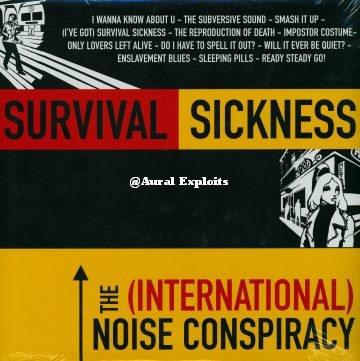
On the International Noise Conspiracy’s Epitaph debut, Survival Sickness, the song titles seem to perfectly express their underground ideals: “The Subversive Sound,” “Smash It Up,” “Enslavement Blues.” Grueling, ghoulish organ coats nearly every explosive rave up. The heavy guitar thrust of “Impostor Costume” is reminiscent of fellow garage revivalists the Chesterfield Kings. And the impulsive “Ready Steady Go!” ends the album on a rousing, beat driven note Fleshtones fans could relate to.

I spoke to Lyxzen a few hours before his bands’ enthusiastic, well-received midnight set.

Compare your work in Refused, which resulted in the thrilling ‘98 album The Shape Of Punk To Come, to the International Noise Conspiracy.

DENNIS LYXZEN: The feeling is similar. I was going through all these different phases, but ultimately I wanted to play what we’re doing now. Refused was just four of us into different stuff. When we started this band, we incorporated radical politics. When we play live, musically it’s more simple. We had to take a couple steps back to move forward.

I think the Noise Conspiracy is more soulful than most current so-called alt-indie punks. You compare favorably to Delta 72, the Mooney Suzuki, and possibly, the Lynnfield Pioneers.

It’s a resurgence. We come from hardcore punk backgrounds, but we all like soul, ‘70s punk, the Kinks, and garage rock. We just want to mix it up and not be a retro band, which is boring. We want it to be exciting to listen to.

The Swedish rock scene seems to be in full force with the Hellacopters, Gluecifer, and the Noise Conspiracy at the head of the pack.

I can’t explain why there are so many good bands. Sweden’s big enough that there’s a lot of bands, but small enough for healthy competition. People inspire each other immensely. It’s a healthy attitude. There’s a nice alternative underground scene. Maybe it’s because Sweden has community music schools. (laughter)

Your songs have a primal urgency. “Survival Sickness” and “The Subversive Sound” remind me of ‘60s garage rock legends like the early Animals, ? & the Mysterians, and the 13th Floor Elevators.

I love that stuff. The first time we practiced we did a Sonics cover. At first, we thought we wanted to sound like that, but we realized we were too good at playing music so we couldn’t play that type of music. One of my favorite bands from that era was the Music Machine. We’re down with that! I think what we try to do is trace punk and hardcore to its roots. All of a sudden you’re back in ‘77 New York, ‘68 Detroit, ‘65 Rolling Stones, then back to the ‘50s and Bo Diddley. We wanted to see where all this good noise came from and who inspired these guys to write their songs.

Your sprawling liner notes for the album talk of capitalist exploitation while embracing Marxism. Conversely, the lyrics never get as politically charged. Why?

We wanted to familiarize people with a danceable, enjoyable, and common sound rooted in popular culture and mix it with radical thoughts. We have to take into consideration that we don’t have all the answers. We’re just posing analysis of things that we perceive need changing.

How would you compare Sweden’s political climate to that of the U.S.?

America’s way more direct and brutal while Sweden is more liberal and not as extreme. Society is deteriorating with these neo-conservative agendas which are now infiltrating Sweden. People are dying of starvation while someone has five Porsche’s. Capitalist society is based on class differences. Bureaucracy uses the poor by making them produce materials they cannot buy on the market at inflated prices.

“Impostor Costume” seems to touch on that.

That’s about the collective changing of identity. It’s like waking up one morning and my name’s on a Wanted poster on the wall. I’m thinking, “Damn, I have to change my identity. We’re forced to be what our perceived roles in society dictate instead of getting an identity that suits us better.

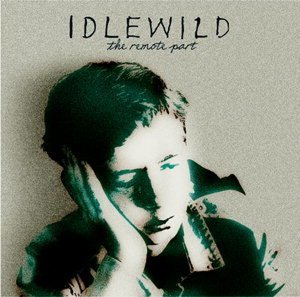
IDLEWILD CONFIDENTLY ENTER ‘THE REMOTE PART’

FOREWORD: Scotland’s Idlewild may’ve only registered with underground rock pundits here in the US, but overseas, their sweeping melodic symphonies continue to reach the charts. Initially a more punk-rooted combo, Idlewild grew into one of the finest symphonic exhibitors.

The following interview promoted ‘02s The Remote Part and Idlewild’s upcoming appearance at Coney Island’s Siren Music Festival (headlined by the increasingly popular Modest Mouse). They opened for Pearl Jam when I caught ‘em live at the Garden soon after. Since then, Idlewild put out ‘05s fairly solid Warnings/ Promises and ‘07s Make Another World (which I’ve yet to hear). I spoke to singer Roddy Woomble, whose ’07 solo folk changeup, My Secret Is My Silence, subsequently reaffirmed his versatility. This article originally appeared in Aquarian Weekly.

Just thirty miles outside Glasgow, Scotland, lies rustic volcanic haven, Edinburgh, sleepy hometown to current Brit-rock faves, Idlewild (and, offhandedly, former ‘70s bubblegum idols, Bay City Rollers). Formed by college art students Roddy Woomble (vocals-lyrics), Rod Jones (guitar), Bob Fairfoull (replaced on bass by Gavin Fox), and Colin Newton (drums), the feisty foursome enthralled local adolescent audiences with wildly energetic live shows, leading to ‘95s independently released “Chandelier” EP and ‘98s Captain mini-LP.

Promptly thereafter, ‘98s fascinating American debut, Hope Is Important, exhibited similar youthful indiscretion and rough hewn hardcore punk agility, rumbling through the urgently discordant “You’ve Lost Your Way” and the ballistic “Everyone Says You’re So Fragile,” yet countering the visceral paranoiac edginess with tranquil fragility. ‘01s better produced, melodically streamlined 100 Broken Windows blanketed the gauzy “Let Me Sleep” and the vulnerable piano-acoustic closer, “Mistake Pageant,” with extremely compelling lyrics. Indubitably, the rubbery, hook-infested “Little Discourage” and the raspy divergence “Idea Track” recalled the arousing mischievous clamor of earlier recordings.

Despite comparisons to introspective Radiohead tailgaters Travis and Coldplay, Idlewild’s ambitious The Remote Part reveals greater assuredness, matured sophistication, tighter arrangements, and more importantly, humble restraint. Terse cinematic epics such as the moody, string-ensconced opener, “You Held The World In Your Arms,” the poignant affectation, “American English,” and the yearning ballad “I Never Wanted” snuggle alongside the blistering anthem, “A Modern Way Of Letting Go,” and the unsettled exhortation, “Out Of Routine.”

What bands did you enjoy as a kid?

RODDY: At age 13, you fall in love with bands’ records, the songs they write, and record covers. That’s when I had an epiphany discovering REM, Smiths, Echo & the Bunnymen, Joy Division, Nirvana, Pavement. They blew me away. Then, when you actually go to the clubs and bands make these noises in front of you, you’re revelation is complete.

Did these influences inform Hope Is Important?

We were just a local Scottish band that’d been to London. Collectively we changed as people and as a band since half the songs from Hope Is Important were written during that period. That’s why that album sounds like a band just realizing who they are. I don’t think it’s a brilliant album, though it has its moments. At the time, we were more comfortable as a live band instead of a studio band. So the album suffers because we didn’t have the proper attitude. Then again, we didn’t know. Eventually, all the pieces fit and it all came together by 100 Broken Windows.

100 Broken Windows had better production and traded the previous albums’ caustic vindictiveness for sensitive melodicism.

There’s different ways to be powerful and get a message across. It doesn’t necessarily mean stepping on the distortion pedal and screaming – which was what we originally thought. 100 Broken Windows was a fully formed breakthrough album with good melodies. People took us more seriously as a band. In England, we were originally seen as a teenage indie rockers’ wet dream, but not very substantial. Now, people who have Windows figure we’ve past that stage and we’re a proper band.

You reach for deep introspection, allowing strings to punctuate the dramatic significance.

We’ve improved as songwriters. That occurs naturally after five years hanging with each other and listening to records. It was an evolution. Also, we have low tolerance for each other’s mistakes. There’s lots of groans before we decide what we like. That’s why the songs sound well arranged. We did many different arrangements before deciding on one we liked.

Rumor is Idlewild has 50 to 60 leftover songs from Remote Parts.

They weren’t necessarily completed things. They were parts, bits, chord progressions, and melodic ideas. Very few were completed songs. It’s more like a jigsaw puzzle on the floor.

Literary influences get scattered across your songs. Gertrude Stein gets mentioned on Windows’ “Roseability.” Walt Whitman gets his due on “American English” and Scot laureate Edwin Morgan recites “Scottish Fiction.”

I think written word is incredibly important. My mother was a big reader. Me and my sister always read books growing up. Through the band, I started writing lyrics. As Idlewild, a lot of our songs don’t deny the influence. You can inject riff heavy music with a lot of thought. The problem is when you namedrop poets, people think you’re some pseudo-poet pretentious geek. Maybe I am. I tried to shy away from that before, but I can’t deny what I am. That’s just my personality. I’m a big Walt Whitman fan. My interpretation of that song is to understand yourself in the context of the world. But many songs are misunderstood, so that’s a celebration of that.

That dichotomy tempers “(I Am) What I Am Not,” which may question God’s existence or, perhaps, sideswipe passive-aggressive personality.

It suggests different situations since everyone has so many different elements and characters. A lot of these songs stem from the environment I grew up in Scotland, where you do have to fit in a certain way since it’s a small town people live in their whole life. Even if you’re not like the people from your own town, you have to become them sometimes.

Some songs remind me of the spirited pathos Morrissey offered with the Smiths.

The thing I always related to with Morrissey was that his songs were quite hopeful. He was just recognizing what was around him without offering answers. That’s what we try to do. It’s not about being too negative or positive, like “come on, let’s smile.” Good songwriters don’t finger point or preach. I actually listened to Hope Is Important for the first time in ages and I couldn’t believe how much I screamed. I never did that live. There seemed to be this pure catharsis because I was very uncomfortable with my singing voice. I basically tried to sound like Superchunk’s singer. They were my favorite band at the time. But it didn’t sound like me. It’s like when you look at a photograph of yourself when you’re 18. You’re like, “God, did I look like that?” But I could see why truckloads of English teenagers accepted us as their band. We were the same age rolling on the floor screaming. Now, these people have grown up with us and we’re reflecting their lives in a different way with our music.

Are some hardcore fans disappointed with Idlewild’s pensive ballads? Early live performances were brazenly shambolic.

I don’t tend to that. There are plenty of new bands coming around every year doing that. Now there’s the Libertines. It’s not a genre in danger of dying out. As we get older and try to prove something to ourselves, the songs get better and individually we play better. Our audience is younger in Europe because in America we play small clubs for only 21 and over. So we appeal to college kids, whereas in Europe, we have young teens listening. Our songs are now played on Radio 2, which is the adult Easy Listening station. There’s a broader fan base in Europe. I hope with the exposure of our record in America we’ll develop a connection with the normal public – not just indie rockers. It’s straightforward in England. If the song’s good, it’ll get airplay. Everything in America is so political and you have to fit in formats. Our songs weren’t played much on British radio before this album, but we definitely had d.j.’s who were fans and spun the records. With “You Held The World In Your Arms,” people who’d never heard of us accepted it and we followed up with “American English,” which I think is a better song. It was played to death and the LP went straight to #3. It wasn’t rocket science, just a good song. Our songs aren’t obscure. They’re designed for everyone to relate to, make a connection, and sing along to. It’d be sad if our album was unnoticed by people that would otherwise like it.

The world is depressing, so you have to celebrate small victories when something good happens. Mc Donald’s is the most popular restaurant in the world making the shittiest food in unethical manner. That’s sad as well. When a brilliant band actually fills up a club with people who really like them, it’s a minor triumph. But the general public will only accept one or two new bands each year. All the rest of the great unsung bands end up working at coffeeshops. That’s depressing. I thought the White Stripes acceptance was great. They’re essentially a real weird li’l indie blues band making perfect pop songs on analog tape and there’s just two of ‘em. Now they’re massive.

What’re you listening to lately?

I like Neko Case and just picked up her album with the New Pornographers. Cat Power’s record is my favorite so far this year. My favorite rock band is Queens Of the Stone Age. I’m a huge Bright Eyes fan as well. I’m anticipating the release of Mars Volta, ‘cause I was a big At the Drive-In fan.

ICARUS LINE GOT A RIOT GOIN’ ON

Image result for icarus line

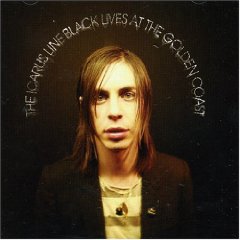
FOREWORD: Boisterous punk-fueled L.A. group, Icarus Line, enjoys partying as hard as anyone. And you’ll see in the following piece, they’re not averse to fighting. I had these fuckers laughing their asses off at some insidiously rancid comments made about sexual positions prior to dinner in their tour van. Heavy metal fans should definitely check out ‘04s rambunctious Penance Soiree.

Icarus Line’s obnoxiously loud and totally exuberant 9:00 set at Point Pleasant ocean club, Jenk’s, scared the shit out of uncool locals, but satisfied everyone else when they opened for indie pop vet, Evan Dando, in springtime ’07. They were on an East Coast tour supporting Black Lives at the Golden Coast, a decent follow-up nowhere as great as Penance Soiree. This article originally appeared in Aquarian Weekly.

Easily one of the most commanding punk-metal outfits currently making the rounds, Los Angeles quintet Icarus Line stormed the West Coast aggro-rock scene in ’98 with cantankerously verbose Hellcat Records 7″ EP, “Highlypuncturingnoisetestingyourabilitytohate.” Armed with an artfully brutal complexity twice as rebelliously unapologetic but not as influential as still-vital precursors Queens Of The Stone Age, the battle-scarred dilettantes again collided Joe Cardamone’s fierce primal screams with jaggedly side-winding six-string menace and rumbling rhythmic propulsion on urgently apocalyptic breakthrough, Mono.

In high school, Cardamone enjoyed thrillingly likeminded cataclysmic daredevils Drive Like Jehu, Jesus Lizard, and Born Against. Yet those influences were “down the road,” since his parents initially enforced British Invasion bellwethers the Beatles, Stones, and Kinks.

“My first concert was Guns ‘N Roses. That made me reevaluate my life – Appetite For Destruction. Every year there’s something new knocking me in the head,” claims Cardamone.

Forging a muscular post-hardcore framework, Mono’s claustrophobic anxiety consumed abrasive gearjammers reeking of the same demonic austerity Detroit beacons the MC5 and Stooges brought forth in ‘69. A commendable long-play debut, it revealed definite DC punk underpinnings, but not Fugazi and Minor Threat so much as fleeting Monorchid’s chillingly maniacal Who Put Out the Fire? Boldly determined push-n-pull Nirvana-spun exhilaration “Feed A Cat To Your Cobra” solidly represented this primordial bastion. When Icarus Line’s boutique label Crank! went out of business, Buddyhead Records suitably picked up distribution.

Signed to V2 Records, ‘04s even more audaciously radical and startlingly original, Penance Soiree, suffered only from damning major label impediments. An explosive powder keg light years beyond underground metal expectancy, it may’ve went largely unnoticed by the general public yet assuredly intensified their clandestine fan base. Mono felt like a stony collision, but Penance Soiree hit harder, a valiantly tempestuous comedown of bulldozing blitzkriegs packing sharp barbs, panicked volatility, and suicidal rage. Lubricious scorcher, “Up Against The Wall Motherfuckers,” spews migraine-inducing venom at unsuspecting libertines bothered by Icarus Line’s squalid corporate sell-out. “Spike Island’s” loose Exile On Main Street pulse, gothic Ministry duskiness, and phase-shifting psychedelic guitars nearly betters “Kiss Like Lizards” flailing Soundgarden seethe. Fellow L.A. pals, the Willowz, ostensibly built a career around “Getting Bright At Night’s” wailed snarls and whiny slurs.

“V2 was good to us, but by the end of the day, they wouldn’t let me make the record I wanted. They wanted me to demo,” the betrayed and never dismayed Cardamone says. “Steve Aoki I’ve known since he went to college. We played shows at his apartment. So we signed with Dim Mak. It’s a good situation for us.”

Three years hence, Black Lives at the Golden Coast keeps up the sordid petulance while exploring a colorful array of unanticipated glam, prog-rock, and balladic ideas. The Melvins and Mudhoney’s grunge-y fury still infiltrates many cuts, but its imposing thematic expanse unexpectedly hearkens back to a forebodingly anguished Rhythm & Blues classic.

When confronted with my erroneous ‘agonized minority scenario,’ Cardamone contends, “I wouldn’t attribute Black Lives to suffering anymore than black music. It’s our take. It could be perceived both ways. But it’s more about Sly & the Family Stone and (soul singer) Bobby Womack then detention centers and drug busts. Rock came from black music, but nowadays kids aren’t influenced by that. Sly’s There’s A Riot Goin’ On completely blew my mind. It was a huge influence – very disjointed and unhinged. Pieces don’t always touch and connect. There’s sparse moments when you don’t know what the fuck is going on.”

Intrinsically uplifting, straight-ahead, and approachable, Black Lives may put-off longstanding lunk-headed metal freaks, but its grueling kaleidoscopic malfeasance proves captivating. A brazenly existential streak runs through bombastic opener “Black Presents,” yelped Jane’s Addiction redolence “Frankfurt Smile,” and resonantly shimmering U2-twinged guitar ballad “Victory Gardens.”

“We took traditional avenues towards songwriting, which was more of an enjoyable challenge than before,” Cardamone insists. “I’m 28. I wanna listen to a song. I wanna write a song. It’s pretty simple.”

An affinity for free form modal Jazz icons Ornette Coleman, Charles Mingus, Sun Ra, and John Coltrane informs Zeppelin-like purge “Golden Rush” and ominous declaration “Kingdom.” Lyrically, Cardamone’s itchy distemper and colossal savagery remain, but his cognizant expulsions rush miles ahead of Icarus Line’s compulsive sonic noise brethren.

“Some people want angst-y teen shit. But I attribute better lyrics to age and experience. You place higher value on relationships and how people are treated. Personal politics are more poignant than anyone starting a riot,” he points out. “Drums, vocals, and bass were put up front like a Motown, dub, or hip-hop style. The guitars are used for texture instead of main chainsaw melody. I didn’t want to do the same shit. It felt good. It’s a pretty regimented evolution, hopefully not too calculated. We’re trying to make records that hold true to what is the soul and fabric of what we are. Being comfortable as a singer on Black Lives was a big step up, telling stories and getting listeners into our world instead of just using the voice as another instrument. We’re expressing vocal patterns in tones like Mike Patton (Faith No More/ Tomahawk).”

Hooky glam-rock turnabout “Gets Paid” may catch fans off-guard, but its sexy Bowie/ T.Rex playfulness works as an aphrodisiac.

“It’s basically the same song as Penance Soiree’s “Party the Baby Off,” but in a different key.” He snickers, “Maybe I can sing now and have a good time putting a smile on people’s faces. Its video is bangin,’ done live like Lou Reed’s Rock & Roll Animal. Lou Reed wrote some of the best heavy rock and roll tracks.”

Choice California anthem, “Slayer,” written while Cardamone resided in a hotel, evokes unfettered West Coast spirit without sounding as mainstream pop as Sugar Ray. Conversely invoking Mars Volta proggish tendencies, the hurtled “Amber Alert” deals with child abduction like horror movie directors John Carpenter or Sam Peckinpaugh, where the kid gets chopped to pieces.

At spacious beachfront Point Pleasant club, Jenk’s, Icarus Line’s initial chaotic wankering emanates from a scraggly scrum as they warm up for Evan Dando’s latest Lemonheads. Cardamone’s howled caterwaul pierces book-ended guitarists’ James Striff and Jason Decorse’s frayed edges, bassist Alvin DuGuzman’s burrowing rhythm, and Jeff ‘The Captain’ Watson’s tribal thump. Their feral bravado goes full force. A murky, sped-up version of “Gets Paid” gains fervid crowd approval. An electrifying miasma spreads across the vast lounge, as the screeching axes emit increasingly massive shard sparks of deafening wattage. By the sweat-drenched mutilated epilogue, friends, family, and followers are thoroughly satisfied (if a bit fatigued), as well as a few previously unconcerned beachcombers, several foxy fillies, and some older folks.

Nonetheless, instead of concentrating on Icarus Line’s fertile studio creations or restlessly vociferous shows, the sensationalistic music press has concerned itself more with the controversial adventures these offstage hooligans enjoy. Former guitarist Aaron North (Buddyhead owner now in Nine Inch Nails) unknowingly drunkenly mishandled Texas legend Stevie Ray Vaughan’s guitar at the Hard Rock Café and the band painted ‘$uckin’ Dick$’ on the Strokes tour bus.

Drummer Watson (back in the fold following the departure of five different skins men) recently managed to get into a skirmish with faux-metal contemporaries Avenged Sevenfold at England’s Leeds Festival.

“All five guys tried to fight him. They didn’t like the way he looked with his t-shirt off. TV On The Radio came to his defense. They rescued him from getting demolished by the band and some Paul Bunyan-looking guy.” However, Cardamone admits, “Jeff was out of his mind drunk. Girls called him over to the table and they were laughing at his jokes and Avenged Sevenfold got mad. They tried to get him away and he said, ‘Fuck you!’ Then it escalated.”

-John Fortunato

JOLIE HOLLAND MAKES GOOD IN ‘ESCONDIDA’

FOREWORD: Roots-y Country-Blues devotee, Jolie Holland, utilizes primal Jazz, rock, neo-Classical, and vaudevillian sources to get across her unconventional musings. Treasured beatnik crooner, Tom Waits, became a fan when he heard Catalpa, a scrappy homemade recording. I got to speak to Holland prior to a Maxwells gig in ’04. She was supporting her first proper studio album, Escondida. Thereafter, she only got better, as ‘06s Springtime Can Kill You and ‘08s The Living And The Dead attest. This article originally appeared in Aquarian Weekly.

Sometimes the past refuses to recede in our memories, reassuringly taking us back to an innocent time when skies were bluer, air was cleaner, and grassroots music more genteel. Bringing back the spirit of those witheringly weathered days is Jolie Holland, whose euphonic inflections and old timey visage revisit, rekindle, and re-acknowledge well begotten olden relics.

Born and raised in Houston, the singer-guitarist-violinist then spent adolescence in a family-owned east Texas home just a few hours northwest of musical Mecca, the Big Easy. Her initial public performance in a local band (as rhythm guitarist) happened at the tender age of sixteen before subsequently securing several solo gigs. Though Holland’s parents assumed she’d attend college and land a high powered corporate job, the free-spirited bohemian began paying more attention to the ragtime Blues of guitar pickers Blind Willie Mc Tell and Elizabeth Cotton.

Yet Holland didn’t get deep into the Blues until she left the Lone Star State for San Francisco, meeting many respectable musicians who shared similar interests. Thereupon, she inhabited Vancouver’s drug-addled ghetto as lead songwriter for the earthy Be Good Tanyas. After splitting from the group over “creative differences,” Holland made a staggeringly admirable bare-boned demo that reached the hands of reputable bard Tom Waits, an undeniably meritorious “role model.”

Captured in a living room, the resulting Catalpa was then given proper release by Waits’ current label, Anti (a subsidiary of established L.A.-based indie, Epitaph). Interspersing hokum Country alongside modern folkloric peculiarities, its courageously naked rural-bound compositions express intimate confidentiality and draw frank comparisons to Alan Lomax’s archaic field recordings.

In November ’03, Holland entered a formal studio with veteran Jazz drummer Dave Mihaly, fellow six-stringer Brian Miller, and other recruits for the lovely Escondida. From delightful Cajun waltz, “Sascha,” to flickeringly tingled sedation, “Darlin’ Ukulele,” and lonesome bluegrass refuge, “Faded Coat Of Blue,” her cherished cabaret poignancy reveals astoundingly plaintive vulnerability. In spite of its homey upbeat Tejano feel, “Goodbye California” deals with untimely suicide, perhaps paralleling the Piedmont-forged death tales of yore.

Wearing an antiquated petticoat dress, knee-high stockings, golden brown shawl, and black granny shoes, the bespectacled, full-figured bumpkin held the half-seated crowd in the palm of her hand at Maxwells in Hoboken, hypnotizing the awestruck minions with understated poise usually reserved for torch song bearers twice as experienced. Holland’s witty self-deprecation, genuine wide-eyed smile, and hippie-esque vagabond countenance kept the audience engrossed despite flubbed improvisational attempts at familiar rudimentary originals and one temporary mid-song bungle.

Notwithstanding these few errors, Holland’s sweetly demure voice possessed this backroom club whether she served up back porch folk, melancholy Western swing, or operatic Jazz. She broke out a violin for a Native American instrumental dirge that slipped into the somber “Alley Flowers.” When her violin fucked up during another number, she recovered brilliantly, succinctly freestyling a cappella lyrics to eventual applause. The sullenly majestic “Drunk At The Pulpit” satiated silenced attendees as a supinely restrained encore.

Why’d you move from the Louisiana-Texas Jazz-Blues hotbed to San Francisco?

JOLIE: I love New Orleans, but to live there, what job would I have – working in a bar around drunken people. I settled in San Francisco and was introduced to amazing musicians I wanted to work with.

Then you moved to liberal-minded marijuana vista Vancouver to be in the Be Good Tanyas. Were you also a stoner?

No. I’m extremely moderate. I lived in a rough neighborhood – 50% HIV rate. It was hard to go out at night because there were junkies everywhere. But I met great people and wanted to see what the city was like. I’m back in San Francisco living at the Golden Gate panhandle. It’s a tourist-y area.

Are Jazz-folk singer-songwriters such as Joni Mitchell or Rickie Lee Jones influential?

I hate Joni Mitchell. I respect that people like her but she’s not singing to me. I can’t stand Rickie Lee Jones. I’d like her if I could understand what she was singing. I’m from the street so I wanna hear what you’re singing or I won’t drop money in your hat. When you mumble, it makes people think you’re not serious. But I look forward to hearing her new album. Most radio songs are bad and the Blues stations play boring new stuff. I didn’t even realize there was good rootsy Blues until a friend turned me on.

Since Catalpa was recorded in your living room, will those songs ever be given proper studio treatment?

My band’s really creative and versatile. Every song I’ve recorded I’ve done 20 different ways. I’ve done Catalpa songs with huge horn arrangements or with guest rappers. I probably will re-record some differently. “Sascha” and “Poor Girl’s Blues” are the oldest songs I’ve ever recorded.

Getting to Escondida’s nitty gritty, you begin with “Sascha,” a diva-esque torch song.

That’s an early Jazz-pop-styled tune. It’s inspired by anarchistic New York writer Sascha. We hung out and had a sweet relationship that motivated me to move out of Vancouver. “Sascha” represents me having a melody in my head and not knowing how to put chords behind it. It had seven chords – which is a lot for a song. I learned more about musical theory before I could finish that.

“Old Fashioned Morphine” reminded me of Billie Holiday, who struggled with heroin addiction.

I love Billie Holiday. But that song doesn’t refer to recreational morphine use. I’m using it metaphorically. I wrote that to amuse myself while waitressing. I’d just read a book about medicine history and my grandfather had just spent his last months on morphine.

Its post-midnight trumpet setting comes closest to Tom Waits’ oeuvre.

It’s funny you mention that. The trumpeter is my friend Ara (Anderson), who was lucky enough to get called by Waits to play on his last two records.

Are you into similarly styled folk troubadour John Prine?

I’m not a fan of his (nasally Dylan-esque) voice, but I love his songs. I do “Christmas In Prison.”

Does the lilting velvety piano ballad “Amen” come from Gospel spirituals?

The most direct inspiration is (acid folk weirdo) Michael Hurley. I love his records. He inspired “Amen’s” wacky arrangement. When you listen to his songs, structure seems to make sense, but then it jumps out of key in strange moments. His songs have an internal sense, tight flow, and strong nucleus communicated in a strong way. He’s so inspiring. “Amen” was written off the top of my head on a full moon night on piano at a crazy practice with his principles in mind.

Then there’s “Poor Girl’s Blues,” a down home Appalachian folk-Blues tune.

At the time in ’95 (when it was written), I was listening to early Dylan, like Freewheelin’ or Another Side.

The quietly strummed gentle persuasion, “Do You?,” has a hushed lilt Norah Jones would appreciate.

I don’t know her but I have 10 friends in common with her. I was in a band with someone who wrote “If I Were A Painter” for her first album. I’m a friend with her first manager. She’s in the family, coming out of a musical circle I stepped into in San Francisco. People are annoyed they hear her too much. But she’s younger than me and I’ve been around longer so she’s not an influence.

Are you into British Isle folk by Fairport Convention or Richard Thompson?

Be Good Tanya’s “The Little Birds” was up for best song on BBC, but we lost to (Thompson’s ex-wife) Linda Thompson. I don’t know what she sounds like. I’m so broke (I can’t afford records).

How might future recordings differ?

I have different ideas. I have an unreleased live record. There’s an element of sketchy rock and roll not represented on either of my first two records so I wanna lay down that rock sound I represent live. I also wanna do a pristine Jazz-slash-Country record with dance songs you could imagine couples dancing to wearing tight jeans.