STEREOLAB CONCOCT ‘DOTS AND LOOPS’ FOR ‘COBRA’

FOREWORD: Arguably the finest purveyors of easy listening ‘90s lounge-core, London’s stimulatingly minimalist combo, Stereolab, mixed gauzy ‘60s-styled French noir and classy ‘50s cocktail music with Teutonic kraut-rock machinations in a uniquely fun way.

The title of ’93 EP, Space Age Batchelor Pad Music, may describe their style best. Leaving behind a long trail of LP’s, EP’s, and singles, Stereolab really hit stride with the quick-to-follow prog-dipped phantasm, Transient Random Noise Bursts With Announcements.

‘96s Emperor Tomato Ketchup was even tighter and more focused. After ‘97s Dots And Loops, I caught up to French-bred singer, Laetitia Sadler, to promote ‘99s Cobra and Phases Group Play Voltage In The Milky Night (and found out she really doesn’t care for lazy French people).

After Cobra, Stereolab were steadily assured but less venturesome. ‘01s Sound-Dust was OK and ‘04s reflective Margerine Eclipse was too. But there was a large four-year gap to ‘08s Chemical Chords. This article originally appeared in Aquarian Weekly.
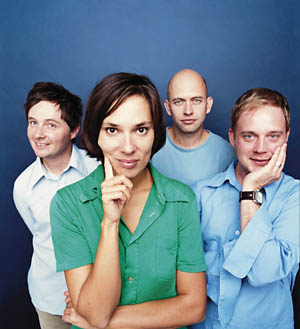
 

Growing more adventurous and experimental without losing their passion for leisurely romantic melodies, Stereolab continue to craft warm, intimate meditations of lush grandeur, pastoral pleasure, and modern sophistication.

Dropping some of the kitsch-y exotica for a more Jazz-affected feel, Cobra And Phases Group Play Voltage In The Milky Night proficiently expands into new directions, increasing the London-based collectives’ versatility and range.
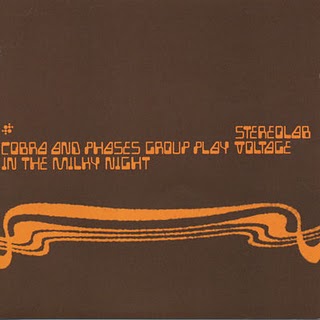
At its most revealing, Cobra captures the wistful moodiness of ‘60s lounge-core alongside the post-bop illuminations of guest cornet player Rob Mazurek’s Isotope 217. Like a simplified free Jazz excursion, “Fuses” unexpectedly opens the set, gently pushed aside by the truly absorbing “People Do It All The Time,” a more natural sounding smooth pop ballad textured by soft aquatic nuances.

To counter the jazzy bass groove of “Free Design,” “Blips Drips and Strips” goes adrift with melodic vibraphone and Sergio Mendes-like lounge-pop effervescence. Later in the program, “Puncture In The Radak Permutation” slips from staccato piano espionage theme to vibe-spindling orchestral string excursion.

As usual, founding members Tim Ganes and Laetitia Sadler (whose casually alluring French-accented vocal swirls give Stereolab its signature sound) surround themselves with prominent collaborators. Tortoise percussionist John McEntire, High Llamas harpsichordist-clavinetist Sean O’Hagan (both of whom helped out on previous endeavor, Dots And Loops), and experimental Chi-town multi-instrumentalist Jim O’Rourke delve deep into Stereolab’s ever-changing muse by providing organic luster and blissful tones.

I spoke to the lovely, talented chanteuse, Laetitia Sadler, via phone while she was in sunny Tucson, Arizona during November ‘99.

What was it like growing up in France?

LAETITIA: I moved around a lot. So I wasn’t rooted anywhere. From ages 10 to 12, I lived in upstate New York and had a view of the world most people didn’t have. That’s what prompted me to leave France. When I came back from the States, I found refuge in music. I’d rather listen to music than chatter with friends. At 16, I wanted to play in a band, but I found a lot of bull shitters lacking talent. I went to London as an au pair and figured if it was going to happen it’d happen there.

I met Tim indirectly in France when he was in a band called McCarthy. They were ahead of their time. They were quite known among the underground when being independent meant something in 1985, following the aftermath of punk. Some bands that were similar to McCarthy even found broad success. When they broke up, Tim wanted to make unique music. He set out to do it. It wasn’t easy, but if you search long enough, you get there. I wanted to write about things that mattered to me and also raised a lot of questions. We did that with Stereolab. We’ll never entirely be reached, but we’ve carried on for nine years so far.

Were you influenced by Serge Gainsbourg’s brilliant ‘60s French lounge pop?

LAETITIA: I think Stereolab’s melodic aspect is fundamental. French pop in general – Francois Hardy and string arranger Vanier, as well as Serge, inspired us. Vanier’s arrangements were very moving and melodic. Melodies are very powerful. They can haunt a million people because they’re so strong.

Cobra seems to be Stereolab’s most Jazz-influenced set. How does it compare to your previous album, Dots And Loops?

LAETITIA: It’s more likable than Dots And Loops. It has more air in it and some relief. I find it stifling. But all the tracks have good qualities. On Cobra, the melodies are meant to be sung rather than our vocals being used as mere instruments. The songs are more fun to sing. When we started playing them at shows in the spring people were immediately taken by the songs. On first listen you’re not gonna grasp it all. I didn’t.

Do you feel Stereolab is responsible for exposing the thriving ambient-lounge scene?

LAETITIA: Yeah. We were doing stuff at a point when no one else thought of doing it. Maybe we were an incentive for some artists to do something different. For others, we weren’t. I know people in Paris, England, America, and Tokyo listened to the same sort of muzak and found it inspiring. They wanted to integrate it into their music. They thought, ‘I did it first. They all ripped me off!’ (laughter) As for Stereolab, the magic lies in John (McEntire), Jim (O’Rourke), Mouse On Mars, Sean O’Hagan of the High Llamas and other collaborators. Sean’s put such an impression on our music. We’re made up of many elements. It’s an amalgamation of ideas.

Did you record Cobra in Chicago because it’s the home of Tortoise collaborator John McEntire?

LAETITIA: Chicago is like a lover you could never live with, ever. But you toy around with the idea and fantasize about it.

People say that about Paris, France.

LAETITIA: I don’t have any romantic notions about France anymore because there’s lots of social tension. People are unhappy and grumpy. There’s such a malaise I’ve never seen in any other people. I’ve met Americans who hate America because of its society and government being brutal and violent. But the Americans see through this and have certain values. The French have a profound hatred of the French, And I have that,. I had to get the hell out. There’s no real progress there. It’s just talk, talk, talk, You can only have fun when you start doing things instead of just talking about it. They’re good at being academic and have a realm of ideas, but they never take action., Although some people are the exception.

I’m amazed with the large amount of material Stereolab has released thus far.

LAETITIA: Other bands are just lazy. We could put out much more, but we have to tour. Plus, Tim and I have to spend time with our child. We built our own cellar studio in London recently. Soon we could be self-sufficient.

Who would you like to collaborate with in the future?

LAETITIA: There’s this guy, Richard Devine, who’s from Miami and runs a small label that releases leftfield techno, jungle, and electronic music. It would be nice to collaborate with him. He’s making music I feel is new and imaginative without borrowing from the past or re-modernizing.
THE OFFSPRING OFFER SORDID SLICE OF ‘AMERICANA’

FOREWORD: Fun-loving Huntington Beach bohos, The Offspring, were less punk than fellow Californian contemporaries Social Distortion, Green Day, and Rancid, but their dirtied-up grunge-daubed arena rock competed better against Seattle heavyweights Pearl Jam, Soundgarden, and Stone Temple Pilots for ‘90s mainstream rock radio airplay.

‘94s hugely successful Smash featured the tempting dare, “Come Out and Play,” and even better, “Self-Esteem,” which salaciously summed up Generation X’s passive-aggressive plight. Though ‘97s long overdue Ixnay On The Hombre couldn’t compare, it remains an underrated gem.

Luckily, ‘98s Americana allowed me easy access to the universally popular band and I caught up with dexterous guitarist Noodles at their New York Roseland Ballroom show. The band has slowed their pace since. ‘00s Conspiracy Of One was OK, but I was less interested in ‘03s under-recognized Splinter. Following a five-year layoff, ‘08s Rise And Fall Rage And Grace was a nifty comeback. This article originally appeared in Aquarian Weekly.


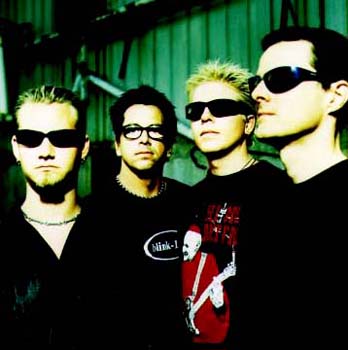
Fame was bestowed on Orange County quartet, The Offspring, when their third album, Smash, became one of the best selling indie rock albums of all time. Kevin ‘Noodles’ Wasserman (guitar-vocals), Dexter Holland (vocals-guitar), Greg K. (bass), and Ron Welty make simple, effective pop-punk chants that leave a lasting impression on the brain, separating The Offspring from many of their sound-alike brethrens.

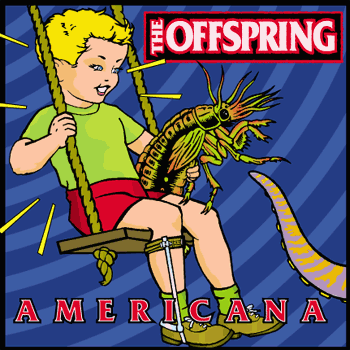
Ixnay On The Hombre, released in ’96, had the same sure-footed uniformity as Smash, but lacked a track as popular as either “Come Out And Play” or “Self-Esteem.” However, radio jumped on board immediately for the funky, humorous ditty, “Pretty Fly (For A White Guy),” the stress track from the new Americana. Playing the part of anxious, victimized West Coast suburban misfits mired in teen ‘angst’ wasteland, The Offspring’s panted snot-nosed rants and razzle-dazzle guitar licks pack quite a wallop.

Highlights from Americana include mannered hardcore rockers Have You Ever” and “Walla Walla,” a rollicking version of Morris Albert’s otherwise melodramatic ballad “Feelings,” and “Self-Esteem” knockoff “She’s Got Issues.”

A humble Noodles offered plenty of insight about The Offspring during a pre-Halloween sit-down.

What seems to be the key to your success?

NOODLES: We try to have a good time and do what we enjoy. We hope our songs make a connection and find an audience.

But why have The Offspring earned platinum records while other West Coast pop-punk bands have not?

NOODLES: We’re just better. (laughter) No. There are bands that are better than us. But we’ve just struck a chord with people. We were in the right place at the right time and had been doing this for ten years before we had any commercial success. Why not TSOL, the Dead Kennedys or the Dickies? Certainly these bands have been noticed, but we try not to take ourselves too seriously. Our stuff is lighter than Korn.

The Offspring’s melodies and chants may be more adaptable to commercial radio than those older peers.

NOODLES: The earliest music I heard was when my mom used to listen to the radio. You know, “Do You Know The Way To San Jose” and “Up Up And Away.” Then, there were my father’s records like Simon & Garfunkle and Crosby Stills & Nash. I had a cousin who got kicked out of his house and came to live with us, He had The Who, the Rolling Stones, and Led Zeppelin. Then I got into Kiss.

Does the environment affect the differences between East Coast and West Coast punk?

NOODLES: East Coast is more of an inner city thing. New York City, Philadelphia, Washington DC. There’s more of an industrial clanging sound. Iggy Pop once talked about Detroit pop being affected by Motor City industry. Growing up in ideal sunny California, the sounds of waves crashing in the background inspires you.

Also, The Offspring seem to use more major chords and come across less ornery than other punk-related bands. Perhaps it’s easier to lump you guys in with Mr. T Experience and Redd Kross.

NOODLES: Right. I’m familiar with those bands, but they’re not huge influences. We do deal with serious topics on “Have You Ever,” “Staring At The Sun,” and “The Kids Aren’t Alright,” but without overstating it. A very real emotion comes from driving around and looking at the bright kids we grew up with who had huge futures ahead of them and have fallen through the cracks. They got into drugs and forces that have crushed their spirit and left them immobilized or dead.

Do you feel “Pretty Fly (For A White Guy)” and Smash’s “Come Out And Play” informally address racial differences and teenage self-absorption in a humorous way?

NOODLES: Lyrically, they’re quite different. “Come Out And Play” concerns guns at school and youth-on-youth violence. That went beyond racial lines. “Pretty Fly” is about wannabes, being something you’re not in order to be cool – which is impossible. It’s a lot more tongue in cheek.

What does “She’s Got Issues” concern?

NOODLES: It was initially going to be called “I’ve Got Issues” but it came out like the guy was just whining. So we changed it. It’s about not taking responsibility for your adult life. You can’t blame all your problems on a dysfunctional family or bad childhood. Some people cry about needing closure. Big deal. Who doesn’t? Congratulations. But get over it. All of us have neuroses and psychoses.

Which may relate to the diminished expectations embraced on Americana.

NOODLES: We thought the songs on Americana were little illustrations on the opposite end of Norman Rockwell’s portrait of America. There’s a less attractive side to America. Without really knowing it, we put together a record that shows different examples of that. Dexter thought it’d be wise if the song “Americana” went with the theme of tattoos and fast food culture watering down values.

Rumor has it The Offspring cover the Ramones “I Wanna Be Sedated” for the horror-comedy Idle Hands.

NOODLES: The movie people wanted us to do something recognizable for a scene at a high school dance where this hand is running around murdering people. We’re huge Ramones fans, but thought it might be blasphemous covering such a great song. We didn’t know if we could do it justice, We also re-recorded “Beheaded” from our first album which worked perfectly for the theme of Idle Hands.

Since I never heard your first two albums, could you explain the bands’ growth since then?

NOODLES: If you look back at the first record, you could see the seeds and the roots of The Offspring. You got the melody, the hard guitars and drum and bass., You got the uptempo feel. The first album was rougher because we were still learning our instruments. With Ignition, we really came into our own groove. “Dirty Magic” was our first real departure on Ignition. It was slow and had swirly acoustic guitars. The band was what I did on weekends and summer vacations back then. Our band is like brothers. Sometimes we want to kill each other, but it hasn’t been a struggle for us to stay together.

What will your live show feature this time around?

NOODLES: We’re gonna have more people onstage to help us out. We had to take some of the samples off the CD to do “Pretty Fly” live. Our tech has built a rack of doll heads he hits to trigger the samples. We’ll be flying by the seat of our pants and will be a lot more relaxed in what we’re doing.

ROYAL TRUX COLLIDE WITH ‘VETERANS OF DISORDER’

FOREWORD: Royal Trux vocalist Jennifer Herrema was responsible for making the drawn-out undernourished ‘heroin chic’ look popular. Of course, as a former heroin user, and proud of it at the time, Herrema and long-time musical partner, Neil Hagerty (who’d played in Jon Spencer’s Pussy Galore), perfectly fit the part. Royal Trux ruff ‘n ready ’88 double-disc, Twin Infinitives, completely turned heads when it came out. Then, ‘93s indelible Cats And Dogs, ‘95s Thank You, and ‘98s Accelerator set the stage for ‘99s Veterans Of Disorder. It was during this time I interviewed Herrema at her record labels’ headquarters.

Looking half out-of-it, she explained the benefits of Prozac and talked about the current music scene in a slowed down soft tone. In ’00, Royal Trux released their last proper studio LP, Pound For Pound. Since then, Herrema shortened her band name to RTX and Hagerty went off on his own, releasing three LP’s to small fanfare. This article originally appeared in Aquarian Weekly.


A major influence on the entire ‘90s grunge movement (specifically Nirvana), Royal Trux have deconstructed abstract scuzz-rock since the late ‘80s. Now living comfortably in rural Virginia, founding members Jennifer Herrema (an unpretentious hip chick whose ‘heroin chic’ pose in a Calvin Klein ad caused a minor controversy with flaccid conservatives) and Neil Hagerty (formerly of Pussy Galore) shocked the underground with Twin Infinitives, a sprawling improvisational drug-soaked epic sometimes compared to Lou Reed’s speaker-shredding Metal Machine Music.

Signed to Virgin in ’95 during the mad rush for major labels to pick up any band who smelt like teen spirit, RTX made the magnificent Thank You with now-deceased producer David Briggs (an experienced musician from Neil Young’s band). When its follow-up, the uncompromising Sweet Sixteen, failed to sell well, Virgin dropped the extended duo at the hefty cost to the label of a million bucks.

Back at Drag City Records, RTX offered ‘98s Accelerator and ‘99s equally compelling Veterans Of Disorder. Undiluted, obtuse, and exuberant, VOD’s unfinished feel gets exemplified best by the pop confection, “Waterpark,’ the art-damaged psychedelic collage, “Sickazz Dog,” the slippery Blues mistreatment, “The Exception, ” and the tropically twisted “Yo Se.”

Born in DC near RFK, Herrema moved to NYC at age sixteen, where she attended school and befriended former Jefferson Airplane bassist Jorma Kaukonen. When she’s not making music or modeling, Herrema enjoys airbrush designing, riding horses, mountain hiking, and playing soccer. Recently, she contributed an article about the effects of Prozac for Vice.

Who were some of your early musical influences?

JEN: I listened to my parents music – Dylan, Paul Simon, Carly Simon, James Taylor, the Beatles, the Animals and Seals & Croft. My parents didn’t have house, so we lived with my grandparents. When we finally got a house, I learned piano. But I was diagnosed with an eye-hand coordination problem. As soon as I heard that, I just thought, ‘I can’t do this.’ But that was a cop-out. So I played, learned how to read music, and by seventh grade, I was listening to Chic, Earth Wind & Fire, the Sugarhill Gang, and Bootsy’s Rubber Band. Within the next year, my friend had big teenage brothers who smoked pot in the attic. So we started hanging around, smoking weed, and listening to her brothers’ King Crimson records and awesome stuff by Soft Machine. By the time I was twelve, I had baby-sat a lot and saved lots of money. I went to the import section of a record store and found new punk stuff. I filed through it and got some horrid stuff. But I also found GBH, the Attics, Anti-Noise, and Discharge.

I started going out with this guy about eleven years older than me. He got me into Roxy Music. I loved them. But he got into heroin and became evil and horrible. He’d beat the shit out of me. He died. I cried for a minute and that was it. After that, I met another older guy and he freaked me out.

Didn’t your parents tell you to stay away from guys like that?

JEN: No. Mostly because my dad grew up in a family with eleven kids and got pushed around his whole life. His parent wouldn’t let him go to college. He decided he’d never do that to his kids. He figured you live and learn by your mistakes. We had very little discipline. A lot of people found that weird.

Are you more settled and comfortable with your life now?

JEN: I have my moments of insecurity like everyone else does, but I don’t freak out as much.

Twin Infinitives stands as an early triumph for Royal Trux. How did it come about?

JEN: We were wasted when we did it. We knew what we wanted to do. But it was like a delusion. A writer once asked what we were doing with that album. I said, ‘Can’t you tell? It’s our take on Tyrannies And Mutations by Blue Oyster Cult. At the time, I believed that.

How’d you come up with the self-descriptive LP title, Veterans Of Disorder?

JEN: I was watching a Normandy D-Day invasion flashback. There was a tombstone with ‘here’s to the veterans of disorder’ written in, like, charcoal. It stuck in my head.

Do you feel Royal Trux inspired Nirvana and the Seattle grunge scene?

JEN: My take on it is it needs to be said in print. It’s not oppressing that we didn’t get credit for that part of history. Our past albums have their place in history. And that’s the past. If anyone would come with any expectations about our past, they’d be disappointed with our evolution. But it’s healthy to change and grow. The past shouldn’t be a blueprint for the rest of all time.

You tend to divert your eyes or wear sunglasses on LP photos. Is that because you’re unsettled with being seen as an egocentric fashion model due to the Calvin Klein ad?

JEN: That’s part of it. But also with the modeling, they asked me to do it because of the way look. I asked how much would I get and what are the residuals. I said, ‘What’s the scene? How do you want me to look.’ But I won’t concede to that ‘chic thing.’ I’d find myself feeling horrible, sleepless, and dreamless if I bought into it. More or less, I role act. I understand how MTV and VH1 do Women in Rock pieces, but also understand the greater picture. I think it does harm to separate males from females and not take it all as a human species thing, It propagates everything feminists are trying to eradicate.

You mean like Bill Clinton getting oral sex from a post-teen bimbo?

JEN: Yeah. He’s fucked. I just have to keep in mind what I can concede and what I can’t. That doesn’t mean it’s not right for other people. I’m just uncomfortable with it.

MEDESKI MARTIN & WOOD’S GROOVE MACHINE GETS ‘COMBUSTICATION’

FOREWORD: New York City’s scrappily experimental Jazz-funk trio, Medeski Martin & Wood, inventively enjoined hip-hop rhythms and jam band sauntering to its eclectic musical stew. When I caught up to them at Manhattan’s enormous Hammerstein Ballroom in ‘97, I saw one overdosed hippie, two naked large-nippled girls, and drank three Heineken beers as they played to a capacity crowd. They’ve continued to release many live, acoustic, or studio LP’s since. MMW’s members have offered their services to many artists, including Chris Whitley, John Scofield, North Mississippi All Stars, and Phish head, Trey Anastasio. This article originally appeared in Aquarian Weekly.


Taking the title of their newest disc, Combustication, from public TV personality Dr. Julius Sumner Miller, downtown New York City improvisationalists Medeski Martin & Wood prove great camaraderie and intuitiveness equals a successful democratic fusion of jazz and funk. Meeting at avant-garde Mecca, the Knitting Factory, around 1990, keyboardist John Medski, bassist Chris Wood, and drummer Billy Martin share a love for provocatively daring instrumentals.

MMW’s fifth album, Shack-Man, gained respect for its abstract post-bop acid Jazz amongst post-modern prog-rock fans and intelligent indie rockers alike. Those who really wish to explore uncharted territory are immediately directed to the trio’s self-released Farmer’s Reserve, a straight-up, unedited improv experiment available on the internet.

Following the unlikely success of Shack-Man, the more stylistically diversified Combustication also attempts to broaden the palette of the combo’s avid fans. Guest turntablist DJ Logic valiantly adds scratches, electronic textures, and sampled loops to the organic mix.

Keeping busy on the side as a studio hand, Medeski recently produced the new Dirty Dozen Brass Band album, wrote Dave Amaran’s musical score dedicated to beat poet Jack Kerouac, and composed a traditional organ piece with guitarist Marc Ribot for a Windham Hill sampler. He has previously played with the Lounge Lizards, Either/Orchestra, and the late-great bassist Jaco Pastorius. That’s just the tip of the iceberg.

What type of music did you listen to as a kid?

JOHN: At age five I first started playing Classical music. Then I got into playing old Jazz and pop tunes from the ‘40a and ‘50s. When I was eleven, my neighbor’s older brother played me Oscar Peterson and I realized there was a whole other way of doing this stuff. That’s when I began getting into Jazz. I attended the New England Conservatory of Music part time while I worked for five years. I switched over to more improvisational music after that when I bagged Classical. I didn’t see the point of going to school for Jazz when you could learn privately and go out and play. I’m not a big fan of school.

In comparing Combustication to the previous set, Shack-Man, I’d say it’s less funk and more expansive.

JOHN: I think Combustication is more of a studio record. It’s more expansive. It might be more Jazz in feeling. But it’s more funk and hip-hop the way it’s mixed. It’s a different combination of what we’re about: grooves and improvisation. Shack-Man’s very live in terms of recording style.

Some fans claim Medeski Martin & Wood are avant-garde-ish, but your music is easier to approach and more accessible.

JOHN: I have no idea. Avant-garde music is an inspiration, but we play more and more grooves. We love groove music. Many of the current avant-garde artists have great spirit and are expressing themselves well.

I find your melodies easier to follow than Ornette Coleman’s or Henry Threadgill’s.

JOHN: Yeah. I guess. Actually, we don’t dwell on catchy, strong melodies. Sometimes we are criticized for that. In general, the vibe comes from New Orleans funk as much as avant-garde.

And now you’re signed to legendary Jazz laberl, Blue Note. How’d that come about?

JOHN: They’re great. They treat us good and put no artistic pressure on us. Their approach is very hands-off artistically. And it’s not working out for them business-wise, they simply drop you.

Much like Booker T & the MG’s during the ‘60s, MMW could probably make a secondary career backing other intelligent likeminded musicians.

JOHN: Yeah. We do play on a couple peoples’ records. We get calls from time to time to do that. We did John Scofield’s Au Go Go record and singer Oren Bloedow’s record. Chris Wood and I recently played with Mark Anthony Thompson on his Chocolate Genius LP. I love playing all kinds of music with all types of people. As for our band, it’s very democratic. Like Bill Evans Trio, who started it, we have a bass, drums, and piano lineup.

Plus, turntablist DJ Logic adds electronic enhancement and weird sounds to Combustication.

JOHN: He fits in the cracks. Not a lot of DJ’s could play live. You’d think it would be an obvious thing but very few people could do it, especially when you’re improvising around it. We take a lot of left turns and he stays right there with us. He fits into what we do more than just about anyone ever has. He adds elements without changing our direction. He’s from the Bronx and we met him playing with Vernon Reid. We called him up to do a few Shack-Man parties that we did at the Knitting Facoty and that was it.

You completely reconstruct Sly & The Family Stone’s “Everyday People.” Your version has an ethereal Gospel feel.

JOHN: I love that song. Name a better composer than Sly. He’s up there with anybody. We’ve reinterpreted John Coltrane, Thelonius Monk, King Sunny Ade. We like to pay homage to great musicians that inspire us. We started doing that tune a while back. It felt good to play “Everyday People” the way we did.

SAW DOCTORS GLAD TO ‘SING A SIMPLE SONG’

FOREWORD: Working class Irish folk-rock combo, the Saw Doctors, gained a huge international cult following thanks to exuberantly festive live shows. In New York, they sold out Irving Plaza countless times. I saw ‘em there during autumn, ’97. Since then, they’ve released infrequent studio recordings such as ‘98s Songs From Sun Street, ‘01s Villains?, and ‘06s The Cure. I interviewed co-leader Davy Carton to promote their durable compilation ’97 compilation, Sing A Simple Song. This article originally appeared in Aquarian Weekly.


Hailing from Tuam, a nearly rundown factory town outside Galway, Ireland’s Saw Doctors nostalgically reinforces original Celtic-flavored universal anthems in disguised rock settings. By assembling the greatest tracks from’91s If This Is Rock And Roll I Want My Day Job Back debut, ‘92s All The Way From Yuam, and the belated ’96 release, Same Oul’ Town, this pub-friendly act hopes to conquer the world with their Sing A Simple Song comp.

Ever since the Saw Doctors debut, “I Useta Lover,” became the biggest selling single ever in Ireland they’ve maintained critical acclaim and massive fan enthusiasm while staving off early local media exploitation. It seems some disgruntled conservative-minded religious zealots disapproved of “I Useta Lover’s” provocative line about the ‘glory’ of some chick’s ‘ass.’

Meanwhile across the ocean, New York’s Irish bars stuffed jukeboxes with the catchy ditty while the nightclub Tramps had to dela with a capacity crowd of loyal, cultish fans (quite an accomplishment considering they had no US record deal). Authentic Irish folk rockers with solemn hometown odes, chanted work songs, Gaelic tunes, and love ballads, friendly vocalist-guitarists Davy Carton and Leo Moran keep the home fires burning with earnest sentiments and wry humor.

I spoke to Carton over the phone one late October afternoon. His band was getting ready to come to New York to play Irving Plaza (a venue Carton admits he has never been to).

What initially inspired you to pursue a music career?

DAVY: I just loved music and always liked a good song. I’m a self-taught guitarist without a major music background.

Would you agree the Saw Doctors songs work so well because the arrangements are so tight.

DAVY: We do spend a lot of time arranging. But you’ve got to have a knack to correctly arrange a song. There’s a lot of good songs that lose their appeal if they’re not arranged well. It’s fortunate for us that people like our songs. But first we have to like them ourselves. We’re like guinea pigs testing them out.

I’d be remiss if I didn’t ask how the Saw Doctors first single, “I Useta Lover,” gained such universal appeal.

DAVY: It caused a small little revolution within the Irish Catholic church. But the thing about it was the church wasn’t against it because it brought people back to the church. It’s weird how it almost changed the face of music in Ireland. It was originally seen as taboo to rhyme ‘the glory of her ass’ in that song. But we get a kick out of it gets people to laugh at themselves. I used to play that song in a power pop band called Blaze X in ’79. But the main chorus was added later in ’84. Me and Leo then put extra lyrics in it and it became a huge hit. The chorus is catchy but it developed over time. It’s still the biggest selling single in Ireland, which is an achievement in itself.

Your sold out show at Tramps had people hanging from the rafters.

DAVY: Tramps was a strange venue because they keep the people from getting too close to the stage. We encourage audience participation. I can remember loads of times when we didn’t have enough P.A. from the soundman because the audience was singing along so loud. That happens regularly in Scottish Celtic places. It’s like a big choir. They must think we’re a karaoke band.

How is the current Irish scene doing?

DAVY: Ireland is a very small, close community. A city like Dublin has only 700,000 people. But it’s always thriving with traditional music. Bands spend weeks there playing local clubs. But Dublin is the base for Irish rock music since the influence of U2 is still felt. It’s a really healthy scene, but not on the grand world stage.

I was intrigued by your first albums’ wry title, If This Is Rock And Roll I Want My Day Job Back. Was that a rip at the relentlessly tiring and monetarily unstable lifestyle musicians live through?

DAVY: Exactly. It was done tongue in cheek. When we started out doing it for a living it was rough to make money. Then again, I used to be a cotton and material weaver.

Although your Celtic-influenced rock couldn’t be considered punk, the Saw Doctors seem to have that type of raw energy.

DAVY: The punk attitude keeps us on the edge and givers us an anarchistic touch. Punk doesn’t have to be a particular brand of music. We’re just working class guys, not royalty. We’re small town local heroes. Some people define punk as just mohawk hairdos and violence. But there’s more to it. We’re a whole generation of self-motivated thinkers. Some people believe punk is not intelligent. But if people enjoy it, that’s fine.

The band seems to shy away from major political concerns. Why?

DAVY: We have our own attitude. People should make up their own political opinions. The way I vote is strictly my own. I am not a politician and cannot solve country’s problems.

In your opinion, should Northern Ireland be free from British nationalism?

DAVY: I’m not sure. People take it to the extreme, pitting Unionists against Nationalists. But what about the people in the middle who want a well-run system without fear of getting hurt? History has to change for something positive to come from it. Extremists are not fair. We need a policy across the board that will work. Instead, it still comes down to power and money.

I thought it was cool how the Saw Doctors purposely came to the US while Ireland played in the World Cup Soccer Championships. Did you go to the Meadowlands and watch Ireland upset Italy?

DAVY: No. I was in New York that night watching the game. But I went to see Ireland lose to Mexico in Orlando afterward. The heat is tough down there in Florida during summer.

What musicians inspired you when you were growing up?

DAVY: My first big influence was Creedence Clearwater Revival. John Fogerty’s quite a strange3 character, I hear. But I do like his singing. His new songs seem glossy and pale and not as hooky compared to Creedence, but here it is nearly 30 years later. I like most pop music singer-songwriters like Bruce Springsteen. And also I love the Ramones. Leo likes Woody Guthrie.

“Macna’s Parade” is one of the Saw Doctors most authentic Gaelic tunes. What inspired its creation?

DAVY: That particular song is about an annual Galway festival parade. Macna’s Parade is a street theatre company that has grown with us over the years. They were responsible for the heads used in U2’s Zoo TV.

I heard your original accordion player quit the band a few years back because he won the lottery.

DAVY: Yeah. The lottery in Ireland ranges from one to four million pounds. He won 850,000 pounds, which is like a million dollars. Eventually, after eight months he felt he couldn’t work with us anymore. He had extra money he wanted to spend and the band restricted him. That suited us because his replacement, Derek Murray, played keyboards too. And now everyone involved is much happier.

MONSTER MAGNET LEADER TAKES VEGAS ‘POWERTRIP’

FOREWORD: I first saw jolting Jersey jammers, Monster Magnet, play live at Irving Plaza in the mid-‘90s. I was amazed by the flexible gumby-like bodily contortions singer-writer Dave Wyndorf could manage while still spitting out venom inside metal-edged arena rock tunes.

After some ’89 demos and a cheap Glitterhouse Records EP, these evil space rockin’ metal-plated combatants made ‘92s undeniable stoner rock doctrine, Spine Of God. But in all honesty, it wasn’t until ‘93s Superjudge that I became aware of Monster Magnet. ’95s Dopes To Infinity made me a fan for life.

So when it came time for me to interview Wyndorf at a discreet Manhattan pub to discuss his bands’ latest endeavor, Powertrip, I was stoked. While he smoked cigs and I plowed beer, I listened and marveled at his boho idealism and then sent the following article to a topnotch girlie mag.

After Powertrip, Monster Magnet’s ’01 LP, God Says No, kicked harder ass than ‘04s better-titled Monolithic Baby! In ’06, Wyndorf overdosed on prescription drugs but came back to the fold for ‘07s 4-Way Diablo. In ’04, guitarist Ed Mundell’s side project, Atomic Bitchwax, found favor with High Times stoners at midtown Manhattan-based Doobie Awards. This article originally appeared in Gallery Magazine.


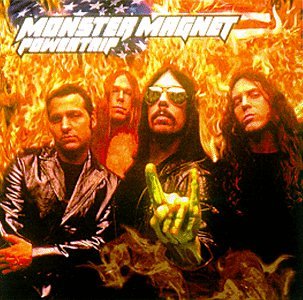
During a Las Vegas jaunt, Monster Magnet singer Dave Wyndorf spent two weeks leering at strippers, observing gamblers, and writing (from the confines of his hotel room) the 13 muscular, full-throttled tracks served up on Powertrip – the bands’ fourth album.

Like a nomadic warrior trapped inside a hard rock war zone, Wyndorf taps into the unbridled sexual energy sapped from the soul of rock and roll.

“The rappers do what they want in Vegas. They get the chicks, the money, and the guns. I loved watching them. They were like a bizarre dream. They own rock and roll,” Wyndorf admits. “But the rockers have given the press very little to write about besides Marilyn Manson. Much of what’s picked up by national radio stations is disposable, artificial and slick. It’s all just manufactured energy.”

Since the late ‘80s, rock radio has saturated the market with overblown heavy metal practitioners (is that a dirty word?) such as Posion, Motley Crue, Winger, Ratt, and glam-rokers Bullet Boys (including a legion of watered-down, forgettable, no-talent hair bands). It has been an uphill battle revitalizing the once thriving scene. When Nirvana hit the big time, grunge infatuated the impressionable teens that were once proud fist-waving metal heads.

Unscathed by such trends, Monster Magnet sough to incorporate psychedelia, punk, and a dash of sitar into its adventurous and ambitious metal-edged sound.

Wyndorf, who grew up 45minutes outside Manhattan in Red Bank, New Jersey, joined the punk-metal band, Shrapnel, before forming Monster Magnet and releasing several singles and EP’s during the late ‘80s. Monster Magnet exploded on the national scene with ’93 stoner nightmare, Superjudge, a grueling Mountain/ Black Sabbath-derived long-player with power (and weed) to burn. ‘95s more assured Dopes To Infinity found the group on the brink of worldwide success. But as they found out – achieving mass acclaim in the ‘United States of who gives a shit’ (a line taken from Powertrip’s cock tease “3rd Eye Landslide”) becomes a Catch 22 experience.

“Radio is afraid to lose sponsors and advertisers,” says Wyndorf. “MTV has already bowed down to Tipper Gore’s PMRC, an organization that manipulated the media. Now rock and roll rebels take it up the ass. The first sign of rock and roll losing its cultural power was when punk rockers started to clash with rockers (in the late ‘70s). That’s when rock fragmented and lead to further niche marketing. Most kids who are now in their twenties have no sex and take no drugs, but they’ll explode when they reach forty.”

He insists, “Miscommunication gives these kids an excuse to swerve off and internalize, avoiding real life and surrendering to asshole propaganda. When they gravitate towards conservatism, they’re admitting they’re afraid of life.”

Although Dopes To Infinity’s visceral slammin’ anthem, “Negasonic Teenage Warhead” was a radio hit in ’95, Wyndorf realized the drawbacks that conservative commercial radio programmers and multinational music conglomerates imposed on their multilevel exposure. Like most big corporations, they’d rather play it safe and appeal to an already dulled-out audience.

Still, Wyndorf seems fully capable of challenging the opposition by reclaiming rock and roll’s lost territory thanks to Powertrip’s defiant songs. An astonishing accomplishment and a fine sonic successor to Tool’s convulsive Aenima, its dramatic metal-blazed epics unleash frustration and anxiety with unbridled intensity. He insults emasculated politically correct slime with the snide declaration: ‘So won’t you put my dick in plastic and put my brain in a jar’ (taken from “Atomic Clock,” a corrosive knockoff of Black Sabbath’s “War Pigs”).

But he’s also not afraid to admit having to overcome his own shortcomings. The searing guitar freak-out, “Tractor,” refers to self-imposed pill rehab (‘I got a knife in my back and a hole in my arm when I’m driving my tractor on the drug farm’).

Voyeuristic fascinations also dominate the stampeding “Bummer,” a raunchy pre-metal spasm ridiculing vulnerable, narrow-minded Confederate Southern belles with scathingly sordid lines like ‘You’re looking for the one who fucked your mom…It’s not me.’

“While touring the deep South in ’96, I became aware of how the local girls were looking for someone like their father. It’s a bummer. They go after the image and feel guilty afterwards if they give in to sex. It comes down to taking emotional responsibility,” he explains.

The mescaline-fazed “See You In Hell” recalls the psychedelic daze of the conceptually naïve LSD-laced mind-trip “Incense And Peppermints” by Strawberry Alarm Clock (or quite possibly, Iron Butterfly’s “In-A-Gada-Da-Vida”). Its lyrics deal with downsizing preconceived notions of peace generation hippies of yore.

“On a bus ride, a hippie broke into this story about how his wife unintentionally had a baby, freaked out, and buried it in a Jersey swamp. It’s a total ‘60s horror tale. Hippies I met in the past were always confrontational and self-centered. They’d sell their girlfriends for speed,” Wyndorg explains.

Although he admits working in the studio on a new record is never a comfortable experience, instead calling it “controlled disaster,” Wyndorf does insist there is a method to his madness.

“First, I make four-track tapes with guitar, bass, vocals, and drum machine. Then, I bring them to the band (Ed Mundell, lead guitar; Joe Calandra, bass; Jon Kleiman, drums, Tim Cronin, visuals and propaganda) and have them critique the songs and possibly rearrange things. I like to start with a slow groove, then let it build to a fucking explosion. I usually abandon the songs at some point. Otherwise, I’d be refining them forever.”

While in Vegas, Wyndorf saw a rainbow of humanity. He’d see shiny happy people come in for the first time – psyched up and ready to gamble – only to be drained of all their money.

“That place is brutal. You’d see people come in one day, and by the next, they’d be getting dragged out, all washed up. But there was also a lot of honest emotional psychoanalyzing going on in my head. It made me realize that the best thing about Monster Magnet is that it’s all about rock. If I didn’t get to jump around onstage every few months, I’d be in an insane asylum.”

After the bands’ worldwide touring, Wyndorf sought seclusion away from the other Monster Magnet members and the wintry northeast. He headed for the heat and settle in the blazing Vegas desert in ’97.

“Las Vegas is the ultimate symbol of all the shit I was worried about concerning Monster Magnet’s place in the entertainment world, like maintaining a cool lifestyle. It’s where money, advertising, and imaging get scaled to the success of Titanic and Jurrasic Park. Monster Magnet was initially designed to appeal to just a few people, but now it is millions,” he says while lighting a cigarette.

“On Powertrip, I reacted on a gut level. Instead of trying to mastermind a record for the lowest common denominator – which would have neutered half the cool ideas – I tried to avoid mental breakdown by putting myself on a writing schedule. The more records I do, the closer I come to distilling a potent diary of my life experiences. I can’t fantasize, so I write what’s inside of me. I wanted to make Powertrip a very physical record that operated from the groin first, unlike Dopes, which was very cerebral. It has more action, tension, and spontaneity, not a lot of dreaming.”

As the sixth of eight children, Wyndorf admits he struggled to overcome a teenage identity crisis before becoming the virile entertainer his avid fans adore. He went through a weird gestation period, failing miserably when it came to picking up hot-to-trot chicks.

“But my love of music had a healthy, hypnotizing effect. I’d lock myself in a room with a bag of pot and listen to every obscure rock album like a total mutant,” he recalls, adding that the single most powerful force is when nature commands you to stare at girls’ asses.

“In Vegas, I’d go to strip clubs for the awesome temptation. As frustrated as I’d get, the more intrigued I’d become. And since I was raised Catholic, it teaches you how to become a dirty bastard. You have to overcome the guilt. It’s hard to put your trust in manmade organized religion.”

Now that grunge has died down and electronica has failed to take America by storm (as many had thought it would) maybe good old straight-up rock ‘n roll bands will become all the rage again. Who knows? Maybe leather jackets, biker boots, and long hair will replace nose rings, buzz cuts, and sneakers. If so, look for Monster Magnet at the top of the heavy metal heap.


VICTORIA WILLIAMS @ THE BOTTOM LINE

Victoria Williams / The Bottom Line / February 5, 1999

Dressed hippie-chick casual for this special Bottom Line industry showcase, fragile-voiced pianist-guitarist-banjoist Victoria Williams assembled an adaptable Classical-folk ensemble (with a vibraphonist to boot) to complement her sweet childlike sentiments and sublime imagery.

Williams’ idiosyncratic singing caresses choice covers and several serene gems off her recently released Musings Of A Creekdipper. Although outwardly appearing ditzy and naïve, she assuredly orchestrated the on-off band through affectionate and earthy compositions without losing composure over such an ambitious undertaking.

Despite the informal presentation and some of the instrumentalists’ lack of preparation, each member seemed totally ‘in synch’ with Williams’ oeuvre. For posterity, thankfully, the show was videotaped in its entirety.

Perched at the pinao, she led off with the heartfelt “periwinkle Sky,” then switched to acoustic guitar to succinctly deliver the compelling ballad, “Kashmir’s Corn.” She entrusted the expansive arrangement of the rustic “Train Song” and the mellow “Nature Boy” (written by deceased eccentric lounge Jazz vagabond Eden Ahbez) to the very competent troupe and came out a winner.

“Hummingbird” adventurously crossed acoustic bluegrass picking with Classical violin, as gentle harmonica and atmospheric flute filled the softer spots splendidly.

Throughout, Williams combined genuine warmth with angelic innocence, bearing her soul while retaining a sincere ‘aw shucks’ giddiness. Between songs, her whimsical wit and playful teasing (with band and audience) comforted everybody. She left us with a spare piano-accompanied version of Louis Armstrong’s uplifting “What A Wonderful World.”

Though Williams’ delicately fractured high-pitched singing could be an acquired taste, she easily won over the audience with earnest, good-natured charm, sharing homespun stories ‘bout relatives, friends, and acquaintances. In a world full of underachieving complainers and slack loiterers, and despite being diagnosed with multiple sclerosis (currently in remission), Williams’ endearingly and courageously follow her muse, living a peaceful life in the California desert with her husband, ex-Jayhawks leader, Mark Olsen.

ICONIC ROCK PHOTOG MICK ROCK GETS HIS DUE

FOREWORD: I met peerless glam-punk photographer, Mick Rock, at a downtown Manhattan studio on a rainy night in 1998. Afterwards, I gave him an herb-induced ride uptown. He was a sweet guy who made a living shooting pix of famous glam-rock and punk idols – not knowing at the time these artists would be the cultural centerpieces they became. Though he nearly died from two decades of cocaine abuse, Rock’s still with us. This article originally appeared in Smug Magazine.

British photographer Mick Rock helped expand ‘70s counterculture through instinct and intuition. After studying revolutionary French literate at college, he worked for enigmatic designers Hipgnosis (whose cover art for Pink Floyd, Genesis, Led Zeppelin, etc. is legendary) before becoming a full-time photographer. As his career progressed, subjects such as David Bowie, Lou Reed, Iggy Pop, and Talking Heads found a place in front of his lens.

Rock emerged from the sexual and chemical indulgences of the ‘70s with a long list of accolades, including four Grammy nominations and numerous gallery exhibits. His erotic works have even been published in Penthouse. To truly understand the breadth of Rock’s work, log on to mickrock.com or peruse greatmodernpictures.com. His book, Mick Rock: A Photographic Record 1969 – 1980 is also recommended.


One of the first people you photographed was Syd Barrett. What was he like?

MICK: Syd was an eclectic individual. I remember the first time I saw Pink Floyd in ’66 at the Cambridge Art College party. There was no particular reference for what I heard that night. It didn’t come from Rhythm & Blues or Country & Western. You couldn’t pin it to European avant-garde. They were definitely unprecedented. I suppose that’s why Syd retains his legendary status as a flawed, fucked up, burnt-out genius. There’s the beauty of the fact he’s still alive. (Editors note: Barrett died in ’07) He might just as well have died in 1970. I interviewed Syd for Rolling Stone in ’71, but he hasn’t done another one since. His phrasing influenced David Bowie. I remember swapping stories of Syd with David so he’d exchange stories of Lou Reed and Iggy Pop.

Your photographs for album covers and magazine articles introduced an entire generation to the glam-rock scene.

MICK: That was in the late hippie period. There was a different mentality. It wasn’t about ambition. There weren’t many magazines or retro documentaries. You couldn’t sell a print at an art gallery. There was no great design. I was looking for the edge, not fame and money. Lou Reed wasn’t well known back then. Bowie and Iggy were obscure and Queen hadn’t had a hit when I shot their LP cover. Syd acquired a reputation because Pink Floyd became the preeminent English psychedelic band along with Soft Machine. When I first met David, it was the start of his Ziggy Stardust period. If I showed the earliest Ziggy pictures, you’d see how unsophisticated they were. He had done the Greta Garbo thing prior, with Hunky Dory.

Any crazy Bowie adventures you’d like to share?

MICK: These kids were like animals in Liverpool and dragged him offstage. He came down with legs in the air and head on the floor and laid there for a couple minutes. That was a trip. He got up, shook his head, and said, ‘That’s the luck of the draw.’ Bowie was the synthesizer who absorbed lots of influences. Igyy, Lou, and Mott The Hoople were going nowhere until David gained attention. By ’73, it was another story. David built his own mystique. There was a buzz about him in England, but it took a couple US tours with his androgynous look. Truckers would call you a poof or sissy. The feminine thing was in the air and mutated out of the hippie period and caught the imagination of the ladies. We’d get frequent sex with girls because of that and it coincided with the ‘coming out’ of the gay community.

What kind of influence did drugs have on Iggy & the Stooges?

MICK: It took them off into a million directions. Drugs, when you’re young and experimental, can have creative values. Of course, there are limitations. I never witnessed Iggy cutting himself onstage or throwing up. I saw him throw himself into the audience to get mauled by sticky young men. He had a dislodged personality. It took three near-death experiences for him to want to live.

Were you affected by the drug culture of the ‘70s?

MICK: In the beginning, it was LSD. The first pictures I took were on an acid trip with a young lady. I was hanging with rockers as a pothead college student. Back then you could get seriously busted for a joint. There was a direct link between sex and drugs – especially for those who mainlined. When I was in college, I let someone shoot me up on two occasions. I could have died. I threw up everywhere. A couple times I inadvertently snorted or smoked it. It’s different today. Media has expanded and AIDS scared everyone.

One of your most stark photographs graces Lou Reed’s The Blue Mask.

MICK: That came out of the Transformer period and was used eight years later. Lou’s a very nice person. He’s a bit paranoid about talking of kinky sex and drugs. That’s another time in his life. He’s very suspicious of journalists. But when I had bypass surgery, the first flowers I got were from Lou.

Why’d you have bypass surgery? Natural causes. (laughter)

MICK: I doubt that! I’m sure the cocaine I did and the cigarettes I smoked affected me. For 21 years, I was a serious cocaine addict. The good thing was I remained creative. The downside was it made me completely balmy when it came down to business.

In the mid-‘70s, you began shooting punk rockers when they became the new underground rage.

MICK: I saw the Sex Pistols first ever show at Chelsea Art College. Johnny Rotten insulted the audience. He was funny. But at the time, I thought, ‘What the fuck is this?’ They couldn’t play their instruments. While the Ramones moved the music forward, the Pistols moved the culture. I always thought Johnny Rotten was Ziggy. He had the same red hair.

What were the Ramones like?

MICK: I remember sitting with Dee Dee Ramone when he was complaining that he wrote “Chinese Rock” instead of Johnny Thunder. They spent time doing heroin together so who knows. Once I saw Patti Smith getting in trouble with bouncers at a Ramones show for shouting and throwing up. She was a wild one…

ELLIOTT SMITH’S SAD DEPRESSIVES CONQUER UNIVERSE

FOREWORD: Tragic singer-songwriter Elliott Smith began his fruitful musical in Portland, Oregon’s locally popular Heatmiser, a grunge-affected alt-rock band he left to start an aboveground solo career. Singing in a softly whispered drone, his literate transcendental folk-based self-examinations found a larger audience when several tracks were prominently used in Hollywood films Good Will Hunting and The Royal Tannenbaums.

Living in L.A., Smith continued to suffer from depression and had to deal with an ongoing heroin problem. He became quite a reclusive by the time ‘97s melancholy masterwork, Either/Or, gained popularity, and its ’98 baroque pop follow-up, XO, solidified his growing fan base.

However, while taking a train to Manhattan in order to convince Avalon Publications to give me a book deal, I had heard the grieved troubadour committed suicide. Found dead in his apartment from stab wounds, Smith’s ardent admirers wondered ‘til now if foul play was involved. Fab indie label, Anti Records, put out his final disc, From A Basement On The Hill, in 2004. This article originally appeared in HITS magazine.


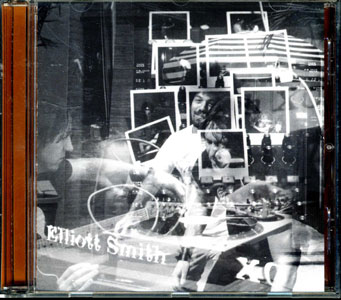
Gloomy composer Elliott Smith’s fourth solo album, XO, should quickly put him on the verge of mass acceptance. Initially a major underground buzz started building in ’97 when Smith’s Either/Or received critical acclaim, and the plaintive, “Misery,” featured on Hollywood smash, Good Will Hunting, was nominated for an Oscar Award.

On XO, Smith continues to build a more dynamic sound, taking advantage of multi-layered instrumentation, wonderfully embellished harmonies, and sweeping melodies. Great lyrical depth, provocative imagery, and impressionistic subtleties flow through the droll baritone’s unerringly infectious songs.

“Sweet Adeline” slips comfortable from a folk-acoustic opening to a crescendo-heightened chorus. Piano-based “Waltz #2 (XO)” builds a mysterious aura as Smith’s gurgled processed vocals recall the Beatles’ experimental “Flying.” Maintaining a shady pleasantness throughout, XO hits its fertile peak with wispy “Bottle Up And Explode” and shimmering sparkler, “A Question Mark.”

A sensitive, low key singer-songwriter, Smith may open the mainstream floodgates for underrated male acoustic artists such as Ron Sexsmith, Freedy Johnston, David Poe, Bill Callahan (Smog), and Anders Parker (Varnaline). I spoke to him about his latest masterpiece one hot summer day in ’98.

Wasn’t the new album, XO, originally titled Grand Mal?

ELLIOTT: I wanted to call it XO at first, but I thought it was too close to the name of my last album, Either/Or. But it turned out Grand Mal was the name of a band and there was going to be a problem. So I changed it back to XO. It’s just what people write at the end of letters after they sign their name.

Actually, many of your songs could be described as plaintive dispatches. What differentiated these songs from Either/Or’s batch?

ELLIOTT: I played more instruments on XO because there were more around in the studio. Other than that, I don’t know how these songs differ from the others. I’m glad they are stylistically different. As long as I don’t make the same record twice, I don’t think about it much.

What unique quality did producers Rob Schnapf and Tom Rothrock add to your songs?

ELLIOTT: They’re really good at helping me filter out the stuff that isn’t adding something to the song, but rather, is sitting around on top of it. I usually do a good job at that myself, but they helped refine songs.

Do you need to be spurned by love to write about heartache and misery?

ELLIOTT: No. Not at all. I’m not coming from any particular emotion. Someone could live ten minutes and have plenty of material to write records for. There’s no subject more interesting to write about then another subject.

Have you gained more composure as a writer and performer over the last few years?

ELLIOTT: Maybe. Anything someone does a lot they’re bound to get more comfortable doing. But I don’t think about it in terms of getting better or worse. I just like to do it.

What will be the initial stress track from XO?

ELLIOTT: The song they’re gonna focus on is “Waltz #2 (XO). It’s the title track.

I thought that song sounded like long lost Beatlesque ‘70s solo artist Emitt Rhodes?

ELLIOTT: I hadn’t heard of Emitt Rhodes until a few weeks ago. We were trying to make it kind of Beatles White Album-ish. That was one of my favorite albums, along with Magical Mystery Tour.

Did you listen to a lot of radio as a kid? Did your parents turn you on to music?

ELLIOTT: I grew up listening to classic rock. I liked melodies, so as a kid I liked the Beatles. My folks listened to Country and Western since I grew up in Dallas, Texas. It was a lot of redneck stuff that nowadays I could like, but at that time I didn’t dig it at all. I wanted to listen to my Kiss records instead.

On “Baby Britain,” you mention Tommy James’ ‘60s pop smash, “Crimson & Clover,” and it sounded like you sampled the guitar part from the Beatles’ “Getting Better.”

ELLIOTT: That’s me playing that guitar part. And Rob Schnapf plays one of the other guitars. It’s one of those un-syncopated downbeat octave guitar parts that has a cool vibe people don’t usually do. The song is about someone who couldn’t get out of a depressing loop. And it’s long and repetitive, which makes it parallel to the way “Crimson & Clover” was.

Perhaps the most ambitious song is the mesmerizing opener, “Sweet Adeline.”

ELLIOTT: Most of its music is derived from a song I made up a long time ago when I was 17. The words are all different, but the chord progression is not. I wanted to do something with the song, but it never worked out until now.

Are there any songs you’ve given to other artists?

ELLIOTT: I gave away a song called “Figure You Out” to Mary Lou Lord. Actually, she figured it suited her. I was into easy accessible pop at the time and I thought it was a throwaway.

What type of literature do you enjoy reading?

ELLIOTT: Right now I’m reading Tolstoy’s Resurrection. People seem to think some of the old great writers are really heavy and difficult to read. That’s not true. I like a lot of Russian novelists. I’m not into the self-conscious modern books. The old books seem to be written by people who wrote because they loved to and not to impress their friends. They weren’t trying to be cool bohemian writers.

Do you have any funny Oscar Awards stories to relate?

ELLIOTT: Oh yeah. Everything that happened there was funny. It’s just a silly situation. It’s an awards show, you know?

POLVO / TRANS AM @ TRAMPS

Polvo / Trans Am / Tramps / January 10, 1998


This enjoyable sold-out show placed prog-rock in a semi-thematic multigenerational metamorphosis. Tickets went fast as word spread that Chapel Hill, North Carolina’s Polvo may be playing their final New York date as a band. Even ex-Cop Shoot Cop Firewater leader Tod A, in search of a ticket, didn’t attempt to get inside the packed 23rd Street club.

In support of the recent album, Shapes, Polvo started their enthralling, if sometimes problematic, set with a few skewed inside-out Blues riffs stylistically described in song as “Rock Post-Rock.” Throughout, a one-hour-plus gig, guitarists Dave Brylawski and Ashley Bowie struggled to keep their sporadic, nearly inconsequential vocals above the impressive instrumentation.

Perhaps one early epic-length eruption temporarily lost focus, but beyond that, Polvo gained composure with each distended piece. An inverted version of “Purple Haze” rampaged into The Who’s Tommy underture, “Sparks,” tempting a sinister Brylawski to comment ‘classic rock will be all over the radio in two years. I’m sure.’

On the implosive “Enemy Insects,” guitars surged while Steve Popson’s rattling bass shook the foundation, giving this evening its high watermark. For an encore, Polvo came full circle with a medley of commingled classic Led Zeppelin, Yes, and Jimi Hendrix riffs. Sure, everything didn’t go Polvo’s way, but they took chances and proved their appreciation for Baby Boomer album-oriented rock matched their assertive, gutsy approach to original post-Gen X progressions.

Exceptional DC trio, Trans Am, proved to be perfect openers, deconstructing rock-Jazz excursions that seemingly broke down the sophisticated, kaleidoscopic experimentations of Soft Machine and king Crimson. Multi-instrumentalists Nathan Means and Phil Manley curried wiry, syncopated electrodes from stacked keyboards, cranked out dual buzzsaw bass clusters, and scattered a few guitar textures atop web-like instrumental passages.

Climaxing in a shuttered noise-rock rumbler, Trans Am splashed resourceful feedback and syncopated rhythms into a tense convulsion. At the closing, guest Chapel Hill guitarist Grant Tennille came onstage with the boys to shake up a sly quasi-blues Zeppelin medley centered around “The Song Remains The Same.”

JON SPENCER BLUES EXPLOSION / DELTA 72 @ CBGB

Jon Spencer Blues Explosion / Delta 72 / CBGB/ September 28, 1996

The line of fans stretched around the block to see jon Spencer Blues Explosion on this pleasant Sunday evening in New York. Those lucky enough to get inside had to fight their way through the pit area for close-up glimpses. One girl fought dehydration brought on by intense heat while others waited for the charitable two-hour Blues Explosion set to end in order to get to the downstairs bathrooms.

Perched above a two-foot platform fronting the main right speaker behind three lovely women, I sweat through Delta 72’s white soul confections anxiously awaiting the Blues Explosion. Guitarist-singer Jon Spencer thrilled the packed crowd with his friendly demeanor, playful kitsch, and assertive axe wielding. His lips pressed against the mike as he leaned back to sing crusty metallic blues-rockers, swampy rockabilly raveups, offbeat R & B, and countrified soul.

A dozen testosterone-fueled motherfuckers in front of the stage proved to be somewhat hazardous during slamming jams such as the scorching Skunk,” the hook-crazed “Bellbottoms,” and the Rufus Thomas shuffler “Chicken Dog.” But the bassless trio kept piling on dramatic intensity, pausing only to take a short break before an extended encore enveloped by “The Blues Explosion Theme.”

Second guitarist Russell Simins and drummer Judah Bauer never wavered, providing the GQ-looking Spencer with solid support throughout. Impressive! Fans should also check out their latest recording, Now I Got Worry.

Led by steely-eyed, acrobatic guitar slinger, Gregg Foreman, DC quartet Delta 72 ground out a tenacious soul-drenched groove with fine results. Foreman’s raw-throated assertions were colored by Sarah Stolfa’s persistent Farfisa beat, drummer Jason Kourkounis’ busy stick work, and Kim Thompson’s Replacements-ripped bass thump. By mixing ruptured instrumental frenzies with zombie-like meditations, Delta 72 did a wonderful job supporting Spencer’s headliners.

REEL BIG FISH / MR. T EXPERIENCE @ IRVING PLAZA

Reel Big Fish / Mr. T Experience / Irving Plaza / March 3, 1996


Though they play different styles of loud, catchy West Coast pop, California’s Reel Big Fish and Mr. T Experience unified a highly energized, fully appreciative teen-dominated audience at Irving Plaza. While brassy seven-piece Reel Big Fish speed up Two Tone Brit ska and give it an assertive kick in the pants, bouncy ‘70s-flavored rockers Mr. T Experience unleash adrenaline-fueled, feisty pre-Green Day punk.

Several energetic fans went crowd surfing while others gleefully moshed non-stop, creating an intense buzz that further stimulated both bands.

To get the boys and girls juiced up, Reel Big Fish led off with the goofy Animal House-imbibed “Trendy,” throwing caution to the wind by cheekishly begging ‘please don’t hate me ‘cause I’m trendy’ and chanting the infectious catchphrase ‘everybody’s doin’ the fish, yeah yeah yeah.’ Their self-effacing humor and hilarious bohemian sloganeering dotted nearly every song.

Gleeful fans connected instantly with each little ditty, joining in on silly choruses and a few casual, curse-filled verses. Playfully mocking the so-called third wave ska scene and their own teen-reckoned insecurities, RBF offered a constant stream of exuberant adolescent laments to remedy schoolyard blues. And when they tossed out a new song, they had no problem getting a thumbs up from the crowd.

Rarely does a band get the complete audience eating out of its hand, but it became customary this fortuitous night, especially during the anthemic “Everything Sucks,’ and the daringly obvious “Sell Out.”

Perfect frat-boy fodder for misguided youths, RBF fully understood the plight of its followers. As silly pranksters, they never met a trend or heartbreaker they couldn’t sufficiently razz. They snubbed rapper “Snoop Dogg Baby” on an innocuous teaser and a former lover on the lesbian-licked “She Has A Girlfriend Now.”

Mr. T Experience delivered hard rock candy and bubblegum-chewed power pop that received a dense bass-thickened tone at this spacious venue. Guitarist-vocalist Dr. Frank struck crooked knee poses and jumped up and down while his cheesy harmony-doused two-minute tune shimmied forward. Strangely, after asking the crowd if they wanted to hear a ska song, Dr. Frank broke into the Lurkers’ punk classic, “Sonic Reducer.”

Taking the best elements of ‘60s/ ‘70s AM radio smashes (a cool cover of Elton John’s obnoxiously sassy “Don’t Go Breaking My Heart” and the ultra-catchy original “Ba Ba Ba Ba Ba”) and sharp-witted Bay area punk, MTX proved they could still get excited over simple pleasures.