CAVESTOMP @ CONEY ISLAND HIGH

Cavestomp / Coney Island High / October 25, 1997


This rampaging two-night Cavestomp!, sponsored by On Any Third Sunday, admirably captured the ageless nostalgic essence of underground guitar rock. Attending Saturday’s show were a diverse crowd of ex-hippies, punk rockers (the Candy Snatchers were spotted getting high at the upstairs lounge), mods, post-mods, and minimalist junk-culture enthusiasts. Literally defining the phrase ‘keep it simple stupid,’ this ghoulish pre-Halloween gig kept three-chord rockers comin’ fast ‘n furious despite occasional technical glitches.

Hosted by Fleshtones singer, Peter Zaremba (aided by obscure vintage vinyl played between sets), Cavestomp also featured merch tables with primal garage and punk recordings plus memorabilia. BBC footage of the Rolling Stones, the Move, The Who, and dozens more was shown at intervals.

As I arrived, the Insomniacs were playing nightmarish psychedelic rockers with reckless abandon, giving skeletal, no-holds-barred songs a helluva swagger. Somebody please put the Insomniacs on a bill with the Dropouts for a maximum fun ‘90s version of ‘60s punk.

Stockholm’s maddeningly archaic Nomads kept their composure after a blown amp cut short a version of Teenage Head’s “Picture My Face.” Opening with a perfectly scuzzy instrumental, the Nomads dedicated the anthemic “16 Forever” to the Dictators’ Andy Shernoff before giving the crowd a viciously searing “Touch My Hand” encore.

The Henchmen’s bustling Blues-tinged set was not unlike a stripped-down version of New York’s ‘60s legends the Blues Project. They let grinding organ saturate blurry guitar-drenched songs. But both Detroit’s Henchmen and Rochester’s Chesterfield Kings were temporary victims of faulty equipment and a muddy sound mix, taking away some of the energy but none of the verve of their combustible sets. Rompin’ through cryptic raunch rock, the Chesterfield Kings’ shag-haired singer-harp player, Greg Prevost, prowled around the club with a wireless mike that cut out at times.

Boston’s Lyres brought down the house with basic muscular retro-rock sizzlers underscored by snazzy organ flourishes. Their steamy after-hours party music will never be faddishly fashionable, though it deserves massive exposure for its uncompromising simplicity and proud association with rock’s roots.

Kudos to promoter, Jon Weiss, for assembling such a terrific and much needed event (and for getting me some free brews). P.S. Sorry I missed ? & the Mysterians, but it was already 3 A.M.


BLONDE REDHEAD / BLACK HEART PROCESSION @ BOWERY BALLROOM

Blonde Redhead / Black Heart Procession / Bowery Ballroom / November 15, 1999

Catering to more sophisticated and advanced underground tastes, the Bowery Ballroom featured the experimental brilliance of intuitive New York trio, Blonde Redhead, and the soft-focus delicacies of San Diego-based Black Heart Procession.

Blurring the line between post-modern noise rock and artsy prog-rock, Blonde Redhead’s enigmatic, guitar-imposed abstractions seem to initiate from Jazz related improvisations. Guitar masters Kazu Makino and Amadeo Pace offer slashing Sonic Youth-inspired chordal fury countered by single-note riffs that lingeringly bend and curl around tension-filled settings.

Besides providing diligent axe work, doll-faced Makino also manipulated taped sequences while relinquishing anguish and despair in an urgently pleading voice comparable to a vexed PJ Harvey or a dramatically exasperating shriek reminiscent of heartsick diva, Bjork. Drummer Simone Pace kept the rhythm red hot and feverish, banging skins with a mighty thrash.

Through the penetrating barbed wire affects, chaotic mantras formed. The spiraled warbler, “10,” featured Fugazi-linked Jerry Busher’s screeching trumpet blasts and a bustling slacker-styled All Scars punk dancer named Chuck. Siren exhortation, “Luv Machine,” sounded even more emotionally riveting done live.

Never shortening the distance between band and audience, Blonde Redhead slid in and out of clangorous fare with workmanlike precision. For an encore, they delivered the minimalist industrial machination, “In An Expression Of The Inexpressible, ” which locked into tape loop dementia for several minutes without changing course or increasing momentum. Stifling!

Black Heart Procession’s perpetually haunting, meditative death marches provided quiet peril beforehand. Wearing black sunglasses on a dark-lit stage, Pall Jenkins and Tobias Nathaniel tinkered with Wurlitzer piano, toy piano, Moogs, guitars, sheet metal, and saws, creating understated minor chord therapy out of ethereal imagery.

Although I missed half the set, fans seemed completely mesmerized by their withering soft-core and slow burn dynamics and brittle late night ambience.

All in all, a very rewarding evening for those who love being musically challenged. As I left the packed club, I thought I spotted no wave art-pop icon, Arto Lindsay, near the bar enjoying the proceedings.

THE FROGS ARE PUNKER THAN YOU

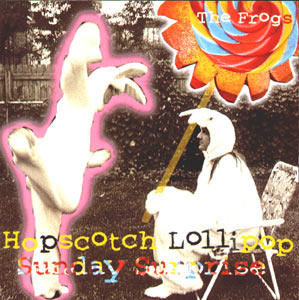
FOREWORD: I was not so much impressed by the Frogs off-the-cuff home-recorded coffeehouse-styled punk-imbibed novelties as much as I was intrigued by their audacious rips on conservative moralists and asshole media types. Wisconsin brothers Dennis and Jimmy Flemion began the Frogs was back in 1980, but only received properly publicized exposure ten years after when several soon-to-be-famous grunge artists touted them. I interviewed Dennis Flemion in ’01, when the Frogs last album, Hopscotch Lollipop Sunday Surprise, was released, and then put out of print, within months. This article originally appeared in Aquarian Weekly.


Witty Milwaukee deviants, the Frogs, gained recognition, and the respect of Nirvana, Pearl Jam, and the Smashing Pumpkins, by giving the finger to hypocritical conservatism and deriding phony moralists.

Masterminded by brothers Dennis and Jimmy Flemion, these twisted freaks provocatively ‘derange’ totally bizarre improvisations. 1989’s gay-themed Only Right And Natural and the oft-bootlegged Racially Yours mocked gay bashers, white trash, and prejudicial chauvinists with lewd profundities. The media-blitzed Starjob EP and ‘99s Bananimals provoked right-wing extremists, humorless hicks, and countless squares.

Recently, the Frogs unleashed their most polished, unified, and discreet long-player, the pop-rooted Hopscotch Lollipop Sunday Surprise. Gone is the lo-fi amateurism and a portion of the duo’s offhanded satire, replaced by conscientiously heartfelt glam-rock confections such as the buzzy “Whisper,” the stoically-sung fuzz-toned “Sleep On The Street,” the T. Rex-sniped “Bear,” and the implosive “Better Than God.”

Nevertheless, the Flemion’s can’t resist getting goofy for the blow job-addled “Know It All” and the warped psychedelic dreamscape “Nipple Clamps” or dismissive on the vehemently straightforward “Fuck Off.”

Originally perceived as a double-length concept album, Hopscotch initially salutes monogamous heterosexual contact instead of indulging in the taboo escapism, misogyny, bestiality, and sacrilegious lust hilariously exposed on previous releases.

Your new album has a more serious tone.

DENNIS FLEMION: We’ve played serious songs since our inception, but the labels don’t put them out. People don’t want to hear them in bars. They wanna rock. Unless you’ve built up an audience and you’re a demagogue, it’s hard to get people to sit back and listen. The days of Bob Dylan at the Royal Albert Hall, as documented on Don’t Look Back, when you could hear a pin drop, are over. Nowadays you’d hear people yelling song titles and shit. Everybody’s in everybody else’s business – which is a problem. They do it with behind the scene shows about actors, demystifying everything. It was better when we were in awe of these people. You get greater insight to spur your mind, but it makes it contrived and lacking of substance.

Are you pissed off that ultraconservatives don’t understand the Frogs sarcastic wit?

DENNIS: We were around before politically correct culture existed. Since 1980, our independent music has annoyed naysayers in the press.

You fist-fucked that priest on Bananimals.

DENNIS: I’m of the mind it was a goof. That’s why Only Right And Natural’s “Drugs” had a priest with a yeast infection. The person who puts down or accuses someone is usually guilty of the deed. John Lennon believed in peace, but was an angry man with violence inside him. Our songs aren’t pessimistic or evil, although saying that is like slitting my own throat. It’s detrimental to our band to say we’re not controversial because a certain segment of society views us that way. People are on different wavelengths with PC culture. Like someone said about Hitler’s reign, ‘It’s a lucky day for the ruler when the masses don’t think.’

If you know anything about spirituality, you know it’s hard to walk the walk. You might long for something on the side. This is normal. I’m just pointing it out. You get an orgasm for a few seconds of heaven. You feel connected. But then you’re kicked out of the garden. That’s the carrot religion holds up for the culture. After hearing it long enough, you finally go, ‘It’s not taking me there.’ It’s a mood-altering image religion pimps on.

The stuff we make up is done on the spot – which can be difficult. We can write on any universal theme and strike a chord. But there’s no place for censorship in art, whatsoever. The purpose is to express. That should never be shackled. Kurt Loder on MTV was discussing how lyrics could lead to hate crimes. What’s next? Banning everything. It makes you angry to see how the public gets snowballed.

Your humor seems to mock local Wisconsin cheeseheads as well.

DENNIS: It’s probably a reaction against them. The levelof hick stupidity is unbelievable. You shake your head in disbelief. Some of my sense of humor comes from my parents. But I took it farther than they did. I believe in freedom of speech and expression of doing with your soul whatever you want. Why be thin-skinned? There’s so much fear out there. It’s the dumbing down of society.

TV feeds off stupidity. Clinton’s out of office so now the liberal media that previously sucked his dick could smear his already horrid, diminished reputation anytime there’s a slow news day.

DENNIS: Now Bush is going, ‘We have to straighten out the economy.’ What was wrong with the economy? They manufacture this bullshit in the press. Like we had to go bomb some country. They show it on the news and there’s nothing going on there. Why bother? What’s the threat? But Iraq pulled a fast one on us (during the Gulf War) when they started burning the oil fields. The footage was similar to volcano eruptions. That was more punk than any band out there. That fucker (Saddam Hussein) is on the edge.

COME KEEPS DRIPPING ON ‘NEAR LIFE EXPERIENCE’


FOREWORD: Though I’d spoken to Come boss, Thalia Zadek, and right-hand axe man, Chris Brokaw, several times before (at the Mercury Lounge and other venues), this 1997 interview at a Chelsea café in Manhattan was our first ‘sitdown.’ Zedek had worked her way up the alt-rock no wave ladder through formative bands such as Dangerous Birds, Uzi, and Live Skull, releasing a few solo albums after Come disbanded in ’99. Chris Brokaw, former Codeine drummer, made over a half-dozen hard-to-find but easy-to-love and anything-but-compromising solo albums, including ‘05s truly superb Incredible Love. His live show at Maxwells in Hoboken during ’08 was one of my favorite events of the year. This article originally appeared in HITS magazine.


Baseball legend Babe Ruth grew up in Baltimore and reached Hall of Fame status playing for the Boston Red Sox and New York Yankees. Similarly, venerable tortured artist, Thalia Zadek, was raised in Baltimore, then settled in Boston after gaining initial credibility playing New York’s Lower East Side. She lent her formidable talents to cult faves Uzi and Dangerous Birds during the ‘80s. Along with Scarsdale, New York native and co-guitarist Chris Brokaw, they formed the critically acclaimed band, Come, recording audacious debut, 11:11 in ’92, and its respectable follow-up, “Don’t Ask Don’t Tell” two years later. With bassist Sean O’Brien and drummer Arthur Johnson in tow, they also backed former Dream Syndicate leader Steve Wynn on ‘96s Melting In The Dark.
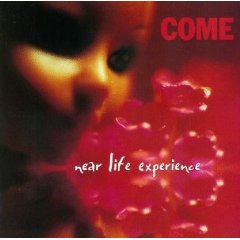
For Come’s current project, Near Life Experience,” Zedek and Brokaw recorded and then toured with Tara Jane O’Neil and Kevin Coultas, both of whom are on loan from ethereal mood purveyors, Sonora Pine. Near Life Experience damn well could be Come’s most accessible and adroit full length disc. It prominently features the cellophane-wrapped miasmic opener, “Hurricane,” the twisted mantra, “Weak As A Moon,” the tension-packed, electrocution “Bitten,” and the balmy reflection, “Sloe-Eyed.”

I spoke to Zedek and Brokaw at a Chelsea diner. Legend has it they picked up the check.

How did you come up with Near Life Experience’s twisted title?

THALIA: The title refers to a slip of the tongue. I was telling someone I had a ‘near life experience,’ but meant to say near death experience.. Chris was cracking up at the imagery of that.

How has your music developed over the years?

THALIA: The Dangerous Birds were very poppy. We had a lot of different ideas. But I got into straight punk afterwards. I began to like the unstructured music of the Birthday Party, which was similar to punk if you tore it apart.

How can artists maintain critical acclaim when impending popularity offers the chance to sell out?

THALIA: I think music that is really original will get popular. Musicians aren’t doing themselves a favor by jumping on a trend because trends change. If you make stuff that’s interesting and original while trying to express yourself rather than copy someone else, it’ll be appreciated. You may not be a superstar, but you’ll get an audience. It doesn’t make sense to me how people pander and sell out because if you lose credibility and integrity, there really isn’t much else. I like different types of music. But I’m always baffled by what gets popular.

What current band annoys you?

THALIA: Everclear strikes me as writing incredibly stupid songs. They get on my nerves and make me want to cringe. I like catchy songs with good melodies, like Oasis, but I don’t get into their silly lyrics.

What’s the first record you ever owned?

THALIA: Either “Kung Fu Fighting” or the Carpenters “Top Of The World.” I actually didn’t buy much music later on. The first musician I was really into was Bob Dylan. I remember Leonard Cohen. I love his song, “Suzanne.” I discovered more of his music later on.

The gloomy despair of your first two albums seems not as prominently displayed on Near Life Experience. Do you have a happier outlook?

THALIA: I don’t have a more satisfied outlook. But my outlook has changed. I can’t pinpoint what happened, but after 11:11 and Don’t Ask Don’t Tell, we tried to show some variety by not having just a single mood. Instead, we’d write five slow songs and then there would be one fast one thrown in.

The cover art for Near Life Experience seems to imply a reawakened innocence.

THALIA: What it implies is something not quite real. This German lady, Imche Wagner, took those pictures. I loved the colors and the doll sniffing flowers seemed fitting in its artificial nature. But there’s nothing artificial about the music. (laughter)

What made you want to pursue music, Chris?

CHRIS: My dad used to play drums. He once sat in for Jerry Lee Lewis. It was a fluke. He went to see him play at a roadhouse in Indiana and his drummer never showed up. He got paid and did a few sets.

Do you feel restrained being in a backup role to Thalia?

CHRIS: The main reason I play with Thalia is she’s a really good guitarist. Our friends introduced us and we played for hours. It was a great situation because we had a good musical dialogue. And she’s a great lyricist and singer. I’ve always trusted her judgement, even when she puts my music into words. The attention may be on her, but so is the pressure. Our stuff isn’t exuberantly happy so the press picks on Thalia, which is a relief.

What’s the difference between touring Europe and touring the States?

CHRIS: In Europe, they want you to play for a long time. It’s something they speak very highly of. My friends saw Guided By Voices in Berlin and they did five encores. In the States, they’d say that’s enough. But Europeans seem to have a longer attention span.

Who are some of your musical influences?

CHRIS: I was reading Please Kill Me by Legs McNeil. It had quotes from several late ‘70s punk bands which I realize influenced me. New York Dolls. Richard Hell. Iggy Pop, the Contortions, Public Image Ltd. And Bush Tetras. But lately, I’ve been listening to Charles Mingus and other Jazz artists.

What are the first records you owned?

CHRIS: Jeff Beck’s Beck-ola, the New York Dolls’ Too Much Too Soon, and Kiss Alive. One of the reasons I learned to play guitar was because of Kiss. Before that, I bought the singles ‘Bad Bad Leroy Brown” and “Monster Mash.”

LIQUID LIQUID: RAP’S UNSUNG HEROES

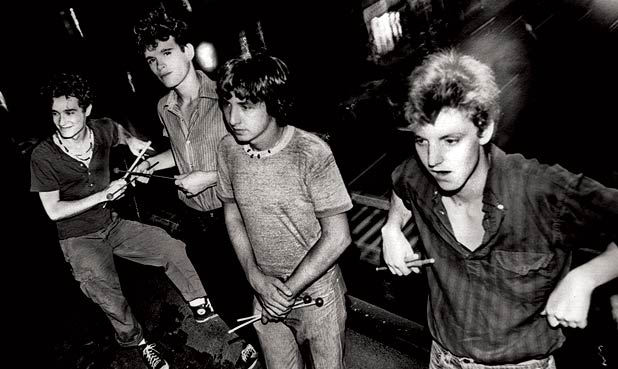
FOREWORD: New York City’s dub-plated groove-based post-punk troupe, Liquid Liquid, crafted influential multi-cultured homemade minimalist recordings a decade before the ‘90s lo-fi do-it-yourself indie rock and rap underground became all the subterranean rage. Grandmaster Flash & Melle Mel’s massively popular 1981 anti-cocaine diatribe, “White Lines (Don’t Do It),” used the elastic bass from Liquid Liquid’s “Cavern” as its musical bed, creating a big club following for the Jersey-originated quartet.

Though they disbanded in ’83, I caught up with Liquid Liquid multi-instrumentalist Richard Mc Guire in ’97 to discuss the generous self-titled double disc compilation that was coming out in weeks. We spoke over the phone for an hour. This article originally appeared in Cover Magazine.


Hip-hop began somewhat inauspiciously when Washington DC’s Chuck Brown was caught “Bustin’ Looose” and North Jersey’s Sugar Hill Gang cooked up a “Rapper’s Delight” in ’79. At about the same time, Liquid Liquid’s combination of diverse elements – Latin percussion, faux-soul, free Jazz, and eastern exotica – lent an extension to the underground scene that wouldn’t be explored until years later.

Influenced by Curtis Mayfield, Sly & the Family Stone, and African jungle rhythms, as well as dub-reggae tape manipulators Lee ‘Scratch’ Perry, Augustus Pablo, and Adrian Sherwood, Liquid Liquid put their minimalist funk smack dab in the middle of the punk and disco rebellions from ’79 to ’83.

Coming together at Rutgers University in ’78, Richard Mc Guire (bass, percussion, piano, guitar, melodica), Scott Hartley (percussion), and Sal Principato (vocals) first called themselves Liquid Idiot. They muddled around the tri-state circuit for a year before hiring Dennis Young on marimba and changing their name to Liquid Liquid.


In ’79, the band performed its first few New York shows at CBGB and various loft parties, on several occasions playing with graffiti artist Jean Michel Basquiat’s band, the Gray. After a three-song tape failed to immediately impress 99 Records (whose clients at the time were respected guitarist-composer Glenn Branca and the Bush Tetras), Liquid Liquid resubmitted a better recorded eight-track tape of a live show at CB’s that got them signed.

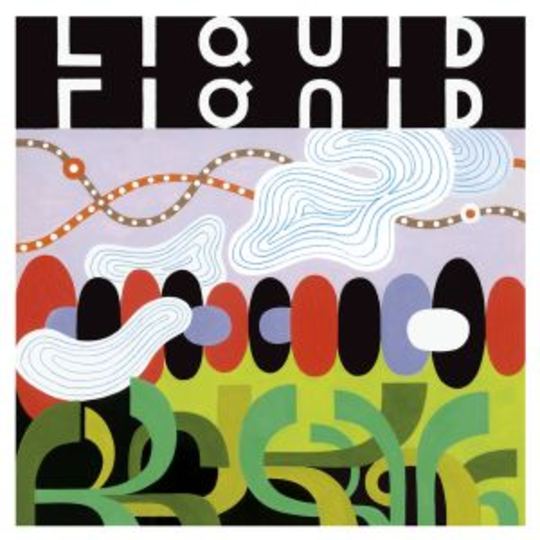
By ’83, Liquid Liquid had played the Peppermint Lounge with loopy dance rockers, Konk, and toured Europe with the Talking Heads. In quick succession, they had dropped two influential extended-play ’81 singles, an inspiring eponymous entree and Successive Reflexes, followed by ‘83 full-length, Optimo. Along with four live tracks recorded at Berkeley Square in ’82, these discs have finally been assembled and repackaged as the historically significant Liquid Liquid on Grand Royal Records.

Relying on intuition and impulse, these untrained, non-conforming Yankee experimentalists prefigured many post-modern studio techniques. They introduced freeform minimalism (check out the live version of “Push”) and loosely-structured rhythms devoid of any cultural restrictions.

Remarkably, Liquid Liquid was respected by both the underground rock community and dance club patrons. And their impact on electronica, drum ‘n’ bass, and ambient trip-hop is just starting to be realized.

“We made all-encompassing groove music,” Mc Guire says. “Each member collaborated, smoked pot, then waited for a good groove to arise. Scott and I referred to Liquid Liquid as ‘body music’ We went through permutations, growing from unskilled musicians to more sophisticated technicians.”

While hanging around in NewYork’s Lower East Side, McGuire became intrigued with Latin sounds. As meringue and other south-of-the-border rhythms filtered into ‘80s dance subculture’s mega-mix, Liquid Liquid seemed bent on internalizing Latin music as much as expanding hip-hop’s boundaries. Ultimately though, it was the rubbery “Cavern,” featuring the infamous bass groove sampled for Grandmaster Flash & Melle Mel’s coke-snubbing missive, “White Lines (Don’t Do It),” that made Liquid Liquid an important precursor of what is now respectfully labeled ‘old school’ hip-hop.

“Just when “Cavern” was climbing up Billboard’s dance charts,” Mc Guire says, “Afrika Bambaataa picked it up and began playing it at the Roxy, where Grandmaster Flash originally heard it. Then, club DJ Jellybean Benitz would close dance nights at the Funhouse with it. At the Paradise Garage, which was a huge gay joint and a benchmark of its time we’d play four songs. Then the DJ’s would spin discs.”

While waxing nostalgic, Mc Guire recognizes and accepts the shift in the music scene but doesn’t feel completely out of touch.

“It’s definitely a different scene in New York now with people cutting up music and giving a rebirth to old songs. They take it to another level using computers to construct and compose. And the form is growing rapidly,” he insists. “There’s a lot of drum ‘n’ bass I like, mostly DJ-related stuff like DJ Shadow, Tortoise, and U-Ziq. And Beck is all over the place. He puts it all together in one delicious stew and doesn’t take himself too seriously.”

On the cusp of club fame accorded by “Cavern,” the original Liquid Liquid called it quits in ’83. The pain of not receiving proper compensation for the use of its samples (check out Deee-Lite’s “Bellhead” and the Lights “Build A Bridge”) led Mc Guire to seek alternative ventures. He became a New York Times illustrator and now designs books, records, and Swatch watches. His own Mc Guire Toys line climaxed with ‘EO,’ an animated solar-powered toy. Still fond of his original artistic direction, he recently created a new video for “Cavern” at an animation studio. So keep watching for a possible third wave of Liquid Liquid.


MASTERS OF REALITY SKEW THE BLUES

FOREWORD: Masters Of Reality frontman Chris Goss informally inspired the entire stoner rock movement of the late ‘90s. I met Goss at a cordial dinner ’97 party at some small Manhattan eatery prior to this interview – which was conducted over the phone due to a horrendous accident blocking the Washington Bridge.

At the schmoozing dinner party were many High Times and Smug Magazine pals. As the smoke cleared and after Goss performed acoustically, I got to speak to the semi-legendary metal head about his muse. He was as nice as could be to everyone on hand. This article originally appeared in Cover Magazine.


After playing a refreshing one-hour acoustic set at tiny East Village eatery, Old Devil Moon, hefty Masters OF Reality singer-guitarist Chris Goss recalled how he used to practice six-string by studying Led Zeppelin’s nimble acoustical arrangements. Influenced by British rock guitarists such as Jimmy Page and Ray Davies, Goss also credits Blues masters Freddie King and Howlin’ Wolf for additional inspiration.

Without succumbing to demonic heavy metal pretensions or bad hair band atrocities, Masters Of Reality make trebly, blackened hard rock that reclaims the territory Cream and Ten Years After conquered in the late ‘60s.

Goss claims, “The British rockers skewed the Blues with strong, Gothicized beats and a big bottom end. They slowed down blues riffs, lowered them an octave, and stripped down the songs to emphasize the low end, creating a Hammer of the Gods atmosphere.”

After an eponymous ’88 debut and its belated ’93 follow-up, Sunrise On The Sufferbus, the eclectic The Ballad Of Jody Frosty went unreleased in ’95 (due to amicably resolved record label politics).

Returning to form, Masters Of Reality soar through the stratosphere with ‘97s masterful How High The Moon, recorded live at Los Angeles’ historic Viper Room.

“We compacted an hour-and-a-half show into a palatable 50-minute disc that cuts to the chase. There are no weird drawn-out moments on it,” Goss maintains. “And we decided to record at Johnny Depp’s Viper Room because it was a small room we felt good playing in. Depp’s partner, booking agent Sal Jenko’s a cool guy who respects bands that play there.”

Goss interestingly compares the loud, brazen guitar savagery of ‘60s Brit-rock with the spitfire assertiveness that Seattle grunge bands thrived on during the early ‘90s.

Coincidentally, Goss played with legendary Cream drummer, Ginger Baker, on Sufferbus. And he harmonizes with grunge-pop idol, Scott Weiland, formerly of Stone Temple Pilots, on the beautifully pale ballad, “Jindalee, Jindalie” (originally penned for Jody Frosty).

“Working with Ginger was such a privilege and a positive experience. We clicked so wonderfully. Making rock and roll records is a great way to make a living.”

LILYS / SWIRLIES @ KNITTING FACTORY

Lilys / Swirlies / Knitting Factory / May 23, 2003

Lilys mainstay, Kurt Heasley, and Swirlies mastermind, Damon Tutunjian have a lot in common. Both originally took inspiration from cynical trailblazing UK noise-rock shoegazers Jesus & Mary Chain and My Bloody Valentine; gained significant underground prominence around ’92; survived some lean years; and returned to the studio for worthy ’03 albums promoted for curious Knitting Factory patrons this rainy Friday eve.

Splitting time living between New York and Boston, Tutunjian assembled a new Swirlies crew consisting of guitarist Rob Laasko, Mice Parade drummer Adam Pierce, and fill-in keyboardist-backup vocalist Doro Tachler (with Lilys bassist Mike Walker joining for several tunes). Losing none of the resilient ambitiousness and wide-eyed enthusiasm best expressed on ‘93 apex, Blonder Tongue Audio Baton, the Swirlies paraded through a revelatory 45-minute set mostly featuring choice cuts from the recent seven-song Cats Of The Wild Volume 2 (Bubblecore Records), their first release in nearly eight years.

Delivering blissfully distorted compositions with unlikely concision, Tutunjian’s latest lineup piled scree textural warmth to escapist ephemera, pausing at length between numbers for proper tuning. Pretty melodies underlined scruffy psychedelic-tinged indie pop mindbenders. Warped chord structures and swelling reverb hovered above the trebly bottom end, shaping dizzyingly serene blues-y schisms post-collegiate brainaics sucked up like free beer.

Afterwards, Philly-via-DC’s newfangled Lilys were unable to reinvigorate the lissome verve of their respectable fifth long-player, Precollection (Manifesto Records). Heasley’s dryly absurdist humor lost half the crowd and a few casual acoustic turnabouts seemed laborious. A drunken spectator at the back of the club started heckling him during one of his drawled spoken rants, requesting Elton John’s “Rocket Man” for no apparent purpose. Happily, Heasley came back with some hilarious putdowns and the Nazi-like Manhattan cigarette patrol caught the drunkard smoking butts (a definite no-no in these conservative times), silencing him for the remaining half-hour.

Despite the Lilys inconsistencies, Heasley’s picturesque lyrics illuminated Precollection’s sturdiest material, as well as hot nuggets from ‘99s appreciable The 3 Way. The absolutely radiant “Squares” was an undeniable highlight. But while Heasley’s sweeping caterwauls and unguarded optimism definitely kept long-time admirers attentive throughout, those sitting on the fence may’ve been unmoved or unimpressed.

DASH RIP ROCK / INTERPRETERS @ MAXWELLS

Dash Rip Rock / Interpreters / Maxwells / December 9, 1998

Experienced boozy New Orleans swamp rockers, Dash Rip Rock, never fail to deliver adrenalized good-timey party tunes. And they kept their streak going with a two-hour set at Hoboken’s regenerated Maxwells, performing tracks from their eighth album, Paydirt, plus seasoned faves and a host of cheery covers.

Relying on hilarious wit, rockin’ good hooks, and nifty cocktail-soaked harmonies, the game trio opened with a rip-snortin’ take on Hank Williams’ enlightened “I Saw The Light” that was immediately countered by a downtempo hillbilly treatment of Guy Mitchell’s downhearted hootenanny “Singing The Blues.” Then, these shot-glass shootin’ mojo bohos offered the drunken love ode, “Locked Inside The Liquor Store With You,” righteously claiming at the song’s conclusion, ‘we have more drinking songs than other bands have songs.’

Part of the fun was seeing them rumble through cheesy oldies like Grand Funk’s “We’re An American Band,” Big Star’s “In The Street” (made popular by FOX’s vogue-ish That ‘70s Show), and Rush’s “Fly By Night” as well as ‘90s indie rock like the Muffs “Sad Tomorrow” and Vaselines “Molly’s Lips.” They even added a slow burning “Please Come Home For Christmas” for seasonal affect.

Able to rock and roll ‘til the cows come home, Dash Rip Rock showed off tricky flashes of brilliance and a fanatical pop knowledge, finally bowing out when the late hour forced all but thirty hardcore fans to retire.

An astonishingly propulsive live band, Philadelphia’s the Interpreters led off the evening with the thrilling “Glorious,” a garage thrasher neatly based on the emphatic opening riff of The Who’s pre-punk rouser, “My Generation.” Far more powerful onstage than on their no-less-wonderful Back In The USSA, the trio’s primitive attack and raw energy kept the somewhat reserved audience enthralled, especially during blazingly chanted anthems like “Shout!” and “I Should Have Known Better.”

Singer-bassist Mark Gaer’s goofy antics peaked on the punk-stimulated closer, Uptight,” where he cracked up fans by squirming on the floor to do the Worm while the band temporarily slipped into emblematic Philly hometown Rocky theme, “Eye Of The Tiger.”

This show offered some of the best damn electric music you’re likely to find anywhere. So all hedonistic pleasure-seekers should feel welcome to get liquored up and enjoy either band next time they come ‘round.

JESUS LIZARD @ IRVING PLAZA

Jesus Lizard / Irving Plaza / January 25, 1997

FOREWORD: Noisy post-punk stunners, Jesus Lizard, were in town promoting their fifth album, Shot, the second to last studio offering these seminal Chi-town fixtures would make before breaking up. Though I regretfully missed openers, Brainiac, I had a good time drinking and goofing around with them post-set as I had previously at the Mercury Lounge with childhood pal, Scott Wagenhoffer. Tragically, Brainiac leader Tim Taylor was killed in a car accident later that year. A decade-plus, his bands’ solid rep still precedes them. Many bands have mentioned Tim’s virtues posthumously.

Jesus Lizard fans take their band very seriously – watching every lurking movement dramatic singer-screamer David Yow makes. With a commanding onstage presence, Yow sweats until he’s finally shirtless, urgently spitting out harrowing lyrics like a possessed demon in need of immediate exorcism. He occasionally stage dives into the flowing mass of bodies in front of Irving Plaza’s stage, working the audience into a frenzy.

Surrounding Yow at each end of the stage are guitarist Duane Dennison and bassist David Sims, the dynamic duo whose punctual, gut-crunching riffs manage to coalesce above Mac Mc Neilly’s persistently gritty drums.

But Chicago-based Jesus Lizard never allows the surging guitars and alarmingly distorted overtones to venture into mosh-induced hysteria. Instead, they create portentous semi-Industrial abrasions; relentlessly demolishing barbed tunes such as the terse, rubbery Mistletoe,” the demanding “Uncommonly Good,” and the rumbling “Pervertedly Slow.”

For over an hour, Yow maintained his lunatic fringe, intensifying each song with spirited performances. At times I thought Jesus Lizard should’ve at least temporarily changed the tone and tempo, but each time they came up with another captivating gem. And the generous encore gave the crowd time to unwind as the majority either pogoed or shook their heads up and down.

Fuck those close-minded commercial radio programmers for not forging ahead and discovering this truly audacious quartet, especially in the age of grunge.

Due to my own stupidity, I missed Brainiac’s set beforehand. But if they were as great as they were last February at Mercury Lounge I’d advise anyone with a taste for inventive post-rock noise-pop to indulge immediately. I will not rest until I see them play live again.

HIGH LLAMAS / LOW / MAGNETIC FIELDS @ TRAMPS

High Llamas / Low / Magnetic Fields / Tramps, April 9, 1998

Pleasantly charming lightweight art-pop rarely gets any more intimate and mesmerizing than this wonderfully adorned triple bill on a rainy Thursday evening at Tramps. The well-balanced lineup of sure-footed underground musicians made sure the audience went away both relaxed and pleased. Several fans left before the High Llamas finished, but that was mainly because they were ultimately satisfied and probably tired (the headliners played for more than 80 minutes) instead of disinterested.

High Llamas whimsically morphed psychedelia, exotica, and cheesy pop into thriftily dulcet morsels. It’s as if these Londoners make music for an enchanted island that doesn’t exist. Imaginatively borrowing dramatic spaghetti Western motifs reminiscent of “Wichita Lineman” or “Midnight Cowboy,” along with espionage themes suited for James Bond flicks, singer/ multi-instrumentalist Sean O’Hagan’s troupe handled stylistically diverse, well-crafted material (most from the newly waxed Cold And Bouncy) with casual aplomb. While it’s not unfair to compare some of O’Hagan’s early compositions to Pet Sounds/ Smile-era Beach Boys, precarious melodies subconsciously lifted from Electric Light Orchestra, Steely Dan, soft-Jazz creampuff Michael Franks, and less obvious sources also seemed to pop up for brief intervals. But there’s no denying the widespread appeal of the High Llamas eclectic blend. Marcus Holdaway’s keyboards, Dominic Murcott’s vibes and shakers, John Bennett’s guitar, Rob Allum’s percussion, and John Fell’s bass peppered the expansive arrangements quite succinctly.

Duluth slow-core purveyors, Low, began their somber, sometimes seductive, set unobtrusively (never even mentioning their perfectly suited moniker). They first delivered a subtly hypnotizing spiritual that prepared the still-gabbing-like-it‘s-intermission audience for its narcotic transience. Guest Ida Pearl draped heavily amped violin glissando across coiled guitar riffs on one song while droning, lingering organ gave another the buzzing restraint of lighter Yo La Tengo fare. The trio continued to anesthetize the packed crowd with a dirge-y instrumental that headed into the abyss. Much like the Cowboy Junkies, Low put the lull back in lullaby without getting laborious.

Manhattan-based Magnetic Fields’ vulnerable romanticist Stephin Merritt seamlessly weaves his velvety voice through electric and acoustic guitars and bowed upright bass, leisurely strolling through his plain and simple pop tunes with graceful splendor. The stimulating “Strange Powers closed the set with gorgeous subliminal imagery.

Unlike most shows, this evenly matched tripleheader could have just as easily been inverted and nobody would have blinked. Those with insomnia left Tramps to finally get a restful night’s sleep.

REVEREND HORTON HEAT @ IRVING PLAZA

Reverend Horton Heat/ Irving Plaza / March 1, 2000

Dallas psychobilly wildman Reverend Horton Heat (a.k.a. Jim Heath) served up a full hour of hellraising, punk-inspired, high-octane raunch for a packed Irving Plaza crowd. Wearing a bright red suit, bow tie, and greased-back pompadour, the Rev delivered car ‘toons’ and booze-soaked parodies while stimulating juvenile fratboys’ peckers with lowest common denominator bait “Wiggle Stick” and Nurture My Rig” (dedicated to “hot New York City girls”).

Like his manic mentor, Mojo Nixon, the Rev borrows freely from ‘50s rockabilly, swamp rock, and swingin’ Country. After leading off with a blustery spaghetti Western instrumental hoe-down and a brisk West Texas breakdown, he put the pedal to the metal on a jagged gear jammer reminiscent of Commander Cody’s ‘72 French Connection hit “Hot Rod Lincoln.” The Rev then went freewheelin’ on a bass thumpin’ cowpoke ditty ‘bout cocaine before deriding domesticity on the jailhouse boogie strutter, “Spend A Night In The Box” (the title track from his Cool Hand Luke-inspired new album).

When the trio weren’t rocking full-on, the Rev spurt out cool asides, ripping a Texas newspaper for calling his ‘96 release, Space Heater, one of the worst Texas-made recordings ever and giving the finger to New Musical Express for charging that “he’d be flipping burgers” and washed up soon. He then gained audience ‘parcipitation’ for upright bass partner Jimbo’s quirky theme song.

Admittedly, the Rev gets painted into stylistic dead ends on record. But he’s far more assertive, funny, and schizoid live (despite the fact he drained the audience with two plain Country-pop songs and needless guitar indulgences near closing time). Although derivative, the beat-driven, “Lust For Life”-skewed “I Can’t Surf” and the Polecats/ Stray Cats-derived “It’s Martini Time” bristled with enthusiasm.

By selling his filthy soul to the devil long ago, this guitar-slingin’ Reverend has left the comparatively sane competition in the dust.

AMY RIGBY WISHIN’ AND HOPIN’ TO BE ’18 AGAIN’

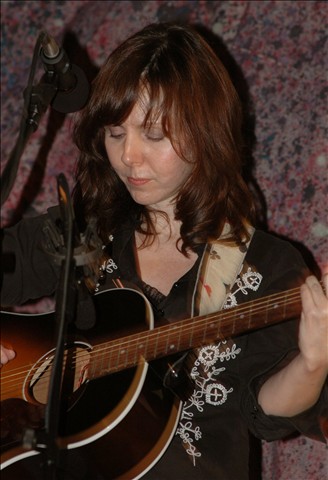
FOREWORD: I befriended self-proclaimed ‘mod housewife’ Amy Rigby (birth name: Amelia Mc Mahon) after catching her live show several times in Brooklyn and New York. I originally did a piece on her for HITS magazine to support ‘96 breakthrough, Diary Of A Mod Housewife. She was always kind despite having to do full-time secretarial work to make ends meet when not performing. Rigby and her then-current band (Dennis Diken of the Smithereens; Brad Albetta of Mary Lee’s Corvette; Jon Graboff, ex-Beat Rodeo) played Mercury Lounge, June ’02, right after I did the following interview.

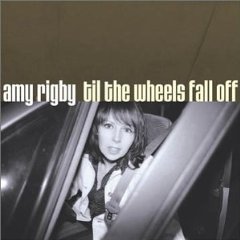
She went on to record two more consistent LP’s, ‘03s Til The Wheel Fall Off and ‘05s Little Fugitive, before settling in France with semi-legendary post-punk boyfriend, Wreckless Eric. Together, their eponymous ’08 LP turned out to be one of the years’ best. This article originally appeared in Aquarian Weekly.


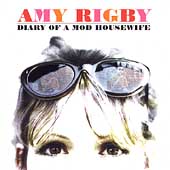
Singer-songwriter Amy Rigby grew up in Pittsburgh before joining harmony trio the Shams and working a mess of Manhattan temp jobs, settling in Nashville with her 13 year old daughter thereafter. When the Shams broke up in the early ‘90s, Rigby became the under-recognized reigning queen of domesticity with a pair of worthy Elliot Easton-produced albums, the encouraging ’96 debut, Diary Of A Mod Housewife, and its worthy ’98 follow-up, Middlescence.

Defining a ‘mod housewife’ as a “woman being dragged kicking and screaming into adulthood…stuck in the netherworld between bohemia and suburbia,” the charismatic Rigby knows first-hand the predicament of leaving adolescence too soon. She has dealt with middle-age dilemmas such as divorce (from ex-dB’s/current Steve Earle drummer Will Rigby), shitty office clerk work, and near-poverty while continuing a modest, yet fulfilling, musical career.

Arguably her best album, ‘00s The Sugar Tree boasted sordid delights such as the testy “Balls” and the deceivingly heartfelt “Cynically Yours.”

But life ain’t grand and Rigby’s three albums have recently been deleted. Luckily for fans, Koch Records released the superb compilation, 18 Again, which provides an even-handed retrospective and includes a tender demo version of “Magicians.” The hilariously disgruntled folk-blues “Invisible,” the snappy pop confection “The Good Girls,” and the weary-headed, Indigo Girls-ish “Knapsack” deal directly with the everyday struggles of working class stiffs. The nostalgic, string-laden “Summer Of My Wasted Youth” and the pedal steel-addled John Wesley Harding duet “Beer & Kisses” offer no apologies for her slacker lifestyle.

Are there any artists like yourself making a career unloading domestic revelations?

AMY RIGBY: I felt like Loudon Wainwright did quite a bit of family songs. Maybe that Susie Roche album, Postcards From an Unmarried Housewife. Chrissie Hynde (of the Pretenders) made reference to being a mother on some songs. It’s so not sexy. There’s no mystery about it so people keep it hidden. It’s the opposite of what rock’s about, which is what intrigues me, combining the two.

What music turned you on as a teen?

AMY: I listened to FM rock in the ‘70s: Elton John, Beach Boys, The Who. When I moved to New York, the whole punk scene was going on. I went to see the Ramones and Patti Smith. I didn’t listen to Country until punk died in the early ‘80s. That’s when I discovered Patsy Cline and rockabilly.

Did you get there by way of ‘80s cowpunk combos such as the Del-Lords and Jason & the Scorchers?

AMY: Yeah. I had a band called Last Roundup that were peers of those bands. We were more of an acoustic hillbilly band because we didn’t have drums. I was writing songs, singing, and playing guitar. But Angel Dean was the lead singer. Country music has traditionally dealt with regular people. Loretta Lynn sang about “The Pill” and having kids at home. That was an inspiration.

The liner notes mention how the single-parent dating ode, “What I Need,” was inspired by Ian Hunter.

AMY: The chord progression and spoken word intro are actually like David Bowie’s “All The Young Dudes” (which Hunter’s band Mott the Hoople turned into a gigantic ‘70s AOR hit). I’ve always liked how Ian was the ultimate rock star, yet always presented songs as a frail human. Some of his anthems spoke of how