JOE PERNICE @ THE FEZ

Joe Pernice / The Fez/ March 5, 2001

By John Fortunato

“I’d like to end with a hopeful cover song ‘cause I don’t have one of my own,” wry singer-songwriter Joe Pernice moans softly to a packed Fez crowd before the clock strikes midnight this frosty Monday. After a pause, he further cautions, “someday it’ll be all over.” The seated audience chuckles, then he easily slips into New Order’s “Love Vigilantes.” Very few artists could pull off re-interpreting Goth-rock drama without the full support of electric guitar, keyboards, and drums. Yet Pernice did it with only acoustic guitar and voice and did it well as a final encore.

Though I sincerely doubt the approachable transplanted New Yorker from the woods of Massachusetts has suffered the heartache, pain, and insecurities his lyrics employ, his rasped baritone whispered reflections that melted like butter on the brain. Most often, love set the tender trap for the poignant vulnerability of his metaphoric wordplay.

Standing alone on-stage wearing a white T-shirt and jeans, the casual, informal Pernice took advantage of this solo opportunity by offering songs from his entire decade-long career. There were the cherished rural remembrances of “One Hand” and “Glass Jaw” from his early Scud Mountain Boys daze. “All I Know” and the swooning title cut from the breakthrough Pernice Brothers disc Overcome By Happiness got saddled by the emotive “She Heightened Everything” from the courageous follow-up The World Won’t End. “Up In Michigan” and “Hundred Dollar Pocket” came from the anonymously monickered Chappaquiddick Skyline while the dope-escapism of “Prince Valium” was lifted from the equally inconspicuous, newly released Big Tobacco.

In a pinch, you’d swear the shadowy figure of Elvis Costello haunted Pernice. Both appear to be the same size, share awkward microphone mannerisms, wear black-rimmed glasses, and drape compellingly lovelorn sentiments with spare acoustics whenever the mood strikes. Whereas ‘70s era James Taylor could pull out the drug-stricken tearjerker “Fire & Rain” and few others to soothe his avid fans, Pernice has an expanding collection of despair-wracked homespun originals that may not be as simple and pure, but are always on the money. Besides, JT’s between-song banter pales next to the naked insecurities and puzzling humor this contemporary of Elliott Smith rattles off.

And when Pernice reaches back to the English Beat’s early ‘80s ska gem “Save It For Later,” the quiet solitude of his solemn delivery matches the weary-legged emotions of David Wakeling’s words. Quite frankly, his interpretive abilities are nearly as genuine as his adroit songwriting.

PERE UBU’S TRAVEL ODE TO ‘ST ARKANSAS’

FOREWORD: Pere Ubu have been investigating bizarrely conceptualist avant-rock since their humble pre-punk origin in’75. Fronted by skewed art-damaged relic, David Thomas, they’ve released dozens of strangely divergent original albums, EP’s and singles over the years. I was supposed to see Pere Ubu when they played Warsaw in Brooklyn during ’04 (after I conducted this interview), but a foot of snow kept me away. But I heard the half-filled audience nonetheless loved every minute of it. By ’06, unheralded Keith Moline (of Thomas’ concurrent band, the whimsical Two Pale Boys) had replaced long-time guitarist Tom Herman for the R & B-soaked Why I Hate Women. This article originally appeared in Aquarian Weekly.

“Rock is a folk music with a shared language building upon what’s gone before so you recognize it as such and realize it’s to be heard in that context,” claims dignified avant eccentric David Thomas. A fixture in Cleveland’s ‘70s underground scene under the alias Crocus Behemoth, the idiosyncratic, warp-quirked squiggly-voiced Thomas formed Pere Ubu with now-deceased guitarist-critic Peter Laughner from the remnants of bizarre, esoteric icons Rocket From The Tombs.

After the abstruse skull-fuckery of Pere Ubu’s ‘77 5-song single, “Datapanik In the Year Zero,” and the audacious long-play debut, The Modern Dance, ‘78s magnificent Dub Housing countered straightforward fare such as “Ubu Dance Party” and the funhouse chant-along “Caligari’s Mirror” with the obtusely out of tune “Drinking Wine Spodyody.” Synthesizer wizard Allen Ravenstine was given free reign to exploit sonic debris.

Though its ideas weren’t as compressed or compelling, ‘79s static New Picnic Time moved the ever-changing combo so far left that inventive psychedelic dadaist Mayo Thompson of art-damaged bohos Red Crayola came aboard for ‘80s far better The Art of Walking and ‘82s less thrilling Song of the Bailing Man.

Following a tumultuous breakup, Thomas formed the Pedestrians and recorded The Sound of the Sand with Brit-folk legend Richard Thompson and a host of Ubu-related pals. As David Thomas and the Wooden Birds, he unleashed the ecliptic Blame The Messenger with Ravenstine, Ubu mainstay Tony Maimone (bass), Jim Jones (guitar), and Chris Cutler (drums). This lineup became the new Pere Ubu for ‘88s re-energized The Tenement Year.

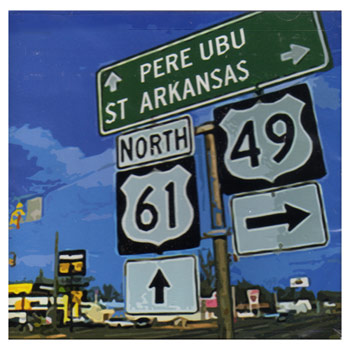
While ‘89s nearly perfect Cloudland refined their more pop-oriented approach, ‘91s gloomier Worlds In Collision added Captain Beefheart sideman Eric Drew Feldman to the clan. The hardest rocking, most accessible Ubu disc yet, ‘93s Story Of My Life led to ‘95s resilient 61-minute marathon Raygun Suitcase. Former guitarist Tom Herman was welcomed back into the fold for ‘98s obtuse Pennsylvania, securing the lineup (theremin-synthesizer player Robert Wheeler; bassist Michele Temple; and drummer-organist Steve Mehlman) that would make ‘02s fantastic travelogue St Arkansas.

Using the road as a metaphor, St Arkansas’ skeletal sketches scour scurried scatalogical schisms with stark psychosis. The gloomy visage, “Dark,” where ‘AM radio sets you free’ as the ‘ghost town rises,’ matches the haunting paleness of Ubu’s best material, as does the sinister “Michele.” The fast moving bass chugger “333” and the beat-driven hitchhiking lament “Phone Home Jonah” provide motorific relief.

Just as the meek shall inherit the earth as cockroaches and locusts roam free, Pere Ubu not only set the stage for the independent late-‘70s do-it-yourself punk insurgence, but somehow managed to outlive relegated offshoots new wave, grunge, and alt-rock in the 30-year process. So meet the new boss same as the old boss.

Why was there a 4-year stretch from Pere Ubu’s last studio set, Pennsylvania, and St Arkansas?

DAVID: We’re not a professionally recorded rock and roll band. We do things haphazardly. We’re not a commercially successful band on a treadmill with a record company hoping for our next record. Nobody told us we had to go about our career a certain way. I did a few LP’s with my improvisational group. I did Surf’s Up with Two Pale Boys, and a Mirror Man opera.

Who were your early influences?

DAVE: It’s hard to re-create influences. Even t.v. and what goes on in the world affects music. At the time we were formulating what we were doing, rock was a thin, broad church. In the early ‘70s, a very exciting time when pigeonholing of music didn’t exist, after Hendrix opened for the Monkess – which nobody thought was terribly weird just slightly odd – we never found it difficult marrying art music with pop or simple ideas with difficult riffs. Groups were exploring synthesizers in concrete sound. We were forerunners of that movement. People were working towards that earlier like MC5, Velvet Underground, Terry Riley, and the Silver Apples. Everything from Krautrock to pop was influential at that point. Integrating concrete sound with non-musical analog synth into musical forms in a narrative voice was in its formative stage.

Fans back then paid attention to what was happening in the underground thanks to burgeoning free form FM radio.

DAVE: Cleveland was the nexus for music from all over the world. Record stores competed to have the most complete catalog. At the same time, it didn’t pay to be in a band that wasn’t a copy band. You’d play for yourself. It was an inwardly turning attitude of no one likes you so do what you want. It’s liberating and shaped our attitude since.

Would you consider yourself an avant-surrealist pitted in the historical timeframe between Captain Beefheart and New York’s No Wave movement?

DAVE: Sure. I like being called avant. That and a dollar get you a cup of coffee.

Eric Drew Feldman of Beefheart’s band played on Worlds In Collision and the live Apocalypse Now. Did you ever meet his infamous, now-estranged boss?

DAVE: Years before I met Eric, I interviewed Beefheart for a radio show. I was a journalist for the weekly rag, The Scene, and my connection with the station gave me access. I met him backstage and hung out as long as he permitted it to happen. The station changed formats next week so I don’t know if it was ever broadcast.

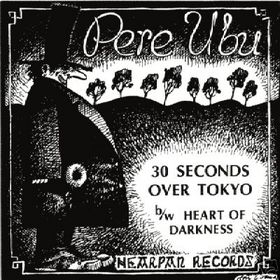
Pere Ubu’s early single, “30 Seconds Over Tokyo / Heart Of Darkness,” profoundly ushered in the age of independent recording.

DAVE: Television’s “Little Johnny Jewel” came out two months ahead of us. It’s like Pet Sounds coming out after Sgt. Pepper and Pepper gets the credit. No one would release our singles. It was supposed to be the end of Pere Ubu. Leave a record behind for someone to find in a Salvation Army record bin.

Whereas Pennsylvania was artily eccentric with lots of open spaces and not at all mainstream, St Arkansas seems more approachable and semi-thematic.

DAVE: It’s about driving Highway 49 from Conway, Arkansas to Oxford or Tupelo, Mississippi. The motive was to let the road write the songs. I decided to drive cross-country, visit someone in Arkansas, and on the way back to Cleveland, take this road.

Where ‘AM radio sets you free’?

DAVE: I listen to everything on the radio. There’s double meaning to the chorus, which is usually the case with Pere Ubu. It’s a dark, obsessive song.

Each twisted Pere Ubu tune has a stylistically diverse abstract mission unto itself.

DAVE: That’s the way it’s supposed to be. You want to create unique stuff and pump more data down the data stream. The ambition is to cram more into less space and tell a story with fewer words.

What new bands do you appreciate?

DAVE: I like Yo La Tengo. (Band mates) Ira and Georgia saw my opera I was in on the West End. I like Spiritualized, Steve Earle, and Mark Mulcahy, formerly of Miracle Legion. He’s done a series of good solo releases.

PEDRO THE LION’S OTHER HALF NO ‘ACHILLES HEEL’

FOREWORD: Since Pedro The Lion mainstay, David Bazan, was unavailable for comment in ‘04, I picked on new band mate, TW Walsh, for some info. Although Bazan’s band has always been a revolving door, Walsh, an experienced studio hand and goodly lo-fi recorder, was given the chance to affect Pedro The Lion’s minimalist folk sound. But I’m still waiting for their next move as of ’09. This article originally appeared in Aquarian Weekly.

It’s been said Seattle-based Pedro The Lion adeptly funnel the idyllic springtime tranquility of Thomas Kinkade’s illuminating paintings and the detailed variations of novelists J.D. Salinger and Flannery O’Connor through their wounded songs. Brainchild of venerable singer-songwriter, David Bazan, a born again Christian with a litany of languid dirges and frustrated undulations, Pedro The Lion has grown to include its first truly permanent member, multi-instrumentalist/ recording engineer TW Walsh.

A former Bostonian, Walsh lingered in obscurity, but through mailed tape exchanges he befriended Bazan and began touring as his bassist-guitarist in 2000. The two hit it off well since Walsh’s Irish Catholic background complemented Bazan’s corresponding spirituality.

As a child, Walsh recollects hearing Graham Parker, Elvis Costello, and the Rolling Stones through his father, who’d go on to learn guitar as a fully matured adult. Perhaps this spurned his rock-based muse.

“My first band made our own recordings,” Walsh says. “I ended up being more interested in it than the others. I had a better job than my band mates so I accumulated microphones and stuff like that. I was a computer programmer, got laid off, but had money saved up. A friend of mine had a studio so I began trying to do recording as a living, but I didn’t make it financially. Not a lot of the bands I worked with are on record labels. There’s only a small budget.”

However, Walsh managed to record highly regarded Willard Grant Conspiracy’s country-tinged Regard The End, though he’s not convinced it turned out quite right. Recently, he worked with Emergency Music, whom he calls “a pretty good retro-pop band influenced by Belle & Sebastian, Velvet Underground, and the Beatles.”

Walsh admits, “I got interested in Pedro The Lion by reading a review of It’s Hard To Find A Friend in underground zine, Tape Op. Then, I bought the Seizure EP. For awhile, they had no specific lineup. It was difficult to keep up because there was no money. Dave kept doing it as a solo act. It just so happened our friendship developed over the years until we began composing together a bit.”

Backtracking, ‘98s intimately charming lo-fi debut, It’s Hard To Find A Friend, set the depression-bound tone Pedro The Lion’s future excursions would thrive upon.

On 2000’s spare Winners Never Quit, Bazan’s beautifully rueful pop constructions rendered appealingly melancholic restraint, but each plainly majestic arrangement holds weight under scrutiny. Bazan’s moody endeavors refuse the urgency to meander aimlessly despite elongated song lengths, securing similar crestfallen minimalism as quiet-core brethren Red House Painters, American Music Club, and Smog. For a changeup, the shimmering “A Mind Of Her Own” bursts wide open with a petulant spangled guitar angularity nearly matched in immediacy and pizzazz by “Never Leave A Job Half Done.” Ticking 6-string dangles above melodic bass murmurs on “Simple Economics,” which confronts electioneering sabotage. And the briskly strummed “Bad Things Happen To Such Good People” proffers folk-Blues repent.

The epic heartbreaking grandeur of ‘02s gloomier Control deals directly with mental anguish, divorce, adultery, and the afterlife. Perilous marital friction consumes the concerned “Option.” Roiled redemption “Rapture” finds the Lord’s presence during an intimate affair, counterweighing pious conscientiousness with lustful compulsion. Siren “Penetration” digs peevishly into cracked fault lines: ‘It’s priceless when you say you have to work late when we both know you’re at a motel.’

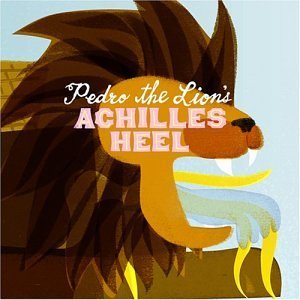
Compared to the thematically traumatizing Control, ‘04s more subdued Achilles Heel offers a finer varied sonic palate, leveraging its predecessors loud distorted bombast and conceptual prose for compelling somnolence. Moving farther away from its acoustic base, the expressive allegorical metaphors remit pathos and disillusionment through broader luxuriant contour.

Walsh contends. “They both have good songs, but Achilles Heel isn’t unified by a particular sound. It reflects David’s taste in music more accurately. Control’s only a snapshot.”

Achilles murder ballad, “”Discretion,” despite its morbid sadness, receives a profoundly unlikely upbeat treatment. The equally grievous “The Fleecing,” a “defense of faith against hipster detractors,” finds Bazan’s flinty monotone mope soaring opposite rubbery bass and elastic guitar.

“David’s faithful Christian fans have attacked him because he curses on (the piss-y complaint) “Foregone Conclusions.” He’s under scrutiny for songs he writes. These people try to control and criticize actions of others. They don’t understand the dynamic and try to back him into a corner,” Walsh ascertains.

Sometimes it seems Bazan’s pointed lyrics endorse an empathetic liberal perspective.

“He leans to the left of me. He believes in political and social justice. I’m a little more scatterbrained, not as informed,” Walsh chuckles, then discusses the national election for a sec. “I lived in Massachusetts and doubt Bush will win there. I voted for Nader in 2000, but now I’m in the swing state, Washington.”

Bazan proves capable of dealing with subject matter previously untouched. The sarcastic “Bands With Managers,” with its wiry guitar, sinewy groove, and funereal beat, mocks a particular band his friend once booked. Building upon its highly emotional gravity, Bazan hits some amazing falsetto squeals singing ‘bout a local group courted by major labels.

Though Walsh won’t be specific about which band the tune condemns, he cautions, “They broke ties with the people they worked with, became total opportunists, and tried to be the exception to the rule in terms of not getting lost in the shuffle.”

Retaining steadfast resolve in lieu of commercial concessions, Pedro The Lion continue to gain support amongst indie folk connoisseurs and perhaps, undeclared sanctified mortals.

“It’s easier for us to make it work on an interpersonal level now. We squeak by making a living. And there’s luckily a lower cost of living in the Seattle area. Plus, there are some local friends I’ve obtained who want me to help out doing mixing and mastering. I did the Crystal Skulls, but that’s not really a money gig. I just help when I can.” But, he adds, “If the bands aren’t friends, I have to justify it to my wife by charging them.”

While Pedro The Lion will be put on temporary hold for an offshoot project Bazan and Walsh have set up, the latter will also be busy pursuing solo interests.

“Right now, we’re working on a record for (boutique label) Suicide Squeeze under another name not yet decided on. I actually have three records out under my own name. My voice comes from a different place than David’s, but the songs come from the same influences. It’s pop music with dark lyrics and a classic rock sound. Next year I’m gonna tour as Pedro The Lion, on my own, and for the unnamed band.”

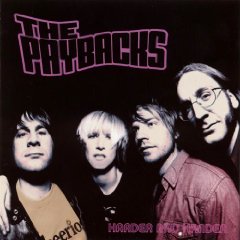
THE PAYBACKS KEEP GETTING’ ‘HARDER AND HARDER’

FOREWORD: The Paybacks are just another solid-bodied garage band from Detroit. Jarring lead singer, Wendy Case, battling back from years of drug abuse, became the hardest rockin’ chick in the midwest. By ’02, her bands’ rough ‘n ready Knock Loud zoomed forward in overdrive. Since then, ‘04s arena rockin’ Harder And Harder and ‘06s Love, Not Reason, came to the fore. This article originally appeared in Aquarian Weekly.

Born in Akron, Ohio, raised in the foothills of North Carolina’s Blue Ridge Mountains, and now a resident of Detroit, singer-guitarist Wendy Case grew up listening to American hillbilly folk before discovering Led Zeppelin as a Michigan teen. Deciding to become a full-blown rocker, she got involved with San Francisco’s radical ‘80s punk scene then retreated to her home state to get clean.

“I had a bad heroin problem in San Francisco. I didn’t have anywhere to go to clean up so I went to an ex-boyfriend in Ann Arbor. He tried to help me get back on my feet and offered a home.” She then snickers, “I wasn’t planning on being a rock star.”

Now a hard workin’ 41-year-old road dog whose early heroes were bluegrass legends Doc Watson, Bill Monroe, and Flatt & Scruggs, Case is the amazingly gruff-throated leader of the Paybacks. Determinedly resurrecting herself after a 13-year battle with drug abuse, Case has become one of Motor City’s most formidable talents. Her uncannily masculine raspy bark has the soulful scruff of early Rod Stewart and Steve Marriott. Like those two famous singers ‘70s-related bands, Faces and Humble Pie, the Paybacks loose boozy temperament rules the roost.

Living on the West Coast from ’82 to ’88, Case hung out with deviant outré rockers such as Flipper’s Will Shatter, Crime’s Frankie Stix, and her then-boyfriend, Jack Weird of Seizure. She was part of the hugely influential punk party scene while it was winding down due to substance abuse and under-exposure.

“I was like the kid and they were the older rock guys. Everyone was on drugs so that became my introduction,” she offers. “I went down the hard drug road for a considerable time.”

Case soon found sobriety in the multi-cultural melting pot college town she lived in as a teen. But that bucolic “hippieville” was full of addicts. In fact, Case says during the late ‘60s, people busted with weed would only have to pay a meager $5 fine.

“Ann Arbor is a Big 10 community with lots of art and culture. The Stooges and MC5 were from there at their apex. So it has significant music history. It’s where John Sinclair started the White Panther political movement.” She contends, “Great music doesn’t have to be made where hardened destroyed ghettos exist. It’s what happens in peoples’ minds and hearts. We had an ideal advantage over others because there was enlightenment, knowledge sharing, and spiritual empowerment.”

In high school Case hung out with the Cult Heroes and Destroy All Monsters at the end of the Sonic Rendezvous era. Her band, Ten High, along with the Rationals and the Ups, were pretty significant in terms of modern garage punk.

“Before it started happening in Detroit, where little bastions of manicured lawns go right into Crack Central, Ann Arbor was all over it. That was ten years prior to the Paybacks,” she informs. “We were doing obscure covers by Mark Martin and the Haunted, real garage pioneers. Then, bands like the Detroit Cobras began doing similar things. They were doing more of a garage-soul version. We had an entire little scene that migrated to Detroit.”

Along with Ten High, regional outfits the Hentchmen and Fortune & Maltese gained exposure in the early ‘90s. Soon, the Gories took hold, spawning the Demolition Doll Rods, whose primitive 3-chord rock minimalism was sufficiently crazed.

“I liked the novel sounding garage bands. I was into (‘60s psych-garage legends) the Sonics, Seeds, Standells, and Chocolate Watch Band. The Paybacks get lumped into this whole garage scene, but everything is called that now. So we were appalled. We were an arena rock band, so get it straight,” Case demands. “But fuck it! As long as they’re talking about us, we’ll go along with it.”

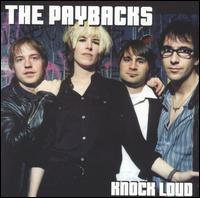
No doubt about it, the Paybacks revved up debut, Knock Loud, was one of 2002’s greatest finds. Shotgun opener “Just You Wait” sets the tone for an explosive set of balls-out ballistic blasts. Fans of Muffs’ singer-guitarist Kim Shattucks will eat up Case’s demanding screamer “Thin Air.” AC/DC buffs should give the abrasive eruption “Tie Me A Knot” and forceful “Hot Shot” a try. “Hollywood” works as a reliably super-bashed take on Chuck Berry’s durably efficient ‘50s fare.

Though she enjoyed making Knock Loud, Case avows sophomore effort Harder And Harder is more cohesive. Skull-smashing cigarette-stained growls and scowled grunts hurl out of Case’s pretty mouth on the scalding vindication “When I’m Gone,” the slovenly liquor-doused double entendre “Scotch Love,” and the bitchy calamity “Me.” Rough hewn boogie stomp “You And Your Friends” drips sludgy feedback gunk into the proverbial street corner gutter while the snippy “Jumpy” is built atop a familiar Elmore James/ Muddy Waters-styled Chicago blues riff given plenty of horse-squealing shrieks. Intended as a formidable B-side Case thought would “be amusing while everyone else was doing Christmas music,” the carousing T. Rex-borrowed “Celebrate Summer” closes the disc on a fittingly ceremonial note.

“Our band sounds more established these days and the songs are more aggressive, but not by design. It just turned out that way. It’s a tighter sounding record without the big, shiny pop elements of the first one – which was a cruder recording with a different guitarist who was into lots of riffs,” she maintains.

That guitarist was Paybacks founder Marco Delicato, whose replacement (due to touring restraints), Danny Methric, was in estimable Detroit bluesrock trio, the Muggs. Also onboard are two celebrated local garage progenitors from the Hentchmen, bassist John Szymanski and drummer Mike Latulippe. They provide a ceaselessly crunchy rhythmic grind metal heads and punks alike could dig. Together or apart, these proud misfits have logged tons of hours playing scurvy Detroit dives such as the oldest, best known Magic Six, and the now-defunct Gold Dollar, which Case describes as “a hole in the wall that had transvestite shows and was located in the Majestic Theatre.”

Admirably, Case’s gritty tunes, charred shouts, and gutbucket guitar befit the grungy shit holes lining many crowded beer-drenched midwest cities the Paybacks often frequent. She composes her best brash trash whilst pissed off.

“The best ones happen in a rush in about five minutes. Lyrics and music come together at once. It’s pretty awesome when that happens,” she cautiously insists. “I just wish it happened all the time. Sometimes I’ll start with nothing but a song title and build on that. I only really write anything decent when I’m in chaos. So I wait around for the other shoe to drop ‘cause when I’m happy I write retarded cute happy songs. There’s got to be genuine passion.”

That lustful enthusiasm gets put to the test in every sweaty club the corrosive quartet regularly performs at. Luckily, exhaustingly extensive touring for three-quarters of the year hasn’t taken its toll on the Paybacks yet.

“The road agrees with me. It’s a cooperative effort – us against the world. We understand each other well and are respectful of each other. Plus, we were all friends, liked the same music, and had the same sense of humor before becoming band mates,” Case closes.


NO AGE TAKING IT TO THE STREETS WITH PROPER ‘NOUNS’

FOREWORD: Undoubtedly one of America’s best young art punk outfits, No Age have continued to advance and expand their sound. 2010’s Everything In Between, influenced by sensational unheralded ’90s act Disco Inferno, shuns conventionality and evades most preconceptions. This article originally appeared in Aquarian Weekly during 2008.

Living in a little rent-controlled Hollywood backhouse for the last nine years, No Age guitarist Randy Randall found interest in radical psychedelia and its related Los Angeles-based Paisley Underground thanks to his cool older brother. Modish ‘80s indie bands such as the Three O’Clock and Redd Kross informed the experimental 27-year-old musician as an impressionable teen. Around the same time, he discovered noise-rock icons, Sonic Youth, a more direct influence on his imminent musical ruminations.

After lauding luminary Sonic Youth axe man, Thurston Moore, Randall reflects, “I was looking for the most out-there guitar weirdo music by the Residents, Marc Ribot, and especially Captain Beefheart. I love Shiny Beast and Doc At The Radar Station. I know Trout Mask Replica gets its accolades but I feel Beefheart’s best band did those later recordings. They really locked into the groove.”

Riding atop a healthy local noise scene that includes mainstays Lavender Diamond, Abe Vigoda, and others, No Age cut their teeth performing at cavernous downtown L.A. warehouse club, The Smell. Soon, the dazzling duo of Randall (a part-time booking agent for The Smell) and percussionist-lyricist Dean Spunt decided to lay down some tracks for a few forthcoming extended play singles.

“Dean listened to hardcore, which I knew nothing about originally. He was into Minor Threat and obscure ‘80s punk,” Randall asserts. “I was more into feedback-soaked music. Somewhere in the middle we met.”

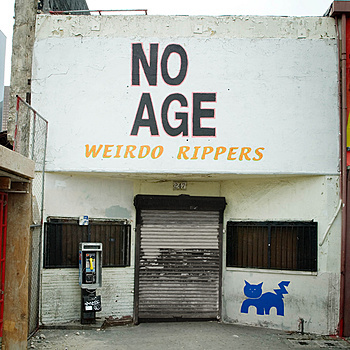
Initially getting together in formative trio, the Wives, the propitious pair released their first five No Age EP’s separately at the same time, a fortuitous ploy psychedelic San Francisco freaks, Moby Grape, tried unsuccessfully with various 45’s during ’67s Summer Of Love. Never believing they’d attain recognition beyond the West Coast, the curious twosome obligingly received critical national underground attention, hitting the road for an awesome tour, garnering a serious fan contingent, and ultimately assembling the early EP’s on triumphant ’07 entree, Weirdo Rippers.

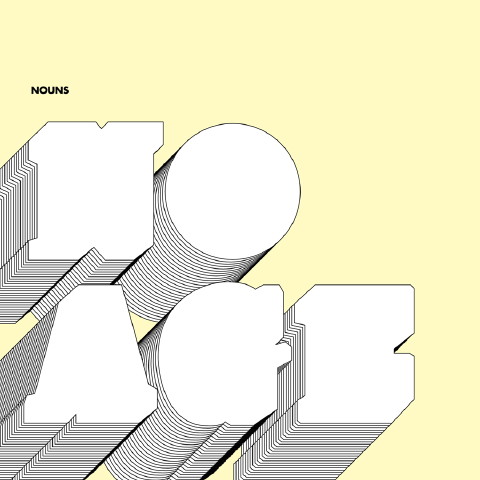
“It was just us writing songs and then culling them for a collage-y full length,” he claims. “With Nouns (Sup Pop), we wanted to make a proper album that flowed. We wanted to see what we could do within our restrictions. It’s easier to work with two people. It cuts down band politics. We use samplers to make the most out of it. But we’re open to collaborations in the future.”

A gallery-styled prism-hued booklet accompanies Nouns ample package, serving as resplendent imagery and to break up the album’s literal thematic flow concerning people, places, and things playing a vital role in the duo’s lives.

Be advised. No Age may cause whiplash with their calamitous roughhewn commotion, at times limiting access to seasoned noise addicts and avant-garde aficionados only. Offering no easy way out, Noun’s clangorous subterranean opener, “Miner,” places a distant stentorian guitar inside a cellar-bound tin-canned drum scrum. Ensuing rampaged shakedown, “Eraser,” capitulates to a seismic garbled guitar quake halfway through. In fact, the auspices of this dirtily indeterminate 6-string scree had been sitting around since Weirdo Rippers dropped, waiting to be completed.

“We didn’t know how to finish “Eraser.” We played around with it long enough and it was made into something.” However, Randall insists, “Sometimes songs write themselves from beginning to end. Other times, you just have parts to try and fit in or ditch instead.”

Though savaged by thunderous discord, the salutary “Teen Creeps,” is less dirty and more accessible than those first two cuts. Awash in muffled fuzz tones, its simple beat and blistering guitar-bass provide instant satisfaction.

Equally conventional (by No Age standards), “Ripped Knees” shows off a familiar Strokes-strummed scamper Spunt constantly mocks Randall for unconsciously imitating.

“Dean’s been busting my balls for writing some stuff that sounds like the Strokes. I didn’t even know who they were. I’m probably ripping off whoever they’re stealing from,” Randall quips. “I’m a huge Velvet Underground fan, so maybe that’s where it comes from.”

Following the buzz-y Industrial shrill of deviant instrumental, “Keechie,” the macabre “Sleeper Hold” unloads prime Husker Du clamor, reaching stratospheric heights as its soaring feedback-flailed bass drum-rumbled scuzz-rock fracas builds.

“Husker Du are one of Dean’s favorite bands. He met Bob Mould in Spain and flipped his wig,” Randall says, utilizing one of the legendary Minneapolis band’s album titles to explain Spunt’s excitement meeting an idol.

Ominous mantra, “Things I Did When I Was Dead,” seems to end up on a hospital bed with a doubtful prognosis. A tape-looped defibulator spurts electro-beeps into flat-lined vocal droning as crickets eerily chirp near an imaginative graveyard. Correspondingly, distortion drenched stampede, “Errand Boy,” piles on obtuse lyrical gloom. But maniacally fast-paced foray, “Brain Burner,” a static-enhanced My Bloody Valentine knockoff, contains a jaunty melodic hook exceeding anything posed on the jarringly blared Weirdo Rippers.

The most straightforward number, “Here Should Be My Home,” doubles the sonorous voices, veers into traffic, then barrels down a bumpy road.

Retaining a restlessly subversive attitude, the uncompromising No Age have no trouble piercing rock’s wildly spectral boundaries. Looking backwards for a moment, their uninhibited approach completely emboldened the white noise disfigurements consuming Weirdo Rippers, hearkening back to the blaring cacophonous shimmer Jesus & Mary Chain perfected in the mid-eighties. Dissonant commencing overture, “Every Artist Needs A Tragedy,” plies shards of mangled metallic scraps to a tortured artist lampoon. Pounding drums and slashing cymbals drill across “Boy Void’s” trashy lo-fi tempest, going from shallowly muted to dynamically up-front. The same obtuse contrasts distinguish swinging rock and roll scrambler, “My Life’s Alright Without You,” as it vacillates between muzzled faraway dungeon blear to blazingly in-your-face intimidation. Coming out of three minutes of lazily meandering free form sludge, “Dead Plane” unexpectedly drifts into a blurry Ramones-styled adolescent frenzy before taking flight like a big ol’ jet.

But while Weirdo Rippers relied primarily on fascinatingly layered sheets of sound, Nouns brought aboard better melodic attributes and consistently streamlined production techniques. Nevertheless, the tidier follow-up does maintain street cred with the neuvo ‘no wave’ crowd circulating ‘round the City of Angels and beyond.

As our conversation concludes, Randall quickly accepts my praise then concedes, “We’d definitely like to get things more simpler. We want to do something that’s sparse, atmospheric, and has wide-open spaces. Sort of a minimalist project.”

MOJO NIXON’S WILD PARTY PRESIDENCY

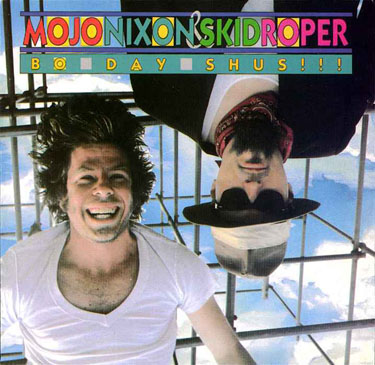
FOREWORD: Satirical nutjob, Mojo Nixon, should’ve become president in ’90. I put his name out there, but the ignorant public went with that sleazy dog, Clinton. Anyway, Mojo’s a happy miscreant ably mocking out America’s tabloid stars on a whim. In the ’80s, he snubbed MTV’s lackluster scum, or as he called it, gism, and in the ’90s, he continued to tour. After playing a hilarious  set at Wetlands in SoHo,  we got together and tried to get the Yankees long-term organist stoned in the dank basement area he was playing in. Nixon’s currently semiretired from music. The Nixon For Prez article ran in Aquarian Weekly and the follow-up was picked up by High Times in ’98.


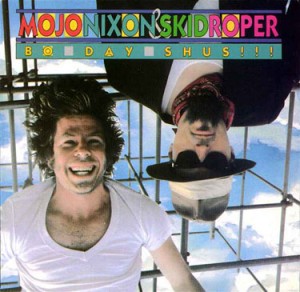
NIXON for President! No, not Tricky Dick, but instead Mojo Nixon, a Mason-Dixon scoundrel whose appearance is closer to werewolf than man. His porkchop sideburns, unshaven face, unkempt hair, and vagabond clothes give Mojo that scruffy, hungover look. Devouring a bag of barbecue potato chips, our next President of the Untidy States is in rare form this early January afternoon in New York. As I reach for a Rolling Rock, this crazed, shaved monkey spits out derogatory comments concerning the ineffective government he plans to overthrow.

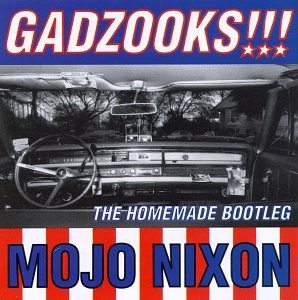
If you thought the dregs took over the White House when Bill Clinton was elected, then sit back ’cause the plague is now upon us. As it gets closer to Armageddon, only cockroaches and locusts will survive. Which brings us to Mojo Nixon, a demented Virginia singer/ musician/ actor/ politician/ preacher whose latest distorted parodies corrupt his mop up compilation “Gadzooks!!! The Homemade Bootleg” (Needletime). He upsets conservative softheadedness with the spiffy honky tonk spoof “Are You Drinking With Me Jesus,” the charged up boogie woogie shuffler “Winnebago Warrior,” the swampy cock-rocker “King O’ Sleaze,” and the loony “Beer Ain’t Drinking.”

Yes, the man who covered MTV with gism, gave singer Debbie Gibson a two-headed love child, preached “Elvis Is Everywhere,” and stuffed VJ Martha Quinn’s muffin, plans to end government oppression by letting the meek inherit planet earth. Like former President Ronald Reagan, Mojo has appeared in low budget movies such as Car 54 Where Are You and Rock And Roll High School Forever. His latest film, Buttcrack: The Movie should take this zany hick to the crusty anal depths of ‘sucksex.’

But wait, before you think this charismatic fuck up is just crude, rude, tasteless, and scuzzy – guess again. His opinions, like Howard Stern’s, are actually relevant, insightful, and intelligent. As I guzzle down some brews, Mojo skullfucks my own sick mind with his non-rhetorical year 2000 Presidential campaign agenda.
Give me some of your family history so voters in 2000 could understand your logic.

MOJO: In the early 1700’s, my Scottish ancestors moved to an American county, refuseed to leave, and became preachers practicing interbreeding within a 15 mile radius.

Explain how a ‘turd’ party candidate will upset the two party system.

MOJO: It’s my genetic destiny to lead an armed insurrection to revolt in a desperate struggle against oppressive government. I, Mojo Nixon, will be at the hill with rebel allies. And the greedy boneheads leading our institution will then be swinging from lightbulbs. Newt Gingrich claims Bill Clinton is a sleazy liar with his campaign contributions. But there’s no clean campaign money. It’s given to a committee. What’s the difference? It’s like saying ‘I didn’t rape her, I only ass fucked her.’

What’s your opinion on abortion?

MOJO: I’d like to ask people against abortion who is going to take care and love these kids when they’re born. No one is pro-abortion. But the alternative is an unwanted child abused at a foster home who then becomes a criminal against society. Use some forethought and get protection. Nature is trying to get us to fuck all the time. Abortion should be safe, legal, and a last resort with no stigma attached. There’s no shortage of people. It’s not like we need more to fight Martians. These European Victorian Puritans are warped believing it’s assisted suicide. It’s self-determination and completely your individual right. State and government have nothing to do with it.

As President, would you get rid of the American Medical Association?

MOJO: The American Medical Ass Hole-Ciation is against unions but they are a union. And they’ve got a death grip on on society. Like lawyers, they origianlly tried to help those in need. Now they’re involved in a scam with the insurance companies. Actual surgery may cost $500, but it becomes $50,000 when they try to split up the free money pie. The A.M.A. is a country club with a hammer lock on politicians.

Right. And why vote at all when a Republican or Democrat is going to win thanks to that bull shit electoral college!

MOJO: Yes. I plan to rewrite the Constitution and get rid of the electoral college. It was meant to keep the two party system alive. We need third and fourth parties. And the your-mom’s-out-of-town-let’s-have-a-party. Or, I just got mushrooms, this is gonna be one helluva party!

Will you have an ass kickin’ party like Andrew Jackson had when he won the election in the 1800’s?

MOJO: He was great. His friends rode horses in the White House and hillbillies were getting drunk on the front lawn. Now we have political animals like Clinton. He would eat shit on national television if the public demanded it. Bureaucrats suck!

The Butthole Surfers told me President Lyndon Johnson used to parade around naked in his office in order to get the attention of his adversaries.

MOJO: Lyndon Johnson got people to do stuff they’d never ordinarily do. One time he scared a Secret Service guy when he was headed to the wrong helicopter. He told him ‘son, these are all my helicopters because I’m Commander In Chief. But if you insist I get into that one, I’ll go.’

I hate those asshole newscasters for convincing the dumb American public of a Soviet threat which never fucking existed.

MOJO: Most people bought that Communist bull shit. Russia was 90% Surfs until 1860. It’s like the Middle Ages over there. How the fuck were they going to invade America? They’d get halfway through Pennsylvania and say ‘I’m fuckin’ tired.’ Crazy Americans would be in the woods shooting their asses. In reality, the Russians are our friends. They like to drink. The Japs and Germans thought they were the superior race until our tribe known as We the People kicked their asses.

What are your thoughts on the Iraqi War?

MOJO: It was supposed to be Bush’s re-election showcase to completely annihilate a minor third world thug. We built Saddam Hussein up as Hitler. And we got Texaco and Union 76 to sponsor the war with campaign funds. It was nauseating to see us pick on that idiot, schoolyard bully.

What about human rights violations in foreign countries?

MOJO: Human rights problems are bull shit. It’s not the United States place to tell other countries what to do. This country had slaves. Cuba is a perfect example. Castro came to us in ’60 for help and we didn’t provide any so he went to Russia for support. Cuba has fine ballplayers, boxers, cigars, gambling, and women. But the U.S. is fixated on a non-issue. Cuba should be a giant Club Med, or Club Fidel.

What would you do as President to clean up our Judicial system?

MOJO: The Judicial System is a lie. The idea of an adversary system where truth is revealed and justice served is finished. Whoever has the most expensive lawyers wins out of attrition. Men are weak. If you dangle enough pussy in front of them, they’ll give in. We should have public executions at halftime of the Super Bowl for deserving scum.

How would you straighten out the tax problem and welfare?

MOJO: We’d have a true flat tax with no exceptions. And as for welfare, there would be one office and one form. There’s a lot of morons working for the government because useless jobs were created for them. I’d also dump half the military to balance the budget.

What restrictive pornographic boundaries would there be under your leadership?

MOJO: Pornography is nuclear bombs. Prudes hide behind feminism and religion. It’s not about violence to women. Some people’s sexual wires are just crossed.

Should the U.S. legalize drugs?

MOJO: Tomorrow! TV commercials stress how drug dependency is bad. But should casual users be punished because some genetically or socially messed up people can’t handle it. Drug enforcement police want drugs illegal so they could make money. Years ago, amphetamines were cheap to buy over the counter. But now there’s a longing for the fake ’50s way of life which never existed. Legalize drugs with the only restriction being they can’t be advertised. Hell, people legally drink themselves to death. Medical research companies are all about making money and manipulation. They’re untruthful ‘hypocrats.’

What are your thoughts on religion?

MOJO: Priests can’t marry and that only encourages perversion. Only a few people are not sexual or too mystical. Any hate preaching, mind controlling person telling people to fear God is not religious. Instead, they’re in the mind control business. Feeling guilty about something which we don’t know about is insane. I don’t believe in God in the traditional sense. Is some life force guiding our nature? I don’t know.

Who will be in your Presidential Cabinet?

MOJO: Hunter S. Thompson will be Minister of Produce. Richard Pryor will be Minister of Funny Shit. And like Clinton, we’ll have midgets. Maybe even some ugly albino black guys.

——————————————————-
MOJO NIXON: HIGH TIMES INTERVIEW


It’s Friday the 13th and the “High” Priest of extemporaneous pontification, Mojo Nixon, seems hellbent on kicking around several societal icons. His recent compilation, “Gadzooks !!! The Homemade Bootleg,” along with a starring role in “Buttcrack: The Movie,” continue to push this zany, demented character into public attention like a church pew fart. Propagating such hilarious diatribes as “Debbie Gibson Is Pregnant With My Two Headed Love Child,” “Stuffin’ Martha’s Muffin,” and “I’m Living With the Three Foot Anti-Christ,” Mojo sets Blues, bluegrass, and rockabilly innovations back 30 years.

HT: Who are some of the latest victims of Mojomania?

MOJO: Well, I was just in the middle of a litany of stuff. I was just in Detroit, home of Bob Seger. I like Bob, but if I hear that “Like A Rock” truck commercial one more time, I’m going to put a rock up his ass and explode it with dynamite. And does that guy in Oasis realize I have Beatles records. I’d like to send his sad ass back to England. I hate third generation pop music! Since Hootie & The Blowfish stole Huey Lewis & the News’ style, I figured I’d blend the two bands into shit stew – Huey & the Fish Blow. And I feel the guy from Counting Crows should have Van Morrison wipe his ass with that motley hair.

HT: Do you still believe “Elvis Is Everywhere”?

MOJO: After his daughter Lisa Marie married Michael Jackson, I figured he must be dead by now. How could she go to bed with that freak of nature who wanted to hang out with Webster and that monkey. It’s extremely odd. He had four number one records as a 12 year old, but hasn’t written a good song since “Billie Jean” – and it’s debatable whether he even wrote that. He acts like the sun is still shining out of his ass, but like Prince, he’s a washed up has been. It must be sad when you have to go to Burma to revive your career.

HT: Recently, I did a High Times piece on the late Country Dick Montana of the Beat Farmers. He even wrote the lyrics to “Gadzook’s” inebriated fable “She’s All Liquored Up.” How close were the two of you?

MOJO: I was friends with Dick but he was never a revelatory guy. I think I know three facts about him after all those years together. He was so psycho. I remember he had to get a thyroid cancer operation and he never told anyone. Then he called my wife, who is a nurse, and asked her if malignant was bad. However, he was the engine that ran the San Diego scene; promoting young acts and making himself available.

HT: Has American society become more ignorant in recent years?

MOJO: I agree they are stupid. Masses of people go to Mc Donald’s because they watch an ad they think was a well produced, good idea. But the food is bland and will kill you. But historically, 50 years ago we were in much worse shape. People died at 50, couldn’t read or write, and worked on assembly lines. Expectations now are higher, but not everyone’s a computer wizard, rocket scientist, or heart surgeon. We’ve got ESPN now, so something must be right.

HT: In November, 1980, while performing with your punk band Zebra 123, the U.S. Secret Service questioned your political motives. Why?

MOJO: We were celebrating the anniversary of Kennedy’s shooting death. We had posters of Reagan and Carter with their heads exploding. In Denver, hardcore music hadn’t happened yet. Everyone wanted to hear shitty, skinny tie bands. Anyway, the Secret Service thought we were trying to buy guns. And the local record store, Wax Trax, refused to put up the poster because they thought it was in bad taste.

HT: Should drugs be legalized?

MOJO: I firmly believe keeping drugs illegal hasn’t stopped anyone from using them. What we do is relieve ourselves by doing drugs. Should we be punished because one out of every five people gets addicted to cocaine. What about the other four people enjoying themselves. Like Donnie Osmond said, one bad apple don’t spoil the whole bunch. It’s not like heroin should be marketed by Mc Donald’s. But there are definitely heroin addicts everywhere. The war on drugs is a joke. It never made a dent. And the stricter it becomes, the dumber it becomes. Some people feel if something is illegal, they’ve got to do it. People should be responsible for their own actions. If they’re told cocaine and heroin are risky and they indulge anyway due to peer pressure, that’s a decision they must live with.
NIGHT MARCHERS N’ HOT SNAKES PICK UP REIS’ PIECES

Image result for JOHN REIS ROCKET FROM THE CRYPT

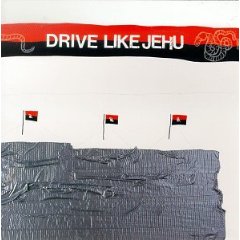
Despite signing a self-mocked major label deal in the post-grunge ‘90s, San Diego-based singer-guitarist John Reis has stubbornly maintained his cherished do-it-yourself integrity. A reluctant guiding light rebirthing ‘emotional hardcore’ from the ashes of ‘80s DC trailblazers Fugazi, Reis piloted seminal combo, Drive Like Jehu, while contemporaneously commencing increasingly accessible faux-soul aggro-garage legions, Rocket From The Crypt. Some time thereafter, he prudently struck up dazzling ancillary outfit, Hot Snakes, an arguably more consistently tight collective, while keeping unheralded troupe, The Sultans, inconspicuously pertinent ‘til the demise of all the above-mentioned acts. Hitherto, the 21-year-old entrepreneur had dissolved formative band, Pitchfork, during 1990.

Although childhood ‘70s idols included Alice Cooper and Kiss (faddishly phantasmal costumed acts whose stage shows ruled), Reis soon caught onto renowned British blues-rock cadres Led Zeppelin and Groundhogs through a friend’s brother.

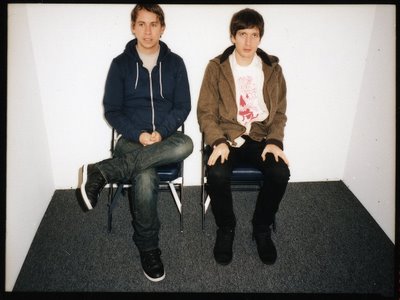
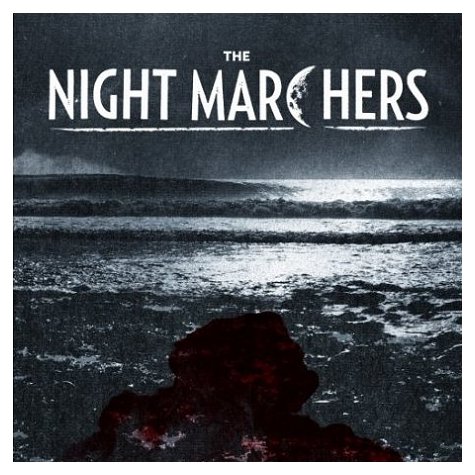
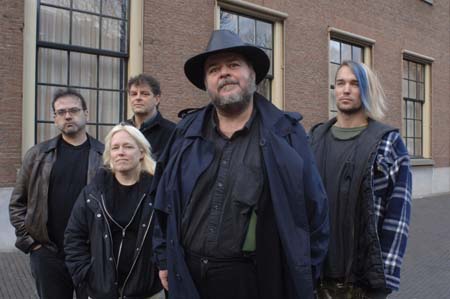
Known best as Speedo in super-indie assemblage, Rocket From The Crypt, the prolific boss man also runs boutique label, Swami Records (homing indie staples Beehive & the Barracudas, Demolition Doll Rods, and Penetrators). Recently, he reconvened recording with versatile sundowners, the Night Marchers (pictured above).

“It’s been educational. Our local scene had camaraderie,” he affirms. “The environment in California’s lazy, not apathetic. We won’t leave our flip-flops ‘til we’re guaranteed a good time. So it’s semi-numb. But San Diego’s surprisingly conservative. You have ‘the man’ to contend with. Influential Mexican culture’s hidden. It’s the land of mini-malls and the government’s eager to cover up Mexican history not deemed culturally acceptable.”

While Rocket From the Crypt employed a raw “back-to-basics ethic,” recapturing the muscular mangled mayhem of Detroit legends, the MC5, and redirecting the savory melodic impulse of L.A. provocateurs, Social Distortion, Drive Like Jehu toiled in spellbindingly cataclysmic guitar fury. Their epochal self-titled ’91 debut indisputably flaunted skull-shattering intensity as Reis and mutual partner Rick Froberg’s arpeggio axe duels spun stratospherically out of control, flailing skyward above busily rudimentary rhythmic patterns bassist Mike Kennedy and drummer Mark Trombino unfurled. A certain lubricated spontaneity creeps into its dense sludgy grind and discordant catacombs. Bitterly, the disc itself reads ‘CD’s really fucking blow.’

Rebuking the cold, sterile sound carrier, Reis rails, “Compact discs are controversial in many ways. It was the future wave we were forced to buy into it, less sonically, visually, and economically feasible – reeking of labels making more money because they were cheaper to make than vinyl. Everyone swallowed the purple Kool-Aid.”

On gear-jamming ’94 set, Yank Crime, Drive Like Jehu’s unyielding emphatic urgency surges, resulting in crustier unbridled exhortations filled with wildly ululating banshee yelps, dissonantly roughhewn jolts, and distended extemporaneous mantras.

“We got into a fierce democracy by then. Everyone put two cents in. Dischord stuff was a big influence. I loved Teen Idles, Minor Threat,” Reis admits, before downplaying his role in prefiguring ‘emo’ bellwethers Jawbreaker, Samiam, and Promise Ring. “We were apart from them. We’d never tag ourselves as ‘emotional hardcore.’ Neither would those bands. We were part of a loose group of piers influencing each other. As our music progressed, we kept in touch with what was happening, liking Beefeater, Rites Of Spring, and Dag Nasty. Fugazi’s probably the best live band I’ve seen, always exciting to check out and draw inspiration from.”

Synchronously, Reis’ less combative brainchild, Rocket From The Crypt (pictured in black & white), began taking form, delivering unheralded entrée, Paint As A Fragrance (on defunct local label, Cargo), before mighty Interscope scooped ‘em up for ‘94s scorching breakthrough, Circa Now! Recorded, according to liner notes, during martial lockdown due to racially motivated Rodney King riots, its catchy post-hardcore delineation’s had toughened resolve similar to the underclass protesters threatening the L.A. studio they inhabited. Damning straight-up rocker, “Short Lip Fuser,” chanted pub-crawler waltz, “Ditch Digger,” and blues-grooved lure, “Hippy Dippy Do,” find solace amongst blistering Husker Du-like growler, “Dollar.” Sporting an apropos slick-back pompadour, Reis rendered his clamorous version of guileless pre-Beatles rock n’ roll regalia.

By compressing grittier arrangements, ‘95s ghoulishly vibrant celebration, Scream, Dracula, Scream!, raged forth with Apollo 9’s blaring sax protruding against assertively trad-minded guitarists Reis and Andy Stamets, bombastic bassist Pete Reichert, and kit batterer, Atom Willard. Panicked rampage, “On A Rope,” uncannily electrified the responsive second stanza of Al Hirt’s titillating instrumental “Java.” A harbinger for future Crypt kicking endeavors, infectious jubilee, “Used,” discharged swashbuckling carnivalesque froth redolent of Springsteen’s E Street Band.

“Scream has a loose vibe – prominent horns,” Reis recalls. “Our debut’s first batch of songs were written, recorded in a few days. That was cool fun. For the second, there was a time gap. We’d evolved threefold, toured a lot, and adapted our sound. We found new ways to express ourselves sonically. By Scream, we’d digested, regurgitated, and incorporated many things deemed cool. Ultimately, you wanna make people feel the way you feel creating music you like.”

‘98s snazzy RFTC unveiled a vintage stripped-down dancehall assault, retaining an archetypal Fleshtones garage-soul exuberance highlighting snappy opener, “Eye On You,” raunchy horn-fueled R & B flank, “Break It Up” (where Reis’ garbled hurl is a dead ringer for Heat Treatment-era Graham Parker), and brassy makeup-applied sing-along, “Lipstick.” Trumpeter JC2000 makes his presence felt.

Assigned to bustling indie, Vagrant Records, ‘01s Group Sounds displayed Reis’ strongest lung bursting shouts and brought aboard drummer Ruby Mars. “Straight American Slave” charges out of the gate like a cyclone, setting the pace for the remainder and taking an unexpected sociopolitical stance.

“It’s a look at America’s mainstream acceptance of homosexuals being on television and seen as jesters – good to laugh at and entertaining to watch – but there’s still a contradictory homophobia,” Reis submits.

‘02s flashy departure, Live From Camp X-Ray, dispenses sarcastic deviancy, garnering tremendous high-energy neo-psych sendoff, “Too Many Balls,” and razor sharp frenzy, “Outsider,” a snarled fuckoff to trendy fiends.

Reis claims, “As a whole, we felt happy with what we did. X-Ray had a real dry ‘70s punk production – no frills, dead sounding. We weren’t flavor of the month, but wanted acceptance. We had to be who we were. Lyrically, we tried to stylize and mold ourselves to the Saints and Boys.”

Which brings us to R.I.P., an uplifting farewell capturing a great American band in their element at Westin Hotel Ballroom, Halloween ’05. Reis enters the stage in a coffin donning a blood-stained shirt as horns pipe out initiating licks to Screamin’ Jay Hawkins voodoo brood, “I Put A Spell On You.” The crazed “Get Down,” in particular, anxiously explodes full-throttle. Terse rockabilly boogies, camouflaged in studio interpretations, copiously benefit in this sweaty environment.

“I still get big incentive from (satirical Chicano Elvis impersonator) El Vez,” Reis avows. “The way he performs, his resourcefulness, and how he makes a shoestring budget look like a million bucks. He mixes fun with social relevance and is fulfilling on many levels – a super-cool guide dedicated to the art of putting on a show. When punk started, it was the reactionary antithesis to arena rock bullshit – the popes of rock people prayed to and bowed to with lighters raised and girls flashing tits. Punk was about everyone being part of the show on an approachable grassroots level. To have El Vez find medium-ground, elevate it, and not lose sincerity is awesome.”

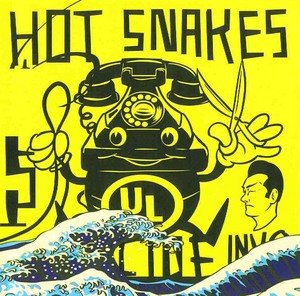
Hot Snakes reunites Reis with Pitchfork/ Drive Like Jehu guitarist Rick Froberg, introducing thunderous drummer Jason Kourkounis (Delta 72/ Burning Brides) and adept bassist Gar Wood. DC hardcore bastions tenaciously inform ‘00s primal Automatic Midnight more so than ‘02s fiery follow-up Suicide Invoice, but both totally shred, evidenced by soaring whirligig “My Story Boy,” untamed yammering grumble “No Hands” and the latter’s jacked-up Wipers-ripped entirety.

“I do ape the down-stroke, cleaner textures, and a certain velocity from the Wipers,” Reis says of guru Greg Sage’s cult crew.

Meanwhile, super side project, the Sultans (with drummer Tony Di Prima and Reis’ younger brother, Dean, on bass), dropped overlooked relentless barrage, Shipwrecked, in ’04.

But Reis’ meritorious story doesn’t end there. Re-gathering Kourkounis and Wood while saddling ripened bassist Thomas Kitsos, he inaugurated the Night Marchers in 2007. Boasting well-rounded hard rock vehemence ascertained from Hot Snakes, See You In Magic (enkindling the Hawaiian phenomenon of ancient warriors reappearing as sacred spirits) unleashes scrappy blues scrums, recombinant psychobilly, and irascible cow-punk scamper, “Branded.” Steely-eyed sneer, “You’ve Got Nerve,” sung in a throaty whiskey-stained baritone, mannerly debunks a jilting ex.

“It’s a new band, new outlook, new things going on, but same guitar sound, fingers, vocal chords. Some things you can’t escape,” Reis smirks. “It sounds like all my bands rolled into one. In the past, they were compartmentalized with different casts who’d take songs and put trademark sounds together. Obviously, I’m only in one band now. We’re tackling material, realizing what can be done.”

At times, See You In Magic seems nostalgic. Scrabbled basher “In Dead Sleep” and rabid devotional pledge “I Wanna Deadbeat You” snatch syncopated riffs from Chuck Berry. Rousing prelude, “Closed For Inventory,” assuredly loots Dez Cadena’s hoarse Black Flag howl.

“Black Flag’s Damaged made a profound impact – half-joke, half-terrifying – made by criminally insane creeps. They were like a favorite horror movie,” he says.

Besides running Swami Records in spare time, Reis is fulltime part owner of San Diego joint, Baby Pink Elephant.

“It’s a classic dark lounge with strong cheap drinks served by capable bartenders. Get lubricated and lost in the dusky velvet booth,” remarks Reis.

So life goes on for the cocksure bard. “World domination is eminent. I’ll ride that to the bank. Night Marchers are decapitating people with fresh sounds.”

NEW PORNOGRAPHERS LINKED TO ‘MASS ROMANTIC’

FOREWORD: New Pornographers keep delivering good aggressive pop music at a consistent rate. After I interviewed co-leader, Carl Newman, to promote 2000’s indelible Mass Romantic, the casual combo received more than a glimmer of underground fame. So they kept pushing on. ‘03s Electric Version wasn’t quite as great, but ‘05s Twin Cinema really hit the spot. ‘07s Challengers was only slightly less intriguing. This article originally appeared in Aquarian Weekly.

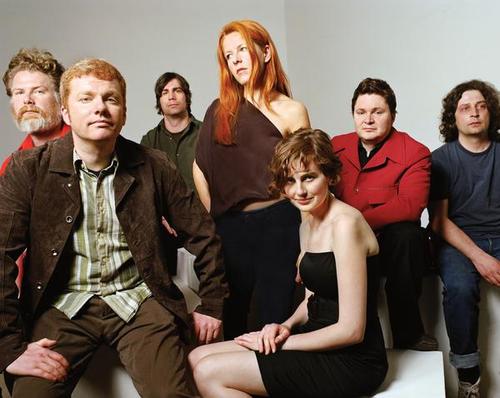
100 miles north of Seattle lies the bohemian city of Vancouver, home of the New Pornographers. A fabulous underground supergroup featuring Zumpano’s Carl Newman, cartoonist/ digital filmmaker Blaine Thurier, the Destroyers’ Dan Bejar, Limblifter’s Kurt Dahle, and Thee Evaporators John Collins, this Canadian collective makes some of the most exuberant pop in recent memory.

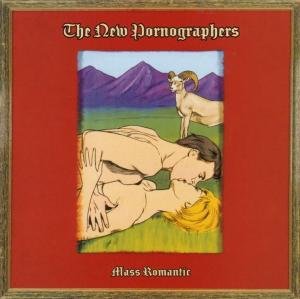
Their hyperkinetic debut, Mass Romantic (Mint Records) grabs hold immediately, whizzing by in an instance without letting go.

From the foot stompin’ melodicism of “The Slow Descent Into Alcoholism” to the scrappy arena rock of the Cheap Trick knockoff “The Body Says No,” Mass Romantic rolls along at an exhilarating pace. No Depression-linked Country & Western wunderkind Neko Case helps out the boys by singing like a feverish rocker on the vibrant, jangly title track and lending a naive schoolgirl charm to the twee-pop “Letter From An Occupant.”

“I was worried people would think all our songs sounded the same. But Neko was our secret weapon,” the humble worrywart Newman confides. “The album doesn’t let up much. There’s lots of bombastic rockers. We gave them different rhythms and shuffled the tempos to give each song a different feel.”

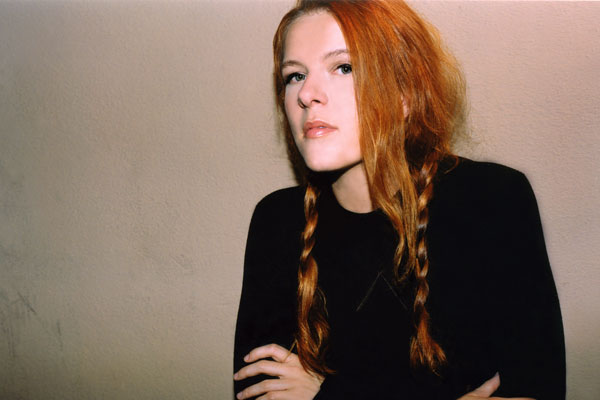
The omnipresent Neko Case (whose Furnace Room Lullaby with Her Boyfriends and coffeehouse collaboration with guitarist Carolyn Marks as the Corn Sisters were critically hailed in ‘00) proves to be resilient and stylistically flexible whether displaying a rock-edged demeanor or keeping tongue firmly in cheek.

“Neko basically came in, did her part, and left. We labored hard. She was shocked when she heard the album. She didn’t know what it sounded like,” remembers Newman.

Growing up in the late ‘70s listening to oldies radio initially influenced Newman’s musical taste. He was knocked out by catchy one hit wonders and goofy novelties like “The Night Chicago Died” and “Billy Don’t Be A Hero.”

“When I became a teenager, I totally flipped for REM. They were the first band I truly admired. But REM seemed too magical. Since I’m not a good guitar player, I then dissected the music of the Pixies. Their guitar parts were simple and cool.” He adds, “People give Nirvana more credit, but the Pixies influenced them profoundly.”

Since Zumpano’s arrangements are more structurally complex and busy, Newman just wanted the New Pornographers to have a simpler, solid-bodied rock foundation.

“I tried to streamline it a bit,” he insists. “We injected weirdness into the strraightahead, driving songs later on. But I tried to hold myself up to insanely high standards. I can’t help but let myself down.”

Although Newman claims he tried to obtain a certain “something” just out of reach, he remains very proud of Mass Romantic.

“It has received good feedback from fans and, believe it or not, Toronto radio,” the defensive Canuck mentions.

Taking the show on the road sans Case and maybe another studio member or two hasn’t hurt the New Pornos sound much, though.

“We realize there’s so many people singing you can take one away without much hassle. We tried to do the songs as close to the record as possible, but that was so overblown. We try to replace the things we can’t do with live energy,” he admits.

As for his full time gig with Zumpano, whose ‘95 debut, Look What The Rookie Did, and its sturdy follow-up, Goin’ Through Changes, turned some heads and created a nice buzz, Newman says, “We have a record that’s 60% done. But we’re in limbo now. We need to hook up and finish it. The Pornos sidetracked it and have taken us by surprise.”

NEKO CASE: ‘BLACKLISTED’

FOREWORD: I heard one of the skin mags offered singer-songwriter Neko Case good money for nude pix but she declined. While that may be too bad for curious males (or females), her naked reflections will have to suffice. And she shows these bare emotions on nearly every song she puts forth.

On the side, the fresh-faced red-headed lass has worked with the Sadies, Corn Sisters (a duo with fellow folk composer, Carolyn Mark), and New Pornographers. I took my wife to see her at Maxwells intimate backspace for a solo acoustic set that truly showed off her golden pipes. I’ve met her a few times in New York and she’s never less than cordial. To promote ‘02s Blacklisted, I got to put the mike to Case. She has since released ‘04s live The Tigers Have Spoken and ‘04s astounding Fox Confessor Brings The Flood. Middle Cyclone, her ’09 album, is getting major respect. This article originally appeared in Aquarian Weekly.

Singer-guitarist Neko Case began her musical journey as a runaway from Alexandria, Virginia, taking minor roles as drummer for amateurish Vancouver indie pop combos Maow and Cub during the early ‘90s. In ’97, she debuted with The Virginian, a formative solo album conveying a sharp-minded Country-folk sensibility. The more assured follow-up, ‘00s Furnace Room Lullaby, broadened her scope and brought a better lyrical perspective to love-stricken odes and rural home-fried recounts. By the end of ’01, she moved to Chicago and recorded the pristine Blacklisted, affirming her position as one of America’s premier (if under-appreciated) vocalists.

Made with Calexico’s John Convertino (drums) and Joey Burns (bass) at their Arizona-based desert studio, Blacklisted spans through neo-traditionalist Appalachian-styled back porch folk, Western ballads, and bluegrass with a casual splendor and elegant grace only Case could unveil so seemingly effortlessly. Stellar versions of Aretha Franklin’s “Running Out Of Fools” and the poignant “Look For Me” (learned from a Ketty Lester cassette) saddle up next to dirgey acoustic originals such as the title track, the sentimental, imagery-soaked “I Wish I Was the Moon,” and the clinging ballad, “Tightly.”

During free time away from a busy touring schedule, Case delivered ‘99s cuddly old timey Corn Sisters recording, The Other Women, as a campfire-inspired duet with friend Carolyn Mark. She also lent her crystal clear bell-toned alto to the indie star-studded New Pornographers’ pop masterpiece Mass Romantic around the same time.

The spunky, good-humored, red-headed Case took some time out between house-sitting Mekons singer Sally Timms’ cat and a green tomato-laden dinner with fellow Chi-town pal, singer Kelly Hogan, for this informative, introspective interview.

Banjo-strummed Blacklisted opener, “Things That Scare Me” would fit in well next to the heralded bluegrass-folk soundtrack O Brother, Where Art Thou?

NEKO CASE: I got the idea for that song from bassist Tom Ray ‘cause he plays banjo. We were on tour with Jim & Jennie & the Pinetops. They’re a great band that influenced it as well.

Was music your only real outlet after prematurely leaving home as a teen?

NEKO: It’s just so much fun. Most of my time was spent focusing on music because I wasn’t living a very easy existence then. My friends were starting a band and I wanted to play drums so we did it.

There’s an overwhelming sadness and broken-heartedness that shows up more succinctly on each successive record.

NEKO: I’ve been learning how to write better songs and express things. I’m a happier person since I have an outlet to talk about sad things. But there’s a lot of hope in the music I hope people will hear.

Is it difficult maintaining a relationship since you’re on the road so often?

NEKO: You don’t. It’s crazy. (laughter) I don’t need a boyfriend every minute. I’m not in a relationship now. I’ve been in some where the person was jealous of my career. So it didn’t work. That’s a drag.

Does the title, Blacklisted, refer to the Grand Ole Opry episode where you took off a blouse and continued in a bra due to the venue’s heat or lack of air conditioning?

NEKO: No. Blacklisted is just a name of a song. It encapsulated the theme of the album. It’s an evocative word. The Grand Ole Opry thing has been overblown. I didn’t tell the Opry to fuck off. (laughter) There was a misunderstanding. It has happened to Dolly Parton, Hank Williams, and Johnny Cash, I think. Some of the people who work there were great, treated us nice, and showed us stuff we’d never see. Like being backstage and seeing Jimmy Dickens (whose hilarious “May The Bird Of Paradise Fly Up Your Nose” was a goofy ‘60s novelty) walk by and say “how’s it going.”

My favorite album track may be the steel guitar-laced “Stinging Velvet.”

NEKO: It’s a little love song to Washington State where I lived and where it rains all the time.

How has living in Chicago affected your current music?

NEKO: Different scenery makes a difference. I have a great apartment and roommate. That makes me feel relaxed and at home. I live in the Humboldt section. It’s considered a bad neighborhood, but I think it’s fucking best. The secret to Blacklisted’s sound is Joe (Burns), John (Convertino), Tom (Ray: bass), and (frequent collaborator) Jon Rauhouse work so well spontaneously. They’re into the magic of the moment. Most songs we did in two to three takes.

What artists did you listen to with those guys while recording sessions in their sleepy hometown of Tucson, Arizona?

NEKO: Lots of stuff… the Latin Playboys. Joey Burns is into Manu Chao and John Convertino loves all kinds of Jazz. We all like the simple piano stuff by Erik Satie. If I were to look at an example of what singing should be, I’d look towards Gospel first. My favorite is Bessie Griffin & the Gospel Pearls. She sang in a large group and let other female singers take lead. I’m a huge Staple Singers fan. Their best album, on Savoy Records, features them wearing white Gospel gowns on a hillside and Mavis is singing. It’s a great find. Sister Rosetta Thorpe is awesome. Her guitar playing is so good.

After hearing about your influences, I now understand why you have such a bell-clear voice.

NEKO: It’s not like I could sound like those ladies except in a fantasy world. My friend Kelly Hogan’s my favorite.

What did you learn from being on the road with gloom-obsessed legends Nick Cave & the Bad Seeds while promoting Furnace Room Lullaby?

NEKO: Nick, his band, and crew were so nice. Even though they’re famous, there’s no attitude or egotism. He’d come off the stage sweating after a two-hour performance, go to his dressing room, come over to us, and let us know he enjoyed our show. He said they were thrilled to be on the tour with us. Everyone was stellar.

Along with the next New Pornographers album, what else do you have planned?

NEKO: I’m thinking of doing a live record with the Sadies up in Toronto at the Matador. We’ve been playing together for years and their live shows are the best I know. We thought it’d be fun to do originals and old songs and get members of their family involved to play a bunch of nights. Most people make live albums to get out of a contract and don’t care about quality. But we’re making sure it sounds good. As for the New Pornographers, I think they are slaving away in a dark basement finishing the new album in rural Pennsylvania. I’ve already done my part singing. It will be like a new wave pop record. I don’t write songs for them so it’s easier to keep things separate.

Anything planned with fellow Corn Sister, Carolyn Mark?

NEKO: We recently went to the Yukon together and played a Dawson City Musicfest. She has a new album she’s busy touring for.

Do you do any home recording?

NEKO: My EP, Canadian Amp, was recorded in the kitchen with rented ADAT equipment. I want to buy some gear, but I’m waiting for the prices to get cheaper. I know a lot of gearheads who send me e-mails of stuff.

THE NEGRO PROBLEM’S ‘JOYS & CONCERNS’

FOREWORD: Since this ’99 interview with Stew of the Negro Problem, the colorful orchestral pop mastermind’s Passing Strange has won a Tony Award for Best Musical Book. He’s also released at least one Negro Problem record (‘02s Welcome Black) and two under his own name, Stew (‘00s Guest Host and ‘02s The Naked Dutch Painter). Unfairly confined to the underground (literally, I saw him play Knitting Factory’s basement space twice), Stew is a truly gifted tunesmith in need of better recognition. His constant companion for over a decade, Heidi Rodewall, always offers solid musical support. This article originally appeared in Aquarian Weekly.

The Negro Problem’s Mark Stewart (a.k.a. Stew) and Heidi Rodewald (formerly of L.A. pop group Wednesday Week) recently showcased scaled down, dandy originals for five consecutive Wednesday’s in March at Tribeca’s Knitting Factory. Living temporarily in Brooklyn (maybe permanently if the rent is right), the dynamic duo emerged from the same Silver Lake, California, underground pop hotbed as Beck, the eels, and Wondermint.

By embellishing well-constructed compositions with distinctively Baroque pop influences such as the Beatles, Beach Boys, and Arthur Lee’s Love, TNP garnered great press and received cult status with ‘98s fabulous Post Minstrel Syndrome.

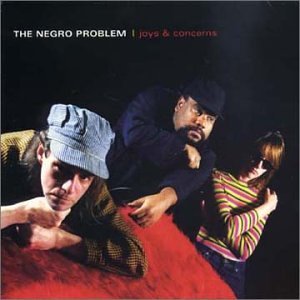
Two years hence, the revamped combo return with the retro-refined masterpiece Joys & Concerns (Ariel Flipout Records). Caught in a “crazy mixed up world” full of uncertain romance and self-doubt, Stew’s ambitious lo-fi fantasies gleam with emotional resilience while retaining a definite childlike dalliance.

Like an adolescent bohemian daydreamer, burly Stew drifts off into “Comikbuchland,” a lush, synth-soaked paradise clustered with Sgt. Pepper insouciance later re-cast as a snazzy, organ-fueled rollercoaster ride titled “The Rain In Leimert Park Last Tuesday.” On the sleek “Mahnsanto,” he visits Disneyland and sulks over Tomorrowland’s demise. Written from the perspective of a gay doll stuck sucking “Barbie’s plastic tits,” he confronts societal norms with the wry “Ken.” But the brightest jewel on Joys & Concerns has to be the tempo-and-mood-shifting, Magical Mystery Tour-derived “Goode Tyme,” a hook-filled trinket topped off by Stew and Heidi’s buttery dual harmonies.

Before loading Heidi’s keyboard into an associates’ car, then driving her and Stew to a late night, post-Knitting Factory-gig diner, I spoke candidly with them.

Why has Silver Lake developed such a keen pop scene?

STEW: I have no idea. There’s something about the area. It has always been an artistic area. In the ‘20s, there was Aldous Huxley. It must be something metaphysical, weird, or just cheap rent. Cheap rent attracts people who do interesting art. But I’m tired of L.A. We can pay rent but we want to move on and be a band that can play the whole country. That’s why we’re doing a Knitting Factory residency.

What artists initially inspired you?

STEW: The people who turned me on to rock and pop were black musicians who were very eclectic. The first time I heard Pink Floyd and progressive rock was when I was auditioning for an all black funk band at 14 years old. They accepted me into the band, lit up a doobie, and put on Dark Side Of The Moon. True musicians have open ears. The first time I heard Abbey Road was when my cousins played it the week it came out. It was a big event. So it wasn’t like I had to crossover. Back then you’d hear James Brown and Sly & the Family Stone next to the Beatles, Rolling Stones, and Jethro Tull when radio was wide open.

How do most of your arrangements come about?

STEW: It’s not that thought out. It’s spontaneous. We try to keep ourselves awake when we’re making the music. (laughter)

“Goode Tyme” seems to sum up your own personal Joys & Concerns.

STEW: You hit it. That song was the defining moment of the record. But the d.j.’s in L.A. like “Comikbuchland,” the slow version. I can’t predict what they’ll like. It’s my favorite tune. On one hand, it’s totally sincere, and on the other, it’s sarcastic. It’s daring to be optimistic.

Do you find there’s a distinct difference between East and West Coast pop?

STEW: I know there was a difference between East and West Coast pop from the ‘60s. The current stuff, I don’t know. The world is so small regional is a concept that went away. But in the ‘60s, the Velvet Underground would have never happened on the West while the Beach Boys couldn’t have happened on the East. The West is more into harmony. The East is real fast. That’s why you get the urgency of the Velvet Underground, Television, or even doo-wop. Whereas, the West Coast artists take it slow and sit around in the garage. I know a guy who would see the Beach Boys when they rehearsed. They’d just sit around in the gym all day.

How’d you hook up with Heidi for Joys & Concerns?

STEW: We needed a bass player who sang. She was in Wednesday Week and had been to the mountaintop. She had done the MTV nationwide tour. She lived up with a friend of ours, learned the songs, and that was it.

How does Post-Minstrel Syndrome compare to Joys & Concerns?

STEW: The second record has someone who has had relative difficulties and pain. It wasn’t supposed to be sad, but the realities crept through. It’s more adult. I had the guts to write about what sucks. Before, I never wrote about problems. I didn’t want to whine and cry about my shoes like Eddie Vedder does while he’s got a million dollars. I’ve had a good life, but things got weird relationship-wise. The first album was like being in the playground, having fun and laughing.

Why are Joys & Concerns’ more upbeat tracks near its conclusion instead of up-front like most pop records?

HEIDI: Everything was against the sequencing. But I was listening to Stevie Wonder’s Innervisions and I thought it was cool how it came down really fast for a low key second song (“Visions”). Besides, we’re not for the kids. That’s not our audience.

STEW: But you can’t fault the kids. When we were doing Joys & Concerns, this 16 year old boy whose father is the station manager of KRLA and has a wealth of knowledge about pop and access to all the right music was asked ‘Why aren’t you into music? You like video games’ The kid goes, ‘Do you really fucking expect me to get excited about Matchbox 20?’ His dad was like ‘case fucking closed.’

There’s this massive conservatism that’s choking this country and its mass marketing of boring, contrived music.

STEW: Kids don’t like pop music anymore. 12-string guitar Beatles-influenced stuff had a brief period, but now kids like more ballsy stuff. Kids are far removed from pop. My eight year old daughter has only been listening to TNP, Hanson, and “Macerena.” When she heard the Beatles’ White Album she said, ‘Is that you guys?’ Her friends have no music that sounds remotely like “Blackbird.” When she hears verse-chorus-verse-chorus-fade, she thinks it has to be TNP. It just shows that this way of structuring music is totally lost. We’ve played outdoor shows at Santa Monica on Saturday afternoon to wide open demographics. Everyone is there: backward hat skateboarders, rappers, intellectuals with John Lennon glasses, and old ladies. When we play, the kids stop and listen, then walk away. There’s nothing in our music that grabs them. But there’s the guy with the glasses who has come out of Borders Books who lets the music grab him by the throat.

Take “Livin’ La Vida Loca.” It’s like a taco commercial. There’s no subtlety. It’s desperate sounding. The production makes sure you can’t take your attention away. Nothing lets you off the hook for a second. I’m trying to get my kid to listen to the Beatles and other stuff just to indoctrinate her. The way things are now, I hate the fact Top 40 sucks. I love the idea of a #1 song, but Whitney Houston and Mariah Carey are histrionic divas who don’t sing songs which exhibit their entire range. Why can’t they record an Aimee Mann song which has some depth?

MUFFS GLAD TO BE ‘ALERT TODAY ALIVE TOMORROW’

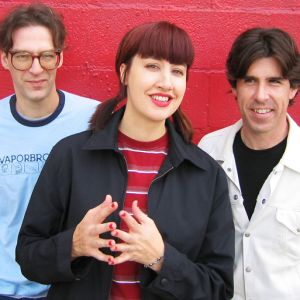
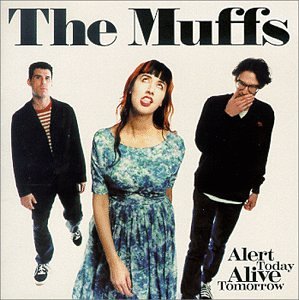
FOREWORD: The Muffs should’ve been as big as Blondie, the Go-Go’s, Bangles, or at least, Courtney Love’s Hole. Led by big-voiced shouter, Kim Shattuck, they tore into trashy hard pop candy with utmost conviction and nervy verve. I got to see ‘em thrice in New York City during the late-‘90s. But the first time I saw Kim in person standing outside of CBGB, she had sunglasses on and wore pants instead of the li’l skirts she’s known for and I didn’t think it was her. Too bad. I could’ve hung out with one of my favorite female rockers for awhile. Anyway, since this ’99 interview supporting Alert Today Alive Tomorrow, the Muffs put out ‘04s o.k. Really Really Happy and drifted into the sunset. This article originally appeared in Aquarian Weekly.

Pouty-faced pop-punk singer/ guitarist Kim Shattuck went from the cozy confines of Long Beach, California to the craziness of L.A. when she flew the coup in her twenties. Using music as therapeutic medicine, she formed the Muffs after a stint in fuzztoned ‘60s revivalists the Pandoras. Originally an all-female band, Shattuck recruited drummer Roy Mc Donald and bassist Ronnie Barnett and recorded one of the hardest hitting post-grunge albums, ‘95s Blonder And Blonder. With one of the most diabolical screeches since Roger Daltry caterwauled through youth-liberating “Won’t Get Fooled Again,” Shattuck made the Muffs a major club attraction.

The trio’s third album, Happy Birthday To Me, traded some of the sneering vehemence and jagged, Hole-like snarl of Blonder And Blonder for the sharper melodic edges, softer tones, and more diversified material which somewhat informs the back-to-indie resonance of the newly waxed Alert Today Alive Tomorrow (Honest Don’s Records).

Running the gamut from sincere balladry to AC/DC-ish hard rock (“Dear Liar Love Me”) to spaghetti Western instrumental (the closing “Jack Champagne”), Alert Today Alive Tomorrow captures Shattuck as both maturing artist and wild-ass bitch.

Attired in her usual baby doll dresses, Shattuck’s seductive goofball sexiness and half-demonic stage presence hooked me during a sweaty, intense ‘95 CBGB gig and a vibrant ‘97 Tramps show. I spoke to her via phone in early June.

Why’d the Muffs make the switch from a major label to a small independent for the new record?

KIM SHATTUCK: Reprise was having problems so we fell in with the Fat Wreck Chords people. We were too poppy for that label so they put us on Honest Don’s. We’re on a cool San Francisco label and get a good royalty rate. As long as we keep playing and building a loyal following of fans, we’ll be happy.

Strewn among Alert Today Alive Tomorrow’s all-out rockers are several heavily emotional, sincere ballads. There’s less little girl sluttiness than previous releases offered.

KIM: Right. On “Prettier Than Me,” I was going for a Velvet Underground feel. But I wrote that ten years ago and was afraid to do it. I thought it sounded too mature and no one was gonna like it. So I sat on it for a long time. The other slow song is “Your Kiss,” but that starts off rocking before going soft.

Are you being self-deprecating on “Another Ugly Face” and “Prettier Than Me.”

KIM: “Another Ugly Face” is about someone else’s ugly face, not mine. It’s one of a continuing series of stalk and stare songs, including “Everywhere I Go.” Every once in a while I feel like I’m getting stared at. It’s a paranoia.

Your rowdy songs have a very bohemian bent. What is your take on life? Are you existentialist or God fearing?

KIM: I care about where I’ll go in the afterlife but you never know until you get there, so…I like the whole beatnik mentality but the people from that era of writers really bore me.

Are you aware the cool introduction to “I Wish That I Could Be You” sounds exactly like Who’s Next’s “My Wife”?

KIM: I’m definitely an early Who hardcore fan. I’m kind of a snob that way. But I don’t own and haven’t listened to Who’s Next. But there definitely is a Who vibe to it. Our songs go from dark and brooding to poppy and light. I wrote that song and “Lucky Guy” about Ronnie. “Lucky Guy” was a sarcastic song about how he always falls into things.

Your signature screech seems under-utilized on the new album. Why?

KIM: I started screaming less on Happy Birthday To Me. That gimmick is coming to a close. But as long as we do the old songs, I love screaming. To me, it’s just releasing a loud wail to get out frustration. Now I’m picking on myself more lyrically. I want my music to evolve naturally and move forward but I’m proud of my early albums. “Blow Your Mind” kind of reminds me of my bouncy old song, “On And On.” “I Wish That I Could Be You” is a little like “Penny Whore,” only better.

By the way, older songs like “Penny Whore” and “Red-Eyed Troll” showed a definite country influence.

KIM: When I was really little I’d watch the Johnny Cash Show on t.v. and you’d see Buck Owens on Hee Haw. I was into that a bit. But what got me playing the guitar was the second revival of rockabilly when the Stray Cats came out. I was really impressed with that kind of sound even though I can’t play it. I had a boyfriend who used to wake me up in the morning with Bob Wills & the Texas Playboys. The Beatles did country tunes on their albums and that was maybe my original influence.

What have you been listening to lately?

KIM: A band called Buck that sounds a lot like us. It’s Ronnie’s wife’s band. She writes really good songs and used to be in Cub. It’s a continuation of that kind of music but way better. They totally rock. We may tour with them. Lately, I’ve been repetitively listening to a double-album of Buddy Holly. There’s a really cool place called Record Surplus around here and they have perfect condition records, some in sealed plastic. I recently bought an E.L.O. album with “Living Thing.” I love the Move. We were thinking of covering their song “Curly” from Fire Brigade on the upcoming tour. I really like the Creation compilation, too. They’re from a real dorky era of ‘60s garage-pop.

Kim from the Fastbacks told me Blonder And Blonder’s title was inspired by a comment Courtney Love made about your hair.

KIM: Yeah. She was thinking I was copying her by having blonde hair. I think she’s a toe-head: born with blonde hair that darkened as she got older.

MUDHONEY ‘BECOME TRANSLUCENT’ AFTER ALL THESE YEARS

FOREWORD: Mudhoney’s Mark Arm and Steve Turner joined me for dinner in Little Italy during ’98 when they were touring for Tomorrow Hit Today. It was still daylight and they were going on at 10 PM at Bowery Ballroom. We shared thoughts, talked about the Seattle grunge scene, and laughed off some beers. The Bowery was packed that night. And Mudhoney played as hard and raw as they possibly could. In ’02, they released Since We’ve Become Translucent and I got to speak to Mark via the phone. This article originally appeared in Aquarian Weekly. Below the Aquarian article is my initial ’98 interview caught on tape in Little Italy for my friend Jeff Wright’s art mag, Cover.

Alongside more experimental counterparts the Melvins, Washington natives Mudhoney lit the fuse igniting the Nineties grunge explosion. Originally, vocalist-guitarist Mark Arm and guitarist Steve Turner had teamed up with future Pearl Jam members Jeff Ament and Stone Gossard as Green River for the blistering Rehab Doll, forging the carnal post-punk exploits of the Butthole Surfers with the forthcoming metal-edged grunge of Soundgarden, Tad, and Alice In Chains. But when ‘87s impromptu single, “Touch Me I’m Sick,” and ‘89s developmental eponymous full-length debut received college radio exposure, Mudhoney built their own fervent cult following.

’91s shambolic Every Good Boy Deserves Fudge… turned out to be the volatile mess o’ fun the quartet (filled out by bassist Matt Luikin and drummer Dan Peters) had longed for, leading to ‘93s maddening blitzkrieg Piece Of Cake. The aggressive buzz-toned sonics of “Suck You Dry” led to the succulent 7-song neo-psychedelic departure, Five Dollar Bob’s Mock Cooter Stew.

Throughout, Arm’s smoke-charred baritone pelted smug lyrics in an uncontrollable manner, unleashing infuriated caterwauls and churning bellows for utmost ferocity. By ‘95s cataclysmic My Brother The Cow, Mudhoney began to strike a balance between feasible hard rock accessibility and visceral sludginess, indicting the status-seeking Courtney Love on the malevolent fuck-off, “Into The Shtik.”

It became apparent Mudhoney was getting better with each successive release despite fading farther from fan-fraught fame. ‘98s feral Tomorrow Hit Today left a permanent shit-stained mark on post-grunge graduates. The organ-doused garage rocker “Night Of The Hunted” stated its purpose clearly, to “stand our ground” and against all odds never “back down.”

Despite its self-effacing title, Since We’ve Become Translucent didn’t surface until ’02. But any apprehensions the combo might have had are negated by this fresh set of taut song ideas. Punctual horns perk up and enliven the bombastic Exile On Main Street-informed “Where The Flavor Is” and the skull-drilling “Take It Like A Man.” A hazy Black Sabbath darkness hovers above “Crooked And Wide,” as new bassist Guy Maddison (ex-Lubricated Goat) pours on apropos gloom. “Sonic Infusion” crosses stoner rock idealism with Raw Power suss and the rampaging “Dyin’ For It” gets propelled by droning keyboard madness.

Meanwhile, cavernous cobwebs of cacophonous guitar affects climax in a sea of wailin’ tenor sax (courtesy of Arm’s long-time buddy, Craig Flori) on the long mantra, “Baby Can You Dig The Light,” creating a fertile jam only grunge masters the Melvins could match. The rambunctious “Inside Job” features legendary MC5 bassist Wayne Kramer and the downcast “In The Winner’s Circle” spits out blood-curdling vitriol like Alice Cooper once did.

During free time, Arm has toiled with gut-busting garage-Blues alongside members of Lubricated Goat in Bloodloss while Turner played R & B-damaged proto-punk in the Fall-Outs. Together, they continue to make side projects under the Monkeywrench moniker.

Do you really feel Mudhoney has done a disappearing act as per the facetiously sarcastic LP title?

MARK ARM: We’re a little fuzzier. (ha-ha) It’s from a line in “Sonic Confusion.”

In the late ‘80s, the Pixies, Melvins, and Mudhoney perked up an underground scene battling back stale hair-metal bands.

I appreciate that anyone would think our little contribution to the world of music perked up the scene.

I own an old Green River record that further solidifies your historic stature.

That began in ’84 when the Butthole Surfers and Big Black ruled. What was good about that time was bands were doing stuff they wanted to do with no goal in mind to attract a certain crowd. The Butthole Surfers were completely in their own little world in all aspects of personality and music. They didn’t worry about breaking on radio. Our motivation has only been to please ourselves and if people came along for the ride, great.

Were you friends with fellow Northwest rock hopefuls the Melvins prior to the grunge explosion?

Matt (Lukin) was in the Melvins. We played early shows with them until they moved to San Francisco. There was acrimony between Matt and the Melvins because of what transpired. (ed. note: he was left behind in Seattle) We did play with them in L.A. around ’89 with Thee Headcoats. Our paths cross periodically, but not as much as they should have, considering our shared history. We’re hoping to play with them in Portland this fall.

You got to work with former MC5 idol Wayne Kramer on “Inside Job.” How’d that come about?

There was a short-lived internet site, Music Blitz.com, we got approached by in ’99. It was gonna be a web-only site before Napster went hog wild. They were trying to sell downloads, but were undercut by free file sharing. Before we went to the studio, he came over to my house and played some bass ‘cause Matt had quit. They asked Wayne to put together a compilation called Beyond Cyberpunk with mostly older punk dudes like Pere Ubu and younger, upcoming bands.

I’m due to interview Pere Ubu soon.

Tom Herman, who just re-joined the band, is one of my favorite guitar players. What I love about Pere Ubu is they existed in a place where there was no support system prior to punk. Some of it sounds like a cross between Stooges, Hawkwind, and Captain Beefheart. That’s three of my favorite bands of all time.

Your new songs seem more approachable thanks to the spanking horn sections and punctual arrangements.

We’re getting more aware of how to do things, I hope.

Why use three separate producers at three different studios for this album?

Except for Tomorrow Hit Today, when we used Jim Dickinson (Rolling Stones, Big Star, Replacements), we never really had a set producer. We always worked with engineers to co-produce. The idea was to add more tonal sonic variety.

How has new bassist Guy Maddison affected Mudhoney’s sound?

He used to play in Bloodloss with me and was in Lubricated Goat. He’s lived in Seattle since ’93. He has a totally different style than Matt. He doesn’t follow along with the guitar riff. He plays around it and has a great fluid style. If it weren’t for him, we wouldn’t have been able to go on. His personality fits in.

Do you listen to mod bluesrock revivalists White Stripes?

I saw them a few weeks ago.

What’d you think of Kelly Osbourne’s cute punk-pop version of Madonna’s “Papa Don’t Preach”?

It’s kind of like Frank and Moon Unit Zappa’s novelty, “Valley Girl.”

————————————————————————————-

MUDHONEY LOOK FORWARD ON ‘TOMORROW HIT TODAY’

Though incorrectly introduced as straight-edge by a mutual friend in 1983, Mudhoney founders Mark Arm and Steve Turner came from distinctly different Northwest backgrounds. As one of the forefathers of Seattle’s grunge scene, Mudhoney began sharpening their skills with the psychedelicized Superfuzz Bigmuff EP. Since ’93, they’ve recorded for major label, Reprise, delivering virtually ignored masterpiece, My Brother The Cow, and ‘98s wholly diversified Tomorrow Hit Today.

As we await dinner at Mulberry Street’s Da Nico before Mudhoney’s superb Bowery Ballroom set, Arm offers, “My parents were so against rock and roll, which made it intriguing. My mom was an opera singer and hated any non-Classical music. She had strict ideas of what was right and wrong since she grew up under Hitler in Germany and now is in her seventies. I gave my dad a Hank Williams record for Christmas and she mocked it for being boring and repetitive. But my dad was from Kansas and used to listen to that growing up.”

Dragged to opera shows, church, and Christian schools as a pre-teen, Arm developed a rebellious attitude reflected in the ambivalent, sometimes venomous lyrics Mudhoney’s songs receive. Although Arm’s diatribes probe morbid fascinations with uneasy queasiness and explore the unsettled dementia of life’s dark underside, he rejects the tortured artist treatment.

“Most artists write about good times and love. It’s done to death. So I might as well be the guy who focuses on the bad times,” he says.

As Arm’s partner, Turner grew up in a family of overachievers, but he was more interested in riding bikes and skateboarding.

“When I was 14, my mom thought I was a genius, so since then I could do no wrong,” Turner admits.

While Arm appears to be a menacingly unkempt rascal with red-dyed hair and bad attitude, the opposite seems true of Turner, who wears small, conservative specs, fits the mold of Mr. Perfect, and runs Superelectro Records (which features indie bands the Fall-Outs, Kent 3, and Wellwater Conspiracy).

“We had friends running the Amphetamine Reptile and Sub Pop labels when we first got together. We planned to put out one single. I was working at Muzak in the shipping department at the time,” explains Turner.

As grunge gained national popularity, Mudhoney became a fixture on the touring circuit, never gaining the massive acceptance afforded Nirvana, Soundgarden, and Stone Temple Pilots.

While enjoying delicious Italian food, Arm offered some scattered thoughts on egomaniacal legends from Seattle’s early ‘90s heyday.

“Some local artists swallowed fame hook, line, and sinker, surrounding themselves with leeches. We’ve seen a lot of people thrust into the spotlight and very few did it with grace. Pearl Jam never threw stupid tantrums and never asked ‘do you know who I am?’ They know that bowing down to people like that is ridiculous. And it’s an ongoing condition.”

Two hours later at Bowery Ballroom, Mudhoney blows its avid fans away with the meaty hooks and propulsive beat of new songs like buzzing spaghetti western-influenced “Oblivion,” snarled garage rockin’ “Night Of The Hunter,” and whiny-voiced “A Thousand Forms Of Mind.” As Arm’s groaning blues-soaked voice purged burning staements of purpose and Turner’s icy riffs soared into the dope-filled room, it was apparent that Mudhoney’s wicked enthusiasm hadn’t wavered a bit in more than a decade.