MR. T EXPERIENCE PROVES ‘YESTERDAY RULES’

Image result for MR T EXPERIENCE

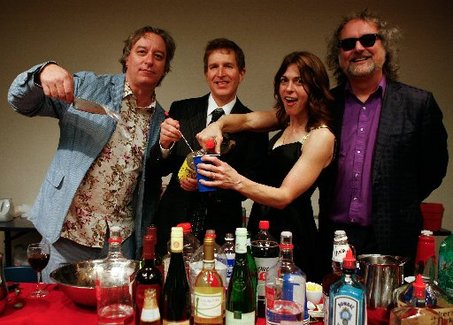
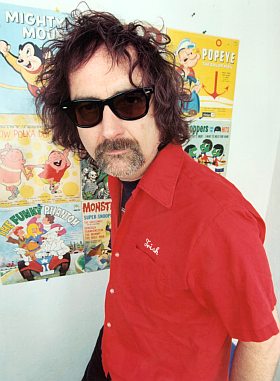
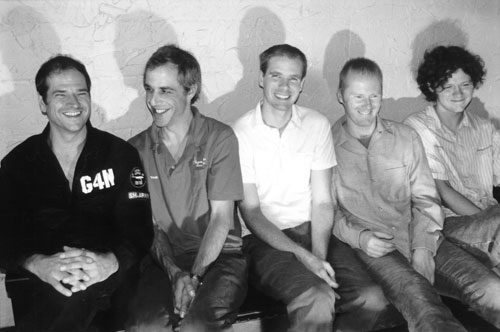
FOREWORD: Mr. T Experience is the brainchild of Frank Portman, a mainstay of Berkeley’s famed late’90s Gilman Street scene. After a five-year layoff, MTX came back strong with ‘04s Yesterday Rules. At that time I spent a few hours eating, drinking and talking with Frank and his female publicist at Brooklyn’s North 6 club – prior to his show. Nice guy. In ’06, Portman’s first novel, King Dork, arrived. This article originally appeared in Aquarian Weekly.

Before Green Day and Rancid discovered gold in San Francisco, Mr. T Experience were slowly developing Gilman Street’s vital underground scene across the bay in nearby Berkeley. Founded by Dr. Frank (Portman) and ex-member Jon von, the perky combo originally gave fidgety tongue-in-cheek romanticism and disparagingly wry humor limited indie pop credibility while hair metal claimed mid-‘80s airwaves.

“When we started, there were no local bands that weren’t Reagan-oriented hardcore rock,” Dr. Frank insists as he swigs a pre-gig beer in my Odyssey. Still going strong despite two breakups, a misunderstood ’99 misstep entitled Alcatraz, and a hard-to-find solo follow-up, MTX (Mr. T’s abbreviated handle) hang in there with ‘04s resounding comeback Yesterday Rules.

Oft times the brunt of cruel anti-pop jokes at their beginning stages, MTX struggled to gain serious attention before paving the way for Operation Ivy (Tim Armstrong’s pre-Rancid gang) and Sweet Children (Billie Joe Armstrong’s pre-Green Day crew).

“At early Gilman shows, a hodgepodge of weirdos would open for national acts. One of our first shows was Nomeansno. But hardcore metallurgists MDC and Attitude Adjustment were in the mix and they’d make fun of us so we’d have a terrible time,” Dr. Frank recalls. “They’d go, ‘You’re that la-la-la band.’ People say we started the pop-punk trend, which I don’t think is all that accurate. We couldn’t get on metal bills, so we put shows on at pizza places, gradually hooking up with Maximum Rock And Roll to start the Gilman club.”

Soon the East Bay scene changed as prog-metal lost traction and pop-punk won out. Green Day attracted major notice. The defunct Operation Ivy became a genuine mass cultural phenomenon. Eventually, do-it-yourself bands became hot show biz prospects, reeking revenge when The Offspring blew up in ‘95.

But Dr. Frank admits the historic early Gilman scene was overvalued and undernourished just as the ’77 Brit-punk explosion he watched firsthand had been.

“I remember all those early shows being lame, poorly attended, and pathetic. The audience wasn’t paying attention and Tim Yohannon of Maximum Rock And Roll had a philosophy to go along with his Communist rhetoric that bands should be taught they’re not so special. You’d have to clean bathrooms – which we stopped doing because it was hard enough being in a band,” he declares. “Kids now think that was the golden age, but I tell them it wasn’t wonderful. Most shows had only 50 people. We just couldn’t play anywhere else. It’s still going on now.”

Incredibly, at age 14 Dr. Frank attended the Sex Pistols last US show in ‘78, where Johnny Rotten made his famous ‘Ever get the feeling you’ve been cheated?’ comment. He remembers that spectacle and an early Clash show being lousily planned, awkwardly handled, and audibly awful.

Clarifies Dr. Frank, “When I think back at those shows, I can’t remember how it sounded because I was overwhelmed. My ears were ringing for the next year. My friend Mike and I took the bus to the city and saw The Clash at Kezar Stadium in Golden Gate Park. That show sounded like a tangle of feedback and noise. You couldn’t make out songs, but I thought it was the greatest thing I’d seen. Everything The Clash did then you try to avoid. You want everyone playing at the same time and be able to distinguish guitar from vocals and bass. It was a mess.”

Inexplicably, Dr. Frank alleges punk hadn’t yet been established in the States and the Sex Pistols audience was full of freaky longhaired tie-dyed hippies that’d frequent Bill Graham concerts.

“Those bands misunderstood America,” he smirks. “They booked clubs in working class areas thinking there was a street music scene like in England. But our working class weren’t punks. So it was cool and stupid at the same time. They were selling cream pies with broken glass that you were supposed to throw at the stage. I bought all this Communist propaganda after The Clash show and my father said, ‘You might want to give a critical eye to this stuff.’”

Wow! I’d thought the most exciting historical fact about Dr. Frank was his whore lord grandfather. Speaking of familial ties, his now-deceased father restored Frisco’s famed Mission Delores (its graveyard visited in Vertigo) and built Mission San Jose in the South Bay from the ground up. A general contractor with Catholic beliefs, he turned pre-teen Frank onto folk beatniks the Kingston Trio and Limeliters. But of foremost interest then were his parents show tune albums. That changed when a college bound aunt introduced Frank to punk and he soon bought English new wave by the 101ers, Motorhead, and the Undertones while picking up New Musical Express. Though various old girlfriends depleted a solid record collection, the priceless Chiswick recordings remain in his domain.
“At high school, I tried to adopt something that’d completely confuse classmates. There’s a lot of energy and power in that. I see that in our younger fans. MTX are like a little club they belong to and all other people are idiots,” he says with a grin.

Though embarrassingly juvenile, MTX’s foretelling ’86 debut, Everybody’s Entitled To Their Own Opinion, was recorded cheaply in one day by lowball producer Kevin Army (who’d twist knobs for initial developing Lookout! acts and still remains on board for Dr. Frank 18 years hence). Despite a poor budget, it captured the amateurish potential, earnest youthfulness, and jocular novelties channeled through slowly developing neophytes.

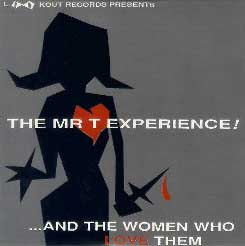
Following ‘92s zesty Milk Milk Lemonade, which featured MTX’s most skilled performances yet, the band broke up, re-organizing sans Jon von for ‘93s “Gun Crazy” EP and the confectionery Our Bodies, Ourselves. ‘95s engagingly candy-coated …And The Women Who Loved Them refined the truncated trio’s approach to loud, festive three-chord delirium further advanced by ‘97s even better Revenge Is Sweet And So Are You. Then, the consistently improving MTX delivered the harder-edged bubblegum-punk masterpiece, Love Is Dead. Led by the catchy shouted singalong “Ba Ba Ba Ba Ba” – still a concert staple – they were back in fine form with more economical tunes, better stylistically developed material, and sharper jovial wit.

However, ‘99s ill fated Alcatraz tainted Dr. Frank’s reputation amongst some long-time fans. A commercial failure radically different from its predecessors, MTX had hoped to challenge their audience with raw tracks.

He inquires, “I got together with Kevin (Army), told him I wanted the sound to be different to distinguish it. So I had these lo-fi demos and found you could make music that’s rocking and communicate appealing emotions when you back off the thick layer of generic punk guitar noise. So Alcatraz was my statement of independence to build the band from the ground level. We used different guitar levels on each song and took great pains to let the sonic depth equal the songwriting depth. It split our fans in two. That pissed me off, led to a solo record, then 9-11 derailed things practically, financially, and psychologically. I obsessed on international politics, which detracted from the music. That’s what took so long to do another record.”

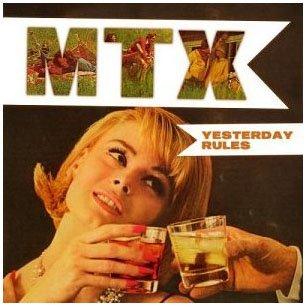
Breaking in new players, MTX triumphantly return as a quartet with the enthusiastically nostalgic Yesterday Rules. Its girl-with-martini cover art beckons mid-‘60s discotheque nirvana, perhaps invoking a nifty Laugh-In appeal.
The upbeat neo-psychedelic charmer “Boyfriend Box” spreads sunshine nipping at the Monkees closing t.v. theme, “I Wanna Be Free.” A winsome bounce escorts the otherwise frustrated “Oh Just Have Some Faith In Me” and the impulsively discontent “Fucked Up On Life,” which recalls early Elvis Costello or Graham Parker with its quirky mid-tempo melodicism. The footstompin’ “Shining” rocks hardest of all.

But most memorably, the cleverly catchy acoustic strummer “Institutionalized Misogyny” explores love-hate politics and seems adapted from Appalachian Country ode “Rocky Top.”

“I’ll seem like a dork, but casting that song along the lines of traditional folk was done purposely to underscore the quaint homey attitude sometimes ridiculed, but it branches off into a ‘60s soft pop angle at the bridge. The title was intriguing because you can’t imagine how it’d be a song,” Dr. Frank confides.

When I mention the loopy “Everybody Knows Your Crying” would work as a George Jones tearjerker, he agrees. “George Jones’ songs are genuinely moving, make you wanna cry, and then they’re instantly a part of you: “The Race Is On.” “He Stopped Loving Her Today,” that one is a puzzle or little riddle. When you realize what it says, it hits you like a godly thing, a taste from beyond.”

At Brooklyn club North 6, tidily thin Dr. Frank, wearing a brown leather jacket and slinging a cherry wood guitar, lets his jittery left leg drive the beat as he leans slightly towards the mike to deliver Yesterday Rules highlights and frosty crowd favorites in a honeyed baritone. Kids pogo to “Ba Ba Ba Ba Ba” and chant along during three acoustic solo performances climaxing with the hilarious complaint, “Even Hitler Had A Girlfriend,” before the band rejoins their determined leader for more dynamic merriment.

As he reflects back, Dr. Frank recounts, “I feel lucky to have survived. I may have done stuff that people think sucks, but never something that was fake. I’m proud of that.”
MR. LIF LIFTS OFF WITH ‘I PHANTOM’

FOREWORD: Bright Barbadian Bostonian, Mr. Lif, brings sophistication and innovation to hip-hop’s expansive permutations. During ’02, he released his fascinating long-play debut, I Phantom, which got promoted by the following piece. Alongside MC Akrobatik, he began the Perceptionists, whose ’05 Black Dialogue album also gained critical praise. Since then, he’s recorded ‘06s Mo’ Mega and ‘09s I Heard It Today under the Mr. Lif banner. This article originally appeared in Aquarian Weekly.

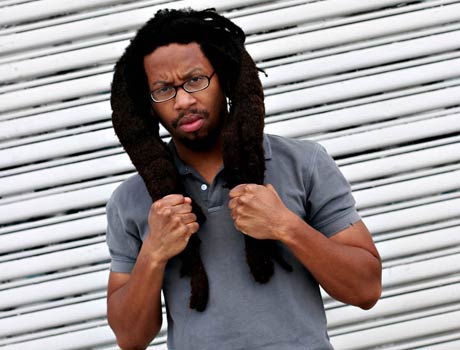
Raised by Barbados-born parents in Boston suburb, Brighton, Massachusetts, young Jeffrey Haynes attended prestigious Noble & Greenhough Prep prior to developing rhyme skills at Colgate University. Partly inspired by his calypso-loving orthodontic father, Haynes became Mr. Lif for the rhyme-styled boom-bap single “Electro”/ “The Nothing,” a minimalist hip-hop underground classic reliant on dope-ass samples and hard drums.

Hooking up with Definitive Jux label entrepreneur-former Company Flow emcee-producer El-P, Mr. Lif dropped out of college and climbed to the top of rap’s evolutionary ladder after delivering ‘02s cynical cinematic schism, Emergency Rations. Using the ghetto as mindset, its portentous apocalyptic drama dealt with the raw predicaments and deteriorating self-esteem of “brothers locked down” in the depression-bound “Home Of The Brave.”

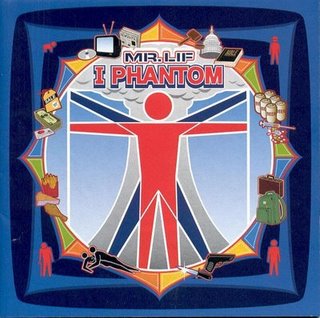
Now residing with his equally politicized collegiate girlfriend in countercultural hotbed Berkeley, California, the freshly rejuvenated, lyrically re-charged Mr. Lif returns from a feigned sabbatical for the fascinatingly nightmarish I Phantom. The grim urban realism of “A Glimpse At The Struggle” shifts into the nostalgic narrative “Return Of The B-Boy” and the ill Fat Boys/ Run DMC funk scheme “Live From The Plantation” (with its Batman-scoffed horn blurts) before the sinister “New Man Theme” cultivates vintage neo-orchestral Superfly/ Shaft blaxploitation reprised on the gritty bass-throbbed thriller “Friends And Neighbors.”

Before Lif’s profoundly bleak “Post Mortem,” Aesop Rock guest-raps on the traumatic domestic dirge, “Success,” while up-and-comer Insight drops by for the organ-fluttered, dub-plated “Status” and the thoughtful lamentation, “Iron Helix” (which dispenses choppy James Brown-styled rhythm guitar). Simply put, the provocative I Phantom rails against the manipulative “cycle of evil,” whether corporate or political, without glorifying thug life or giving into complacent defeatist temptation.

Who are early influences?

MR. LIF: I used to listen to Kiss, Michael Jackson, AC/DC, Blondie, REO Speedwagon, Pat Benatar, and all that Top 40 shit. But of course I love LL Cool J, Run DMC, De La Soul, A Tribe Called Quest, Boogie Down Production, and classic hip-hop – mainly Public Enemy.

The spare military beat of Emergency Ration’s “Heavy Artillery” reminded me of early-‘70s sociopolitical rap progenitors the Last Poets.

Someone tried to put me up on them, but I never knew about them on my own. Obviously Ultramagnetic MC’s and Run DMC and those cats blow my mind, but PE’s It Takes A Nation of Millions to Hold Us Back definitely changed my outlook on rap. They actually stood for something. There was an awareness movement to empower the community. I try to emulate those pioneers and emcees like Gang Starr’s Guru and Rakim.

Has the black community been marginalized by corporate mentality?

The code of professionalism says to leave your black culture at home and drop the slang dialect or clothing for the workplace. We rely on that to make money in a deteriorating culture. Those who aspire to make great sums of money at big corporations probably have a policy of codes about conducting yourself. Everyone’s forced to learn how to cope. It’s ignorant.

Was Emergency Ration EP written post-9-11?

“Home Of The Brave” obviously was written afterwards, but most were before.

On that song, you mention how those nasty anthrax letters disrupted the tragedy.

Yeah. It’s a scare tactic the American media used to control people. The movie Bowling For Colombine re-enforces how Americans are the most scared people in the world. They always talk about potential threats to confuse or scare you to stay home and watch fucking t.v.

How’s I Phantom a step up from Emergency Rations?

I use different vocal techniques for call and response things. The EP leaves off with an overt attack on foreign policy and conditions in the US. “Success” provides a thesis statement for the album, which is a critical analysis of everyday life of 40-hour workweeks turning to 60 while we try to maintain a level of self-esteem functioning in the face of absolute chaos.

What’s your take on the current Iraq situation?

I was on tour for awhile so I’m a little out of touch, but I’ll be back into research soon. The media used the sniper attacks to overshadow the war. People keep empowering Bush, allowing him to function without the approval of the UN Conditions are gonna get worse. U.S. interests in the Middle East and the falling of the Twin Towers tap into the governments’ militaristic views. We locked down Afghanistan and removed their government and put ours in place. Now we move into another country to help our agenda. Anytime we need a scapegoat Saddam Hussein comes off the bench for us. Bin Laden passed the torch. It’s horseshit. Money gets exchanged behind closed doors in ways little people like us can’t imagine.

Conversely, as a noble nation, the US has freed many Afghans since the fall of the Taliban.

You hope so. We’re all looking through the scope of the American view of the rest of the world. There’s enough problems in America. The legal structure disempowers the disadvantaged and it’s shown by the murder rate and drug abuse. Hopefully, if we remove terrorist organizations the problems will be solved. But I’m not sure if America’s not the biggest world terrorist. We may portray country’s being worse off than they are. The manipulative media is known for demonizing leaders of other countries. Whether or not removing a leader to help us out will benefit foreign countries isn’t our concern. I’m sure the rate of heroin importing from Afghanistan has been rising dramatically.

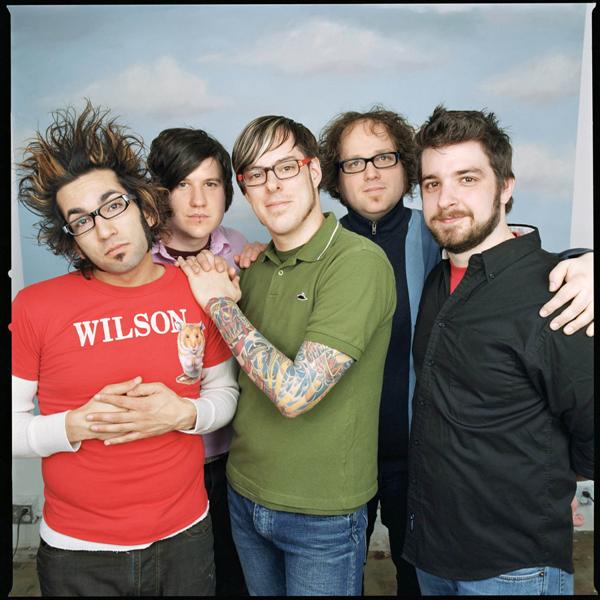
MOTION CITY SOUNDTRACK’S HAPPY SAD DIVERGENCE

One of the hardest parts about constant touring is time spent during unexpected late night delays following exhaustive concerts. So it’s encouraging to hear Motion City Soundtrack leader, Justin Pierre, a frustrated cinematographer sweating it out as a traveling musician, persevere in this grating environment. Living on four hours sleep, due to a broken-down bus on the way to the airport, he then loaded a van, headlined a gig with barely 45 minutes to spare, and woke up at noon the next day for our eye-opening conversation. Such is life for the wickedly weary Minneapolis native, whose rejuvenated combo showcases the finest sunny day indie pop outside the Golden State. 2010’s outstanding My Dinosaur Life topped all previous bids with its sharp melodic hooks and perfectly constructed emo-punk tunes. This article originally appeared in Aquarian Weekly.

Absorbing similar influences as Cali-pop rivals Rooney and Phantom Planet, despite hailing from the frosty Great Northwest, Pierre’s pliant troupe contrasts his bitterly aching sentiments with cheery hook-filled melodies. As the story goes, primary cohort Joshua Cain (guitar-backup vocals) coerced Pierre to merge talents in the late ‘90s. Long-time accessories Matthew Taylor (bass-piano) and Tony Thaxton (drums), lifted from Richmond, Virginia’s equally pop-rooted band, Submerge, cram ample rhythmic piquancy into Pierre’s vividly orchestrated architectural abstractions. And Jesse Johnson, who’d onetime toiled at Pizza Luce alongside Pierre, joined the crew shortly thereafter to ply glimmering keyboard riffs and glistening bells.

True, Motion City Soundtrack play by steadfast ‘emo’ rules a bit too closely at times, never straying far from familiar whiny suburban blues entrenchment, but their collective charisma, infectious tunefulness, and dynamic sheen always find their way into young girl’s hearts as well as shirked guy’s minds. Contagious ’03 debut, I Am The Movie, dispensed straight-up full-on backpacked emotionalism. Upbeat in tone, but jaggedly versified, “Shiver,” best reflected Pierre’s piercingly pontificated polarities. Better yet, cautiously optimistic ‘bust-a-move’ confection “The Future Freaks Me Out” placed wistful Weezer whining atop angst-y post-adolescent aggro-rock, referencing Will & Grace as a nifty pop culture reference.

Pierre deduces, “The first record had a gnarly Pixies Surfer Rosa feel and came from scream-y rough auspices. Tony busted out the drums in one or two days. I was listening to a lot of popular groups – Alkaline Trio and Weakerthans. Only now could I see how I might’ve stolen some ideas. But by the next set, I didn’t wanna listen to popular music. Instead, Pavement, Superchunk, and Sunny Day Real Estate informed me.”

‘05s mainstream-ready sequel, Commit This To Memory, hardened the lyrical anger and frustration, consequently doubling the smarmy fun quotient.

“We got more comfortable with each other. I’d come up with basic melodies on the spot. When we became bored with something, we disregarded it.”

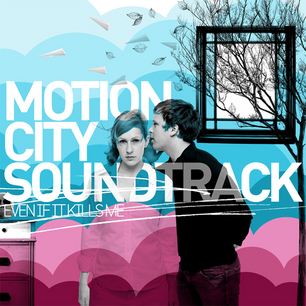
As zestfully euphonic as its two predecessors, ‘07s ebullient Even If It Kills Me (Epitaph) increases the carefree arena rock glee juxtaposing dusky bittersweet requiems. The uppity alacrity of “Fell In Love Without You” zigzags enlightened swoon “It Had To Be You” and climactic choral capitulation “This Is For Real.” “Calling All Cops” alleviates early ‘80s Cheap Trick dramatics with gloomier effluvia, ‘savaging victims from the wreckage’ while ‘everything falls apart.’ A sparkly sleek insouciance encapsulates “Where I Belong.” And a trio of tender ballads brings the program to a solemn retreat, going from piano-plinked torch song, “The Conversation” to apologetic decree, “Broken Heart,” to withdrawn slowdown “Hello Helicopter” (featuring Say Anything’s Max Bemis and the Matches’ Shawn Harris on backup harmonies).

For this astonishingly captivating third album, producer Ric Ocasek (ex-Cars craftsman) and engineer Rick Shaw, responsible for twisting knobs and customizing Weezer’s sterling debut, finally got to team up again, securing comparisons to Rivers Cuomo’s gang but never compromising Pierre’s integral integrity.

Pierre shares, “Ric’s name came up as producer, but we never heard back from him. Meanwhile, Fountains Of Wayne’s Adam Schlesinger and Girls Against Boys’ Eli Janney approached us. Janney was a mentor. Before we signed with Epitaph, he found us a lawyer. We’d done “The Hardest Part” with him for Superman II and he wrote ridiculously catchy tunes for Josie & the Pussycats. So we worked with three separate guys. Ric ultimately called 8back after he had time to focus. He’s an iconic character, but completely normal and so fucking tall. We used the same guitar Rivers Cuomo did for “Say It Ain’t So” on a couple songs.”

What initially interested you in music?

JUSTIN PIERRE: My dad had a record player. I was in diapers when he gave me headphones to hear the Beatles, Stones, Who, and Doors. In high school, I was a bad saxophonist, but had a friend who played guitar. We started a band after he convinced me to pick up guitar. After high school, I thought I’d be done with music. But Josh found me at a video store I worked at and convinced me otherwise. We’d known each other since our bands played the same local gigs. Eventually, as a fluke, we began Motion City Soundtrack. Josh forced me against my will. (sarcastic laughter) We were big fans of Fugazi, Jawbox, and all that angular stuff. We liked writing eight-minute songs. One day, he introduced me to contemporary bands Jimmy Eat World and Get Up Kids and said how much fun they were. We have lots of influences but definitely try to combine the happy with dark, depressing weirdness.

So you wanted to do something besides music?

I saw Twin Peaks at age 12. That made me wanna get into movies. It was so strange and cool. I liked it. Then, I began writing stories in high school. Afterwards, I had a dark period, quitting jobs, failing college first time around, and in ’94, I spent six months reading plays and watching movies. I’d rent six movies a day to build a library and study. I became production assistant on Snow, shot by Eric Tretbar. Everyone worked on a super-low budget, but I met some rad people. One guy had worked on the Coen Brothers’ Fargo and another did Mighty Ducks III. One day, someone didn’t show up and I helped the cinematographer, Phil Harder, who was doing music videos for Prince. He told me about Minneapolis Community College’s film program and I signed up. But Josh found me to do music. Still, I’ve shot four short films and a few music videos. I prefer writing and directing. I’m a terrible actor.

Does your straight-up pop accessibility come by pure chance?

Well. Radio doesn’t play us. There was one really awesome station in Minneapolis, REV105, in the ‘90s, but I don’t listen to the airwaves anymore. TV channels with music videos are disappearing. When we were writing Even If It Kills Me, I thought it didn’t have as many catchy songs as the previous one. Now, I think there’s an overdose of fun pop blasts. But the words are still depressing. I have kids comment about how the music makes them feel good. But the lyrics are sad or purposely goofy. We can’t be pigeonholed lyrically. Hopefully, it’s interesting, new, and different.

Uppity opener, “Fell In Love Without You,” imbibes that happy-sad dichotomy. It’s as if you’re taking swipes at an ex-girlfriend.

I was trying to find an appropriate way to vocalize ‘fall out of love with you,’ but may not have used sensible, proper grammar. Basically, when I write, I take my old screenwriting teachers’ advise. Other kids were writing about drug dealers and FBI agents, but that seemed false, so I wrote about me. I can’t really write from another persons’ perspective. Though I may be running out of complaints. (laughter) Also, I tend to venture off – which is what I love about Tom Waits and Ben Folds.

On the other hand, “It Had To Be You” seems to be a pensive love trinket.

Find your own meaning. That’s what I dig about music. The main concept is missing out on something or not taking a chance. It’s sad, but there’s knowledge there as well. Is it better going through life with no idea, blissfully ignorant? Or knowing what you should’ve done but didn’t.

Towards the middle of Even If It Kills Me, there are three enjoined ballads. Why?

When we write, we have lots of tunes to pick and choose. Some don’t work. We did two B-sides, one so bad lyrically I hope it doesn’t see the light of day. Josh is good at organizing records. All I know is we wanted to start with “Fell In Love,” and end with “Even If It Kills Me.”

How will Motion City Soundtrack’s music develop and expand over the course of time?

I don’t know. I know we’re getting older, fatter – there’s some expansion there. I view our first three albums as a trilogy – before, during, and after. Next time, we’re gonna take a fresh look at everything. I’m excited. There were many mid-tempo numbers this time. I want to get back to doing spasmodic stuff. Push the limits of imagination… Actually, I have no idea.

THURSTON MOORE DISCOVERS ‘TREES OUTSIDE THE ACADEMY’

FOREWORD: Iconic Sonic Youth guitarist, Thurston Moore, gave me a tremendous overview of his sagacious noise-rock outfit in ’07. He was supporting solo project, Trees Outside The Academy, with a one-off gig with his Ecstatic Peace compatriots MV & EE with the Golden Road, Tall Firs, and Religious Knives. This article originally appeared in Aquarian Weekly.

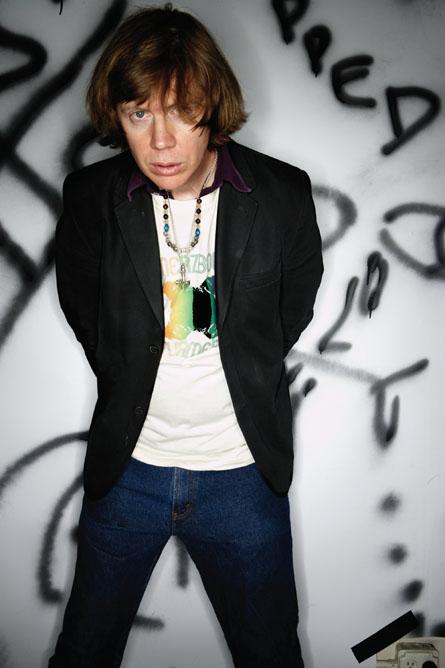
In his late teens, entrepreneurial Connecticut-raised guitarist-vocalist Thurston Moore was determined to go city bound, experience the wondrous joys New York afforded, and obtain a modicum of prosperity. There, he met his attractive leggy flaxen-blonde life partner, Kim Gordon, plus a few explorative youths, who’d mutually get involved professionally to reach an esteemed status infrequently attained by such ostensibly outré artistes. If co-founding legendary noise rockers, Sonic Youth, wasn’t enough, he befriended a gaggle of likeminded interdependent nonconformists (including free jazz dignitary, William Hooker) and set up Ecstatic Peace Records.

Recently, lanky busybody Moore dropped his belated second solo album, Trees Outside The Academy, an illuminating navigation fraught with the same penetratingly obscurant symphonies his primary outfit continually delivers in spades. Yet there’s a halcyon acoustical solemnity somewhat foreign to Sonic Youth that differentiates this abstruse solo affair. It’s fair to say he remains lucidly vibrant despite arriving at the ripe golden age of fifty.

THE BEGINNING

Precociously intellectualized no wave junkies sprung forth by lower Manhattan’s late ‘70s noise addicts and neo-punk fugitives, Sonic Youth began inauspiciously as a jaggedly clamorous art gallery aggregate unafraid of discerningly exploiting the Big Apple’s miscreant subterranean jungle. From the onset, guitarists Thurston Moore and Lee Ranaldo challengingly fused dissonantly de-tuned cacophonies and acrimoniously blared rock scrums with a calmly embellished sublimity, naively influencing shoegazers, grungemeisters, and scree-pop denizens of all stripes.

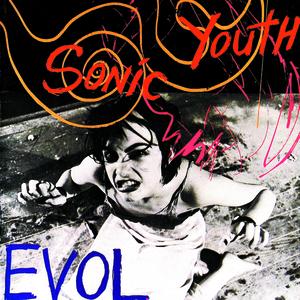
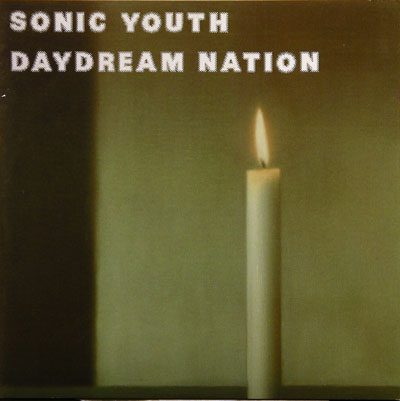
Peruse their early back-catalog for valiantly scabrous hit-or-miss endeavors, then move past ‘85s gruesomely perturbed primal conquest Bad Moon Rising to the acrimoniously convulsive corrosiveness of twin pillars Evol and Sister before ingesting the startlingly jolted investigations swamping cherished ’88 magnum opus, Daydream Nation. The latter contains fiery MC5-nuzzled anthem “Teen Age Riot” and explosive hardcore peculiarity “Silver Rocket,” durably combustible fugues that blew away expectations and sent shock waves through the nascent post-punk underground.

Moore explained the magical happenstance that brought Sonic Youth together in thorough discourse.

“In 1980, living downtown, everyone knew each other. It was more of a small town vibe. The no wave scene centered around Max’s Kansas City, CBGB’s, the Mudd Club. Then, bigger places like Hurrah, Danceteria, and Peppermint Lounge started hopping. Kim and I were there. I met Lee because he played in a band I was in earlier. At that time, I was in the Coachmen and he was in Flux. We played CB’s audition night together, had a similar vibe, and kept an eye on each other. I noticed him in (discordant freeform mentor) Glenn Branca’s band. He was a very interesting guitar experimentalist I knew peripherally. Glenn had put an ad in Soho Weekly for a guitarist. I didn’t get the job, but Kim knew him. She said Glenn wanted to rein me in ‘cause I was too wild. Lee didn’t join us then. We had another girl doing keyboards and used Dave Keay, the Coachmen drummer.”

Asked to curate an experimental music festival at Spring Street’s White Columns gallery, a nightly fling turned into nine exhilarating nights juxtaposing weird punks with the likes of masticating old guard provocateurs, MARS (re-formed under witty pseudonym, Don King). Branca did a new piece with full ensemble, the formative Sonic Youth performed, and Ranaldo (with Flux drummer in tow) rendered “Avoidance Behavior,” the harshest, loudest, most intense festival offering.

“Our keyboardist decided not to play, so East Village kid, Richard Edson, whom we found on recommendation, joined. He was acting in Jim Jarmusch’s film, Stranger Than Paradise. We got another gallery gig and asked Lee, who was our age and doing similar music, to join.” Moore adds, “The name Sonic Youth had no cache at the start. Ed left so we picked up drummer Bob Bert (future Chrome Cranks/ Knoxville Girls/ International Shades consort). He was critical. He answered a flyer I’d put up all over town. We hired him on the spot. He was our Jersey connection and played with a few Maxwells acquaintances. We were touring quite a bit through Europe. He tired of it and probably wanted to change direction anyway. Then, Pussy Galore came to Hoboken from DC and he joined them, providing clattering drums and a radiator. I was going to CBGB’s hardcore matinee shows and Steve Shelley (entered the fold). He was in Lansing, Michigan’s hardcore band, Crucifucks, a radicalized unit with an older singer who had absurdist lyrics like ‘Hinckley had a vision,’ ‘Democracy spawns bad taste,’ and “Cops For Fertilizer.” I bought the Crucifucks demo tape from the back of Maximum Rock And Roll and he wrote me. He was also in very good avant-garde troupe, Strange Fruit. He was gonna leave Crucifucks for San Francisco, but took my advise and headed for New York.”

ABOVEGROUND FAME

Sonic Youth grew up in public, learning chordal structures and basic scales over time, diving headlong into creative finessing in order for their first forays to feel special. The culmination of matured songwriting and freshly expansive arrangements alleviated the restrictive constraints placed upon less inventive luminaries. Boldly uncompromising shrine, Daydream Nation, became a magnanimous double-album defying odds just as former SST label mates the Minutemen and Husker Du did years earlier with broadened landmarks Double Nickels on the Dime and Zen Arcade.

“Kim and I went to see Anton Corbijn’s Joy Division film, Control, and she was remarking how it’s the first rock biopic that ‘gets’ what it’s like being in a band,” he shares. “It’s very sublime. There’s no drug exploitation and bad rock and roll behavior – it’s there, but not focused upon.”

By the late ‘80s, Sonic Youth indirectly helped steer the course of popular culture. The whole British shoegaze movement that cropped up during ’85 profited from their dynamic sustained tension and flailing guitar maneuvers. My Bloody Valentine, Jesus & Mary Chain, and Ride seized the opportunity, countering revelatory cataclysmic fierceness with warmer fuzz-toned intimacies. By 1990, the oncoming Seattle landscape would forever be altered as the grunge explosion gained universal acceptance. The Melvins, Mudhoney, and Nirvana fully adapted Sonic Youth’s emblematic cranked-up metallurgic heft and droning downbeat skronk for a chilling screech still transversely reverberating.

Signed to major label, Geffen, Sonic Youth thereafter prospered when ‘90s weighty Goo and ‘92s dungy Dirty wavered with conventionality, climaxing with ‘94s skull-fucked blooze concision, Experimental Jet Set, Trash, and No Star (featuring somniferous Gordon-whirred helix “Bull In The Heather”) plus its superior dilated conniption, Washing Machine.

“By Experimental Jet Set, we’d stepped away from the heavioisity, went against the grain, and got inspired by interestingly introspective contemporary music by Lou Barlow (Sebadoh), Pavement, and Royal Trux. That was more important to us than what was being championed with the success of indie rockers getting into Nirvana,” Moore admits. “Afterwards, one major change was Kim focusing more on guitar than bass. Beforehand, she was playing bass almost exclusively. We became a three-guitar-and-drum band for a few albums and tours. The only low end for awhile came from the knick drum. That was bizarre and cool.”

Fortuitously, following ‘98s specious drone-bludgeoned protraction, A Thousand Leaves, respected Chicago-based producer-multi-instrumentalist Jim O’Rourke entered the fold, first as a collaborating ‘ideas man’ for histrionically dismissive poetry-plodded excursion, NYC Ghosts and Flowers, then full-time on ‘02s bewitchingly contemplative masterstroke Murray Street. Beautiful spindly opener, “The Empty Page,” tempers the usual brutal tumult. And a maze-like neo-Classical grandiloquence underscores the serene folk proclivities defying the fuzzily squelched bluster consuming the harrowing balance.

“We became a five-piece with Jim. It was a gradual progression. We felt Sonic Youth was so idiosyncratic it’d be difficult to incorporate anyone into the band. Jim had a good read as to what we were doing aesthetically without selling his own goals out. He interacted with us in a real interesting way,” Moore claims before recalling the tragic circumstances affecting their next project. “After 9-11, the Murray Street neighborhood we worked at got blasted. We needed special passes from the city to get down there. It was off-limits to the public. That atmosphere made Murray Street both sentimental and direct. We took after rock history and named an album after its environs, like Abbey Road or Folsom Street. Much was inspired by Italian photographer Stefano Giovannini’s picture of the corner street sign, which withstood the shock of the blast. You could see dust on top of this beautiful sign.”

Nearly as impressive, ‘04s perilous Sonic Nurse ambitiously re-visited the now-distant past without scoffing the hauntingly vicious savagery of yore. Gordon’s black magic charm imbeds “Pattern Recognition” and her crackled ‘baby breakdown’ evokes lipstick traces of alt-chick Liz Phair on addictive hard-candied schoolyard crush, “Kim Gordon And The Arthur Doyle Hand Cream.” Sweet soulful serenade, “Dude Ranch Nurse,” also easily sufficed.

“That record was the most successful as far as fitting lots of noise to pop structures without separation. The material was unified and couldn’t be dissected so much. We were trying to blur the boundaries using extreme elements with more traditional ones,” says Moore.

Amazingly, Sonic Youth’s final album with O’Rourke, ’06s Rather Ripped, includes two of their finest accessible numbers, the sunshine-y white soul spangle, “Reena,” and the flinty crepuscule sear, “Incinerate.” It proved they could rejuvenate bygone conceptual designs with renewed panoramic vigor sans predisposed posturing or pretentiously pious posing.

“I’d like to think Rather Ripped is as good as anything on rock radio – which has become decrepit,” gripes Moore. “There’s some cool college stations and I review records for Arthur magazine and gets lots of promos. But I’ll buy records. I like mostly avant-garde stuff and Kim’s been listening to Norwegian death metal lately. Finding time to listen is difficult, but I like the fact there’s so much good stuff out there.”

GONE SOLO, AGAIN

As for Moore’s solo ventures, ‘95s minimalist Psychic Hearts benefited from short, fast, sharp tunes and lyric-driven perspicacity. Its skeletal riff fabric and frantic repetition beg comparisons to The Fall. Meanwhile, ‘07s versatile Trees Outside The Academy elevates solemn dirges, mystic pop, and surreal instrumentals with pastoral acoustic accouterments. “Tough yet sweet New York City girl,” violinist Samara Lubelski, brings further melodic mellifluence and gorgeously subtle touches while Sonic Youth partner, Shelley, keeps time. Charalambides’ Christina Carter enjoins Moore on lovely Anglo-folk duet, “Honest James,” and Sunburned Hand Of The Man’s John Moloney piles on propulsive skins to hastening rampage “Wonderful Witches.”

Concerning similarities and variances to his main band, Moore infers, “I feel freer. As far as lyrics go, they’re not shared enterprises. I’m sensitive that Sonic Youth’s a democratic vision. So there’s a different vibe. Psychic Hearts was ‘first thought-best thought’ and was done in two days. Trees is completely different. Instead of a second guitar, there’s violin. I’m a different person in a different world informed by rural Massachusetts instead of New York. “Honest James” and “American Coffin” are influenced by the culture of tragedy in America. We’re dealing with the conflict to do the right thing while war looms. War’s always informative for every artist unless they ignore it and hope it goes away. You try to rise above and write intellectually from that perspective. But I don’t have any conscientious ideas when I’m writing. It’s ‘of the time.’ Lyrics play with language. I always loved Blue Oyster Cult’s “experiments that failed.” That was a great line. They had a mystical scientist vibe going through songs. I always reference Tyranny & Mutation as a heavy document in my life. I’ve wanted to do a cover of their “Career Of Evil.” In Sonic Youth, I usually transpose songs from acoustic to electric. I didn’t make that move on Trees and that gave it a distinctive sound. Playing live, I’ll do a handful of songs on electric guitar.”

Trees Outside The Academy maintains a trebly tone due to the quiet ambience and echoing open space at old friend (and Dinosaur Jr. mastermind) J. Mascis’s Bisquetten Studio, located beside Paradise Pond across from Smith College in bucolic Amherst. Moore dabbled with calling the album Zero Hour, but let that slide. Serendipitous straight-up love trinket, “Fri/end,” shows appreciation for the married life, the striking instrumental title cut hearkens back to classic Pete Townshend a la Tommy, and skittishly bittersweet sanctuary “Off Work” burrows into the mind’s recessive nooks. Just keep an eye out for the disgruntled ‘language meanies’ infiltrating “Wonderful Witches.”

Moore elucidates, “The language poets of St. Mark’s Poetry Center came onto the scene with an academic take on poetic verse. What preceded them – Frank O’Hara and Allen Ginsberg – was a more confessional style celebrated by Ted Berrigan, the big man on campus at St. Mark’s. But academic nerds came in with ideas of how poems don’t need narrative sense. It was about how words looked on the line. It’s an interesting approach I’m respectful of. But Berrigan, back in the day, talked about the influx of language poets and said, ‘Watch out for those cold-hearted language meanies.’ He thought they were tight asses with shirts buttoned up to the neck. And he was a bearded cigarette-smoking hamburger-munching free soul.”

When asked whom he hates more, elitist avant-garde snobs or anti-intellectual pop stars, Moore laughs, then answers, “I love ‘em both equally. I have a soft spot for pretentious intellectuals. But if they become totally insufferable I run the other way. I’ll call their bluff. If they put on airs of superiority, I’ll take them to task. That’s when you steal their hubcaps. Money’s the great equalizer.”

EPHEMERAL STUFF

Should Sonic Youth be considered for the Rock & Roll Hall Of Fame alongside pioneering ‘80s groups the Minutemen, Replacements, and Black Flag? Or will the powers-that-be skip these true innovators and only give props to better-received contemporaries U2 and REM?

Moore insists, “There’s a committee the industry lobbies. Our management has talked about being considered. But you have to start six to eight years before consideration is granted. As a contemporary working band… I mean, is (cross-grained funk-soul legend) Bobby Byrd in. Probably not. But Madonna’s in.”

In springtime ’08, a pictorial essay venerating the late ‘70s no wave scene, rigidly edited by Moore and journalist Byron Coley, will see the light of day. Only the true architects of no wave will be featured: MARS, D.N.A., Lydia Lunch, James Chance, and Teenage Jesus & the Jerks. Moore felt he had the obligatory authority to unleash such a vital collection since he lived through the entire scene and witnessed firsthand the oft-times unheralded originators involved. 98% of the snapshots are said to have been unpublished.

Now distributed by colossal Universal Records, Moore’s thriving Ecstatic Peace label is home to some of the absolute finest youthful bands making the scene. There’s Nashville garage-punks Be Your Own Pet, abrasive Hartford menaces Magik Markers, Bushwick-via-Ann Arbor nihilists Awesome Color, and Boston psych-blues spankers Black Helicopter, a veritable wellspring of reliable musical artistry sure to please any gourmandizing freak.

Controversially, Sonic Youth plan to release a comprehensive Starbuck’s compilation assembled by artists, novelists, actors, and musicians who’ve name-checked the invigorating crew over the years.

Moore defends the corporate-sponsored accord by asserting, “Tower Records went bankrupt. Places to buy recordings are drying up. Starbuck’s loved the idea. But we needed to give them one exclusive song, so we did a real outsider tune. We had a photo of a young yuppie businessman wearing IPOD headphones slouched back looking out the window. We also had pictures they’d never consent to use. A college kid slumped over sleeping on a Starbuck’s table with homework. A homeless guy slumped on a chair with Starbuck’s cups at his feet.”

It appears obvious Sonic Youth would appeal more to the slumbering university student and the down-and-out vagrant drifter than the typical slick Starbuck’s customer, but don’t underestimate the enormous impact they’ve already had on business professionals. Aren’t they the ones who initially bought Nirvana’s Nevermind when they were young over a decade ago?

MOONEY SUZUKI TEAR IT UP ON ‘ELECTRIC SWEAT’

Image result for MOONEY SUZUKI

FOREWORD: Mooney Suzuki really kick ass live. I mean, seriously. I’ve seen ‘em three times and each time they did different astounding routines – like singer Sammy getting carried around by his guitarist while still yelping into a mike. But of course it’s the loud garage rockin’ hell raising that carries ‘em forward. The following piece promoted Electric Sweat, arguably their finest half-hour. ‘04s Alive & Amplified was cool, too. I’ve also included my High Times record review for ‘07s Have Mercy.

Absolutely nothing beats the frenzied primal fury New York City’s Mooney Suzuki unleash live. Drawing inspiration from the Japanese cartoon heroes in Voltron, the Jersey-born frontline of Tenafly-bred Sammy James, Jr. (lead vocals-rhythm guitar) and flashy Livingston sidekick, Graham Tyler (lead guitar), create a giant, unstoppable, indomitable force united as one to conquer all. They destroy people’s notion of what rock and roll bands should be by combining the Motor City Madness of ‘60s hard rock pioneers the MC5 and the Stooges with the retro-rock post-punk of ‘80s underground denizens the Lyres and the Fleshtones.

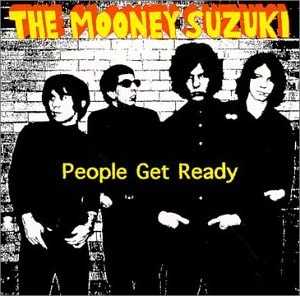
Clad in black wraparound shades, black matching suits, and black pointy shoes, these sharp dressed men invaded America with ‘00s muscular People Get Ready and a string of enthusiastic Cavestomp! shows opening for reunited legendary ‘60s combos the Zombies, Pretty Things, the Standells, and the Monks. The highly charged anthemic chant-along “Yeah You Can” and the exhilarating, harmonica-driven “Make My Way” immediately became action-packed fuzz-toned garage rock staples.

Sustaining the spontaneous intensity while taking a few more chances, the scrappy Electric Sweat increases Mooney Suzuki’s amplitude, wattage, and range. Blazing originals like the youth-induced “In A Young Man’s Mind” and the pithy “It’s Not Easy” re-invigorate vintage Pete Townshend axe wielding and Who-like attitude while “A Little Bit Of Love” hedges closer to the neo-psychedelic bubblegum of the Music Machine.

Finishing up another string of U.S. tour dates at Tribeca’s Knitting Factory in early April, these bratty, beat-driven dynamos energized a sweat-drenched audience with unbridled recklessness and tenacious resilience. Tyler grinds out rugged riffs with a pelvic thrust, sometimes grinding his head into the stage floor upside down as James, Jr. soaks the mike with hurled screams and R & B-influenced testifying. Drummer Jody Stone and bassist Mike Michaels kick out a spiffy, ruffed-up rhythmic pulse that’s always dead-on and startlingly cataclysmic.

Throughout the one-hour set, Tyler throttles his six-string inches away from Asbury cutie-pie on-line fanzine entrepreneur, Rachel, and jumps into the crowd to kick out more jams. The highlight comes when James, Jr. gives Tyler a piggyback ride across the clubs’ perimeter while they continue to ferociously strangle their dangling guitars in an awesome display of dazzling acrobatics.

I spoke to James, Jr. and Tyler via the phone a week after the Knitting Factory spectacle.

Besides Detroit City Rock, what early influences informed your musical upbringings?

GRAHAM: I’ve always been into James Brown and Sly & the Family Stone. The reason we both picked up the guitar was we had the same Who Fakebook. It’s their greatest hits condensed into four easy chords.

SAMMY: For people with learning disabilities.

GRAHAM: We were able to play “I’m Free” over and over.

SAMMY: When I was a child, I liked Van Halen. Then, after a year trying to be Pete Townshend, that shifted to being obsessed with Jimmy Page in the Yardbirds and Zeppelin. Once, I had those four chords down, it was time to learn the Blues scale.

GRAHAM: We developed the chops to play some of the Page and Hendrix stuff, but I never progressed past The Who’s easy chord book. I wanted to play Hendrix and more intricate stuff with the group at school, but I was so frustrated. I threw the guitar down in disgust. When I heard the Detroit stuff by the MC5 and the Stooges, it was so basic and stupid on guitar it was inspiring to see you could still convey the same emotion, immediacy, and energy of The Who without being a technical wizard.

I never realized how fast-fingered you were on guitar until I saw you play at the Knitting Factory show.

GRAHAM: I wish our drummer could be hearing this. His whole thing is speed equals success. He’d be proud to hear I’m one of the fastest guitarists on the scene. It sounds cheesy, but it’s not what you play, it’s how you play. Miles Davis could play three notes that’ll make you shit your pants while Yngwie Malmsteen could play a thousand and you wouldn’t take a second notice.

On Electric Sweat, Mooney Suzuki manage to maintain the spontaneity of the debut, People Get Ready, but there are some cool changes of pace. The banjo-like acoustics, “Psycho Killer” groove, and “Roll Over Beethoven” bridge of the less manic “Oh Sweet Susanna” brings to mind honky tonk music.

SAMMY: We were disappointed we forgot to bring quality acoustic guitars to the session. (Producer) Jim Diamond had some piece of shit acoustic toy guitars lying around the studio. I liked the banjo tone when we were recording it.

What are some of the differences between indie rock guru Tim Kerr’s production for the debut and Jim Diamond’s (White Stripes/ Detroit Cobras/ The Go) on Electric Sweat?

SAMMY: The sweeping difference was Tim is very hands-on with the material, suggesting arrangements and vocal parts. He’s spiritual and motivational. There’s no stopping Tim. He’s gonna tell you what he thinks whether you want to hear it or not and will kick your ass. Jim was very hands-off. At first, we thought he didn’t like us. But it’s his style. I loved working with both.

GRAHAM: We learned from Tim to document a good time, which is what a lot of great records do – not taking it too serious.

On “It’s Showtime Part II,” Sammy’s organ groove adds a Mitch Ryder & the Detroit Wheels groove.

SAMMY: Everyone mentions the Detroit sound, but forget about Mitch Ryder. But again, the same way we try to sound like the MC5 less than we try to sound like James Brown, we sound similar because the MC5 was also trying to sound like James Brown. We don’t sit down and try to sound like Mitch Ryder, but like Mitch, we try to sound like Booker T. & the MG’s, Ike & Tina Turner, and older R & B. That track was our Stax fantasy. It was just a joke. We were in tears thinking how ridiculous we could make it. The organ sound I get for that song is my favorite sound on any Mooney Suzuki record.

Staying with the Detroit theme, “Natural Fact” has a fuzz-toned Amboy Dukes assertion. Are you a fan of the Nuge?

SAMMY: We used to play “Baby Please Don’t Go” and get Amboy Duke and Ten Years After references. I’m not a fan of Ted Nugent, but “Natural Fact” is more Arthur Lee (of Love fame) inspired.

I take it you think rock and roll is less revolutionary, in the sense of visiting new, uncharted, avant-garde territory, than evolutionary, building upon the blueprint that already exists.

SAMMY: Hendrix is mentioned as revolutionary, but I see him as an example of why the idea of revolutionary music is ridiculous because something completely avant-garde as criteria is empty at the end. Hendrix created things we’d never heard before. Yet in his mind, he was a Blues traditionalist. He was derivative, but his personality, spirit, and distinct energy came through what he did. That’s what affects people. It’s communicative.

You’ve both been arrogant claiming Mooney Suzuki as New York’s finest live band. Is there any competition?

SAMMY: I would say no.

How about in the studio? Do the Strokes do anything for you?

SAMMY: Sure. I like their songs. People put us in the same category because we wear the same jackets and are from New York. There’s no musical similarities. It’s not invalid to group bands together based on style, but musically we don’t sound like the Cure, the Smiths, U2, or Pulp. Why would people think we sound similar to the Strokes? The distinction is the only time there’s a blue note in a Strokes song is eight bars of a guitar lead. Our music is based on the Blues. Based on that, how could there be a common thread.

GRAHAM: I wouldn’t even say in approach or attitude.

I agree. Their roots are in New York City ’79 circa Television and Richard Hell and yours are closer to Detroit ’69. I’m curious what it was like to play alongside re-grouped ’60s bands such as the Pretty Things and the Zombies.

GRAHAM: It’s surreal to play with the Zombies after you listen to their records a million times. It’s great to see bands like that come back with the sound you originally loved. It makes you happy. But there are some that should stay in retirement.

SAMMY: The Zombies aren’t one. Colin Blunstone’s voice came to life. It was unreal.

Did they have organist Rod Argent in tow?

SAMMY: Yeah.

Unreal. Did you learn anything from those legendary bands?

SAMMY: When we’re fifty and do our reunion tour, I’m not going to play a headless Steinberger or put an aqua sock on my guitar. I’m not gonna wear a doo-rag and fanny pack.

What’s an aqua sock?

SAMMY: A neo-preen wet suit custom fit for a lucite Stratocaster you don’t want to scratch.

GRAHAM: It’s like a guitar diaper.

SAMMY: A lot of these older bands come back, hire these hot session guns, and then guys show up with wireless rigs and guitar diapers and it kills the original vibe.

Graham, do you get lots of teenage girls who want to fuck your brains out when they see you gyrate and dry-hump your guitar in a sexually suggestive manner on-stage?

GRAHAM: (speechless, cracking up)

SAMMY: You bring up a good point. There are. They seem to love it.

What are your favorite New York venues?

SAMMY: The Bowery Ballroom is a great room to play and has a professional staff.

GRAHAM: Maxwells in Hoboken is my favorite place to go. I love Todd (the promoter/ booker), the sound people, the bar, and the food. I grew up going to shows there wishing I could play there. The first time Todd put out CD in the jukebox, it was a lifetime dream come true. It’s the coolest New York vicinity venue.

 -John Fortunato

MODEST MOUSE EXPOSE ‘THE MOON AND ANTARCTICA’

FOREWORD: I found out after trying to interview Modest Mouse singer-songwriter-guitarist Isaac Brock in 2000 that he shied away from journalists’ due to a false rape charge levied against him. It wouldn’t be the first time. I know firsthand from being at a High Times front cover shot with Staind’s sensitive metal singer, Aaron Lewis, that he was upset with Rolling Stone’s similar decision to use off the record quotes about an uncle’s molestation for titillating fodder.

So I feel for Brock. Anyway, a less obtusely seafaring version of Modest Mouse went on to aboveground MTV-sponsored fame. Who would’ve thunk it at the time? While ‘04s Good News For People Who Love Bad News gained additional plaudits, it was ‘07s We Were Dead Before The Ship Even Sank, that broke things wide open, helped along by Smiths guitarist Johnny Marr’s strong showing. This article originally appeared in Aquarian Weekly.

I admit. I was duped! Heading backstage at Bowery Ballroom to interview Modest Mouse architect Isaac Brock, I met a bearded techie pretending to be Brock. Ever the gullible one, I fell for it. The joke was on me and nearly everyone in Les Savy Fav and Califone (the opening bands) had a good laugh.

After Les Savy Fav’s snarly glam-punk captured my attention, thanks to blonde, werewolf-like Brooklyn singer Tim Harrington’s outrageous antics and mindless audience participation (he distributed silky gold fabric found in the garbage to fans more than happy to receive them), I was sidetracked by another fake Brock. After a few more Heineken’s, I really was convinced this was Brock. It wasn’t.

Califone then went on-stage and kept the increasingly growing audience grooving to their deconstructed blues. Led by former Red Red Meat leader Tim Rutili, these Chicago-based denizens kicked up some dust.

As I settled into a friendly conversation with Modest Mouse bassist Eric Judy and drummer Jeremiah Green, I figured the real Brock would never appear. But what the hell, drinks were flowing and there was something in the air. I was feelin’ good.

“How’d Modest Mouse initially hook up?,” I asked Green.

“I met Eric at a hardcore show. I think it was Undertow or some straight-edge hardcore band,” Green remembers.

“Isaac originally played bass and he talked about being in this double bass band,” Judy says.

“Like Cop Shoot Cop?” I inquire.

“We were all psyched about the music in this place, the Party Hole, that had all ages shows with straight-edge bands. I saw Neurosis in that place. It’s the size of two bedrooms,” Green counters.

Judy admits, “We were still learning to play our instruments. I’ve still got a long way to go.”

“I feel less confident about playing drums than when I was 15. We continually work on our songcraft,” claims Green.

By this time, the booze was soaking up the backstage area, where a bottle of Jack Daniels was devoured. Finally, minutes before he’s due to go on-stage, Brock appears wearing a hooded black pullover shirt.

“Holy shit! You look like the grim reaper,” I quip.

In a slow, pirate-like voice, he drawled, “I need four fingers of whiskey with coca-cola. So if you’d just… give me… four fingers of whiskey.”

After Brock shakes hands with some friends, I ask “How’d Modest Mouse gain its initial exposure?”

He shirks the issue. “You see, I was building this castle out of shit, mud, and straw. We added a whole moat. It was 12 feet high, built from fresh scorpion shit.”

“Scorpions?” I responded. “They take small shits! How could you build from that.”

“It’s rare indeed, my friend. Rare indeed,” he surmises.

A few moments later, I spoke to Brock off the record. But by that time the boozy haze was making everything seem so surreal. He did seem to accept my claim that The Moon and Antarctica may be “conceptually designed.” And I was able to relate how well I thought he was able to lyrically relate to teenage confusion and adolescent awkwardness.

In ‘96, Brock’s Issaquah, Washington, trio released the smirking This Is A Long Drive For Someone With Nothing To Think About on local indie Up Records. By ‘97, The Lonesome Crowded West found Brock refining his cracked, post-hippie naiveté and dysfunctional whiny rants, placing Modest Mouse at the top of the underground rock heap.

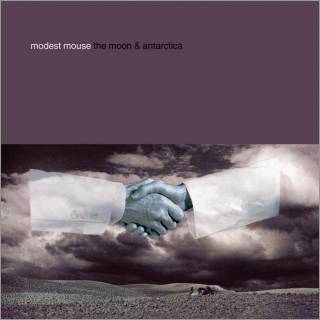
A rarities compilation, Build Nothing Out Of Something, preceded the thematic opus, The Moon And Antarctica. It’s a startling set that traipses down to a garden of earthly delights on childlike sleepyhead lullabies “Gravity Rides Again” and “Third Planet,” then goes to the farthest recesses of the “Dark Center Of The Universe.” Along the way, Brock provides a rainy day panorama of routine, mundane, everyday concerns.

Anyway, it was somewhat ironic Modest Mouse’s Bowery set would begin with a folkish beatnik song reminiscent of Bob Dylan (since the living legend began his meteoric career only a few blocks away in the West Village during the early ‘60s). But it’s Brock’s allegorical words and reflective delivery that make him so relevant and important to today’s collegiate computer geeks. Plus, in a live setting, it’s remarkable to witness Brock’s keen ability to coax difficult melodic riffs and affects-laden textures from his collection of acoustic and electric guitars.

A scorching “Do The Cockroach” had heads bobbing and feet stomping until Brock casually whispered afterwards, “I didn’t expect to be doing that one.” Then, he chewed on the strings of his axe for a few codas; wished an interrupting girl “happy birthday”; and kept the crowd in hysterics with loose, soft-spoken interjections.

If you believe the band, The Moon And Antarctica was inspired by the American folkloric oddities of Edgar Graham. An obsessed, neurologically deranged fan who had made numerous homemade tapes, Graham (under the pseudonym Ugly Casanova) would pretend to be Brock at various local gigs. However, since Graham wounded himself breaking a window at a Modest Mouse show at Denver’s Bluebird Theater, he somehow vanished off the face of the earth.

What we do know as fact is Brock remains a clever songwriter on an eternal quest for the promised land. He skews early Pink Floyd post-psychedelia with an innate indie rock thrust on “Alone Down There.” The obtuse abstraction, “Tiny Cities Made Of Ashes,” hearkens back to the avant-crazed San Francisco art-rockers the Residents while the berserk, grunge-fueled “What People Are Made Of” brings back the excitable punk anxiety of Crowded West’s clusterfuck “Shit Luck.”

On the ride home, I came to realize that what was “rare indeed” was not Brock’s castle built of scorpion shit, but his unquestionable talent.

SCOTT MC CAUGHEY’S MINUS 5 PLUS R.E.M. ‘IN ROCK’

FOREWORD: More of a biography of longstanding Seattle DIY artist, Scott Mc Caughey, than anything else, the following piece goes through the busybody’s rambling career fronting indie rockers Young Fresh Fellows and Minus 5 and his stint in REM. He became the bassist in Robyn Hitchcock’s band, Venus 3, and on occasion, puts out Minus 5 albums for his cult audience.

About a decade before grunge sprouted wings in Seattle, there were two terrific bands hopping around the West Coast displaying their homebred DIY skills: the Fastbacks, led by confectionery pop genius Kurt Bloch, and the Young Fresh Fellows, fronted by frolicking marvel Scott Mc Caughey. Reliant on good time rock and roll and insouciant revelry rather than the clinically depressed lyrics and sonic noise pandemonium of serious-minded grunge pupils the Melvins, Mother Love Bone, and Nirvana, the Fastbacks and Fellows were party troopers sharing beers with migrating Tucson-bred hillbilly-bent country-rock jesters the Supersuckers.

Despite differing social outlooks and life experiences, a common regional bond and two renowned producers – Conrad Uno and Butch Vig – united these thriving disparate artists. Ironically, Scott and Kurt’s feel good bands outlasted downtrodden financially successful proteges Soundgarden, Nirvana, Alice In Chains, and Hole (though Vedder’s Pearl Jam and Buzzo’s Melvins still stand). Meanwhile, Mc Caughey’s side project with REM’s Peter Buck, the Minus 5, are making rounds with some pretty cool sounds themselves.

“Seattle has a self-deprecating beer drinking attitude,” Mc Caughey insists. “It’s not that they don’t take music seriously, but it’s not a big city. It’s a modest atmosphere. No one takes success for granted.”

Growing up a San Franciscan Beach Boys-Beatles fan and now proudly part of REM when not busy with the latest Fellows lineup and the increasingly popular Minus 5, Scott Mc Caughey began 4-tracking reel-to-reels at home by the early ‘80s.

“Back then, you’d get by if you were in a cover band playing taverns. Original bands were in the punk scene and they’d have to hand out flyers to play the Odd Fellows Hall,” Mc Caughey remembers. “You’d play for an hour, then the police would shut you down. At Roscoe Louie Art Gallery, there’d be punk shows in Pioneer Square downtown.”

Worthy early recordings such as ‘85s ludicrously amusing Topsy Turvy, ‘87s more melodically assured The Men Who Loved Music (featuring the kitschy motorific slingshot “I Got My Mojo Working”) and its collateral Refreshments EP (with the ridiculously juvenile “Beer Money” and unjust leftovers) gave Young Fresh Fellows a core audience. Mc Caughey, balking stylish image and teen idolatry, managed to survive those lean years by recording spontaneously and touring moderately.

“It was DIY by necessity then,” he explains. “People got good at making their own records. We made a record with Conrad Uno and stations played it. We rented a van, drove cross-country, and played before there was an (underground) circuit.”

‘89s fabulously nerve-wracked This One’s For the Ladies achieved an embryonic apex, gathering the horn-rasped ska rip-up “TV Dream” and a spunky cheery-eyed spoof on white gospel singer “Amy Grant.”

“This One’s For the Ladies was the first Fellows record with Kurt Bloch. We were all revitalized (after ‘88s lesser Totally Lost). We were inspired and prolific, recording 35 songs, keeping 16. Kurt’s one of my best friends, one of the best guitarists, and a great songwriter with the Fastbacks. It was great how he added three to four songs to forthcoming Fellows records for extra flavor,” Mc Caughey offers.

Following ‘91s flimsy Electric Bird Digest, the Fellows got to work on several tracks with famed Memphis-based Hi Records producer Willie Mitchell and legendary local lo-fi Sonics engineer Kearney Barton for ‘92s livelier It’s Low Beat Time.

Mc Caughey recollects, “We were really into‘60s instrumentals Willie did, like “30-60-90,” and his work with Al Green. He warned, ‘You don’t wanna do instrumentals. No one listens to them anymore.’ But once he saw we were sincere, he agreed to work with us. We told him we weren’t looking for a hit record. He thought we were nuts.”

But Barton understood the Fellows no-hit predicament and glass-ceiling dilemma first-hand. Though the Sonics had a great provincial following and now qualify as garage-rock progenitors, their notoriety grew subsequent to minor national ‘60s missives.

“We’re huge fans of Barton’s records. He operated a studio a few blocks from Conrad Uno. We recorded straight to 2-track. He mixed everything on the fly. I took Teengenerate and the Smugglers there for sessions,” Mc Caughey interjects.

Concurrently, Mc Caughey and REM’s Peter Buck assembled revolving unit Minus 5 with indie pop wunderkinds the Posies (Jon Auer and Ken Stringfellow), setting the stage for an initial self-titled ’93 EP and ‘95s capricious Old Liquidator.

“Peter had just moved to Seattle and I had all these downer quiet songs that were different – forming a psychedelic folk core,” Mc Caughey recalls. “Bizarrely, a friend of mine working Hollywood Records A & R signed us for (‘97s) Lonesome Death of Buck Mc Coy. When he switched to Mammoth, he eventually brought the Fellows along. But I started working with REM and couldn’t promote the records well. Schedules conflicted, but we had modest expectations and a small budget.”

Along the way, Mc Caughey became a pivotal figure in deserving underground outfits such as singer Ernest Anyway’s loopy Squirrels and Barrett Martin’s Jazz-tweaked troupe Tuatara. During ’97, he spent one weekend hooking up with Smithereens drummer Dennis Diken for ‘99s solid solo set, My Chartreuse Opinion.

From there, ‘01s uniquely fascinating twin split discs, Let The War Against Music Begin (Minus 5 with a boatload of collaborators) sidled by Because We Hate You (Young Fresh Fellows with Presidents Of USA’s Chris Ballew in tow), reached an effective dual peak. The former favors moodier retreats such as sensitively optimistic “John Barleycorn Must Live” and karmic Beach Boys-spiked “Great News Around You.” The latter recreates exuberant ‘60s AM radio pop with spiffy Boyce-Hart remake “I Wonder What She’s Doing Tonight,” terse punk expulsion “She’s A Book,” and sly psych-garage reinvention “My Drum Set.”

“I try to have a thread running through records. Because We Hate You was gonna be a return to Men Who Loved Music with references to bands and the music scene. “The Ballad Of You & The Can’t Prevent Forest Fires” concerned a fictional ‘60s band I made a song about. “Fuselage” was about my basement studio and (the self-congratulatory Pet Sounds knockoff) “Good Time Rock And Roll” is about touring with the Presidents. “Your Truth Our Lies” we tried to make sound like early punks Sham 69,” he shares.

As for Let the War, Mc Caughey avows, “I wanted it to be pretty, poppy, and upbeat, though the lyrics are sad and horrible. I wanted that dichotomy. Originally, it was gonna be a weird downer record where things fell apart. But I saved those songs for (‘03s German mail order-only) I Don’t Know How I Am.”

Arguably Minus 5’s finest album, ‘03s illuminating Down With Wilco flips the script as a rootsy therapeutic low-key retreat. Given free reign to mold faultless acoustic adaptations, the subtly complex laid-back digressions and serendipitous neuroticism of nimble alt-country Wilco luminaries Jeff Tweedy (guitar-keys) and John Stirratt (bass) fit the extended combo’s oeuvre without alienating pop-minded supporters.

Released in limited quantity during 2000, Minus 5’s vigorous In Rock (Yep Roc) received proper distribution in ’04 (with the addition of four new tunes). Starting with the fuzz-toned neo-psych 87-second blazer, “Bambi Molester” (honoring same-named Croatian surf instrumentalists), a skewered titular horror theme ensues. There’s the grave “In A Lonely Coffin,” cynically perplexed organ-deepened “The Night Chicago Died Again,” accusatory “Lies Of The Living Dead,” and demented Doors-draped diatribe “Dr. Evil.”

For festive relief, the bouncy glam-rock ascension “Cosmic Jive” befits nouveau Seattle garage denizens Visqueen while “The Forgotten Fridays” glides through Byrdsian choral harmonies and Tommy–era Pete Townshend guitar chords before drifting into the ether.

‘60s prodding aside, Mc Caughey deduces, “It’s like the Rutles. They made fun of the Beatles but captured their early innocence. You may say “The Girl I Never Met” summons softer Beatles fare like “Norwegian Wood” or “Michele.” In Rock’s vinyl version includes “Little Black Egg” by the Nightcrawlers.”

Making cameos alongside Minus 5 mainstays Mc Caughey, Buck, and Bloch on In Rock are Death Cab For Cutie’s Ben Gibbard, singer-songwriter John Wesley Harding, and old pal Ballew. Veterans Bill Rieflin and John Ramberg furnish a sturdy rhythmic foundation.

But touring is out of the question since Mc Caughey’s recording a new REM album in the Bahamas.

“I’m proud to be part of REM,” he humbly admits. “I met Peter after he got our ’84 record (the Young Fresh Fellows developmental debut, The Fabulous Sounds of the Pacific Northwest). While in Seattle, he mentioned us in a college interview. I saw REM play, then gradually over the years I’d give him records and we’d become friends. In ’91, I stayed at his house after an Athens show. In ’92, REM did Automatic For the People in Seattle. We hung out and he moved here. So it made sense when they toured to ask me to join since we got along well.”

Though Mc Caughey’s retro-minded eclecticism and carefree bohemian idealism may preclude a distinct persona, his alert compositional skills and uncanny ability to emulate re-fried tasty riffs make him an unsung working class hero perched below today’s tacky trendsetters and tomorrow’s flossy pop pabulum. So pump up the volume, relax, and let the real Mc Caughey take you on an unending journey to some distant past existing outside yesterday’s marketing scheme.

One Sub Pop employee maintains, “You can’t heckle a band in Seattle without pissing him off.” -John Fortunato

MINDLESS SELF INDULGENCE FIND ‘FRANKENSTEIN GIRLS SEXY’

FOREWORD: Elektra Records saw them coming, but didn’t know what to do with ‘em. Promulgating euphoric intrigue through crazily carefree commotion, shameless shock rockers Mindless Self Indulgence played cardboard and plastic instruments when I saw ‘em at church-like Manhattan venue, Lust, in the spring of 2000. And when I went to interview them post-show backstage, my tape recorder wouldn’t work ‘til I slammed it onto the floor. Oh, and some chicks in fishnet skirts with silver dollar size nips and some guy with a snake-like two-foot dick were hanging out near me upstairs. Such is the life of a busy music scribe. ’05s You’ll Rebel To Anything and ’08’s  followed suit for MSI. This article originally appeared in Aquarian Weekly.

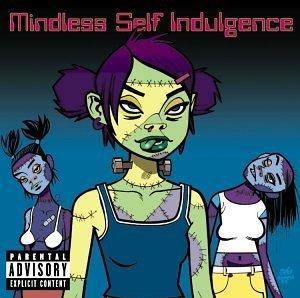
Taking the low road to the anti-revolution, outta control Jeckyl & Hyde phantoms, Mindless Self Indulgence, pulverize hard rock candy and hyper Industrial techno like demented speed freaks. Following the self-released, Atari-crazed arcadia, Tight, this quirky New York quartet signed to Elektra, recorded the explosively whack mindfuck Frankenstein Girls Will Seem Strangely Sexy, and received the opening slot on Korn’s current tour.

On-stage at gothic Chelsea club Lust, Little Jimmy Urine parades around in a USC band suit holding a baton before changing into a maid outfit with featherduster. He does jumping jacks, leapfrogs, and stage dives, sparking the unplugged bands’ theatrical shoegazer karaoke. Green antenna-haired guitarist Steve, Righ? prances around like a menacing, traumatized nerd. Radiant bassist Vanessa Y.T., a robotic blonde wind-up doll in silver hot pants and ripped net stockings, spews water at the sold-out crowd while drummer Kitty assaults her kit like a manic Sheila E. Rumor has it Urine once drank his own piss before passing it around to excited CBGB fans.

As head nutcase, the animated Urine burps “I been denied all the best ultrasex” in a slivery Adam Ant-like rant corrupted by Righ?’s Killing Joke-gone-berserk axe fury on the schizoid “Faggot.” The insanely ludicrous suicidal tendency, “Backmask,” bends Frankie Goes To Hollywood Euro-disco into scurvy Six Finger Satellite rancor while the Beastie Boys-ish “Bitches” whips nu-metal with a wicked hip-hop frenzy only German poli-sci visionaries Atari Teenage Riot would dare attempt.

In the audience at Lust were several mega-pierced, tattoo-flaunting punks, a few spike-haired weirdoes, and the stunning cunt standing next to me wearing only a net to show off her protruding, erect, pink nipples (yummy!).

Fun loving, sarcastic bastards with cracked retro-futuristic Devo-esque pizzazz and humorous, unsophisticated, Sparks-like inertia, this fearless foursome offered me snippy, trite remarks not unlike what the early Beatles gave dipshit conservative press darlings in ‘64.

How’d you guys meet?

STEVE: I met Jimmy at a batting cage. He was the bat.

So you’re using him.

STEVE: Yes.

Do you guys get stoned?

STEVE: No. You can. We want to be free not to.

KITTY: You could do usage of any kind. We don’t care. We encourage it. The music is so fast, the depressant’s no good. I’m all about Coca-Cola and sugar-based products. I watch a lot of t.v. It’s my drug of choice.

Do you offer any apologies for lewd behavior?

STEVE: No. It’s just a body odor thing. We gotta air it out. I got skidmarks on my tights. I just bust that out right now. We deny things and people make up shit and it sounds better anyhow.

JIMMY: Like the time I ate the walrus.

STEVE: I’m just doing this to get money for the liposuction, then I’m out-ee. Then I’ll do anti-fashion on MTV.

You guys are like cartoon characters.

JIMMY: Yeah. But it sucks because when we play outside our ink runs.

How do your song arrangements come about?

JIMMY: We jam for four hours and cut it down to a minute and a half of our best shit. And the album is one long boring… (at this point, Jimmy leaves the room as a fan claims his girlfriend will go down on him)

KITTY: He don’t care if she’ll go down on him. Will she wash his clothes and do his laundry?

STEVE: Ever smell my feet. (he offers a disgusting whiff) That’s how we stay so fucked up. Forget about rolling that doobie.

Do you get nervous before performing such wicked sets?

STEVE: We’re too dumb to be scared.

KITTY: We don’t know any better. (Jimmy leans his head in the door)

MERCURY REV @ BOWERY BALLROOM

Mercury Rev/ Bowery Ballroom/ April 19, 1998

Sometimes a live show is so compelling, enlightening, and transcending the entire experience just becomes surreal. Playing a sold out Bowery Ballroom, Mercury Rev achieved such grandiose heights with their really massive, sonically swirling art-affected rock. Under impressionistic opaque yellow and orange stage lights, the spirited combo began their tidy set with the splendid “Funny Bird” and followed it up with nearly every song from the highly acclaimed Deserter’s Songs. Instead of merely applying moody instrumental textures for recreational backdrop, Mercury Rev composes imagery-laden, fully formed songs from sweet, lingering guitar abstractions and lush keyboard melodies. If, say, the Moody Blues lush dreamscapes had retained a subtler warmth and were more reflective and thoughtful, they’d be natural precursors.

Vocalist/ guitarist Jonathan Donahue effortlessly constructed beautifully resilient orchestral maneuvers. His fragile, mournful tenor and cracked emotional sentiments were gorgeously shaded by Grasshopper’s six-string pleasantries and Justin Russo’s marvelous keyboard flourishes. A mesmerizing peak came during the billowy ballad “Endlessly,” which glided ever so gently into a fluttering synth riff snuffed from “Holy Night.” Perhaps only Spiritualized comes off so marvelously mellifluous in concert. Everyone I casually mingled with at Bowery’s balcony level felt the same way I did. This was truly a Monday night to remember.

ATHENS’ GLANDS SWEATING FOR ATTENTION

FOREWORD: I have no clue what happened to the Glands, whose self-titled ’01 album proved to be scruffily charming in a non-threatening honky tonk sorta way. Capricorn Records (home of the Allman Brothers catalogue) must’ve thought the Glands had a decent chance at AOR radio. I enjoyed the hell out of their 50-minute live set on an early Satuday evening at a discreet lower Manhattan club (prior to going to Katz’s deli and chowing down a fatty pastrami on rye with long-time pal, Al Gutierrez). I also caught them at Knitting Factory weeks before (as described below). But alas, I’ve spent fifteen minutes internet surfing and I can’t find a damn thing about this bands’  whereabouts nowadays.

Athens, Georgia continues to churn out exciting new musical talent twenty years after REM and the B-52’s put the kindred-spirited college town on the map. There’s retro-country rednecks Drive-By Truckers and Red River Dave, plus multi-culti experimentalists Macha and drone pop improvisers Japancakes. And on their self-titled Capricorn Records release, The Glands provide that expansive University of Georgia scene with a topnotch pop-rooted combo.

“Bar None released our debut, Double Thriller. That one came off lo-fi, but was actually recorded hi-fi,” good humored, self-deprecating lead singer/ guitarist Ross Shapiro claims as we plow a few brews backstage at Knitting Factory prior to The Glands well received 45 minute set. “It came out sounding weaker, but this album is a bit more polished. There was a little more thought involved. Some of it was recorded live in the studio as a five piece. We attempted things on the first album that didn’t work.”

Meshing retro-rock mannerisms with thrice-removed blues and a smidgen of moody rural escapism, The Glands’ crooked, unkempt swagger seems to emulate from some long lost post-Beatles stoner daze. Yet some subtle modern gestures creep into the mix.

For openers, “Livin’ Was Easy” finds Shapiro drawling and whining like Pavement’s Steve Malkmus over a purposely warped slide guitar arrangement that begs comparisons to Beck’s bluesier, less popular stuff. Next, “When I Laugh” slips into hazy, non-specific folk-blues much the same way England’s Gomez does. While it could be argued that “Swim” recalls early ‘70s one-shot Thunderclap Newman, a better guess would suggest it’s closer in ‘feel’ to fellow tour mates Elf Power.

In fact, they bring it all back home on the go-for-broke “Work It Out,” reclaiming some of the amateurish spirit and unfinished backwoods rawk of vintage REM.

Though each song flows perfectly into the next, track placement is apparently a point of contention amongst band members.

“It’s always a battle between us. They always say put the best three songs first, but on the debut, we wanted to start with an instrumental and Bar None made us use “Two Dollar Wine.” They thought it sounded like a hit. It’s got wah-wah guitar and keyboard and a hacked-up, busy bassline,” Shapiro inquires.

Indeed, the corrosive “Two Dollar Wine” proves to be a crowd fave half an hour later when they entertain a sold out crowd opening for dynamic Elephant 6 collective, Elf Power. Both bands share an affinity for ‘60s rock and popular music in general.

“We just listened to the Byrds’ Untitled record in our van today. Three-fourths of it is live,” Shapiro maintains. “I probably listen to the same things any kid my age did while growing up. First, AM radio before I had a stereo. Then, when you’re seventeen, you just emulate The Clash. But by the time we started recording, I was a bit older. I’m a late bloomer. I only started writing songs about five years ago.”

It seems as if multi-faceted engineer/ musician Andy Baker has now become an integral part of The Glands lineup. On this tour, he’s playing bass (taking the place of Craig Mc Quiston) alongside guitarist Doug Stanley, keyboardist Neil Golden, and drummer Joe Rowe.

Known throughout Athens as owner of the premier local studio, Baker learned to play guitar before heading to high school. “Then, I found out I wanted to do recording. I started doing live sound in my hometown, When a friend of mine moved to Athens to do music, I got a four-track. There’s so many bands in Athens that I learned to use it as I went along.”

Shapiro adds, “It’s such a closely knit community which supports its bands. There are no critics around Athens, so people come in from Alabama and some small podunk towns.”

When asked about production influences, Baker offers, “I actually like Steve Albini’s recordings a lot. I like a roomy sound instead of an ‘80s production where it’s really dry with fake reverb. I like a natural drum sound.”

Baker joined The Glands permanently when Mc Quiston was leaving. But it’s also worth noting that he currently resides with Shapiro.

Through a smirky smile, the otherwise reserved Baker quips, “Out of all the bands I record, I like The Glands best. That’s why I joined them.”

MELVINS’ KING BUZZO RULES AFTER ‘HOSTILE AMBIENT TAKEOVER’

FOREWORD: The Melvins prefigured grunge and have outlasted every Seattle band they inspired (except Mudhoney and Pearl Jam). Led by freaky afro-laden Black Flag fan, Buzz Osborne (a.ka. King Buzzo), this batty combo piles on the radical noise.

After this ’02 phone interview, I caught up with the Melvins at Bowery Ballroom, where they slashed and burned through a loudly turbulent set. Originally intended for High Times, this piece ended up online at a friends’ cool site, Kittymagic, instead. It turned out Buzzo was fiercely against using narcotics despite his own peer’s reckless dope-fueled behavior. ‘06s (A) Senile Animal was a terrific onslaught, though less worthy ’08 follow-up, Nude With Boots, ain’t bad.

SIDEBAR: I saw the Afro-kinked King Buzzo at San Francisco Giants World Series game. His hair stuck out like nobody else’s.

Inspiring Nirvana as well as the entire early ‘90s Seattle grunge scene, the legendary Melvins came out of Aberdeen, Washington, with a radically abstract and uncompromisingly intimidating metal-sludged attack way beyond their less sophisticated peers. Beginning with ‘87s Gluey Porch Treatment, guitarist-vocalist King Buzzo and lifelong pal, percussionist Dale Crover, have had a major impact on the revitalized independent spirit and non-conformist attitude sweeping modern rock culture. Though Buzzo (born Roger Osborne; nicknamed Buzz by his parents) has remained straightedge since the Melvins took off, his profound influence could be heard on Queens Of The New Age and their ‘stoner rock’ ilk.

“Don’t blame stoner rock on us,” the slightly dismayed Buzzo offers. “Those ideas were interesting 30 years ago. They’re not injecting new ideas to the old formula.”

Growing up, Buzzo enjoyed Black Sabbath, Queen, and ZZ Top, calling them “great musicians and songwriters,” but it was hardcore bohemians such as Black Flag, the Butthole Surfers, and Venom that struck a nerve when he hit his rebellious teens. An avid experimentalist with eighteen full-length albums under his belt as leader of the Melvins, the respected icon admits to enjoying prog-rock visionaries King Crimson as well as avant-garde musicians Frank Zappa and Captain Beefheart.

When grunge exploded internationally, the Melvins were signed by Atlantic Records and released ‘93s mind-boggling Houdini (co-produced by Nirvana frontman Kurt Cobain) and the monumental follow-up Stoner Witch (its title a derogatory term for hippie-ish drugged out girls). Though Cobain was stoked to help out his favorite band, he eventually succumbed to heroin and a shotgun. But Buzzo believes Cobain’s serious drug addiction could not have been curbed by intervention.

“He wasn’t exactly hiding it. If people are gonna get fucked up, they’re responsible for themselves. You can’t get people to quit. I don’t think you can or should,” Buzzo explains.

A former pothead who ran wild and performed his share of unspecified unlawful activities as a teen (half-kiddingly smirking, “if a kid isn’t a criminal and breaking laws, there’s something wrong”), Buzzo remains tolerant of marijuana users, but derides alcohol and hard drug use. Though he believes the green-leafed herb could be a gateway drug, he doesn’t denigrate Melvins fans prescribing to that lifestyle.

“I guess I dabbled in recreational drug use like most kids. As a kid, it makes more sense and you go crazy. Later, it’s a burden interfering with getting things done. People would be surprised the Melvins are more conservative than they think,” the graying Afro-maned North Hollywood resident insists. “Alcohol use is worse than drug use. It’s more prevalent and accepted. More shit passes through the liver. Emergency room statistics prove OD deaths are disproportionately more alcohol-related than cocaine or heroin. I’ve never heard of pot-related heart attacks, but I know people who are hard to deal with when they don’t have marijuana.”

On ‘00s The Crybaby, Buzzo controversially hooked up Leif Garrett to sing a rousing version of Nirvana’s “Smells Like Teen Spirit,” but soon realized the former teen idol was still haunted by his drug-addled past. Buzzo insists “Leif’s a charming, smart, interesting guy who’s still got demons holding him back.”

Recently, Buzzo teamed up with non-straightedge death metal masters Fantamos, consisting of Mike Patton (ex-Faith No More), Dave Lombardo (former Slayer drummer), and Trevor Dunn (Mr. Bungle bassist) for the Fantomas Melvins Big Band’s veritable smorgasbord, Millennium Monsterwork.

Concurrently, the Melvins released probably their most accessible work on Patton’s Ipecac Records, Hostile Ambient Takeover. From the manic Metallica-hardened lunacy of “Black Stooges” to the spasmodic Beefheartian wackiness of “Dr. Geek” to the Twilight Zone imagery of “The Brain Center At Whipples,” Buzzo maintains the virility and spontaneity of his edgy punk-rooted past.

However, he concedes, “I resent the elitist punk crowd that dislikes metal. People have a condescending attitude about that music because of the terrible nu-metal shit.”

Never afraid to get sociopolitical, the caustic Buzzo offered thoughts on several hot topics. He insists there’s a blurry line separating whether drug testing for jobs is an invasion of privacy. “It depends on the job. It’s the employers prerogative.”

As for military drug use, he blames some of it on Nazi Germany. “Hitler invented methadone as mighty fine military-designed speed for himself and troops. I’m sure our military use drugs.”

A true blue American, Buzzo thinks America “is still the best country,” adding “the damage caused by 9-11 was less than what people think. It was a lucky shot that didn’t accomplish much. We’ll just build more. Only 5% of the people at World Trade Center at its peak died. Most got out fine. It was a tragedy, but not on a grand scale. We’re bigger and tougher. People get emotional, but the terrorists weren’t successful.”

MEKONS TAKE ETERNAL ‘JOURNEY TO THE END OF THE NIGHT’

FOREWORD: The Mekons have been around forever, it seems. And they continue to release albums and work with many respected underground artists. Led by mainstays Jon Langford and Tom Greenhalge, the Mekons intuitively incorporate folk and country into righteous political punk. I’ve watched them perform at CBGB, Bowery Ballroom, and Mercury Lounge over the years. And they’ve always hit the spot.

Remarkably, Langford’s found time to be involved in ‘90s-initiated bands, the Waco Brothers and Pine Valley Cosmonauts, as well as sassy ‘80s crew, the Three Johns. Living in Chicago for a long spell, British-born Langford’s paintings have been displayed at Maxwells in Hoboken and been used as artwork for seminal Delaware microbrewery, Dogfish Head. This article originally appeared in Aquarian Weekly.

The term ‘underground rock’ might as well have been coined specifically to describe legendary underrated band the Mekons. Relying more on rootsy folk and rural country than just amateur ambition and flailing guitars, this Leeds combo bridged the gap separating British pub rockers Brinsley Schwarz, Love Sculpture, and Ducks Deluxe from late ‘70s punk nihilists the Sex Pistols and the Clash.

Founders Jon Langford (vocals/ guitar/ melodica) and Tom Greenhalgh (guitar/ piano/ autoharp), plus charter members Sally Timms (vocals), Susie Honeyman (fiddle), Rico Bell (accordion), Sarah Corina (bass) and Steve Goulding (drums), have maintained a respectable cult following by making consistently compelling albums while continually riling against new age rhetoric.

From its mellow, Old World fiddle ballad, “Myth,” to its chanted closer, “Last Night On Earth,” the understated 12-song Journey To The End Of The Night (Quarterstick) further refines the Mekons ambitious sound. Timms’ quivering voice counters Langford’s cigarette-stained baritone on both the pristine orchestration “Last Weeks Of The War” and the anthemic “Cast No Shadow.” She soars majestically on the ominous lament “City Of London,” then solemnly purrs through the cinematic trip-hop noir of “The Flood.” The accordion-laced “Neglect” comes closest to capturing the sinister folkloric revelations of their early Sin recordings while the atonal autoharp confessional “Out In The Dark” (featuring Langford’s gravelly, laryngitis-affected growl) appears in its raw demo form.

The Mekons astonishing canon includes ‘85s Fear & Whiskey, ‘86s The Edge of the World, ‘88s So Good It Hurts, and ‘93s I Love Mekons, to name a few faves. A short stint with major label A & M resulted in the staggering Mekons Rock ’n’ Roll and the quirky “F.U.N.” EP, but never afforded the combo the mass exposure they so rightly deserved. Timms has recorded a few swell country-imbibed discs in her spare time while Langford moonlights in the Pine Valley Cosmonauts and the Waco Brothers (and spent time during the ‘80s in the fabulous Three Johns). For a neat compilation of demos, remixes, and lost tracks, try the recently issued two volume Hen’s Teeth.

How’d you become interested in pursuing music full time?

TOM GREENHALGH: Before punk happened, I never really thought it was possible to be in a band. But when we heard punk, we thought some of us could do that.

JON LANGFORD: I was playing in bands since I was 15 because when you’re playing football, it’s all guys. We’d do cover versions of Black Sabbath and Hawkwind. In ‘77, with the Sex Pistols, the Clash, and the Damned, possibilities seemed unlimited. The shockwave was so great because everyone was affected by it. It’s so different now. Things happen now and nobody ever knows. Everyone’s looking in different directions. The major labels suck so bad.

The latest album benefits from a certain restraint.

JON: We restrained ourselves from recording it too fast and putting stuff on we wouldn’t be happy with – which we do sometimes when we run out of money. We thought about it a little more. The album hangs together tight. Different styles filter through the band, but the tone of the album may be stylistically different from song to song. There’s a pitch to it that’s pretty level. But we never made up our minds and said ‘this one is going to be a reggae (number).’ We never really jam.

How do the Mekons latest songs generally come about?

JON: This album has some simple melodic ideas that were pretty specific. We got Kelly Hogan, Neko Case, and Edith Frost in to record for only one evening. But that set off the album quite nicely because we were concentrating a lot more on vocals. There was a specific movement with this record to write songs that were more personal, confessional, and immediately engaging. I like songs I can sit and play on acoustic guitar. But that bloke from Wire, Bruce Gilbert, said ‘I can’t understand why you have a need for songs anymore.’ He thinks it’s year zero and with techno it’s obsolete to carry a guitar. I don’t like the idea of people thinking we’re too old to rock. That’s why people get into the folk thing. You could do that until you’re very old. It’s a career move. We’re all gonna peak when we’re 65.

Is it more comforting being on a respectable indie label rather than a corporate major?

JON: We’re finally turning the corner and making money. The majors are really unpleasant. You get a lot of people poking around in your life. It’s much easier now. There’s absolutely no pressure on us. I hope the majors go out of business. Internet access is fine but I worry about its faddishness. I think it will wither and drop off. I’m worried about corporations hiring all these drones to extract money from internet technology. We don’t see a need to go to a studio to record our next album when we can record at home now.

How’d you become interested in pursuing music full time?

TOM GREENHALGH: Before punk happened, I never really thought it was possible to be in a band. But when we heard punk, we thought some of us could do that.

JON: I was playing in bands since I was 15 because when you’re playing football, it’s all guys. We’d do cover versions of Black Sabbath and Hawkwind. In ‘77, with the Sex Pistols, the Clash, and the Damned, possibilities seemed unlimited. The shockwave was so great because everyone was affected by it. It’s so different now. Things happen now and nobody ever knows. Everyone’s looking in different directions. The major labels suck so bad.

Tell me about the reggae-splashed “Tina,” which seems to be a politically motivated song?

JON: It was just some bits of words that got pushed around and re-arranged well. Tina means There Is No Alternative. That’s the Margaret Thatcher/ Tony Blair slogan. It’s like nothing else will work so this is the way to do things. It’s very anti-democratic. You do think the world will get better, but through socialism eventually. But the corporate people are changing quicker than the people on the left. They’ve moved the goal posts so far. We don’t need chest beating right wingers going on about immigration. They’re an anachronism. You don’t have to say you hate immigrants, you just fuck them over. The right clings to the idea that it’s about the nation’s state when it’s really about corporations. It was amazing when the apartheid struggle ended in South Africa and Nelson Mandela was freed. But it was a battle that had already been fought.

Would you consider yourselves anarchists or existentialists?

JON: I’m definitely a socialist in a broad sense in believing society should take responsibility. In America, the baby boomers were afraid they’d get drafted for Viet Nam, so rich kids protested. When the war was over, they weren’t radicals.

TOM: We have a suspicion against subscribing to one notion of democracy. There’s no need for people to die of poverty. People take for granted that society has to rely on Thatcherism.

-John Fortunato