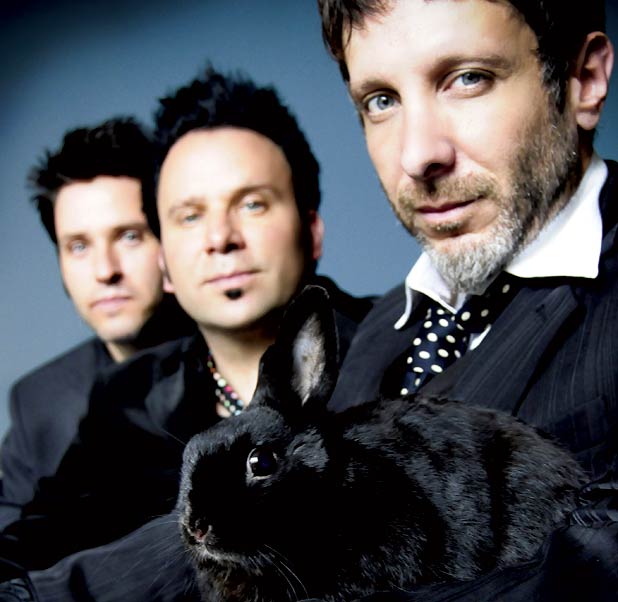
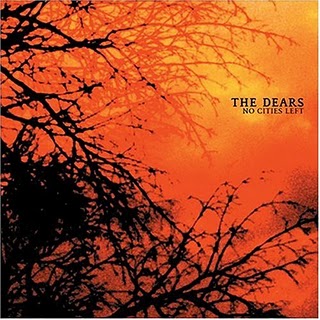
WARLOCKS RISE LIKE A PHOENIX

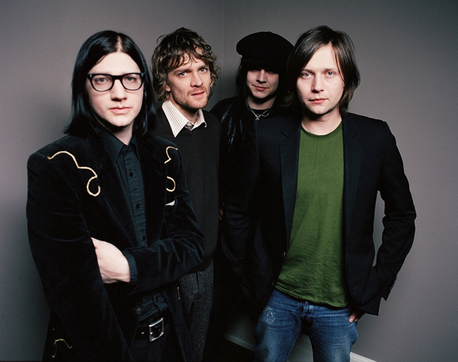
FOREWORD: When I interviewed the Warlocks inside their tour van parked outside Mercury Lounge in 2002, reticent mastermind Bobby Hecksher was nowhere to be found. I caught up with the reclusive Californian thereafter on the sidewalk and got some quotes I tossed into a piece supporting their Phoenix album. Since then, I saw them at the Merc again when ‘05s psych-skulking dirge, Surgery, came out (its review is at bottom). Two years later, the equally analgesic Heavy Deavy Skull Lover appeared. ‘09s The Mirror Explodes was right in line with past endeavors. This article originally appeared in Aquarian Weekly.

Verging on the edge of garage, goth, and slowcore without specificity, the Los Angeles-based Warlocks take Spiritualized post-psychedelic rock on a Codeine-induced acid trip through the mind’s deepest recesses. As bewitching as their sorcerer-inspired pre-Velvet Underground moniker implies, this large conglomerate cast a magic spell with mind-numbing mantras like the 14-minute meditational epilogue “Jam Of The Witches” from ‘01s invigorating Rise And Fall. In the same dark, dense, narcotic mode as fellow West Coast denizens Black Rebel Motorcycle Club, but never as calamitous as ‘70s post-punk schizoids Suicide, the Warlocks hauntingly eerie oeuvre usually evoke thoughts of fear, desperation, and desolation.

On ‘02 follow-up, Phoenix, the echo-drenched “Cosmic Letdown” simulates a heroin binge gone awry while the hazy ordeal, “Hurricane Heart Attack,” gets lost in whirlwind psychodrama. Singer Bobby Hecksher’s creamy utterance of “it’s nothing at all” on the open-hearted, harmonica-doused “Stone Hearts” seems plucked directly from the Velvets’ “Sunday Morning.” Yet there’s also life-affirming positivity to be found on two nearly upbeat opiates entitled “Shake The Dope Out” (a vibrant organ-grooved track hedging close to ? & the Mysterians) and “The Dope Feels Good” (a climactic fuzz-toned phantasm). But nothing beats the insular beauty of “Baby Blue,” a glistening shimmy hanging on a narcotic T. Rex groove.
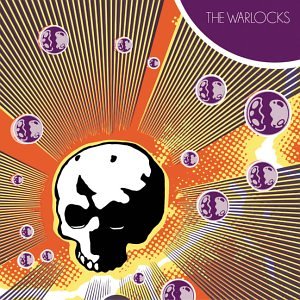
The Warlocks continue to gain exposure from ceaseless stimulating live performances. The present touring crew includes Hecksher (guitar-bass-keys), Jeff Levitz (guitar-lap steel-sitar), J.C. Rees (guitar), Corey Lee Granet (guitar), Bobby Martine (bass), Danny Hole (drums), and Jason Anchondo (percussion). Guitarist Sonic Boom, organist Laura Grisby, and drummer Mike Mc Hugh provided extra studio support for Phoenix.

Here’s our question and answer session.

Some people have compared the Warlocks to the Rain Parade minus the pesky Paisley Generation tag.

JEFF: I was friends with people in that band and enjoyed them as people, but I wouldn’t say we were influenced by their music. I’d say we’re influenced by the same music they were influenced by. But this isn’t the third coming of the Paisley Underground.

How do your lengthy, drawn out compositions usually get initiated?

JASON: Bobby comes out with an idea, sometimes very simple ones, and brings it to the studio and we work on it.

JEFF: The cool thing is everybody in the band is so creative on their own, they write their own parts.

JASON: It’s like being married to six other people.

J.C.: There are far reaching, wide ranging influences that affect our music.

BOBBY HECKSHER: I bring a basic idea to the table and these guys either like it or they don’t. If they like it, they put their magic into it and it sounds as bitchin’ as it does because of them. I just bring the basic starting platform and they tell me if it sucks or not. I don’t have any ego or feelings about ditching an idea for something else. We try some new stuff instead.

What are some of the lyrical inspirations?

B.H.: It comes from people I meet. They’re very simple, straightforward, honest lyrics.

Phoenix doesn’t seem as downcast as last years’ Rise And Fall.

B.H.: It’s a little more upbeat, I guess.

BOBBY MARTINE: We’re a very spirited, happy group right now.

Did you need to be stoned to compose the uplifting “The Dope Feels Good”?

B.H.: (laughter) No. Again, that’s about a person. It’s not about drugs. I’m not being ironic. I didn’t need many words for the person that song is about.

Does your band draw influences from slowcore bands like Low and Codeine.

J.C.: Sure. We do like them. We like that kind of repetitive groove to take you someplace else.

“Baby Blue” has the most accessible feel, but happily never drifts into formulaic pop pabulum.

B.H.: That’s the way it came out. It started with some chords. All my songs are written about people, or groups of people. It could be about a girl and a boy or just girls.

(The interview moves from in front of Mercury Lounge to nearby Katz’s delicatessen to the bands’ tour van.)

What’s the difference between Greg Shaw’s Bomp recording sessions for Rise And Fall and Birdman’s sessions for Phoenix?

J.C.: Phoenix was recorded at four different places and mixed by three guys while Rise And Fall was done in just one place.

DANNY: You don’t always get the perfect mix and you still may not be satisfied after.

J.C.: That’s why on this record we shopped around to get a different style and sound. It may all sound the same after awhile, but the songs stand out.

Were you guys into King Crimson, Soft Machine, and ‘70s prog-rock?

JASON: It’s not like any of us sit around and listen to a whole King Crimson record. But when you hear those good cuts, you’re feeling them. But I don’t think they’re a conscious influence. Even with the same instrumentation going on, there’s so much difference between each song we do because we all try to get a different feel, texture, or sound.

Following “Minneapolis Madman” on the Phoenix EP is an intoxicating 25-minute mantra that put my kids to sleep before I could say good night.

J.C.: That’s our aural asphyxiation. Pure studio shenanigans. (fits of laughter)

JASON: Someone called it VU (i.e.: Velvet Underground) malarkey.
WARLOCKS MIND EXPANDING EXPERIMENTATION

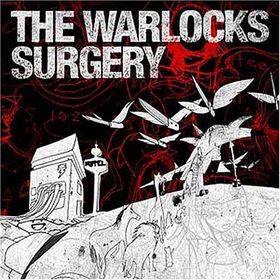
For a stormy summer afternoon at the beach, L.A.’s Warlocks sure do make the perfect haunting moodscape. Led by neurotic front man Bobby Hecksher and a revolving cast of psych folk, their latest, Surgery (Mute), aims to create “some new rock ‘n roll hybrid: sonic space age doo wop.” If ‘03s stultifying Phoenix grabbed at the gut, then the irrepressible Surgery will melt your insides out, as sheets of distorted guitar noise crash down upon stony heads, reverberating straight down to their toes. Several narcotic jams re-create the post-midnight gloom pervading ’01 debut Rise & Fall.
FRUIT BATS REACH DEWIER PASTURES BEYOND INDIE PULP

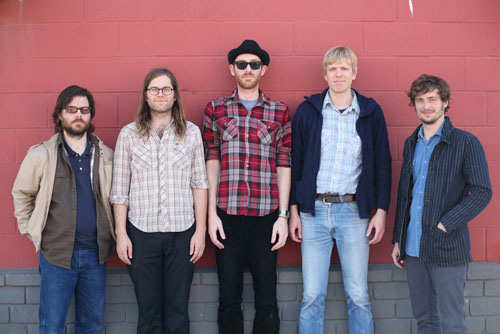
Though born in Lake Michigan port town, Kenosha, Wisconsin, home of genius movie director Orson Welles, multi-instrumentalist Eric Johnson grew up in expansive Chicago suburb, Naperville, where he listened to my alma maters’ college station, WONC-FM. So it’s intriguingly heartening to find the Fruit Bats leader claiming to be very enlightened by North Central College’s somewhat esoteric evening radio programming, especially since I once toiled there as music director way back in ‘78 when Captain Blotter, Doctor Quaalude, and Professor Amphetamine ruled the airwaves.

“I definitely found out about alternative music from WONC. They’d play b-sides and I learned to enjoy offbeat stuff like Captain Beefheart. They played weird cool tracks and had a late night psychedelic hour,” Johnson concedes. “My friend Steve and I would call straight through to the d.j.’s to make requests. We’d disguise our voices and use different names, not to make crank calls, but simply to get songs played on the air.”

As a pre-teen, Johnson’s favorite artists included Queen, Steve Miller Band, and subsequently, fleeting Aussie posse Men At Work. After glam-metal icons Motley Crue caught his attention in junior high, he discovered classic rock legends Bob Dylan and Neil Young, two important cultural figures still affecting the Fruit Bats oeuvre.

“Of course, discovering Velvet Underground was a landmark moment. My friends’ older brother had Loaded,” he admits.

Working with abstruse Red Red Meat mastermind Tim Rutili in more pop-minded Chi-town combo, Califone, whose label Perishable Records released the first Fruit Bats album, Echolocation, Johnson learned the ropes quickly during the ‘90s. He even concurrently fronted I Rowboat, a humble 4-track band started with fellow Fruit Bats guitarist Dan Strack and friend Brian Belval in tow.

“Califone made artier pop with drowsier droning,” Johnson smirks. “I’d started the Fruit Bats beforehand (as a sidebar to I Rowboat), but toured with Califone and guested on an album. But I never wrote a single note for them. I was never really a force or full time member. Tim and I are different musically. He takes pretty ideas and fucks them up and I do the opposite. I take twisted ideas and pretty them up. The songs come from exactly the same place with a totally antithetical means to an end.”

Though a vocal resemblance to Beach Boys legend Brian Wilson seemingly haunts Johnson’s muse, he downplays the connection. Yet the beautifully lush harmonious backdrop informing “A Bit Of Wind” (from ‘03s Mouthfuls) truly does simulate the Californian surf-rockers sensibility.

He yields, “I’ve got compared to Brian just like my friend James Mercer of the Shins has, but I’m not much into the Beach Boys. However, if you sing in the high tenor range like we do and write melodious songs, the analogy gets made.”

Instead, Johnson confirms having an affinity for similarly surreal moody contemporary combos the Flaming Lips, Eels, and Grandaddy.

“Yeah,” he corroborates. “Mercury Rev, too. They all do this grandiose Classical-informed pop usually with high vocals. I don’t mind being compared to them. I love the Flaming Lips, one of my favorite modern era bands. My very last show with Califone we opened for them. I got to meet leader Wayne Coyne. I was actually star-struck by him.”

On the Fruit Bats gorgeous second album, Mouthfuls, a majestic pulchritude and celestial ebullience detail the comely lullaby-like folk-pop pulp. Reflective acoustic-piano contemplation “Rainbow Sign” sets the stage with its creamy narcotic flow. But the sentiments put forth often deal with love-struck pain and anguish in the wake of relationship turmoil as per the spindly 6-string banjo-aided wisp, “Seaweed,” which tenders the serrated line, ‘If I broke my jaw for you I’d find a bloody tooth and rip it out.’ Quite strikingly, the questioningly confessional closing “When U Love Somebody,” a duet with then-partner Gillian Lisee (bass-keys-mandolin), proved to be the Fruit Bats most accessible memento.

Picked up by prestigious indie enterprise, Sub Pop Records, Johnson then moved his revolving troupe out to Seattle’s rainy grunge haven March ‘05, determined to attract a wider audience. While Echolocation only managed to sell 2,800 copies and its follow-up, a mere 10,000 units, the Fruit Bats nevertheless got to be known as ‘that Chicago band that seems more successful than they are.’ Hip college discjockeys, underground press, and boutique record stores hailed the band, but fame and fortune were out of reach.

“We’re still poor with day jobs,” he maintains. “I do craft services. I’m an all day on-set caterer for film sets, television commercials, and shows. They have lots of money to throw around to make snacks. In Chicago, they have a couple studios. The new Batman movie came through town recently. But it’s mostly commercials that are cushy because they have large ad agencies for Nike and Mc Donald’s, big old juggernauts.”

Perhaps the Fruit Bats third full length, Spelled In Bones, completed with ample care down in Strack’s studio basement, will finally put some money in Johnson’s pocket. The ambitiously arranged, harmonically sumptuous “The Wind That Blew My Heart Away” hacks into Pet Sounds’ debonair eloquence. On poignant piano ballads such as melancholic neo-orchestral dirge “TV Waves” and fragile adoring elegiac pledge “The Earthquake Of ’73,” the dusky ivory tingling bring back memories of John Lennon’s early ‘70s recordings.

“Lennon’s Plastic Ono Band is a huge record for me. But on “TV Waves,” I ripped off prog-rockers Genesis. I stole the feel from “Carpet Crawler” from The Lamb Lies Down On Broadway,” he divulges, absent-mindedly failing to convey that Mouthfuls’ “Magic Hour” likewise mentions a ‘carpet crawler.’

Sometimes Johnson’s literary seafaring abstractions and metaphoric man versus nature themes recall the compositional propensity of Modest Mouse comrade Isaac Brock, whom he toured with in one-off side project Ugly Casanova.

He offers, “I’d become acquainted with Isaac through Califone. He’s a great contemporary songwriter. Just because he’s not holding an acoustic guitar sitting down, people don’t think of him as a songwriter. But as a rock musician, he makes the best lyrics for a platinum selling artist.”

Assuredly, Johnson’s warm meteorological proclivities shine brightly in spite of some disparaging lyrical vignettes. Though shooting for a darker tone than Spelled In Bones ultimately consumed, he wasn’t necessarily looking to make a defiantly bolder statement.

“I’d like to do another 4-track record. I have some songs on tape in a shoebox and some were on Tragedy Plus Time, a limited edition ’04 EP. I want to do simple rock – two guitars, bass, and drums. We’ve been such an eclectic band putting every instrument possible on every song. There’s nowhere to go but backwards unless we play with the Chicago Symphony Orchestra.”

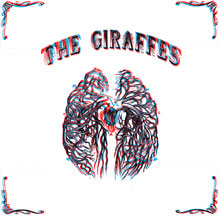
THE GIRAFFES’ NECK OF THE WOODS

FOREWORD: Outrageously cynical art-damaged metallic punks, the Giraffes, really put on a spectacle in concert. The fear and danger alert at their shows is on high at all times. And I wouldn’t want it any other way. Though ‘06s Pretty In Puke EP and ‘08s Prime Motivator didn’t assault the senses in the same way as the Giraffes self-titled ’05 long-player did, I’d recommend checking these guys out live.

Raised in a blue collar Midwestern town, howling Giraffes vocalist Aaron Lazar had to overcome a near-fatal heart ailment before his bands’ self-titled breakthrough Razor & Tie debut saw the light of day. Getting into graphic designing “by accident,” the N.Y.U. Fine Arts major worked as a bouncer at Lower Manhattan musical landmark, the Knitting Factory, prior to stumbling across comrades Damien Paris (guitar) and Andrew Totolos (drums).

“When they asked me to join, they were pretty much an alternative instrumental outfit,” Lazar recalls. “They didn’t think they needed a lead singer. What lyrical stuff they’d done was minor.”

But when a few Texas bred art buddies he’d met attending Kent State in the ‘90s asked to be introduced to the Giraffes while visiting the Big Apple, Lazar acquainted his pals and soon gained enough approval from Paris and Totolos to showcase his wares up-front and center stage. Bassist John Rosenthal then linked up with the boys in ’02.

“I saw them play a couple times and got to know them,” the front man says before describing his surreal ritualistic performances. “It’s a blur to me. I’ll get sick, puke, or throw something at the audience. Then, I gradually come through afterwards. I don’t usually remember anything about the shows. Someone might hit me with an object. It’s not compulsory. Typical rock stars are pretty stale. So fuck aping the danger.”

Raised in Youngstown, a nice place to live until the ‘60s when the steel mills shut down, Lazar escaped the depressing Industrial decay while crack-driven lawlessness had risen, decreasing the city’s population from 250,000 people to a mere 40,000.

“It’s almost a ghost town now – a shit hole. People from Ohio go there to score drugs. So I moved to New York. But once I saw the Manhattan art world up close, I didn’t want much to do with it,” he shares.

After the Giraffes issued ‘96s exploratory self-released debut, Frank’s Quilt, with a previous bassist, Lazar came aboard for the better, harder rocking Helping You Help Yourself, enhanced by Colt 45 Malt Liquor buzzes. An EP side project, A Gentleman Never Tells, followed shortly thereafter, featuring a stirring mix of surf grooves, Tex Mex shuffles, and Spaghetti Western motifs, and like its predecessor, strangely recorded underneath a Hasidic dry cleaning shop.

“We made a self-conscious effort to just rock out hard on our new album,” Lazar admits. “A long time ago we had this idea to alternate each record between straightahead rock and weird concoctions. Trans Am kind of does that but they confine it. We felt less limited in approach.”

Lazar’s handlebar moustache, savage lyrical thrust, and Transylvanian background provide a unique persona to the Giraffes whirred power chords and recklessly adventurous arrangements. At Brooklyn’s Studio G, experienced engineer Joel Hamilton was brought in to produce the Giraffes thrilling ‘05 endeavor, thankfully nabbing the same furious energy their live shows attain.

“Joel is one of the most adept professionals and also one of the funniest fucking guys you’ll ever meet. He’s a rocker in (brutish) band the Players Club. He’s not a clique-y producer. He knew how to capture our sounds because he knew the tricks to work the studio.”

Much of the mischief and mayhem gets credited to the punctual braniac riffs Paris spackles across Lazar’s guided visceral banter, scruffy glam-rock splurges, and basement bound Blues rues. Two better tracks deal with money as the means of expression. Scurried rant “Million $ Man” explodes out of the box, settling down for a soulful ‘do do da do’ refrain before going haywire. And the perilous “Wage Earner” bends galloping heavy metal guitar into hell bound Sabbath-descended drudgery. Similarly, “Sugarbomb” scatters lethal doses of cosmic debris along lofty bridges and extended jams. Better still, the resonating tryst, “Haunted Heaven,” brings to mind Blue Oyster Cult’s premium artfully deployed acid rock.

Though “Junior At His Worst” seems to emulate Alice Donut with its black magic voodoo stomp, Lazar appears to have no specific knowledge of the fellow underground Brooklyn denizens. In a manic gruff-throated growl, Lazar plows onward with unhinged rage, brutally screaming ‘there’s nothing in the whole wide world that could hold its own’ over a demented lament the Butthole Surfers would enjoy.

“If I could write like Gibby Haynes, that’d be the best, but I’m not as good as him,” Lazar modestly explains while referencing one of his heroes. “Maybe art school gives you an existential viewpoint because it makes you think of stuff you shouldn’t waste time on. I try not to care too much about the lyrics. It’s like that old David Byrne line, ‘lyrics are just what help you listen to the song.’ As far as rock and roll goes, good lyrics are not an absolutely necessary part of the equation. I try to write something I won’t laugh out loud at too often. I made up “Junior At His Worst” on the spot. It came out impromptu onstage one night.”

On the penetratingly anxious “Man U.,” Lazar props up a bogus soccer fight as instigative fodder while Paris scarfs up old Iron Maiden licks with Frank Zappa-like dexterity to embolden its terrifying cryptic blaze and anthemic chanting.

Lazar concedes, “That song has a more world weary sensibility. We’re never overtly political, but the soccer riot was a joke. It’s like savvy AC/DC politics. I’m not Zach de la Rocha. I can’t stand this black and white rhetoric. The lyrics take on scarier stuff like the neo-conservative bloodbath. But it’s not like I’m trying to make a big statement.”

With all the local excitement created before the Giraffes eponymous breakout even hit the stores, you’d figure things were going very nicely now. However, just as the Giraffes were ready to unleash their latest album, Lazar suffered two premature heart attacks from a congenital defect. Now sporting an expensive defibrillator, he’s back on the trail going full out entertaining a growing legion of fans.

“I got a little jolt doing our tour with Local H in Chicago. Other than that, my little metal buddy has helped me do fine except for that shock,” he contentedly claims. “If my heart rate goes up above a certain level, the defibrillator sends thirty jolts straight to my heart. We were onstage and I was drunk and felt like I got electrocuted. I took twenty seconds off, the jolts stopped, and I finished the show. I had to go to the hospital.”

In lieu of any unforeseen health risks, Lazar promises to continue performing as wildly as ever. Besides that, he imagines the Giraffes will gladly feel the need to investigate different avenues in the near future.

“My favorite actual song didn’t make it on to this album. We’re just trying to find new ways to explore. Maybe we’ll do Pancho Villa-like Spaghetti Westerns next time. Some new songs may take a decadent Marquis de Sade Italian detour. Our weird stuff and the straight rock stuff are talking to each other. So we’re trying to bring those together without becoming an overblown fusion rock band,” he informs. “After all, Led Zeppelin’s “Kashmir,” as rocking as it is, is difficult to properly duplicate.”

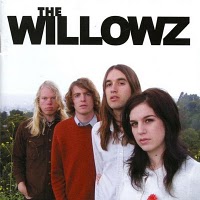
WILLOWZ BLOOMING IN ANAHEIM

Image result for WILLOWZ

FOREWORD: I first met Cali garage punks, the Willowz, at a stunning Mercury Lounge show during ‘05s Talk In Circles tour. Two years hence, I was really in their camp, driving them to the city for afternoon setup at, I think, Bowery Ballroom. Richie’s mom got us all lunch that day. Anyway, we had loads of fun drinkin’ beer and cookin’ herb. I turned that li’l venture into an ’07 High Times interview session. But I missed a late summer show a few months later due to a bloodied finger. Sorry, Willowz. I await another solid album. This article originally appeared in Aquarian Weekly.

Juvenile products of the working class, the Willowz just may be saviors for disenchanted, disheartened minions waiting to subvert those sterile compromising get-rich-quick drones ruining America’s musty airwaves.

Boasting a wide range of molded, twisted, and warped contemporary and traditional influences, the fiery foursome’s super-charged tunes run the gamut from crash and burn self-righteous punk to thunderous balls-to-the-wall MC5/Stooges-informed Motor City mayhem with a quick stopover for laid-back farmhouse tranquility (spare acoustic plink “Blind Story”).

Never sticking to one identifiable style too long while garnering a great assortment of timely hooks and shifting chord structures, this fresh-faced, broad-minded Anaheim foursome retain a scampering wet-behind-the-ears amateur spirit to match their post-pubescent hyperactive restlessness.

A contagious punch drunk anything goes attitude courses through the veins of the Willowz charmingly over-the-top, hefty 20-song Talk In Circles, their breakout second album for virtuous indie label, Sympathy For The Record Industry.

Cleverly integrating garage rock inertia to the overall jubilant tunefulness, the Willowz muck up and pulverize any poppy tendencies, settling for a harder sound than nearby Los Angeles’ shiny happy scenesters such as Rilo Kiley and their growing legions. And they’re brainier than hometown Anaheim headliners, No Doubt, and, for that matter, any pedestrian local emo and hardcore rip-offs. Voices jettison in and out of bustling arrangements, interlocking whiny male-female shrieks that fall just short of Robert Plant hysteria.

Undoubtedly, lead singer-guitarist Richie James Follin’s punk-rooted auspices inform the long-haired loose-limbed combo’s aggression, whether beckoning a presumed slacker to ‘wake up you sleepyhead’ or fervently delivering a ‘fascist plastic song’ like the metallurgic “Cons & Tricks.”

“My step-dad was in early punk band Youth Gone Mad with (producer/ art illustrator) Paul Kostabi, who made our first two records,” Follin explains. “Afterwards, Paul had a band, Psychotica, who toured with Tool and Iggy Pop. They were on Lollapalooza’s main stage with Devo, Soundgardern, and the Ramones. That was obviously an introduction to Nirvana, too. So I began discovering punk stuff early on.”

Once elusive Posh Boy Records owner Robbie Fields gave the then-teenaged Willowz his stamp of approval in ‘02, doors immediately started opening. Their well-received 20-minute eponymous 9-song Dionysus Records EP, which controversially won Record of the Year from SoCal’s OC Weekly, piqued long-time Village Voice critic Robert Christgau’s interest.

Thereupon, French director Michael Gondry used loose Velvet Underground-prompted “Something” and pallid anti-folk number “I Wonder” for Eternal Sunshine of the Spotless Mind’s fine soundtrack. Then, though they were still barely able to manipulate their instruments, appeared initial long-player, The Willowz Are Coming. Its basic ideas came from listening to loads of diverse records and half the songs were written in the studio while they were being learned, giving the project a startlingly skewed, scattershot rawness.

“Jessica (Reynoza: bass-vocals/ abstract painter) got all her dad’s classic records, mostly Soul like Jimmy Smith. Alex (Nowicki) actually played drums in a band with Greg Gagne of the Adolescents son’s band. Dan (Lowe: guitar) got into music playing in a church band,” informs the seemingly shy Follin. “I’d always made up songs as a little kid, but this was the first time I ever did anything substantial.”

With a cheap budget, producer Kostabi not only got the Willowz to rehearse properly and tighten up, he also brought along fellow old school punks to flesh out some songs for Talk In Circles. Cartoonish punk idol Keith Morris of the Circle Jerks added phoned-in vocals to Reynoza’s roughhewn X Ray Spex-gone-to-the-beach ramblings on “We Live On Your Street” and odd mod Jimmy Vespa (from swamp Blues-reggae-informed Mad Juana and trance experimentalists Hypnotwist) provided a smidgen of trumpet.

Follin recalls, “Keith began coming to our shows and became a fan. He’s working A & R at V2 Records now. Paul got the other guests, a few New York City guys he’s known for awhile, to help us out.”

Though Follin admits having an affinity for trend-setting Detroit garage rockers such as former tour mates, the Dirtbombs, as the Willowz became more proficient on their instruments a blues-y semblance crept into the admix. During the stammering “Toy,” a slow counter-melodic guitar peppers the scampering surroundings.

“Those are all B.B. King chords. I don’t feel guilty about it because everyone gets ideas from him,” Follin permits. “I’m also into Screamin’ Jay Hawkins, Howlin’ Wolf, and Muddy Waters. But I also like reggae. I love Jimmy Cliff (of The Harder They Come fame) a great deal.”

Beginning with the impulsive vexing sneer of “Ulcer Soul,” a visceral adrenaline rush where Follin whines the frantic catchphrase ‘take me hoooome’ in a nasal tone Smashing Pumpkins’ Billy Corgan would recognize, Talk In Circles springs forth as predominant wankering guitars crash into dangerously expeditious drum convulsions. Similarly, “No Name Notes” shimmies and shakes ‘til the chafing rhythm quakes. And the rudimentary free form psychedelic keyboards buzzing across the chewy harmonic convergence of “Dead Ears” get neatly set aside for Lowe’s inevitable crunchy guitar explosion.

Throughout, Follin seeks romantic assurance; hoping love will conquer ambiguous feelings of insecurity and uncertainty in an insane universe blighted by derision and divisiveness. The world weary “Unveil” decries ‘modern girls’ nagging him in the ‘modern world’ with a counteractive hesitancy weaving indeterminate lo-fi indie rock candor into abstruse Velvet Underground paleness. Closing instrumental cathedral organ epilogue, “We Can Die Now,” is a fitting finale. It not only confirms the excruciating lyrical malignancy Follin reveals from top to bottom, but by way of its contented title, contrarily celebrates what the Willowz must, beneath it all, realize is an astounding accomplishment that’ll be difficult to best.

To bring a bit of civic pride to the proceedings, and perhaps snub those who’d believe the Los Angeles area only venerates hollow secondhand corporate rock sellouts, the Willowz had photographer Johann Wall randomly document their Anaheim digs in pictorial form for the encased CD leaflet.

“We met Johann in Canada. She came on tour with us,” Follin shares. “We just wanted to show where the music comes from. There’s not many bands from Anaheim and I think some people have particular prejudices against what they conceive as a narrow musical landscape.”

Proving they have the gumption to open up the stale auricles and polluted minds of a youthful generation reeling from constrictive regulated commercial radio fodder, the Willowz clobber the limpid anti-competition (lame as shit American Idol heroes; faddish teen pop zeros; faux hip-hop freeloaders; ceaseless emo-core deadbeats). At least some promisingly formidable local foes would be welcome as friendly competition at this precious moment in time, but I’d bet Silver Lake there ain’t one within a 50 mile radius.

SHOUT OUT LOUDS ROUT TAUT YANKS

FOREWORD: Since their impressive American ’05 debut, Howl Howl Gaff Gaff, pop-rooted Swedish band, Shout Out Louds, have tightened up further, resulting in ‘07s lushly orchestrated grandiose pop stunner, Our Ill Wills. This article originally appeared in Aquarian Weekly.

Popular music has been in the blood of the Shout Out Louds front man, Adam Olenius, since he was a pre-pubescent Scandinavian schoolyard boy. His mother, a nurse who’d spent time in America as a teen, once dated the Zombies venerable Colin Blunstone, while his father, a surgeon, got him hooked on ‘60s/’70s radio hits straightaway.

Meeting fellow guitarist Carl von Arbin in art school, the pair soon hooked up with bassist Ted Malmros, drummer Eric Edman, and finally, “after booking their first show at a small Jazz club,” blonde knockout Bebban Stenborg (a Classically-trained pianist) came aboard to provide keyboards. But just ‘cause the passionate Swedish pop combo got a major label deal to obtain broad worldwide distribution doesn’t mean the awesome foursome have completely forsaken the thriving underground Scandinavian scene whence they came.

“I played in different bands since I was 13,” Olenius recalls. “I’d never been the singer or songwriter ‘til now. We tried everything but were bad musicians. I didn’t share all the same tastes in music. I had lo-fi indie pop records at home and they had more classic rock-oriented records. So I wanted to start a band that played music I liked. My inspiration came from my dad listening to ‘70s music like Chicago. Afterwards, I really enjoyed ‘80s/’90s Brit-pop from The Cure, Smiths, My Bloody Valentine, and Ride.”

So it’s not entirely surprising to find Olenius whining in an almost piercing register close to that of The Cure’s Robert Smith on spindly acoustic sanctuary, “Very Loud,” one of the Shout Out Louds’ finest tracks donning sturdy American debut, Howl Howl Gaff Gaff.

“But I’m more influenced by Neil Young’s high-pitched vocals,” he admits. “So maybe I went from Neil Young to Robert Smith. Other people say I sound like J. Mascis of Dinosaur Jr. So it’s a chain of musicians I truly enjoy.”

An incurable romantic with an oft-times snide slivery-tongued wit, the reliable songsmith acknowledges there’s still a thrifty hometown Stockholm scene motivating his cool egalitarian group.

“I think there was more of a rock scene due to the Hives success a few years back. But now it’s more of a bigger pop scene from electro to Jonathan Richman-like folk. It’s very Dexy’s Midnight Runner-like big soulfulness. These bands are trying to push it to the limits and see how far they could go with pop by experimenting,” Olenius consults.

Of course, an influx of new Swedish labels has helped expose this new wave of artists. Originally signed to local Bud Fox Recordings in 2003, the Shout Out Louds released two EP’s and an early domestic version of their long-player before hitting international seas.

“We kept six songs from the Swedish release and dumped the rest. Some songs we grew tired of since we’d performed other newer ones live. Producer Bjorn Yttling worked on a few new tracks (including desirous symphonic come-on “Oh Sweetheart,” post-Beatles folk-pop affectation “A Track And A Train,” and exploratory mantra “Seagull”). We just got better. You could hear our sound developing as we gained confidence in the studio. We were relaxed and unafraid to take chances,” Olenius explains.

Doing some introductory New York and Los Angeles shows prior to getting inked by stalwart Capitol Records, the Shout Out Louds built a solid overseas following, securing opening spots for esteemed contemporaries Kings Of Leon, Secret Machines, and the Coral in ’05. An appearance on The David Letterman Show in June no doubt increased visibility.

“Letterman seems to be a great guy – funny and intelligent,” Olenius says.

The first song Olenius ever composed, the triumphantly mellifluent petition, “The Comeback,” used as Howl’s catchy opener, has gained a fair amount of airplay here in the States. Above the grandiose bleating synthesizer crescendos and underlying guitar murmur, he fervently begs for reconciliation in a wearied raspy voice persuasively emoting regret, empathy, and finally, resolution, ultimately coming to terms with the frequently schizoid feelings wary lovers often experience during recovery.

“That deals with good and bad crazy emotions. Some songs are more of a collage concerning a time in my life. I could pick up different things and put it together in a song. Sometimes the chorus needs more love and the verses need more hate. So you put everything together in a singular song. It could sound really bad romantically, but it doesn’t have to be that way. It’s the dichotomy that makes them interesting,” Olenius confirms.

To bookend Howl, the elaborate flute-ensconced surrealism of “Seagull” recalls Mercury Rev’s beautiful neo-orchestral flourishes and, more specifically, the airy falsetto flights of Rev’s Jonathan Donahue, as Olenius confoundedly laments ‘I looked into his eyes and I saw myself… kissed his feet and broke his knees.’

“Those are things that go on in my head,” Olenius remarks. “I read a lot. I’m not really into poetry. I can’t focus on that stuff. But I like books. The first songs on our album were written four years ago. So some lyrics are older. But “Seagull” I wrote recently and worked harder on them. You could probably notice how the lyrics have changed over the course of the album. I wanted the lyrics to sound like a debut album – a diary of the few years in the band.”

As the focal point of the Shout Out Louds, Olenius submits the wording and basic foundation of most songs, but everyone has input into the arrangements. Understanding how to express the emotional context of the material overrides the need to be perfect as players. Besides, the profound impact of Olenius’ appealingly rendered love-struck verses doubles when the sympathetic mood thickens. With a lump in his throat the size of an Adam’s apple, he spreads devotional splendor. Beat-quakin’ tambourine-shakin’ “Please Please Please” and conversely, the xylophone-smitten slow ballad, “There’s Nothing,” both plead for sentimental clarity, though no solid conclusion gets rendered. One minute he’s flipping off and devouring a fem victim, the next, he’s gushing tearful apologies and searching for full-time commitment.

“In the future, we’ll try to find a new way to arrange songs and add Jazz elements and South American influences,” Olenius informs. “These are different cultures beyond indie rock. My girlfriend is from Brazil so I get music from there. Plus, a lot of old Swedish and British folk (intrigue me).”

So what’s Olenius listening to now that his band is on the road constantly?

“I really like Antony & the Johnsons. He’s good. Arcade Fire made a great album and they are a great live band.”

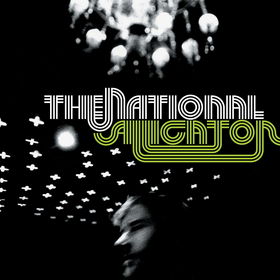
BROOKLYN’S NATIONALS GO UNIVERSAL

 Image result for nationals band

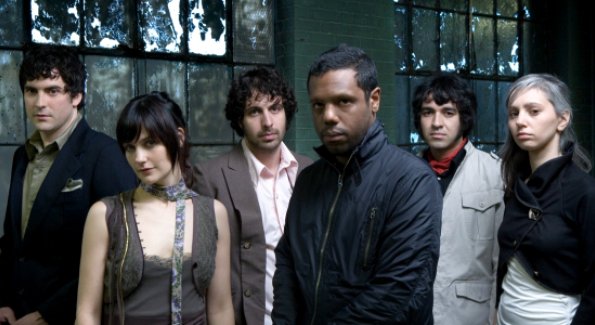
FOREWORD: It was at Mercury Lounge’s basement backstage area after a truly rewarding set that I met friendly Brooklyn-via-Cincinnati combo, The National. They were touring to support Alligator, the soothingly noir breakout album that’d bring ‘em an international audience. During ’07, The National released stunningly accomplished masterpiece, Boxer, and got to play with their idol, Bruce Springsteen, rendering a Woodie Guthrie number in concert. This article originally appeared in Aquarian Weekly.

What happens when two Ivy League brothers hook up with two equally schooled siblings and a maudlin baritone singer in the Carroll Gardens section of Brooklyn? They form judicious combo, The National, self-release an eponymous ’01 debut before ever playing a single show, and get red hot Interpol producer Peter Katis to work on a few very consistent follow-ups. Strangely, all five members are long-time pals hailing from Cincinnati who’d moved east looking for conventional jobs instead of a risky music career.

“We were in New York City five years before we began hanging out doing music,” singer Matt Berninger recalls.

Luckily, the gravitational force bringing these Ohio buddies together was compelling enough to beget the embracing pop grandeur they so intimately surrender. Much like Jersey band, The Wrens, a cohesive, tightly knit unit with only one set of brothers, The National takes a democratic approach to building lathered arrangements. This balance of power deters each individual from going off on a tangent or becoming too precious about any singular influence on the entire oeuvre.

Columbia University grad Aaron Dessner (guitar-bass) and Yale alumnus Bryce Dessner (guitar) must’ve been taught the fine art of interdependency since their beautiful melodiousness resonates so mellifluously alongside Berninger’s fellow University of Cincinnati graphic design major Scott Devendorf’s four-and-six string illuminations and Soho Press employee Bryan Devendorf’s pliant percussive patter.

For the record, Berninger and Scott Devendorf had made one unheralded record under the feminine moniker, Nancy, doing a few small local gigs/ parties ‘round ’91, then temporarily drifted apart. Meanwhile, the others were in Project Nim making soft-toned 10,000 Maniacs-like folk-pop. Though The National’s initial recording offered restrained alt-Country leanings, ‘03s Sad Songs For Dirty Lovers diversified the stylistic presentation.

“I’d compare the first one to the Silver Jews. It was made up in the basement. After touring a bit and feeling the adrenaline of going onstage, we began playing more aggressively,” Berninger lets on. “But we’re still finding out what type of band we are. As good as Sad Songs was, it’s not as comprehensive or competent as the widely varying third album. Song structures have improved.”

Now signed to Beggars Banquet, Alligator finds the moodily deep-voiced frontman becoming hauntingly introspective rendering the shrouded “Secret Meeting” (‘in the basement of my brain,’ no less). On delicate acoustic-folk serenade “Daughetrs Of The Soho Riots,” he almost sounds like a grim Morrissey dolefully gesticulating ‘break my arms around my love.’

Of the latter, Berninger explains, “That’s about holding on to something too tight – ‘til it snaps. And although there never were ‘soho riots,’ it’s an ironic reference to the Daughters Of The Revolution, living in Manhattan’s fancy Lower East Side hipsterville, and getting lost in the middle of (fashionistas) massing the streets.”

In loud contrast to the gloomier episodic ventures, the outwardly exuberant “Lit Up” rushes forth with youthful buoyancy and circular jangled riffs entangle dapper helix “Looking For Astronauts.” Resounding “Abel” revs up the amps before subtle symphonic retreat “Geese Of Beverly Road” returns to introversion.

“We’ve had a version of “Abel” for awhile. It was a more subdued dark ballad drastically changed by a snappy drumbeat. We made it more interesting. It’s a whole different monster,” Berninger confides.

Undoubtedly, The National had great outside assistance putting the expansive Alligator together. Peter Katis mixed the disc and did some recording after engineer Paul Mahajan (Yeah Yeah Yeahs/ TV On the Radio/ Liars) set up practice spaces and captured the five-piece on Pro Tools.

Berninger contends, “Peter has an integral part – cleaning up our sound, whereas Paul was the captain of our ship.”

Furthermore, Australian composer Padma Newsome (from the Clogs) orchestrated neo-classical elements, adding textural complexity via oboe, cello, violin, viola, clarinet, and French horn. Both “Baby We’ll Be Fine” and “Val Jester” recall the half-spoken reflections and spare dourness of Tindersticks’ Stuart Staple, whom, like Berninger, draws on the brooding monotone melancholia Nick Cave and Leonard Cohen seemingly crave. Better still, the reverberating triumphant finale, “Mr. November,” with its crashing cymbals and bashing skins, penetrates deeply as the resolved choral summit ‘won’t fuck us over’ and lucid guitar intensity swell.

“The truth is, seeing regional Cincinnati band the Afghan Whigs get popular nationally was incredibly inspiring,” Berninger gladly opines. “They broke out of the small music scene to become semi-legendary. When I was living there, the Ass Ponys, Tiger Lillies, and Guided By Voices (from nearby Dayton) had a healthy support contingency. Everyone did their own thing. Brainiac was groundbreaking making totally out of nowhere stuff. Maybe living in the midwest gets people looking far and wide for exciting music from all different corners. They look outside Cincy for inspiration. Plus, radio station 97X have a lifeline to underground music. That had a lot to do with aspiring artists gaining access to good radio. There’s not a station like that in New York.”

So where’d they come up with the punchy title, Alligator?

“We took it from (the somber) “City Middle,” which references ‘I wanna go gator round a warm bed.’ Like a predatory male reptile, we hope it matches the undercurrent of tension.”

MERCURY REV UP ‘SECRET MIGRATION’

FOREWORD: Couldn’t get surrealistic Mercury Rev front guy Jonathan Donahue to do an interview, so I let lead guitarist Grasshopper (a.ka. Sean Mackowiak) fill me in on his long-time partnership with the reluctant bard. Onstage at Bowery Ballroom touring for ‘05s The Secret Migration, impressionistic lighting and various cinematic images provided recreational background for the Rev’s massive art-affected musical subtleties. Mercury Rev have been low key since then. I’ve yet to hear ‘08s full-length MP3 download, Strange Attractor. This article originally appeared in Aquarian Weekly.

Compelling and enlightening, Mercury Rev’s highly spirited symphonic constructions pleasantly glide above routine earthly delights. Meeting at a Buffalo lecture concerning Airto, Brecht, the Fluxus Movement, and modern surrealists, singer-guitarist Jonathan Donahue, lead guitarist Grasshopper, and soon-departed lead vocalist David Baker shared a love for the Velvet Underground in the late ‘80s. The trio ended up making incidental music and ambient sounds for a platypus nature film, then started composing more song-oriented fare.

“I was studying about minimalist performer Tony Conrad. He’d come up with the name Velvet Underground and had played with John Cale,” former film school alumnus Grasshopper offers. “I was into Television, Suicide, the Ramones, West Coast punk, and Sonic Youth. Jonathan liked classic rock, which I knew from my older brother. Jon and I went to see Echo & the Bunnymen and Psychedelic Furs concerts and that’s when we wanted to start a band. But we also liked Neil Young and The Band.”

Now residing in the Catskills, Donahue’s shyly malleable eggshell coo renders fragile sentiments with a quivery vulnerability and introverted reluctance. His fey falsetto warmth, plaintive speakeasy baritone drone, and mournful tenor lurk inside Mercury Revs penetrating lovelorn entreaties. Musical partner Grasshopper’s efficient six-string resonance and gauzy textures ravishingly vacillate beneath the enticing agrarian settings and, at times, punctilious delirium.

“Jonathan and myself have always been into reading ancient texts like the Old Testament. We don’t subscribe to any religion but we’ve scoured through Hindu and Buddha documents and read tons of literature. So I guess a lot of that shit is coming out,” Grasshopper informs.

Following the cosmic ’91 debut, Yerself Is Steam (pronounced ‘your self-esteem’), Mercury Rev assembled ‘93s more coherent affirmation, Boces, utilizing violin, French horn, and trombone to sublime effect. Anchored by frenzied 10-minute montage “Meth Of A Rockette’s Kick,” a whirring kaleidoscopic cacophony reaching mercurial ascension, Boces established the Rev as serious neo-Classically inclined indie rock contemporaries alongside surreal moodists, the Flaming Lips (the better-known outfit Donahue played with on ‘88s superb In A Priest Driven Ambulance). Eventual single, “Something For Joey,” the completely stratospheric flute-warbled climax, found the still-maturing combo reaching heavenward before getting completely unsettled by the darting feedback-skewed mantra “Trickle Down” (taking the experimental troupe as left of center as they’d ever be). Bassist Dave Fridmann became resident producer and promptly found notoriety working the boards for the aforementioned Lips.

As a notable side project, Grasshopper and Donahue created the Harmony Rockets, whose lone ’95 album, Paralyzed Mind of the Archangel Void, was described in Trouser Press as a pseudonymous 40-minute ‘arcane trans-rock meditation.’

Grasshopper reveals, “At that time, we were listening to Teddy Riley’s lengthy jams, Miles Davis’ ‘70s electric albums, and Don Cherry’s Jazz. They had rules as to what key to play in, but improvised. So we tried to build a long piece, some planned, some improvised. Different music events would change the flow and it was recorded live at the Rhinecliff Hotel. We’re talking to the Chemical Brothers about doing another one with them onboard. That happened when they asked Jon to play on “Private Psychedelic Reel” (from Dig Your Own Hole).”

Curmudgeonly caterwauling primary singer David Baker left before ‘95s knottier complexity, See You On The Other Side, handing the reigns to Donahue and Grasshopper for a less cluttered, more disciplined, focused, and charmingly mystical set. Donahue’s bowed saw (a wand-like oscillator) took a prominent role bestirring the wandering incandescent abstractions and darkly rapturous anecdotes. Piano-plunked childlike escapade “Everlasting Arm” inadvertently provoked illuminating Pet Sounds comparisons.

Grasshopper opines, “That album was influenced by (German prog-rock conceptualists) Can with a tip of the hat to Phil Spector and Jack Nitzsche. We had met with Jack at V2 Records offices and were gonna work with him on a few tracks. A week later he called Jon and said he liked our demos. Two days after, he passed away. Very strange.”

Despite stolen equipment, misplaced merchandise revenue, and internal friction burdening the Rev, they soldiered on, procuring fellow upstate legends from The Band (Levon Helm drums on sedately perplexed “Opus 40” and Garth Hudson plays tenor and alto saxophone on glistening rainy day ode “Hudson Line”) for ‘98s majestic Deserter’s Songs. A brilliantly resilient and eloquently tranquil affair, this stunningly poignant magnum opus reaches luxuriant heights with the pristinely mellifluent glimmer “Goddess Of The Hiway.” Jimy Chambers’ clavinet and harpsichord, guest Adam Snyder’s B3, mellotron, and wurlitzer, plus Grasshopper’s timely woodwinds, bring orchestral lushness to Donahue’s hushed voice and Chamberlain string arrangements. The celestial “Silent Night”-swiped repose, “Endlessly,” employs these gorgeously grandiose elements best.

“With Deserter’s Songs, we had this desperation after being beaten down. I don’t know if it was dusk or dawn we were trying to capture. We went through drug problems so that record was a meditation on that.” Grasshopper adds, “When you romance with drugs, the next thing is girls.”

Sans Chambers (replaced by keyboardist-percussionist Jeff Mercel) and minimizing flutist Suzanna Thorpe’s status, ‘01s windswept masterstroke, All Is Dream, floats on thin air. The elaborate “A Drop In Time” drifts across with astral balladic effervescence like a ray of sunshine ‘gliding through your hair.’ Any desolate bleakness is washed away by surging euphoric radiance and allusions to dewy meadows, open poppy fields, and hilly pastures.

Operating out of their own Kingston, New York, rehearsal space instead of paying exorbitant sums for an outside studio, the Rev return in ’05 with the plangent suite-like jewel, The Secret Migration. Initially released in separate three-part fragments, this adventurously streamlined spectral achievement retains a somniferous post-midnight neo-psychedelic transience confirming its wondrously meditative romanticism.

“We always had simultaneous releases of our records the world over,” Grasshopper admits. “We have a good European following, but felt the frustration of being there instead of in America (upon release date). So we wanted to have Secret Migration available online when it came out. But a lot of record stores freaked out so we were flying by the seat of our pants and thought, ‘Why can’t we release it in three different segments leading to the release date when the hard copy comes out?’ It was a website experiment. And the American version has extra tracks on a bonus disc.”

Beautifully ethereal ‘waves of emotion’ caress the tenderly melodic “Across Yer Ocean” and the reconciliatory heartwarming lullaby “My Love.” Equally seductive, the ornate vibe-imbibed “Vermillion” and airily swirled dreamscape “Secret For A Song” head for the ozone with angular guitar and nimble piano. “Arise” awakens from the awestruck bedtime moodiness with a fleet drumbeat and sheets of sonic density.

“Romance has its ups and downs,” Grasshopper laments. “Sometimes you’re happy together and other times, there’s lots of friction. Some negative aspects come through our music, but it usually ends up positive.”

Written for the opening sequence to the film, Laurel Canyon, rural memento “In A Funny Way” gets transformed by a Phil Spector-related Wall Of Sound as veiled angelic moans seep into a percussive “Be My Baby”-styled tympani-tambourine backdrop tinged by Fugs member Scott Petito’s sitar.

“We’re also doing the soundtrack for Bye Bye Blackbird. It’s done by a French director and may be featured at the Cannes Film Festival. It’s about the tragic unraveling of a circus due to the film age, which began in 1912,” Grasshopper lets on.

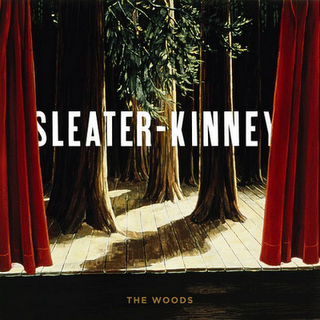
RIDIN’ ALONG SLEATER-KINNEY BROWSING AT ‘THE WOODS’

Image result for SLEATER KINNEY

FOREWORD: I found it extremely difficult to get an interview with Sleater-Kinney frontline Carrie Brownstein and Corin Tucker. Album after album went by with no luck. Damn, I really tried reaching out. I caught these iconic feminist punk mavericks at Manhattan’s now-defunct club, Tramps, where they belted out tracks from ‘97 apex, Dig Me Out.

Eight years and four well-received albums later, The Woods broadened S-K’s scope without getting bogged down in desecrated jamming. But they disappointed some faithful fans with its elaborately elongated compositions. Anyway, I finally got newly recruited drummer, Janet Weiss (of keyboard-heavy pop eccentrics, Quasi), to do this ’05 interview. Within a year, the gals disbanded. This article originally appeared in Aquarian Weekly.

Swindling the name of a popular road in former home base, Olympia, Washington, Sleater-Kinney may be underground rock’s most ambitious combo. Forming at the height of nearby Seattle’s grunge scene, the liberated trio almost single-handedly carried the torch for estrogen-fueled punk independence throughout the late-‘90s. Continuing to take chances over a decade hence with little serious competition, raggedly charming singer-guitarists’ Carrie Brownstein and Corin Tucker (incipient drummer Lora Macfarlane was replaced by Janet Weiss) gained attention delivering boisterously somersaulting rock scrums coalescing guttural call and response wails with responsive choral tantrums.

The universally revered all-female outfit preliminarily brought a stimulatingly chaotic assault and fervently amateurish immediacy to DIY autonomy, lifting the deeply felt feminist empowerment and authoritative railing of seminal local riot grrrls Bratmobile, Bikini Kill, and Team Dresch (at odds with misogynist cock-rock suckers) to inform their veritable individualist attack. Persevering despite a few surprisingly cordial concessions to near-mainstream possibilities, Sleater-Kinney has nevertheless managed to retain their rowdy energetic roar and roughhewn action-packed minimalism, exuding the mindful emphatic adolescent romp and desperate emotional bloodletting influential ‘70s-commenced punk lasses Poly Styrene, the Raincoats, the Slits, and Delta 5 once relished.

Following a formative self-titled debut, the first condemnatory words uttered on Sleater-Kinney’s magnificent ’96 breakthrough, Call The Doctor, were ‘they want to socialize you/ they want to purify you/ they want to dignify you/ analyze and terrorize you.’ Its portentous provocation and sociopolitical snubbing hearkened directly back to the Sex Pistols snottily steadfast sneer, Never Mind the Bullocks.

Throughout, Seattle native Brownstein and Eugene-bred Tucker’s torturously haunted nagging voices and unbridled wiry 6-string mingling charged forth with gale force intensity, building a frantically gritty urgency frothily underlying the imminently claustrophobic maelstrom. Raspy scintillating plea, “I Wanna Be Your Joey Ramone,” with its sniping dovetailed harmonies, remains the most riveting, best-known composition concocted by these distressed damsels. When all the hit and run frenzy subsides, the restrained “Heart Attack” shows off a lighter side that’d affect some latter recordings.

By ‘97s equally fierce Dig Me Out, Quasi percussionist Janet Weiss came aboard, supplementing the ululating quavers and strangulated sentiments with skin bashing, cymbal slashing fury. ‘Motorific’ sonic grumbler “The Drama You’ve Been Craving” and feedback-sizzled “Heart Factory” complement the flanged riff circularity of battering-ram “Words And Guitar.” Though Sleater-Kinney still fire up the amps, oft-times more controlled verses counter the anticipated explosive choral flights.

Originally from Hollywood, California, Weiss found solace listening to L.A. radio as a teen, gravitating to Portland (the threesome’s current hometown) after a stint in San Francisco. A big music fan, she joined a nondescript band “off the cuff” at age 22, learning their songs in two weeks time.

“I was in over my head on tour having not played drums regularly beforehand,” the gracious black-haired Weiss offers following a ten day European jaunt playing festivals and clubs. “I then met Carrie and Corin through a mutual friend. We got together and sounded great. We were enamored by the rawness of punk and the early ‘90s were influenced by that rebelliousness. The first song we worked on, “Dig Me Out,” they had wanted to put drums to.”

Widening impulsive conviction, more elaborately extensive arrangements, and improved tempo and setting variations consume ‘99s artfully disparate fourth album, The Hot Rock. Sleater-Kinney’s usual frontline screaming yelps take a back seat to actual tenderhearted singing while the pro forma confrontational edginess becomes sideswiped by contemplative sympathy as their archetypal doubt and despair reveal more questions than answers.

“I haven’t listened to that album all the way through in years. I was upset by the way it sounded,” confides Weiss. “It was a hard record to make and emotionally wrenching. I didn’t like the drum sound. So many parts were really rigid.”

A convenient holding pattern ensued with delectable ’00 pop bromide, All Hands On the Bad One, a consistently harder rocking affair that’s less idiosyncratic, yet more vulnerable and conventional, scandalously exploiting the cuter side of S-K’s appeal. Hand-clapped cavort, “The Ballad Of A Ladyman,” even utilized violin, a sign of the broader instrumentation soon-to-be decorating future endeavors.

Guest keyboardist Steve Fisk (storied Seattle producer), string arranger-cellist Brent Arnold (now a semi-successful solo artist), Quasi’s Sam Coomes (theremin), and, on the thumping shakedown “Step Aside,” trumpet, alto and tenor sax, alter the sweet ‘n sour soulful sass of noisier insurrection, One Beat. Personal tribulations as well as 9-11’s tragic circumstances (befitting the restive “world explode in flames” explication) embolden the implacable lyrical poison. Tucker’s double duties as working mother vitalize the impatient “Faraway,” demandingly chirping ‘7:30 nurse the baby on the couch.’

“No Sleater-Kinney record will ever be totally positive because of the two viewpoints of our main writers. Carrie’s always gonna have a dark outlook at the end. Corin’s more hopeful. The contrast is built in. Their take on 9-11 was even different. It was impossible to make a happy record after your whole country is turned upside down,” Weiss admits.

Back with a new producer and coarser cacophonous concussion, the gal pals returned in ’05 for valiantly distorturous scrambler, The Woods. Opening skewered parable, “The Fox,” brings fuzzy guitar suss to a scavenging romp not unlike ex-Helium front lady Mary Timony’s exploratory hot licked solo projects.

“She’s definitely a comrade. We’ve toured with her for years and are great fans. That’s a comparison no one minds. She has that weird allegorical fairytale styling,” Weiss agrees.

Discontent lingers across the cynically auspicious neo-Classical folk-inaugurated barrage, “Modern Girl,” placing earthy harmonica next to buzzing amplifier clamor to thicken its resolve. Lyrically vindictive “Jumpers” seemingly ponders a nervous breakdown. And the protracted finale, “Night Light,” develops into an unexpectedly unrefined long jam where Weiss gets to display her limber chops.

“I got to flex my muscles more,’ Weiss says about the experimental closer. “It allowed me to try different things. The more space there is, the easier it is to fill. We did that in one take. It’s two songs combined with an unplanned middle improvisation. We thought, ‘Where is this going?’ It’s very of-the-moment.”

The feeling of being completely fed up and close to the edge of lunacy drifts inside heavily aggressive, sometimes autobiographical renouncements. This ballsy approach invariably suits The Woods mood shifting dissatisfaction.

“It’s not the most settling of times, inwardly, outwardly, politically, or sonically. We felt the same things and wanted to ground people by not making a passive record. A lot of bands are being quiet and doing what’s expected of them and we wanted to be defiant,” Weiss confides. “It’s slightly uncomfortable to listen to our own records. But I’ve enjoyed the last two more than the previous ones.”

Instead of having mainstay John Goodmanson at the helm, S-K decided to change producers in order to capture The Woods’ ferociously rambunctious heft. According to Weiss, Dave Fridmann (Flaming Lips/ Mercury Rev) had the requisite tools to devise a more abrasive, over the top craziness.

“The songs were more expansive and there were guitar solos. We wanted to really rip people’s ears open and wanted someone to push us to make something different then One Beat and as good.”

SCOTS DON’T LET DOGS DIE IN HOT CARS

FOREWORD: In 2004, Scotland’s Dogs Die In Hot Cars released kaleidoscopic ‘80s-vintage stimulator, Please Describe Yourself. Things looked up. But internal squabbling lead to a breakup before a second album could be completed. Nevertheless, there’s still hope they’ll reconcile or hire some new members. This article originally appeared in Aquarian Weekly.

Getting their start playing local Scottish pubs and covering Nirvana’s savage requital “Rape Me” at preliminary shows, Dogs Die In Hot Cars then bought decent equipment, moved from tiny town, Fife, to big city, Glasgow, and began concentrating on composing original material. In actuality, they do for Brit-pop geniuses XTC what Futureheads recently did for zany artsy wags Devo – resourcefully exploit similarly stylistic ‘80s new wave proclivities through expressive harmonic interplay, cheerily melodic scurries, and perky rhythmic quirks while maintaining integrity, passion, and ambitious youthful exuberance.

True, singer-guitarist Craig MacIntosh’s bari-tenor flights, hiccuped phrasing and fidgety whimsicality recall XTC front man Andy Partridge when he’s being deceivingly apprehensive on opener “I Only Love You Cause I Have To,” but his dry humor and nifty 6-string hooks readily draw the listener in without nostalgic reservation.

“I’ve known our drummer (Laurence Davey) and guitarist (Gary Smith) since I was eight years old,” bassist Lee Worrall says prior to performing their last U.S. tour date at Hollywood’s Avalon Theatre along with newest buddies, French noir co-headliners Phoenix. “We met Craig when we were twelve and started making some noise with his high pitch voice up-front. He writes the lyrics and we come up with musical ideas on computer, jam with it, pull it apart, and put it back together.”

Saddled by latest acquisition Ruth Quigley’s mealy organ squeals, Dogs Die In Hot Cars affably snub societal idiocy in an ironic manner doubtlessly understood by its post-adolescent minions.

“You’ve got to have a sense of humor,” Worrall realizes. “It’s been ten years of serious shoe gazing in the Glasgow scene. We wanted to do something more upbeat you can dance to instead of staring at your shoes. Craig likes to argue with himself when he’s writing. He’s not preachy. But most artists lyrics are shit.”

It’s easy to take the titular Please Describe Yourself as a smug mock aimed towards mainstream British press bastions New Musical Express and Melody Maker, ragtag media blitzed trendsetters that have the tendency to narrowly define multiple genres for corporate sales purposes. But that’d only partially explain its derivation.

Worrall comments, “It seemed appropriate on many levels. It was written about living in the same house together and watching people on a t.v. show with a camera in their face sitting in a booth who’d describe themselves in five words or less – ‘happy go lucky’ – they’d all say exactly the same thing. No one ever said, ‘I’m manic depressive’ or ‘I’ve got a tiny penis’ or ‘I killed someone once.’ Also, we had a B-side using that title. So that’s how the title came about.”

As for the weirdly elongated precautionary Dogs Die In Hot Cars moniker these friendly Scots picked to click, he says, “We used to make up fake stories of its origin. The truth is my dad saw it on the back of a car and thought it was the perfect name. It looks good in print, on tee shirts, and always sparks a reaction.”

Joyously resonating “Godhopping” may not deal directly with the Almighty, but its tart sentiment depicts a hint of animosity tossed at flaky spiritual wavering. Yet it’ll definitely put a hop in your step and some sass in your ass.

“It’s got all these obscure words in Mrs. Byrne’s dictionary that Craig was reading while taking a shit,” Worrall notes sans sarcasm. “The theme of changing your religion to fit with the times underlies, out of context, how these people behave.”

Frequently, the choppy rhythms suggest reggae or ska beats, but Worrall dismisses such whimsical thoughts as hasty. “It doesn’t sway us more so than anything else. I think the Police, especially Stewart Copeland, who used reggae styling, is one of the best drummers. We’re into their early stuff. Red Hot Chili Peppers we respect. The influences on the rhythm affects us as we’re doing three-hour funky jams.”

Appreciatively working the studio boards for their meritorious debut were veterans Clive Langer and Alan Winstanley (Elvis Costello, Madness, Morrissey).

“They’ve done so much different stuff,” he adds. “We had a bunch of producers interested, but we weren’t basing it on their track record. We met Clive and Alan after going in the studio to do ‘04s Man Bites Man EP. We did a track to see if we could get along. The songs were already there and the structures and ideas we had were on the same wavelength with them. When we made the album, we’d grown pretty close and they had a good angle. I only wish we had a U.K. record company that’d put it out on vinyl. It’d be a lot more satisfying listening to it on 12-inch.”

Cheeky Anglo-accented salute, “Paul Newman’s Eyes,” with its snappy groove, dinky harmonica break, and classically trained Quigley’s boogie shuffle and soprano descant, relates a poor man’s dream of living the high life. Topical bedroom fantasy, “Celebrity Sanctum,” cleverly connects I Love Lucy’s ditzy red-headed misfit with modern screen actresses Lucy Liu, Catherine Zeta-Jones, and Angelique Jolie while penetratingly conjoining the songs’ lovely crescendo peaks to billowy descending valleys.

MacIntosh’s most engaging lyrical expressiveness soothes somber requiem, “Somewhat Off The Way,” a spindly lullaby with stately piano and majestic church-like chant. Spryly tuneful “Apples & Oranges” applies sunny day ambiance atop fruitful metaphors. The overseas version of Please Describe Yourself inexplicably doesn’t include blazing goofball “Who Shot The Baby,” a rumbling encore informed by the Talking Heads and the Move’s jittery riff-chopped stammer.

“We’ve had a portable studio to chuck ideas into a laptop. We’ll be flying home tomorrow for a week off. Then, we’ll head to Australia for a small tour and disappear during the summer to put together our second album,” Worrall infers. “But we have no clue what it’ll sound like.”

Do annoying comparisons with XTC bother the capable combo?

“We realize now we come from a familiar place. But we had no conception of them at the beginning. English Settlement and Drums & Wires (are touchstones). At least they’re not comparing us to shit bands. Instead, it’s the Proclaimers and Talking Heads.”

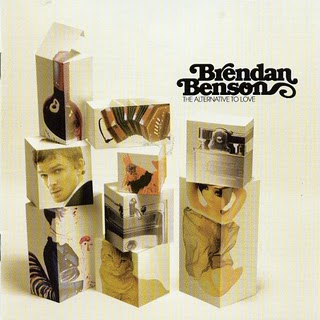
BRENDAN BENSON HEDGES AGAINST ‘LOVE’

FOREWORD: Versatile instrumentalist-composer-producer Brendan Benson was not only excited by the prospects of ‘05s The Alternative To Love when we spoke, but also the new indie rock supergroup he helped integrate with White Stripes luminary Jack White and the Greenhornes’ ace rhythm section. Together, as the Raconteurs, the decisive quartet sired ‘06s excellent Broken Boy Soldiers (with the readymade knockout “Steady As She Goes”) and ‘08s less thrilling Consolers Of The Lonely. As of ’09, the Michigan native had moved to middle Tennessee. A new solo album with backing by local Nashville cats, the Features (whose ’04 disc, Exhibit A, contained their best oddball psych-pop), is due in ’09. This article originally appeared in Aquarian Weekly.

Brendan Benson’s illuminating pop consistently reveals an undeniably infectious exuberance felt throughout both quirky panoramic propulsions and, on the dark side, dusky lovelorn shimmies. A native of bucolic Detroit suburb, Royal Oaks, Benson’s finest tunes expose innermost neuroses as he gushes sentimental hygiene trying to overcome plaguing emotional insecurities and relieve relationship stress. But deep within his wound heart lies a ‘70s-prescribed medication to cure the pain of anxiety.

“My parents were young and listened to cool stuff like T. Rex, the Stooges, and David Bowie. I just like classic rock. Bowie’s a big influence, though it doesn’t show up in my music. I didn’t really get into the Beatles til after my first record, One Mississippi. Then, I got seriously into them,” Benson claims.

One Mississippi compatriots, producer Ethan Johns and ex-Jellyfish soloist Jason Falkner, not only had a profound influence on Benson, but also helped him find comfort finagling the gadgetry and gear that’d soon bedeck the pop-rooted multi-instrumentalists’ home studio.

“I loved Jason’s demos more than his band recordings. I felt honored to work with him. Ethan was more of a studio head. I was interested in recording music and wanted to make my own records. He taught me how to for about a year. Maybe next time I’ll go to a proper studio, but I’ve recorded the last two alone in my own home studio,” Benson volunteers.

But first, Benson had to deal with the depressing fact that major label, Virgin Records, dropped him soon after his debut tanked commercially. So following an extended six year hiatus, he finally returned with ‘02s critically celebrated Lapalco. Thoughtful melancholia, impeccable licks, and swelling keyboard passages add brilliant coloration to this significant achievement, highlighted by the motorvating guitar-driven workout, “Good To Me.” Soon, good news was on the horizon in the form of a contract with lauded V2 Records.

“The only big difference between Lapalco and the new record is I wrote and recorded The Alternative To Love relatively fast. It took five months compared to four to five years. Lapalco was basically a collection of songs whereas the new one is more focused and reflects a shorter period of time,” he admits.

‘05s The Alternative To Love opens with the urgent melodic guitar burner, “Spit It Out,” possibly Benson’s perkiest, hook-heaviest riff romp, which by the way, compares favorably to respected Jersey tunesmith Ted Leo’s best bristling rockers.

The gracious one-man-band explains, “I wanted to set the tone and come out with a bang. I’ve always tried to make songs sound like a band instead of some guy doing a singer-songwriter thing.”

An orchestral Baroque flare embodies “Biggest Fan,” where spindly harpsichord counteracts woodwind-like synthesizer affects. Sturdily uplifting pop nugget “Get It Together” is simply a perfect Big Star re-creation somehow reminiscent of other lost ‘70s oddities such as Jay Ferguson’s “Thunder Island” or Emitt Rhodes obscure self-titled masterpiece. Wistful acoustic yarn “Cold Hands (Warm Heart)” finds Benson beggin’ for a second chance at love, utilizing synth-topped toy xylophone for extra melodic texture. And uplifting sugar rush “Feel Like Myself” adapts the Cars new wave synth vroom for aggregate durability.

When told the salient “Gold Into Straw” recalls the Soft Boys crisply whimsical neo-punk rush, Benson excitedly exclaims, “I love Robyn Hitchcock but never thought that song sounded like his old band. Lyrically, that deals with nonsensical searching. Its stream of consciousness is like King Midas in reverse.”

Then, there’s the naïve uncertainty underlying the chiming early ‘60s Wall of Sound knockoff, “The Pledge,” which employs programmed castanets and sampled tubular bells to intensify the resolving notion: ‘maybe I’m just damaged goods/ maybe you’re just a babe in the woods.’

Benson recounts, “The idea for a full-on Phil Spector arrangement came from Chris Shaw, who originally mixed it. We didn’t use the mix he did, but the concept was his.”

Wandering the dark end of the street contemplating marital bliss, “What I’m Looking For” quests for domesticity while surviving life on the road.

“There’s that conundrum where part of me wants a tamer lifestyle and the other side is wild and doesn’t want to settle down. But it’s not an option now. I’m touring and it’s never ending.” He adds, “When you can’t have something, like a regular home life, it becomes super desirable. But I’m a big complainer so it’s the perfect excuse to write a song.”

At Manhattan’s Bowery Ballroom in April, Benson, longstanding touring drummer Matt Alijan, bassist Michael Horrigan, and guitarist Dean Ferita executed spot-on interpretations of new and old repertoire. Displaying an entire spectrum of original contemporary content, the combo broke into International Submarine Band’s obscure “Stronger” mid-encore, bringing forth the same ‘60s roadhouse spirit that early Gram Parsons outfit once did.

Despite traveling the country two-thirds of the year, Benson recently found time to produce tracks for Cincinnati garage-rockers the Greenhornes. But he had to leave halfway through to prepare for his latest promotional tour.

“Hopefully they’ll finish it,” he says hesitantly. “I don’t know if it’ll come out. I may not have finished one whole song. It’s a little different for them, less garage-y. They’ve expanded their horizon and become more soulful, yet there’s a poppy commercial side too.”

But the real big news happens to be Benson’s collaboration with White Stripes leader, Jack White, a partnership billed as the Raconteurs, that should yield terrific sales results a la Loretta Lynn’s White-aided triumphant comeback, Van Leer Rose.

“It’s weird, if you can imagine balancing my pop with his Blues. Sometimes it’s cut and paste or I’ll sing and he’ll do the chorus,” he points out. “Patrick and li’l Jack from the Greenhornes are the rhythm section. You can’t get any better.”

GOTTA RESPECT HEIRUSPECS

FOREWORD: Many of you haven’t heard of indie Minneapolis hip-hop crew, Heiruspecs, but they’re undoubtedly one the most thrilling live acts I’ve ever witnessed. I caught up with DJ Felix in ’04, weeks before watching Heiruspecs knock out a capacity crowd at Tribeca’s Knitting Factory. In ’08, a self-titled, self-released long-player proved commendable. This article originally appeared in Aquarian Weekly.

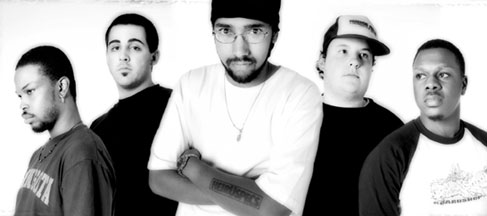
While so many hip-hop heads merely dupe ole riffs rhymes n’ riddims for suitable affectation, St. Paul, Minnesota quintet Heiruspecs create wholly authentic new beats without resorting to sampling. Formed in the ‘90s by DJ Felix and apropos-nicknamed bassist Twinkie Jiggles, at first with random musicians, these shrewd schoolboys spread rap gospel like the evangelical soothsayer their Roman moniker derives from.

DJ Felix recalls, “We started jamming in Central High School’s Jazz Room, doing improvisations – not songs per se. We thought we should organize an impromptu band. We put out a tape years ago that we hope goes away. It had bad sound quality. Our drummer (Peter Leggett), interestingly, the youngest member, played a Battle of the Bands we were celebrity judges at. His band sucked but he was great. There’s a pretty huge hip-hop scene in Minnesota. The Rhymesayers are from St. Paul. Other crews on the way up are Kancer, Unknown Prophets, and Doom Tree. I could walk from my house to Minneapolis in five minutes.”

Though DJ Felix admits having a propensity towards contemporaneous rap stars Nas, Jay_Z, and Gift Of Gab, early on his father’s eclectic taste invigorated the impressionable youth.

“I was into the metal my dad had exposed me to. But then he had Run DMC playing in his van. Those two guys rapping turned me on to hip-hop culture and opened new doors,” he recounts. “But at age seven, I had old tapes of indie rockers Husker Du. (Local hero) Prince could always be heard on the radio so I didn’t bother buying his records. The Twin City scene had many funkier bands that didn’t go too far, but provided my first exposure to the local scene. Abstract Park turned me on to regional prospects. Their member, Glorious, was a big inspiration as far as our sound goes. Then came NWA’s West Coast gangsta rap. The first CD I owned was public Enemy’s The Empire Strikes Black. I couldn’t stop listening to it.”

After Heiruspecs developmental self-released ’02 debut, Small Steps, took hold, respectable label, Razor & Tie, signed up the ambitious quintet for ‘04s progressive-minded rap attack, A Tiger Dancing. Loaded up-front with a scintillating barrage of diligently detailed joints, the crucial set eases into incisively uniform latter fare such as the sanguine “Positions Of Strength” and its cello-tinged reprimand, “Lie To Me.”

“It’s a more mature effort. On Small Steps, we were experimenting, trying to find our sound. There was more childishness,” DJ Felix explains.

Augmented by fellow St. Paul rapper (and feral human beat box) Maud’Dib and a trio of sterling instrumentalists, Heiruspecs have certainly come of age. Meatier beats, stronger opinions, and less gimmickry mark their perceptive sophomore endeavor.

Giving a shout out for brother-in-arms, Maud-Dib, DJ Felix discloses, “He’s a little older, but lived in the same neighborhood for a long time. He was always into music and came from more experimental hip-hop outfit, Twisting Linguistics. He pushed himself to do things others hadn’t done. The vocalized scratching element came out of that.”

Dissing corporate, religious, and neighborhood corruption, the insurgent epiphany, “I’m Behind You,” shoots a poison-tipped arrow at ripe wack targets.

Defending his sociopolitical stance, DJ Felix gushes, “The concept was to examine the criminal mindset from jaywalking to flicking cigarettes out car windows to regular people of elevated status doing appalling stuff. What’s the motive? So I play the devil’s advocate, asking, ‘Did you ever notice you killed that person?’ People of high moral standing constantly screw up. I took a slightly different twist and it made me understand my own surroundings better.”

Executing engagingly scatological investigations reliant upon precise rhymin’ elocution, Hieruspec’s creative depth, sturdy chemistry, and instinctive skills cultivate hip-hop’s discreet fundamentals. Vinegar-y linguistic pugilist Maud’Dib complements DJ Felix’s dexterous tongue-twistin’ gabs while the band reticulate the duos’ mike technique. Percolating rafter-raising beep-beaten anthem “Something For Nothing” grabs attention immediately. Fresh as the morning dew and giving big ups to the Lord, lounge-y keyboard sprinkles pontificating count-off “5ves.” Written out of urban frustration, lickety-split rant “Two-Fold” lets emotion dictate style, blasting forth with a delectably bleating cadenced melody.

Live at New York’s Knitting Factory post-midnight April Fools Day, DJ Felix and Maud’Dib provide an even more profound contrast than their curious white rhythm section. While bespectacled Felix seems almost nerdy, modestly playful, and non-threatening, menacing partner Maud’Dib’s guttersnipe street pounce, serious ghetto demeanor, and quick-spit tongue-lashings sometimes recall Iceberg Slim. They rapidly exchange succinct verses, but domineering Dib’s jittery-faced verbosity, confrontational staccato declarations, and brash bravado tend to hit hardest. Plus, he motivated the appreciable audience to jump along to the climactic mid-set boogie “Something For Nothing.” Occasionally Maud’Dib sprayed unique hyperventilating human beat box affects: brassy splutters, pouty-lipped turntable scratching, and one schizoid whiny scat.

The majority of fierce solo freestylin’ takes place stage right in front of sweat-drenched Rhodes keyboardist dVRG. Meanwhile, half-ton bassist Twinkie Jiggles’ instrument looks like a toy next to his large frame and drummer Peter Leggett’s Jazz-invested patter finds the groove beneath. Phat new joint “They Are” stammers rigidly and concisely. Adding icing to the cake, Berkeley, California rap icon Lyrics Born’s seasoned guitar-bass-drum-keys combo supplemented his terrific participatory call-and-response P-Funk beforehand.

Whether live or on record, Heiruspecs deliver the goods. So watch carefully as these Minnesota ambassadors add a new chapter to hip-hop history.

DEARS IN THE HEADLIGHT

FOREWORD: A black Canadian singer in a predominantly white British-American indie rock scene, Dears mainstay Murray Lightburn sings like Morrissey and couldn’t care less if that’s obvious. Since this ’04 interview promoting breakthrough album, No Cities Left, Lightburn’s rotating Dears cast has proved to be mighty efficient on ‘06s better Gang Of Losers and ‘07s nearly-as-good Missiles. This article originally appeared in Aquarian Weekly.

Though Dears singer-guitarist Murray Lightburn had no formal training, he took reading-writing courses at Concordia University to ably communicate with Classical musicians, an important step forward considering the highly orchestrated settings his quartet greatly employ. Initially, however, Lightburn had to hire university students through an ad to construct ‘01s debut EP, Orchestral Pop Noir Romantique.

“They came through and played the parts I wrote out,” Lightburn recalls. “But I met people along the way who’d read about the band and began collaborating. It was easier to get musicians in the studio. In a way, we’re book-ending the debut with No Cities Left.”

Though the sociopolitical implications of ‘02s harrowing mini-concept EP, Protest, portend No Cities Left, the morose helplessness of “We Can Have It” and spindly acoustic manifesto “Who Are You, Defenders Of The Universe” appear to be personal, instead of bureaucratic, attacks.

Lightburn avows, “I don’t want to go too far with my politics or I’ll lose some people. If you’re singing in English, keep it simple so it’s easier to relate. You have to speak in ways they understand despite any language barrier. They aren’t gonna listen to something that doesn’t convey meaning.”

Lightburn’s utter infatuation with Morrissey proved surreally fascinating when the Dears got to open for the dark-humored idol. Moreover, the pacifistic ‘beat the crap out of me’ despair of “Lost In The Plot” conveniently dupes the neurotically sympathetic baritone bellow of his mentor. Lyrically, the whirring theatrical ascension of soaring plea “Pinned Together, Falling Apart” depicts similarly terrifying lovelorn intrigue.

“Obviously, the thing that pains me most is what humans do to each other,” he says. “As a writer, I’m trying to bring to the table suggestions for everyone to chill out, be positive and loving, not greedy. I’d like to acknowledge there’s a better me inside. I want to be patient and not react negatively. That’s the challenge of life.”

Perhaps No Cities Left’s overall disconsolate theme, paranoiac proliferation, and estranged mortality could be summed up best in the title tracks’ deceptively hopeful queue: ‘Don’t you think that now is the time to move on/ if you don’t mind I’ll just keep holding on for good.’

“We’re looking to take it to another level sonically and do things more switched-on,” Lightburn contends. “It’ll still be epic and huge, but not as abstract. Our soul side isn’t as pronounced as on other works, but if you listen to the Bar-Kays work on Hot Buttered Soul, the rhythm section is disgustingly good – and a big inspiration. “Never Destroy Us” is what you’d get if David Bowie had them backing him.”

Brass, violin, and sax pad No Cities Left’s sullen inclinations, cushioning band mates Natalie Yanchak’s eerie organ vibe, Martin Pelland’s limber bass throb, and George Donoso’s meticulous percussive plod. Slipping into the ether, swirling sleep-deprived moodscape “Expect The Worst/ ’Cos She’s A Tourist” reaches mystical proportion. Furthermore, the rainy day ambiance enveloping “The Second Part” projects comparable sad-eyed longing.

Concerning the latter, the dark-skinned frontman says, “Live, we’re doing a slower, more soulful version, like the Pixies did with “Wave Of Mutilation.” People recognize the opening chords and react, but are taken aback by the different second verse.”

At Hoboken landmark Maxwells, leather-clad Lightburn seizes control with sheer vocal force; delivering pleading testimonials and riveting caterwauled declarations with eyes half-closed to enormous applause. If this emphatic response is any indication, the Dears may just overhaul America’s unconscionably mainstream conservatism.