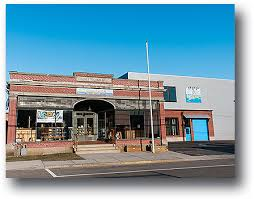
Since the original PUB DOG PIZZA & DRAFTHOUSE in Baltimore’s historic Federal Hill section (shown above) didn’t open ‘til 5 PM as of this March 2012 sojourn through Maryland-Virginia, my wife and I headed a few miles southwest to the industrial-bound Columbia-based franchise an hour earlier on the Sunday trip back to Jersey.
Situated at the right corner of the white-topped, red brick-bottomed Lakeside Retail Mall in quaint suburbia, Pub Dog may be considered a pizza joint by foremost designation, but one step inside proves it more closely resembles a commodious public house. Hundreds of Grand Marnier bottles decorate the walls alongside maps and charts of dogs, verifying the assumption.
Opened in September ’07, six years after the initial Baltimore location began operations (but didn’t sell ‘house’ beers until ’07), Pub Dog’s clean black interior leads directly to the right side sportsbar, where three TV’s show different basketball games and a shuffleboard table keeps kids entertained. A small outside deck allows dogs to roam while their owners ironically quaff a few canine-designated ales.
Sitting at one of the twelve booths in the elevated left side dining area watching hockey and downing suds, I chomped on the Big Dog Salad, a red-peppered romaine lettuce with grilled chicken, smoked gouda and gorgonzola vinaigrette. My wife enjoyed Mr. Green Jean’s Pizza (with olive-oiled mozzerella, feta, spinach, tomato, mushroom and basil) while downing Peach Dog, a tart peach ale with blanched peach lacquering, washed-out stone fruiting, astringent hop bittering and tannic grape souring.
I countered with Blueberry Dog, an easygoing lacquered blueberry tonic with subsidiary cranberry, mulberry and quince hints over white wheat.
More interesting was Belgian Blue Corn, a one-off hybrid tripel gathering lemony banana-clove tartness above sweet corn malts.
Before escaping the doghouse, velvety Irish Stout, Black Dog, hit the spot (along with a courtesy shot of Grand Marnier). The soft-toned dark ale brought mellow coffee-roasted bittering to espresso-milked dark chocolate and toasted walnut.
On February ’24 revisit while staying at nearby Columbia hotel, enjoyed creamily mocha-bound Chocolate Oatmeal Stout, combining toffee-sugared brown chocolate with nutty cocoa powdered bittering above casual molasses oats.
Reviews of the bottled versions of Raspberry Dog, Brown Dog and Hoppy Dog are listed in the Beer Index.
Off the beaten track in the Industrial section of Alexandria, PORT CITY BREWING COMPANY resides at a tan-bricked professional building. Opened January 2011 and visited in March 2012, this increasingly popular microbrewery’s tasting room was absolutely packed at 3 PM this Saturday. Hourly brew tours kept patrons busy when they weren’t sampling the four year-round ales (and one specialty beer).
Owner Bill Butcher and head brewer Jonathan Reeves craft amazingly consistent fare. Though tapped versions were sampled and reviewed herein, check the Beer Index for larger reviews of each bottled brew.
Fine Belgian-styled Port City Optimal Wit had a laid-back banana-clove serenity spread across subtle orange-peeled mildness and lemony Seltzer spritz to its honeyed wheat spine.
Essential Pale Ale layered citra-hopped briskness atop vodka-tinged mandarin orange, lemon, lime and peach illusions.
Despite its mighty moniker, Monumental IPA was stylistically easygoing and approachable. Its floral-hopped pine resin cloaked apple-skinned apricot, nectar, pear and grapefruit dalliances.
Coffee-roasted Porter settled into a fine medium-bodied dark ale, seeping brown chocolate-y vanilla sweetness into dark-fruited dried fig, stewed prune and date nut breading.
Also available at the tasting station was the cyclicalTartan 80 Shilling Scottish Ale, a dewy midrange libation gathering brown chocolate, vanilla and caramel sweetness atop spice-hopped fig sugaring.
Each beer was more than up to snuff and deserved recommendation.
One of America’s largest and most successful microbreweries, TROEGS BREWING COMPANY began in ‘97 at Pennsylvania’s state capitol, Harrisburg. But increased demand for their malt-heavy beers became so overwhelming the brotherly operation run by Chris and John Trogner had to get bigger digs. As of 2012, their well-respected suds could be found in Delaware, Maryland, Massachusetts, New Jersey, Ohio and Virginia.
Now residing in a large freestanding warehouse (fourteen miles east of its initial location) just down the road from Hershey Park since the fall of 2011, Troegs new taupe-hued Derry Township home features a yellow-backed red-lettered Troegs-canopied insignia above brown aluminum siding and railroad-bound grain silo. Servicing the local community and curious out-of-state brew hounds, its ample front porch leads to a colossal indoor depot stationing a big 100-barrel production facility, enormous tasting room, glass-encased bottling plant, microbiology lab and shop.
After buying a Troegs T-shirt, my wife and I settle in the tasting room alongside dozens of cheerful customers this sunny Friday afternoon in late March 2012. A mini-brewhouse backs the prodigious bar where one lengthy community table and several booths lodge the primed weekend crowd. The high ceilings, exposed ducts and elongated steel fan allow for a haunting echo and The Clash’s vindictively apocalyptic “London Calling” plays loudly while I order up a beer and my wife’s $3 local roast coffee.
On tap today are Troegs’ Dreamweaver Wheat, HopBack Amber, Troegenator Double Bock and JavaHead Stout. The draught version of Dreamweaver seems to have a breadier wheat-cracked banana-clove resonance than the bottled versions I’d previously tried.
Also available this crisp spring day is the marvelous Chocolate Weizenbock, a heady elixir reminiscent of a chocolate-covered cherry dessert beer. Its raspberry pureed whiskeyed cherry frontage and fig-dried sugar plum midst saturate Belgian chocolate spicing. Peculiarly, the wafting Hershey’s chocolate kiss aroma makes this medium-to-full-bodied mocha-fruited brew seem stylishly analogous to the world famous chocolate factory down the street.
As we leave to head South towards Vintage 50 in Leesburg, Virginia, an hour away, dozens of new patrons join the throng of people still imbibing pre-dinnertime drinks. The times are certainly changing. And Troegs keeps getting better and more experimental, keeping the recipes consistent despite major expansion.
Tucked away on Chesapeake Bay’s marina-bound Back Creek in Solomons Island, Maryland, RUDDY DUCK BREWERY & GRILL opened July ’09. Argentinean co-owner Carlos Yanez and veteran restaurateur Michael Kelley (formerly Tavern On the Green GM) hooked up with brewer Matt Glass to create this bustling family-oriented sportsbar and restaurant. In a freestanding building next to Hilton Garden Inn, the spacious chalet-styled edifice with brown wood trimming and red brick foundation was packed on Saturday evening as the Final Four college basketball tournament played on one of the bar’s three TV’s this last day of March, 2012.
At the wood-furnished 15-seat bar area were several cocktail tables (with engraved golden duck insignias), inlayed Western-styled flat stone partitions, exposed ducts, nautical paraphernalia, beer-listed blackboards and a left side private lounge. Behind the glass-separated white-walled bar, a huge dining area with high ceilings stretched out far and wide. Opposing the bar near the entrance, the copper kettle tanks stored the house beers and an open kitchen served the food.
My wife and I sat in the bar section eating fish tacos and Mediterranean pizza while watching Kentucky down Louisville to advance into the college-basketball finals. The seared sesame crusted tuna and artichoke spinach dip also looked good. A wonderful bottled beer selection included favorites from Dupont, Ommegang, Aventinus and Corsendonk. But I was here to try Ruddy Duck’s offerings.
While astringent lo-cal Rudd Light (with its bland lemon-limed maize parch and popcorn reminder) and gluten-freeBiere Nouveau (a light ale placing raw-honeyed sorghum across sourdough wheat acridity and sugar-free gum droplets) were humdrum, the rest of the lineup fared better.
Traditional autumnal choice, Festbier, brought leafy-hopped foliage and spoiled orange tartness to soft-honeyed Vienna malting, finishing with a sourdough splurge. Soft-tongued Helles Blonde Lager had a dry-honeyed citric blotch and wispy banana bubblegum notch.
More distinct were sweet-butteredImperial Belgian Wit, a pleasing medium-bodied wheat ale affixing clove-coriander spicing to lemon meringue and mandarin orange subtleties. And juniper hop-embitteredImperial IPA, a briskly fruited winner with honey-malted peach, pear, tangerine, pineapple, grapefruit and honeydew sweetness.
MidlevelIPAranked just below these with its dry resinous hop bittering and lemon-sugared grapefruit, mango, peach and melon tropicalia.
For dessert, I quaffed Ruddy Duck’s brown-chocolate-sweetened Oatmeal Stout, where fig-dried soy souring, coffee-roasted oats toasting and lactic alkaline acidity purged the expectant mocha malting.
There’ve finally been some steps taken to make Manhattan not only the cultural capitol of the world, but perhaps someday, the hottest brewing municipality on the planet. Granite City has dragged behind the rest of America’s incredible Craft Beer Renaissance due to ridiculous political animosity, nonsensical licensing regulations and the sheer amount of money needed to establish any restaurant or brewery on or off-Broadway. However, the landscape’s slowly changing.
Portland, San Diego, Denver, Philadelphia and many other lesser cities have more brewpubs than the largest Mecca on the universe so it stands to reason that taking a chance on going for broke would be ill-advised for now. Yet just a few blocks from lower Broadway, a well-educated entrepreneurial South American native that settled in the greatest city on earth decided against all odds to brew a few new recipes for the awaiting huddled masses.
Gaining immediate respect as both an exquisite artisanal restaurant and worthy small-batch brewery, 508 GASTROBREWERY is the brainchild of Brazilian-born Anderson Sant’anna De Lima and his Pittsburgh-raised wife, Jennifer Sant’anna Hill. Located at 508 Greenwich Street one block from the Holland Tunnel (and visited on a Saturday night in February), this Mediterannean-American hotspot opened in ’08 and by June ’11, received its license to brew on-premises (then closed January ’15). And now the usually tranquil Tribeca-bound neighborhood it services is a destination point for serious beer aficionados as well as sophisticated chowhounds.
A cozy downtown retreat, 508 GastroBrewery now joins upscale Italian-run midtown rooftop phenomenon, La Birreria, and spacious Chelsea Brewery (at West Side Highway’s Pier 23) as the only NYC brewpubs. (Heartland Brewery’s five fine restaurants strictly count as ‘beer pubs’ since brewing is done off-premises in Brooklyn.)
“We’re going to try to open a real full-scale brewery sometime,” Anderson explains as I dip into 508 Cream Ale, a sessionable saison-like hybrid contrasting a peculiarly engaging lemon-seeded orange rot tartness against honey-sugared caramel malts. “We’re not upscale. We just look good. There’s no white tablecloths.”
The San Paulo-bred gourmandizer graduated from Parsons School of Design after coming to New York in ’95. He worked for an ad agency, but became unhappy with corporate life. When he met Jennifer, the soon-to-be-married couple decided to open a restaurant in the Caribbean. Their affluent Virgin Gorda eatery was a success, but very soon into their one-year journey they yearned for the island of Manhattan.
In ’08, while chatting with friends at the restaurant, the subject of brewing came up. Jennifer heard Anderson say how much he’d love to become a brewer, so that very next month, she brought him a brew kit for Christmas.
“I remember making an Amber Ale,” Anderson recalls while I delve inside Citra Common, a crisply well-balanced ale with lightly spiced lemony orange bitterness usurping creamy crystal malts to its crackling citric-hopped finish.
He continues, “When I was younger, I drank German hefeweizens by Franziskaner and Ayinger. But my introduction to America’s craft beer movement came in ’97 when I discovered the (now-defunct) Tap Room Brewpub. It was expensive during college so I’d only go once a month. But it didn’t get the reputation it deserved.”
Though Anderson’s clearly an experienced brewer, he plans to attend Chicago’s famed Seibel Institute for a few concise courses that’ll broaden his scope.
“Education never ends,” he contends as I toss down Neves Winter Ale, a honey-spiced medium body with ancillary lemon custard, fennel and lavender notes. “I want a better understanding of nerdy stuff. I’ll spend a few weeks there and come back with an expanded level of knowledge.”
For the true beer-food connoisseur, 508 Gastro does pairings Sunday and Monday for two hours (5:30 PM until 7:30 PM) at $39. It includes three dishes and bottomless beer – so drink as much as you can.
As for the elegantly curtained interior design, a 12-seat right side bar with hanging pendant lights opposes six left dining booths. To the rear is a chef’s table snuggled next to two more 4-seat tables. Going through the busy sky-lighted kitchen down narrow stairs to the basement, there’s a private 12-seat dining room posing as a catacomb-like wine cellar. The small brew kettle setup (seven 55-gallon fermenters) recently hosted several beers not yet available at the upstairs taps or bottles.
“There’s a sour ale and gueuze readying alongside a Saison, Belgian Strong Ale, Smoked Rye IPA and Golden Strong Ale. We have to utilize space well. I also have a storage space two blocks away for bottles,” he assures me as I try the approachable tropical-fruited India Pale Ale, where sugary pineapple, mango, tangerine and melon counter midlevel piney grapefruit-peeled bittering.
Anderson admits, “Sometimes I run out of certain beer. But I never have an empty fermenter. People have really been coming for the beer. They also give feedback and know more about beer these days. There was a Northern California hop farmer in last week who gave me ten pounds of fresh hops.”
Arguably the best selling flagship beer of the week is the soft-toned Brazil Nut Brown, a moderately embittered invigoration placing peanut-shelled Brazil nut, toasted walnut and pine nut against caramelized hazelnut sweetness. And the response is likewise positive for mild Seltzer-fizzed Hefeweizen, where tranquil orange peel zest lingers above the expectant banana-clove conflux and creamy wheat-buttered malting.
MGMT’s hooky Farfisa anthem “Kids” plays in the background as I taste the marvelous Octopus with Garbanzos, a grilled seafood dish utilizing olive-oiled garbanzo beans, dried apricots, smoked paprika and pancetta. Next, the white-wined Steamed Mussels retained tender freshness.
My wife shared the pita-breaded Greek Mezze Platter, a nifty appetizer culling roasted garlic, hummus, babaganoush, olives and yogurt-like tzatziki. For dinner, she ordered the simply irresistible asiago-cheesed, balsamic-vinegared Artichoke Flatbread Pizza. My son, Christopher, enjoyed the Lobster Rock Shrimp, which gathered oyster mushrooms, pappardelle and tomato cream lobster sauce. Several homemade pastas went untried but looked fabulous, such as Truffled Mushrooms, Goat Ragu and Three Cheese & Chard Ravioli.
“The food recipes are my wife’s. She has complete freedom with her food and I have complete freedom with my beers,” Anderson points out as I dig into the fine cuisine.
At this point, he breaks out a bottled version of the truly amazing and rather unconventional Montezuma Imperial Stout, the perfect mocha-related dessert treat. Its robustly bitter coffee prominence and hop-charred black peppering (two stylistically offbeat leading flavors) overlay Mexican chocolate sweetness, creamy vanilla hazelnut swirls and espresso-milked cappuccino reminders.
The future’s bright for 508 Gastro as they’ve found the right combination of memorable edibles and impressive libations.
Anderson concludes, “I went on Beer Sessions Radio with Jimmy Carbone (owner of below-ground East Village joint, Jimmy’s No. 43) to talk about beer with Kelso Brewery’s Kelly Taylor (who concurrently crafts Heartland’s ever-increasing lineup). It’s pretty cool how Kelly handled the business end. With each Heartland location, they proved you could make craft beer in the city and still make money.”
Like some mad scientist concocting strange brews for some secret society of local hipster geeks, Jersey home brewer Robert Olson could be found boiling and toiling with experimental elixirs at his suburban Ridgefield Park domicile on any given day crafting BOLERO SNORT’S premier 2011/2012 suds. Presently employed as a consultant for a construction claims company, the hearty twenty-eight year old Bergen Catholic grad spends most of his ‘free time’ devising formulas for a diverse range of beers under bovine-sniffing moniker, Bolero Snort – one of New Jersey’s latest upstart breweries.
Working out of his modest garage, the wily wizard recently hooked up with fellow award winning zymurgist Andrew Maiorana on an adventurous journey through the wondrous world of brewing. Together, the now business partners produce a constant barrage of non-traditional, alternative-minded beer batches that take customary methodology to task, with the occasional stylistically brew tossed in.
Brew days didn’t always go as smoothly as they do now. “I made a mess of my parents kitchen with early batches,” Olson claims as he puts an India Pale Ale up for boil. “I had to bottle beers on my second date with my wife, Melanie. I had sanitized everything, but there was sweat running down my shirt. So the fact she stayed with me was impressive. She saw me at my worst.”
Unfortunately, when it came time to cap the beers, Melanie accidentally broke the capper. Now he had forty bottles of beer with no way to cap. So he simply hand-hammered on each top.
In April 2010, Olson began jotting down his own recipes. By May, he’d befriended Matt Steinberg of North Bergen’s New Jersey Beer Company. At the time, Matt was launching his brewery with a tasting at North Arlington’s prestigious beer joint, Copper Mine Pub.
“Matt was a celebrity to me and I was afraid to talk to him. What I think endeared him to me was I saved him from a conversation with some crazy chick,” Olson laughingly recalls. “Matt inspired me – and helped me realized that brewing beer could be more than just a hobby. I started building a brand instead of just winging it. Now I’m routine and practiced.”
As we settle in at the patio, Olson pours his initial flagship beer, There’s No Ryeing In Basebull (its wordy crybaby appellation stolen from Tom Hanks’ famous League Of Their Own character), one of Maiorana’s original creations. A summery soft-toned steppingstone for lighter thirsts, but yet still flavorable for the craft beer enthusiast. It’s a sessionable mainstreamer with a rye-spiced nicety, subtle orange-dried fig acridity, and earthen bottom Olson tagged “a casual sipper for boating or a day on the beach.”
Next up, the bustling brewer breaks out an abstruse peculiarity – a Mexican lager pairing mint and lime zest. Another keg-only pilot batch, we quaff the last remaining bottle he had saved of this capricious Fourth Of July celebrator labeled Cowabunga. Its fragrant cologne snip, setback lemony clove tingle and woody hop prickle dance on the tongue as Sambuca illusions reach fruition. Like all of Bolero Snort’s pilot batches, it’s not yet commercially available.
Then, there’s Apbul Cinnamon Amber, a draft-only aperitif made for the Clemson alumnus’ football tailgate party. A festive cool weather treat, its liqueur-doused stone fruiting drapes cinnamon-toasted apple sharpness, lacey cardamom-nutmeg spicing and honeyed wheat sweetness.
Better still, Wee Heifer Fruitcake (dubbed ‘the fruitcake you don’t want to re-gift’) places dried red cherry, spiced fig and golden raisin inside a citric-tinged dessert beer emulating Reisling, port and burgundy on the backend. Oak-soaked in Woodford Reserve small batch bourbon, its unassuming 9% alcohol volume provides elegant warmth.
As church bells ring out at the top of the hour and a train whistles by in the distance, Olson dips into his first true collaboration with Maiorana. “The first time we brewed together was in March of 2011 and we really wanted to create something unique to mark the occasion.” Emulating a PB & J sandwich, Brown Bag Lunch Brown Ale places Concord grape-jellied Muscat wining below an increasingly pervasive walnut-shelled peanut butter mouthfeel.
A trial batch that Olson hopes to move into a seasonal offering, Bananas Foster-style hefeweizen, Scotty Goes Bullnanas, furnishes fig-dried plantain souring to brown-sugared rum-soaked oak. He admits getting proper carbonation and residual sugaring for fruit beers becomes an obstacle for most brewers as he sour mashes an original IPA.
We then drift into his cask-like Black IPA, recently re-branded Blackhorn, where piney-sapped dried fruiting embraces dark chocolate-y caramel malts.
“The Black IPA was my first original recipe. We’ve pursued alternative ones to become our flagship beer, including today’s standard IPA, but we just kept coming back to it,” he claims as I relish in its amplified wood-charred grapefruit afterburner.
Maiorana decided early on to enroll in the American Brewer’s Guild program to provide Bolero Snort with the technical background needed to spread the upstart brewery into a full production microbrew facility. For now, Olson utilizes a plastic Gatorade cooler as a transition tank. But he also benefits from the backyard garden that provides hops, herbs and fruits for certain beers.
So far, Bolero Snort’s impressed many aficionados. Their Gingerbull Cookie won a local competition two days hence. Olson may mash it higher to add residual sugaring, but its brown-sugared gingerbread sweetness, black-breaded molasses nuttiness, and nutmeg-clove seasoning appear to be well placed.
Before leaving, Olson unleashes Cuadrilla Cocoa(Mexican Hot Chocolate Imperial Stout), a lactic-heavy intricacy plying gingerbread-cinnamon spicing to cocoa nibs, vanilla bean, dark chocolate, sarsaparilla, licorice root and most strikingly, chili peppered heat.
“A cuadrilla is a team of people helping the bullfighter. It’s sure to get people fired up,” the smiley-faced entrepreneur concludes.
For Groundhog Day 2012, I revisit Olson’s 100-year-old Victorian pad to see how the federal and state liquor licensing is going. Bolero Snort has been granted federal approval, the first step in marketing beer for sale, since outdated state laws forbid him from taking the beer off-premises even if he’s allowed to brew up to 200 gallons per year for personal consumption.
At 9 AM, Olson sets up the pilot rig while rolling the brewing equipment from inside the garage to the outside patio. He hopes to be selling beer commercially this Summer and may move his equipment to a local warehouse soon. Initially the beer will be contract brewed with Olson and Maiorana assisting on brew days and distributing Bolero Snort’s fare, but the goal is to maintain a self-run production facility by late 2013.
Today, Olson’s beginning the brewing process for Blackhorn Black IPA as well as an unnamed sessionable Extra Special Bitter – his 70th batch since April ’10. “I’m building an arsenal through creative engineering,” the finance major with a biosystems engineering background says laughingly.
“One of the best thing about the brewing industry is the sense of community among craft people leading to fulfilling collaborations. Anytime two brewers get together, different techniques are discussed.”
And great beer is usually the result. Take Bolero Snort and New Jersey Beer Co.’s world class Clarence Clemons pilot tributary, Big Man Imperial Black Rye India Pale Ale, a creamy mocha-bound full body placing maple-sapped rye graining and oats-sugared cookie dough opulence above less opulent IPA-like bruised fruiting.
At this point, Olson heads to the basement and breaks out a buddy’s newfangled homemade suds (contained in a Samuel Smith brown bottle). Brewed by North Brunswick-based Ben Bakelaar, the ‘historically accurate’ 1776 Porter brings peat-malted dried cocoa and black chocolate to hop-charred nuttiness. It’s simply delicious and always nutritious.
As I make my way out, the sun’s shining on Olson’s fairly large frame. The future looks bright for Bolero Snort. And there’s plenty of beer geek insiders who already know they’re on the loose.
Connecticut may not get the same respect its New England neighbors receive, but there’s a few wonderful Constitution State breweries competing favorably against the best public houses dotting Massachusetts, Vermont and New Hampshire. Besides five decent Southport Brewing franchises, Granby’s upscale sportsbar, Cambridge House, New Haven’s fabulous pizza-brewpub, BruRm @ Bar and Hartford’s terrific City Steam deserve plaudits.
On my January ’12 trip, I reinvestigated one of the best Northeast brewpubs and another one just getting restarted under an Irish banner. The former, WILLIMANTIC BREWING COMPANY, serves a quickly rotating selection of finely detailed handcrafted beers alongside fine food. The latter, TULLYCROSS recently changed hands from John Harvard’s affiliation to craft its own likable libations.
Growing up in Bridgeport during the Seventies, entrepreneurial Willimantic brewmeister David Wollner discovered microbrews when visiting his older brother at New York University. There, he was introduced to Samuel Smith Taddy Porter and Aass Bock at nearby Bleecker Street’s Peculier Pub.
Afterwards, he entered UConn, became an early Sierra Nevada Pale Ale supporter and bought a homebrew kit. When a local general store started yearly amateur brewing competitions, Wollner tried his hand.
“The critics wrinkled their noses at what tasted like carbonated cider,” Wollner recalls as the Allman Brothers play in the background. “The judges said next time double the malts, cutback sugar and add fresh hops. The next few years I won with a stout, old ale and pale ale.”
In ’88, Wollner met his wife, Cindy, and by ’94 they’d open a full service restaurant and craft beer bar with 16 taps led by Shipyard, Samuel Adams and New England brews. Christened Main Street Cafe, the pair slowly convinced Bud-Coors-Miller drinkers to try microbrewed pale ales.
Then, he found the boarded-up, water-damaged post office that’d be a local sanctuary for hardened beer enthusiasts. By ’97, the spacious Willimantic Brewery would open and thrive, becoming a true destination point.
Though Wollner still enjoys a brisk pale ale or hoppy IPA, he’s currently enamored with saisons and funky sour ales. His assistant brewer, Ben Braddock, helped make the varietal Summer of Saison special. Six different summer beers came from one saison yeast strain, including a Belgian Double IPA and Saison Noir. The duo also did a delicious propagation batch with Saaz hops, Simon Saaz-On. Then came well-received Flower Infusion, utilizing hibiscus, rosebud, chamomile, galanga, and wildflower honey.
At age 50, the seasoned owner-operator realized the long hours were taking their toll. So he allowed Braddock to take the reins on a few recipes. A current Thomas Hooker associate with a production background, Braddock helps organize, take inventory and brew on-site.
“I was invited to go to Boston’s Extreme Beerfest, but failed to fill out the $200 Massachusetts license form. I’d donated beers for years and got invited as a guest but was left with a special beer from an old English homebrew recipe,” Wollner shares. “I boiled a chicken, soaked it in the driest country wine, put in a bag with raisins, mace and clove, stuck it in the beer and let it ferment. I had ten gallons of this Cock Ale for Weird Wednesday on cask eight months later. Needless to say, Cock Ale caused trouble. ‘Pump that cock!,’ customers groaned. Some said it came with a large head. It was spicy, like a winter warmer. The chicken added some body.”
Maintaining only one constant year-round draught from the beginning (approachable mainstream moderation, Certified Gold), I’d tried 25 diverse Willimantic beers before downing another four offerings post-haste.
As I dig into my wife’s LA Smog pizza (spinach, mushroom, onions and garlic atop mozzarella-cheesed wheat-floured dough), Wollner joins us as we break into Bohemian Hopsidy. Lively lemon-seeded and grapefruit-peeled orange rind bittering and woody hop dryness contrasted its creamy crystal malting.
Chill Pilz, a feisty schwarzbier, carried coffee-roasted dark chocolate and dry cocoa above bourbon, burgundy and black cherry illusions. Described as a ‘chocolate wheat malted and hop-forward pilsner with ale yeast,’ Wollner may give it permanent seasonal rotation.
Poor Richard’s Olde Aleretained a leathery cedar-burnt mocha fruiting, allowing black cherry, red grape, raisin and burgundy to infiltrate chocolate liqueur, Godiva chocolate, Begian chocolate, vanilla, Kahlua and cocoa passages.
When Wollner’s beverage manager passed away suddenly in 2011, he made a tributary Maibock, Marge’s Meisterbrau, a wonderful honey-dried, orange-fruited, peach-licked, Vienna-malted medium body that warmly concluded my latest Willimantic journey.
Don’t miss out on this extraordinary brewpub. There’s a certain antique grandeur Willimantic Brewing’s marble columns, gothic ceilings, capacious interior and wall-bound ephemera expressly capture.
Located inside a tan barn stable with green and brown trim in a freestanding mall-bound building, Manchester’s TULLYCROSS TAVERN took over the space previously occupied by John Harvard Brewpub and had its grand opening October 1st, 2011 (but closed down November ’13).
A hybrid sportsbar, mahogany furnishings bedecked the hunter green walled interior and a rectangular oak bar served the main area and outer perimeter dining space. A new patio to be constructed in spring would’ve provided outdoor dining. Plus, a newly designed menu featuring upscale pub fare with an Irish flare was just introduced.
Like Willimantic’s Wollner, Tullycross brewer Brian Flach grew up on Sierra Nevada Pale Ale and Sam Adams Boston Lager, thereupon becoming a Dogfish ‘Head.’ After home brewing several IPA’s, an 18-month New England Brewing internship afforded the Worcester resident the chance to come aboard for Tullycross’ July ’11 soft opening. A 22-ounce ceramic mug club offered discounts and special happy hour pricing on Flach’s solid offerings crafted at the front side brew tanks.
On my January 2012 visit, it’s Tuesday Night Trivia, and following some chicken wings and quesadillas, a large crowd gathered for tonight’s 9 PM contest. While digging the scene, I tried four year-round libations, a nifty winter stout and a Belgian IPA.
Eric Burdon & War’s cryptic “Spill The Wine” played as I revisited Tullycross the following day to meet with Flach, who promised a cream ale, German altbier and sundry IPA’s in the near future.
As for today’s beers, I started off with Tavern Light, a Kolsch-styled sourdough softie with citric esters, rice niceties and popcorn buttering that’s just right for indiscriminate pilsner fans as well as bolder folk better suited for the next three ales.
Best selling Tully’s Irish Red retained a bigger body than most stylistic competitors, bringing amiable red-fruited spicing and caramelized wheat-honeyed cereal grains to a stable earthen bottom. Better yet, TCT Pale Ale had a heady IPA-like wood-toned grapefruit rind bittering and tangy peach-tangerine spicing.
“If you’re gonna drink a pale ale, why not go to an IPA,” Flach said. “It’s made hoppier for our customer base. But there’s not a lot of alcohol.”
Next up, Flux IPA #8 saddled subtle yellow fruiting with spiced hop bittering.
Flach contends, “All Fluxes have different hop profiles but the grain bill generally remains intact.”
Another Tullycross standard, Silk City Stout, maintained a soft cask-like chocolate creaminess, malt-smoked hop char, vanilla sweetness, dewy peat resonance and peanut-shelled cola-walnut conflux.
Likeminded Siberian Winter Imperial Stout doused Christmastime cinnamon-toasted gingerbread spicing atop oats-toasted dark chocolate, nutty coffee, black cherry and raisin notes.
Though not in regular rotation, mildScottish 80 Shilling plied toasted cereal grains to peat-y earthiness in an approachable manner.
But the best bet may be hybrid Convergence Belgian IPA, where white-peppered basil, thyme and peppercorn regale lemon-dried orange rind bittering, snippy juniper piquancy, tangy peach-pineapple sweetness and buttery crystal malting.
“Convergence was a collaboration with New England Brewing, whom I’m still good friends with,” Flach affirms. “They were happy to oblige. They make 668 Neighbor Of The Beast. We borrowed their yeast strain and hopped it up.”
In a freestanding gray colonial edifice in the rural northern Connecticut town of Granby lies a reliable upscale sportsbar with a fine rotating house beer selection and respectable pub fare. Opened in 2005, CAMBRIDGE HOUSE was originally journeyed by my wife and I in January 2012 during a two-hour afternoon lunch stint.
Entering the sylvan two-storied restaurant-brewery through the back deck rear entrance, a silver-clad painted stallion welcomes patrons to the mid-sized mahogany-furnished first floor space. A rectangular bar (fronting glass-encased brew kettles) serves left side and rear tables as well as the outer perimeter dining area of the attractive public house. Several TV’s surrounding the bar offer full-time sports coverage.
I munched on the Cobb salad with bleu cheese and my wife, Karen, chose the Tomato Florentine pizza. It’s worth noting that over 50 different house beers have been served since Cambridge House originated. And there were six available on my visit.
On the light side, Copper Hill Kolsch retained a crisply clean light-spiced yellow fruiting, straw maize dryness and carbolic Seltzer fizz. Though recommended to lite beer fanatics, all others should skip this and proceed directly to the better options.
A generous dried fruiting eased into the next four offerings.
Glass-sugared fig spicing and earthen gourd gripped trusty ESB.
Apple-spiced sugared fig overlaid the sour nuttiness sidling Pigskin Brown.
Stewed prune, dried cherry and sugar plum embossed Farmer’s Daughter, a fruit-wined Biere De Garde worth a second look.
Fig-soured green raisin and hop-roasted chocolate spicing enveloped Ominous Forecast, a veritable schwarzbier.
Another interesting libation, Stonehenge, an English strong ale, gathered peat moss, cola nut, red grape, sweet potato and smoked malt illusions.
Streets were filled with Mummers regaled in stage getup who’d finished their Broad Street parade route when I got to the FARMERS’ CABINET, a new Walnut Street saloon (opened St. Patrick’s Day, 2011) named in honor of an ancient agriculture handbook. A uniquely gothic gastropub, it serves “the most diverse collection of European craft beer in Philly” alongside a few indigenously “primitive field” beers emulating from an urban farmhouse nanobrewery down in Arlington, Virginia.
The brainchild of Lehigh University graduate Matt Scheller and married couple Matt and Colleen Swartz, Farmers’ Cabinet also boasts a tremendously original cocktail selection and creative farm fresh menu that includes cured meats and bread made in-house. Originally, the three Pennsylvania-based entrepreneurs had varied success with similarly schemed endeavors initiated by Emmaus’ gothic candlelit Euro pub, Tap & Table, and its twin offspring, Bethlehem’s beer-intense Bookstore Speakeasy cocktail lounge and East Falls’ two-storied Old World-styled Fork & Barrel.
“All those places were steppingstones and building blocks to get into Philadelphia with an equally intense cocktail program with great beer and food fused to the former concepts,” Kutztown native Scheller explains. “We were going for a 19th century Victorian saloon feel with the sparks of elegance – yet ruggedly rustic.”
Heavy curtains drape the burlap-sapped wood planks of Farmers’ Cabinet, where the left side European Beer Hall-influenced communal table welcomes interaction and its opposing cocktail room recalls Prohibition Era speakeasies. A vast array of European beers handpicked by Scheller on international travels age in a temperature controlled cellar storage area. Snooty beer geeks and curious ale hounds will be knocked out by the large amount of hard-to-find one-off brews originating from Italy, Belgium, Denmark, Germany, England and all points between.
“The goal is to provide topnotch obscure beers from small European breweries,” Scheller says. “The biggest concern is spoilage. The health of the beer is important. There’s concern for delicate moderate-bodied beers. Bigger, more robust beers, such as stouts, could sit for awhile and it’s not a major concern. If I think a beer’s been sitting too long, I’ll try it myself. However, most beer’s made to be consumed fresh. There’s a whole different pay scale for several rare bottles, like with fine wines, but they seem to go pretty fast.”
During August ’11, Farmers’ Cabinet hooked up with meritorious brewer, Terry Hawbaker, whose phenomenal craft beers at Williamsport’s Bullfrog cannot be understated. Now working out of a 5-barrel urban farmhouse nanobrewery in Alexandria, Virginia, the talented brewmeister’s trend-setting adjunct saisons have become all the rage in Philly.
“Terry’s currently working on developing a beautiful house yeast to cultivate a really cool sour ale base for blending with other beers. We’ve also gotten invited to Copenhagen’s Beer Celebration in May. Top American brewers will include Port, Hoppin’ Frog, Jolly Pumpkin, and Hill Farmstead alongside many heavy-hitting Europeans,” Scheller revels.
Upon my mid-afternoon sojourn, four worthy saison house beers were available to peruse while sipping a delicious bowl of creamy squash soup. Suitable Ragtime, Delta Blues and Cabaret music played in the distance of this Classical pub as I dug into soft-tongued Autumnal Saison. Utilizing seasonal pumpkin to lacquer lemon-soured citric hops in an unobtrusive manner, the contrarily spice-less libation went well with the delectable gourd broth.
Lively perfumed citrus hops enlivened the earthen barnyard rusticity of smoothly soothing session beer, Field Hop Grisette, where herbaceous white peppering surrounds lemony fig-dried melon wisps. Essentially a lighter saison with impulsive Extra Special Bitter properties, its not far removed from Farmers’ Cabinet’s regular grisette, a lightly tart Berliner Wiess hybrid.
Moving on to the two dark ales, soft-flowingImperial Holiday Porter dumps 50 pounds of pumpkin and sweet potatoes upon hop-oiled coffee acridity and musty chocolate chalking, gaining cherry-dried pumpkin puree illusions over time.
Labeled a hybrid Belgian dark ale, D-Rye Field Stout brought marble-breaded chocolate rye, coarse cola nuttiness, funky earthen musk and pine-burnt wood char to tart dried fruiting. Scheller acknowledges the first batch was not nearly as wood seared and the second batch “got a lot dryer.”
To further experiment with house beers, Hawbaker’s Virginia brewing facility recently installed eight separate 10-gallon vessels in order to test different hops, flowers and woods in certain saisons.
Those who are looking for an abundance of rare European beers or well-crafted specialty house beers will embrace this dimly lit antediluvian public house.
Upon my second stopover at caberet-styled speakeasy, THE FARMERS MARKET, my wife and I stick forks into syrupy Farmers French Toast (with cinnamon, vanilla, honeydew and cantaloupe) for brunch on this blustery December ’12 winter’s day. Sitting amongst the community tables behind the main left side beer bar, we get entertained by aged-in-the-wool bluesman Shaky Lymon, who goes thru four generations of tunes from Robert Johnson, Elmore James, Buddy Holly and Jackson Browne (a snickeringly deranged cover of “Cocaine”).
The pamphlet-like Winter 2012 menu features fascinating cellar-aged beers by renowned gypsy brewers as well as worthy tapped selections from Belhaven, Bells, Founders, Haandbryggeriet, Porterhouse, Pretty Things, Sly Fox and Weihenstephaner.
Attentive barman Dave Winward quickly hooks me up with a fascinating collaboration between Europe’s St. Feuillien and America’s Green Flash called Biere De L’Amitie, a Belgian strong pale ale bringing herbal citric-peeled sour fruiting to rye-smoked black chocolate malting. On tap, its lemony orange-peeled bittering sidles tart kumquat, papaya, crabapple and pineapple illusions above pine-nutty fern leafing.
Next up, Het Sas Christmas Leroylacked seasonal specifity, but not character. On tap, the hybridized Scotch Ale brought vague Christmas spicing to a Belgian dark ale styling, padding its wayward brown-sugared cookie dough center with pallid grape, cherry and cola nut illusions. But a better selection was just ’round the corner.
At this point, brunch is done and I choose one of the finer international bottled selections. Renaissance Elemental Porter, a dark, rich and mellow dry-bodied New Zealander chock full of black chocolate-smoked malts, roasted coffee bean bittering, sour-milked cocoa powdering and peppery-hopped Baker’s chocolate tartness really hit the spot as a dryish dessert.
Ancient cocktail recipes from London’s Ritz Hotel and Harry’s Bar in Paris (circa 1920’s) and NYC’s Holland House Hotel via 1880’s will get boozers going. And the fine wine selection’s aimed towards true connoisseurs.
To start off New Years Day, 2012, visited Philadelphia’s TRIUMPH BREWING ‘round noon (closed in 2014 and sold to 2nd Story Brewing). Located at the Olde City district just up the street from Penn’s Landing near the banks of the Delaware River in a former paper mill, this pleasantly rustic restaurant-bar had a looser atmosphere than Triumph’s New Hope and Princeton franchises.
Opened April 2007, the red-bricked neighborhood bar (with beige window frames and door) features a 15-seat right side bar, private white-walled booth, small rear stage and left side dining area with neo-mod ‘60s wood furnishings. Upstairs, the wood-floored space has a banquet room, glass-encased business room, 8-seat metal bar and silver brew tanks.
Both TV’s at the bar had the Eagles-Redskins football readied as I consumed a few previously untried libations. Winter Bock, a higher octane version of Old City Lager, scattered sourdough yeast atop herbal-tinged lemon rot, clover-honeyed orange tartness and boozy Courvoisier illusions, receiving an ancillary Extra Special Bitter-like fig-date astringency after a few sips.
Dry-bodied Holiday Ale- Caskbrought wafting peat to soft fig-cherry acridity and hop-oiled roasted chocolate.
Seasoned beer drinkers may lean towards Rauchbier, a perfume-wafted, beechwood-smoked German-styled dry body topped with a sharply hop-spiced pepperoni pizza crusting that’s perfect complementing barbecued meat dishes.
Others may reach for the less astringent Irish Red, with its stoned-fruited orange tang overlaying wheat-husked cereal graining and recessive caramel nuttiness.
Inside a historic West Philly firehouse one mile south of the University of Pennsylvania Medical School lies DOCK STREET BREWERY, opened in 2007 and initially visited January 2nd, 2012. Formerly located at Logan Circle with a bottling plant nearby, Dock Street has been transformed into a vibrant brewpub taking up the entire first floor of a marble-pillared three-story red brick building (with a second floor bicycle shop and third floor acupuncturist).
Two black awnings welcome customers to the cement-floored pub, where glass-encased brew kettles, exposed ducts, several black tables and a 10-seat bar fill out the yellow tile-walled facility. An open wood-burning fire pit cooks 20 pizza varieties and the menu also features char-grilled burgers, sandwiches, wraps and calzones.
Owned by Sicilian-bred Rosemarie Certo and head-brewed by Scott Morrison (formerly of Mc Kenzie’s and New Haven Brewery), Dock Street maintains a casual café atmosphere.
The Flyers and Rangers faced off for an outdoor hockey game on the right side TV as I dabbled with six previously untried libations this cold mid-afternoon. Easygoing lemon-soured Kolsch pitted wheat-husked astringency and wood-dried undertones against tingly honey-sugared hop spices.
OMG Pale Ale placed Cascade-hopped wood dryness atop floral red and orange fruiting.
But those were merely reliable moderate-bodied preliminaries for champagne yeast-soured Bubbly Wit, a Belgian-styled double witbier with lemony banana-clove frontage, vanilla-honeyed midst, mild coffee roast, toffee hint and white-peppered chamomile-lemongrass-basil conflux.
Best sellingRye IPA was an approachable dry-bodied moderation gaining resinous earthiness above light rye breading, lemon-seeded grapefruit zest and molasses-honeyed black tea mildness.
Also retaining a viscous honeyed sweetness,Old Ale (traditional English altbier) plied brown-sugared caramel malting to a mild coffee roast and crisp tobacco-peat nuances.
For dessert, I enjoyed sessionable London-styled Man Of Trouble Porter, an espresso-milked relaxant pleating oats-toasted black chocolate with black-breaded pumpernickel and ashen hop-charred mineral grains. Too bad the highly regarded Prince Myshkin’s Russian Imperial Stout was temporarily out.
Upon revisiting Dock Street Brewery nearly a year hence during post-Christmas December ’12, I imbibed five previously untried libations alongside Alsatian-styled Flammenkuche Pizza (packed with creme fraiche, caramelized onions, applewood smoked bacon and gruyere cheese) and the busy Vegetarian Pizza (artichoke hearts, spinach and creme fraiche).
This time around, the place was packed at 8 PM so my wife and I were seated at the left side cafe table away from the TV (where a college bowl game is shown). We consumed the stylistically robust Royal Bohemian Pilsner, a Czech-like pils with efficient maize-husked astringency and dry alfalfa graining reinforcing its lemony floral-perfumed hop bittering.
Then, sociable entrepreneur, Certo, started making the rounds and saying hi to many local customers. She stops by and tells us she’s very proud of Nino’s Prickly Pear, an interestingly peculiar Sicilian-bred moderate-bodied Biere De Garde combining subtle prickly pear overtones with equally refined fig-dried plum, kiwi, mango, raspberry, watermelon and papaya illusions skirting alcohol burnt bittering.
Another Euro-styled tropical-fruited delight, Black IPA, brought chocolate-spiced Belgian yeast and malt-roasted black rye to fig-sugared pineapple, kiwi and mango undertones, finishing with lingered licorice licks.
Tonight’s dark ale choice, approachable medium-bodied Little Prince Stout, packed oats-charred black coffee bittering and dark cocoa powdering onto dry stone-fruited citric nuances.
As dinner concluded, the courteous Certo gave me a bottle of elegantly sessionable, floral-citric, herbal-hopped La Biere Des Amis Saison to take home (reviewed in the Beer Index).
Before hitting the road, I settled into the ‘deceptively strong’ and devastatingly beautiful Barleywine, a velvety smooth 10% strong ale with an oaken vanilla soothe highlighting cherry-bruised banana, cantaloupe and honeydew sweetness while gaining vibrant sherry, brandy and cognac tonality.