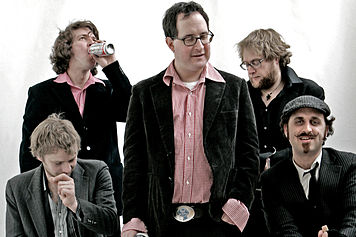
STARS HELP BOLSTER SENSITIVE MONTREAL INSURRECTION

FOREWORD: I interviewed Stars leader, Torquil Campbell, the son of Shakespearean actors, in my wife’s van, following a great Mercury Lounge set.
 
His band was in town promoting ’05 US breakout, Set Yourself On Fire. He couldn’t have been more cordial as we chatted and drank some beers. Since then, he’s released ‘06s A Little Place In The Wilderness, with long-time New York City pal, Chris Dumont (under the guise of Memphis), put out another Stars record (the ‘apoc-timistic’ In Our Bedroom After The War), appeared in movies and on television, and directed local theatre. This article originally appeared in Aquarian Weekly.
Montreal’s spectacular burgeoning music scene has been graced with some highly intrinsic literate wits composing finely wrought symphonic triumphs. The consummate compassion displayed within the scene extends beyond developing heartfelt songs, forging deep personal relationships and a common bond amongst its newly elite competitive icons. One of the brightest Canadian combos, the Stars, formed when Toronto natives Torquil Campbell and Chris Seligman retreated north following a fruitless Brooklyn sojourn.

“It’s a happy coincidence how bands like Arcade Fire, the Dears, and Unicorns got their shit together at the same time,” Campbell insists. “Chris and I felt horrible about our lives, being 26 and living in New York City. So we began recording what had become the failures in our lives up to that point. That melancholy will always be there. The first album, Nightsongs, was me and Chris in his bedroom. We had no idea what we were doing, but wanted it to be different than the miserable existence we’d led. We wanted to make a cosmopolitan, glamorous, beautiful icy blue record.”

Adorably amorous ’03 breakthrough, Heart, found these incurable dream weaving romantics hitting majestic stride quilting lighthearted odes such as velvet-y flute-ensconced serenade “The Vanishing.” An entrancing windswept breathlessness and swelteringly restrained emotionality suavely tempered the wispy grandiose subtlety.

“Morrissey wanted to sound like the New York Dolls and Johnny Marr, the Smiths guitarist, wanted to the Ohio Players. The result of it, living in England where I was as a pre-teen, gave them a connection to their elegant, rough, totally unique, energetic fragility. That dynamic of three pot head instrumentalists hooking up with Morrissey – off in a corner writing in his book – captured my imagination. They changed my perception and led to Velvet Underground, the most underrated, important band ever,” Campbell concedes.
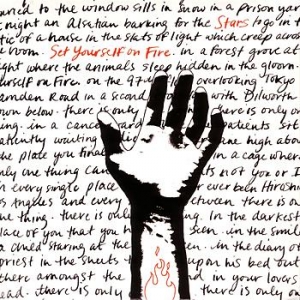
Embellished by real brass and strings, ‘05s stunningly seductive Set Yourself On Fire’s richer template allows the Stars admirable melodic illuminations to retain previous endeavors’ radiant warmth while serendipitously coaxing civic pride.

Campbell explains, “Part of what’s gone out of pop music is espousing a cause and showing some belief, even if it’s naïve and simplistic. People who know Chomsky understand it’s supposed to be emotional. Unlike artier experimentalists, Broken Social Scene, we’re tight, unified, very specific, and anal-retentive. There’s an urge to lose that, but it was like a project. We wanted to make an ornamental record put together perfectly. Now we’ll try to take chances doing other music.”

Proud to be part of “The Soft Revolution,” an inconspicuous peaceful uprising supported by fellow anti-war minstrels advocating radical nations to lay down arms for the betterment of society, Campbell and his minions profess merciful resolution. Accordingly, discordant screed “He Lied About Death” directly disses Bush’s “fascist agenda,” as Campbell’s whispered decree ‘bout ‘a devil born in paradise’ turns into a sneering jibe, ‘I hope your drunken daughters are gay!’

“We wanted to express the absolute chaos we felt the world is in, the sinister, devilish energy circulating around the world,” he offers. “The soft people who are losing must start to burn or it’s all over. Set yourself on fire, sacrifice evil and fear, before someone else destroys you. Rebel against the sons of archaic, cursed, soulless oil men doing business making millions killing people. They’re devils so divorced from society. You have to cry, sing, and be beautiful. As Lennon said, ‘A working class hero is something to be.’”

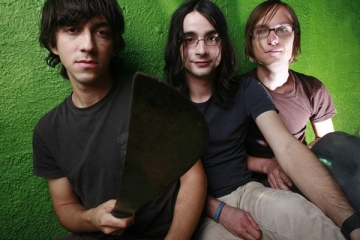
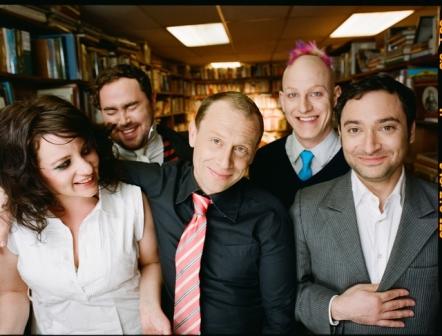
Donning a mix of casual wear and elegant attire, the Stars buoyantly furrow through Set Yourself On Fire’s many highlights with nonchalant assurance at Manhattan hotspot Mercury Lounge. Debonairly dressed Campbell mouths a harmonium or trumpet when not baring his soul. Eye-pleasing singing partner Amy Millan’s suave cat purr and feigned hip-hop maneuvers provide focal point. Friskily charismatic keyboardist Seligman reveals flamboyant flare and leather jacketed new guitarist David Ramsey applies rugged licks as weirdly head-cropped tiger t-shirted drummer Pat Mc Gee and sports-suited businessman-like bassist Evan Cranley furnish sturdy rhythms.

“I’ve known Evan since he was twelve. He was a sweet young boy who played in a Jazz group. He changed everything because he’s an amazing musician and integral part of Broken Social Scene alongside Amy. She came from a bluegrass-Country background. The mythical process of getting thoughts out of my mind, then inventing my whole little world – Heart was close to that mandate.”

Campbell may share a Morrissey fetish with the Dears leader Murray Lightburn, but both admit an affinity for prime Soul. “The Kinks were my first favorite band,” Campbell yields. “Then I felt more connected to Motown artists Curtis Mayfield and Marvin Gaye, Al Green, and black doo wop. They knew the potential and limitations of pop music on every level, played it to the hilt…and it’s sexual.”

-John Fortunato
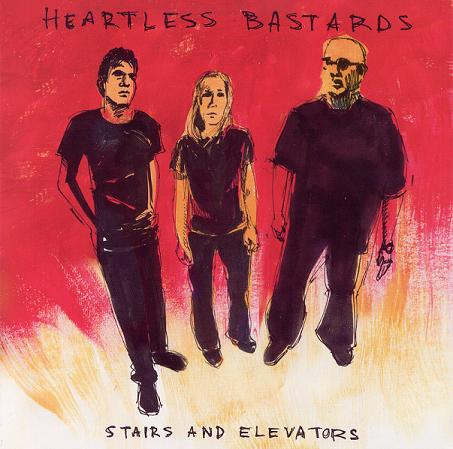
HEARTLESS BASTARDS CLIMB ‘STAIRS & ELEVATORS’ ‘ALL THIS TIME’

FOREWORD: I became friendly with Cincy’s Heartless Bastards during an ’05 tour promoting eye-opening entrée, Stairs & Elevators. Lead voice, Erika Wennerstrom, proved to be a genuinely nice person, as were her two male band mates. I remember being upset when drummer Kevin Vaughn told me respectable Cincy brewpub, Barrelhouse, had closed down (happily, it’s now a local microbrewery). I’ve included my ’06 Aquarian interview with Wennerstrom (where she promotes second album, All This Time), as well as an earlier ‘05 Mercury Lounge club date review (with Stairs & Elevators review included). In ’09, the Heartless Bastards returned with The Mountain. Before opening for seasoned high-profile troubadour Lucinda Williams at Radio City Music Hall, upstart Cincinnati trio, the Heartless Bastards, seized the stage two nights hence inside Hoboken’s hallowed backroom landmark, Maxwells.

Taking advantage of transitory headlining status, the powerhouse blues-y triad delivered a well-received hour-and-a-half set filled to the brim with tersely performed tunes from their critically hailed debut, Stairs & Elevators, and its enduring ’06 follow-up, All This Time.

Inspired by Ray Charles, Aretha Franklin, and a boatload of subordinate Rhythm & Blues sanctities, singer-guitarist Erika Wennerstrom belted out original hard rockers in a convincingly husky contralto. Always verging on the edge of despair, volatile opener, “No Pointing Arrows,” oozed with drone-y sub-Sabbath guitar-bass sludge, reaching an excruciatingly determined zenith as Wennerstrom’s cigarette-coarsened moan crept up from beneath the floorboards to way above the sympathetic crowd. Despite their loudly pungent sound and ruthlessly villainous moniker, these ‘supposed’ Heartless Bastards are actually a shy, friendly cadre, offering very little ‘tween-song chatter and assuming no postures while Wennerstrom laid bear emotional conviction.

“I didn’t really listen to rock until about age sixteen. Nobody I knew really paid attention to it,” Catholic-schooled Dayton native Wennerstrom confessed afterwards. “I’m not into church, but I’m really into (Gospel legend) Mahalia Jackson. I heard of her from a Christmas album that had “Go Tell It On the Mountain.”

By way of Gospel, Wennerstrom felt secure plying her grandiose pipes to hard luck Blues, giving a firm woman’s perspective to the weathered “Feel So Old,” a gloomy minimalist mantra done in a scruffy timbre cognizant of southern R & B practitioner R.L. Burnside – an amazing feat (especially coming from the mouth of a diminutive midwest blonde). Yet she never succumbs to mere abrasive contemptuousness, maintaining sharp-knifed certitude while bleeding sorrow and pain.

“Everybody has their own pain. I think pain is relative,” she claims, deflecting any overbearing heartache endured then transposed through anguished lyrics. “I complain about a million things that happened to me. But I guarantee there are people who’ve suffered worse.”

Perchance, one of those sufferers was influential wheelchair-bound slide guitarist, Cedell Davis, a fellow Fat Possum Records artist whose latent career found a ripened ‘90s audience after years of neglect. Nonetheless, Wennerstrom also admits to having a hankering for fellow underground Ohio rockers Guided By Voices and Braniac – two prematurely defunct outfits that toured ceaselessly not unlike these busy Bastards.

Perhaps mostly reminiscent of tragic cosmic blues figure Janis Joplin, Wennerstrom sings with the same raggedy heart-on-the-sleeve fervor and converses in a similarly elucidated fragile twanged drawl. An unadulterated urgency constantly enriches her vitally projected haunted pining. Stormy polar discontent (“so cold in the winter”) and dusky escapism curdle bewitching numbers such as “Into The Open,” where she intermittently turns to piano for somber retreat. Quite possibly, her band may have sold millions had they existed right after Joplin’s exquisite Pearl dropped in ‘70.

Thankfully, the efficient rhythm section of bassist Mike Lamping and drummer Kevin Vaughn provide plentiful gusto, safeguarding their distressfully self-effacing primary damsel to the hilt. Together a mere four years, the Heartless Bastards have already accomplished plenty. Hanging around veteran performers such as Lucinda Williams and James Mc Murtry could only help seal their fate as semi-famous subterranean homesick blues-rockers.

HEARTLESS BASTARDS TAKE ON MANHATTAN

One cold March night at cozy New York club, Mercury Lounge, blues-y Cincinnati trio the Heartless Bastards warm up a thicket of curious patrons with a durable set of supple tunes from their excellent debut, Stairs And Elevators (Fat Possum). Led by Fender guitarist Erika Wennerstrom’s huskily whined contralto, the amiable combo flawlessly ran through a flurry of resolute bittersweet lamentations ripe for the picking.

Plying her skillful fretting to sparingly swelling arrangements, the bantam blonde-headed filly belted out aching emotion-drenched lyrics that captured all the heartache and pain a dreary existence as a Dayton teen could bring forth. Meanwhile, stoic bassist Mike Lamping stood hunched over, eyes almost closed, plucking dense chords. And hefty bald drummer Kevin Vaughn, buried behind his kit, splattered blunt beats and cymbal tings, filling any empty spots necessary to complement Wennerstrom’s sepulchral tear-stained squawks.

On Stairs And Elevators, inviting opener “Gray” finds Wennerstrom spewing anguish, leaning on the distortion pedal for emphasis. She drags out vowels like vamping punk dowager Patti Smith for the tart “Onions,” seeks clear-eyed “Autonomy” overcoming ominous obstacles and childhood tribulations, and remains hopeful atop the rippling percussive patter encircling doggedly empowered “New Resolution,” all the time steadfastly spouting cautious optimism. “Swamp Song” indirectly salutes Oxford, Mississippi’s rudimentary Country blues men, such as fellow label mates R.L. Burnside and T Model Ford, with blustery axe wielding tumult and adroit rhythmic execution. Similarly, lowdown hoedown “Done Got Old” leans closer to nearby Appalachian mountain folk tradition. Fans of the Heartless Bastards previous tour buddies, the Black Keys and Drive-By Truckers, will not be disappointed.

-John Fortunato

HOLD STEADY ROCK STEADY ON ‘ALMOST KILLED ME’

FOREWORD: After this ’04 piece, promoting Hold Steady’s sturdy debut, Almost Killed Me, Craig Finn’s Brooklyn-via-Minneapolis troupe became all the rage amongst underground pundits. I wanted to do an article on them for High Times, seeing that Finn is such an ardent pro-marijuana advocate, but got denied permission. Since then, Hold Steady increased their fan base with excellent follow-ups such as ‘05s pharmacologically conscientious, Separation Sunday, ‘06s exhilaratingly loyalist, Boys And Girls In America, and ‘08s broadened prospectus, Stay Positive. This article originally appeared in Aquarian Weekly.

Singer-guitarist Craig Finn tries to keep it real compared to what used to be before disco and punk exploded around 1977. Along with former Lifter Puller pal Tad Kubler, the Minnesota native originally assembled the Hold Steady on a whim to play vintage hard rock instrumental snippets for a New York improv comedy troupe. Now married and living in the Big Apple, Finn left behind his frigid Gopher State confines to explore “the big glamorous city” he had always fantasized, finding full-time work for a digital distribution company coding music.

After attending suburban Catholic institute Boston College in the ‘80s, an educational facility neighboring his Beantown birthplace, Finn returned to Minneapolis, finding comfort following the same respected underground bands he loved as a confused adolescent: the Replacements and Husker Du.

“I was into hardcore and punk. I went to many exceptional local concert events that would affect my future endeavors. There was definitely a lot of pride in that area,” he recalls. “There was a lot of personal stuff to deal with when I went to high school. But it was a cool time to grow up in and seemed like a logical place to base my songs.”

Though Lifter Puller maintained artier aspirations and barely gained a foothold beyond the wintry Land of 10,000 Lakes, the Hold Steady proved to be more approachable, straightforward, and thankfully, just as intense, establishing a truly mesmerized nationwide audience. Lifter Puller, over the course of three increasingly illuminating albums, reached their zenith on ‘00s garrulous Fiestas Fiascos, an utterly profound manifesto digesting an oddball cornucopia of mangy drug-fueled characters that’d appreciably inspire impending ventures peering into the soiled subterranean deluge shrouding mind-fucked gangsters, shady ladies, and liquored-up lowlifes.

Finn confesses, “Fiestas Fiascos was so much better than the others. The first one especially, where we made a generic indie rock record too soon. But the more we played together, a certain stylistic efficiency developed.”

Settling in New York City, Finn reconvened with fellow guitarist Kubler, plus bassist Galen Polivka and drummer Bobby Drake, to deliver the Hold Steady’s ruggedly impulsive zeitgeist, Almost Killed Me, an ambitious tour de force these humble Midwesterners never envisioned as the colossal breakthrough it’d quickly become. Immediately, the keen ’04 debut received gushing mainstream press glorifying its frankly detailed barfly portrayals.

Finn’s piercingly reflective narratives, verbose road tales, and seedy urban blueprints toiled as stark American travelogues capriciously intersecting arena rock bombast, punk-addled belligerence, and prog-rock elocution. His charismatic resplendence recaptured the unbound recklessness, party hearty revelry, and delinquent tenacity of the ‘70s Me Decade. Gladly acknowledging Bruce Springsteen’s extensive impact, he concocted heartwarming recollections and eminently quotable lines to don feverishly intuitive novellas.

Almost Killed Me’s vexing opening salvo, “Positive Jam,” offers cocksure determination in the face of perilously indignant domestic memoirs, serving as a semi-sarcastic revisionist history lesson descriptively reconciling the ravaged war-torn greed-impeded savagery abrasively blanketing the otherwise vanguard United States during the industrious 20th century. Moving into the present, Finn showers down sociopolitical acerbity on the existent amphetamine dilemma “Knuckles,” daringly tackling the harsh issue of chemical dependency facing modern post-teen rebels with snickering cynical jargon: ‘I been trying to get people to call me Freddie Mercury, but they keep calling me Drop Dead Fred.’

“There’s some defiant double entendre going on there. Crystal meth has ravaged Middle America. When Lifter Puller played Iowa shows, it was scary how wide the problem had become,” Finn explains.

Elsewhere, hard rocking derision “The Swish” amplifies disingenuous Beverly Hills decadence. Smirked barroom memento ‘Barefruit Blues” beseechingly bellows ‘half the crowd’s calling out for “Born To Run”/ the other half… “Born To Lose”/ maybe we were born to choose.’ And pithy piano underscores the railing guitar workout “Certain Songs,” highlighted by an expressive lyrical excursion insinuating Greetings From Asbury Park.

The inceptive schematic plot, a vital stab at appeasing ‘70s-assuaged neuroticism, gets convincingly consummated on ‘05s superior Separation Sunday. Surpassing the sparer predecessor by introducing a veritable boon of intriguingly deranged caricatures with deeper newfangled personality crises, the Hold Steady’s bittersweet emotional anecdotes steadfastly refuse dilution. Beginning with the growled vestige “Hornets! Hornets!,” these recoiling ambassadors of archetypal classic rock display a contagious enthusiasm name-checking displaced vagabonds and transitory locales.

Despite its glaringly reverential title, the pining ‘seventeen forever’ remembrance, “Stevie Nix,” only offhandedly references the vampish Fleetwood Mac singer, whose surname is resolutely misspelled. But the anecdotal twists therein depicted provoke a forlorn solicitude romanticism ever so closely related to Springsteen’s kaleidoscopic “Rosalita” rap strewn across pounding piano runs and a stammered guitar beat forebodingly retrieved from The Who’s stinging inquiry “The Seeker.” Incidentally, the elongated folk-rap passage “Your Little Hoodrat Friend” melds the same hyperbolic exhilaration atop chilly organ rejuvenation, utilizing the carnival-esque buildup Meatloaf borrowed from The Boss for hyperbolic exhortation “You Took The Words Right Out Of My Mouth.” Astonishingly industrious boogie rumble “Chicago Seemed Tired Last Night” places jukin’ guitars above flashy horn blurts while the penetratingly sturdy “Banging Camp” resurrects Thin Lizzy’s celebratory sonic guitar clusters. Straggling adrift trekking the continent ‘high as hell,’ the compelling “Multitude Of Casualties” ultimately proffers rebirth.

Finn explains, “Most of my songs come from altered composite sketches meshed together. That’s a vision quest about a young girl who leaves an unspecified big city, travels the country with a guy as a troubled youth, then disappears. When she comes back, she’s born again.”

When told that the Hold Steady’s story songs also invigorate comparisons to a northern version of Drive-By Truckers sagaciously fulsome chronicles, Finn’s eyes light up.

“I’m amazed by Drive-By Truckers. Their album, Southern Rock Opera, took me back to a pre-internet time when bands had a mystique,” Finn opines. “When Led Zeppelin would come out with a new album, nobody had a clue what it’d sound like ahead of time. There were no press clippings or informative interviews given beforehand. I had to try to figure out what REM’s Fables of the Deconstructive was about on my own. Nowadays, there’s always a pre-release buzz since artists have websites.”

R.I.P. HUNTER S. THOMPSON

‘Gonzo’ journalist Hunter Stocton Thompson committed suicide in his Aspen, Colorado ranch home February 19, 2005. Cleverly installing himself into many semi-fictional plots adventurously undermining sociopolitical ideologues, the drug and alcohol-addled, aviator glass-wearing gun enthusiast wrote several audaciously satirical novels, such as Generation of Swine and Fear And Loathing In Las Vegas (the film version starred Johnny Depp). An acerbic counterculture icon whose inceptive 1959 book, The Rum Diaries, wasn’t released until his popularity peaked in the ‘70s, Thompson will undoubtedly be remembered for thumbing his nose at ambiguous traditional beliefs.

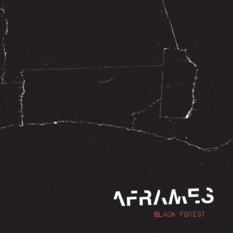
A-FRAMES ABUT NOISY GUNK TO ABSTRACT ART ON ‘BLACK FOREST’

FOREWORD: Where the fuck’s the follow-up, dudes? That’s the question I’d ask the A-Frames, whose ambitious ’05 album, Black Forest, kicked open shuttered doors with a loud bang. Can hardly find shit about them on the internet, ‘cept some guy saying Sub Pop Records is sitting on some unreleased recordings. I’d call the label, but I’m afraid they’d say the band broke up. This article originally appeared in Aquarian Weekly.

A-Frames guitarist Erin Sullivan first became infatuated with schizoid Texas punk while attending Colorado State University with Scratch Acid guitarist Brett Bradford, who turned the local Greeley native on to the Lone Star State’s rabid hardcore scene. Soon after, Sullivan migrated to the northwest, where he fortuitously met compatible music collector geek Min Yee and instrumentalist Lars Finberg in Seattle. The trio shared an affinity for experimental rock’s unconventionality and decided to form the A-Frames as an investigative project impulsively exploring beyond the restrictive three-chord fringes of readymade indie pop. As keen-witted neo-punk descendants, the A-Frames made sundry limited edition singles and an ‘02 long-play debut, followed by the more involving, plainly titled 2.

“Our debut was mostly garage-punk, stripped down and naïve. My singing is hidden through distortion and amps ‘cause I didn’t think I vocalized well,” Sullivan smirks. “It was fairly straightforward compared to 2, which is slicker, more rock and roll-y, but weirder.”

But neither foray would match the unconstrained adventurousness, awesome depth, and clear progression of ‘05s fascinatingly inventive Black Forest. A headier non-conformity creeps through its minimalist no wave idiosyncrasies, fragmentary progressive rock abandon, and bristling automaton dance rhythms. Sometimes Sullivan’s ominously unwieldy baritone intuitively rails against fascism in a roundabout way or slithers into technological blather just for jest.

“The second record hit an apex with futuristic topics telling a story and then running with it. It was the first time I wrote lyrics that meant anything. Before that, it was all rock and roll filler,” he candidly reflects.

But it was the first single for the A-Frames own boutique label, Dragnet, which initially used science and technology as topical minutiae.

“That’s when I stumbled into the idea, on the “Neutron Bomb”/ “Test Tube Baby”/ “Radiation Generation” recording. But I still get criticized for my lyrics,” he claims. “I do research to make them more fun while trying to convey a small message.”

Sullivan’s biggest lyrical influence, Stickmen With Rayguns’ perilously spontaneous vocalist Bobby Soxx, had a knack for pissed off metaphoric intrigue. His loony apocalyptic humor and descriptive visualizations countered the heaviness of his Texas bands’ rollicking freakouts. But unfortunately Bobby Soxx died a total junkie on the streets, apparently “walking the talk,” as Sullivan so bluntly puts it.

“I loved the Butthole Surfers, Scratch Acid, and Teenage Queers, but Stickmen’s “Scavenger Of Death” is such a killer song about vultures picking at a corpse. There’s a picture of Bobby at a club with a mike stuck up his ass and there’s the Butthole Surfers’ Gibby Haynes, age 16, laughing hysterically in the background.” Sullivan excitedly adds, “Min scrounged up some hard-to-find Stickmen stuff and I’d bought the Texas hardcore compilation, Cottage Cheese On the Lips of Death. On it, Stickmen do “Christian Rat Attack.” There’s also a great early Cows tune, “Daddy Has A Tail,” which has an insane bass we’re trying to emulate.”

Captured on 8-track by perpetual A-Frames producer, Chris Woodhouse (ex-Karate Party), in a practice space where gear was brought in, Black Forest’s assemblage strangely came together piecemeal.

Sullivan explains, “We did a couple different sessions. The first ones we weren’t crazy about; didn’t like the mix. When we re-did it, Chris did a fucked up distorted mix that became (demented boogie) “Black Forest II,” with the toms. He plays the flamenco guitar on “Flies” since I couldn’t do it nearly as good.”

While the shuddering rumbled perdition “Death Train” recalls the comparatively straight-ahead tone of the A-Frames first two long-players, not to mention Gun Club’s skulking ‘psychobilly,’ Black Forest’s profound vigor relies instead on perceptively perplexing innovative designs. After an incessant Industrial clang envelops 68-second opener “Black Forest I,” a synth-derived bagpipe intro leads to elastic guitar razzmatazz and clanking mechanical percussion on curiously oblong probe “Experiment.” The ruggedly bass-bottomed volatility of “Galena” hearkens back to Mission Of Burma’s dense outré ‘80s output, but its metallic scheme reverberates more expeditiously. A medieval theme haunts “Flies,” a stationary counter-melodic duet with rad Aussie lass, Jo Clackston. Sullivan’s brawny feedback sustenance, Yee’s fuzzily psychedelic fretting, and Finberg’s punished skins frame the aggressively foreboding “Negative,” a ‘70s-styled political punk rant.

“We’re finally getting exposure. Nobody gave a shit about us. Now, our 7-inch singles sell for a fuck load on Ebay, between $40 and $90. At the time, we couldn’t get rid of them at record stores. It was embarrassing. We took time to catch on. We’re out of step,” Sullivan mulls. “Our live shows are hilarious. There’s the Chicago Blackout festival punk-porno magazine Horizontal Action does. We played with the Clone Defects and the Tirades. Somehow, we always get girls dancing up-front because our beats have a different groove than that of the punks. You know I don’t mind having girls shake their asses near the stage.”

Though signed to Sub Pop, the A-Frames maintain “a super half-ass record company venture,” Dragnet Records, which lacks proper distribution. Yet several worthy 45’s by underexposed acts like Los Huevos, Double Fudge, Piranhas, Twinkeys, and Michael Yonkers plus a full-length by San Francisco’s Vulvettes adjoin Finberg’s offshoot project the Intelligence. Calamitous Sullivan-Finberg spin-off, the Dipers, recorded ‘01s cacophonously walloped How to Plan Successful Parties on Omnibus Records with drummer Dean Whitmore.

“I’ve written a few new A-Frames songs,” Sullivan shares. “I wanna keep it simple next time. I have an urge to record on 4-track. It may be more extreme. For Black Forest, we used different source material to mix from, so the sound quality was unique, using different rooms at different times, creating dumb luck accidents.”

COACHWHIPS THRASH SUSPECTING VICTIMS ‘GINGER MINGE’

FOREWORD: Some of the best things in life just crash and burn. San Francisco’s frighteningly belligerent Coachwhips were probably destined to fast burnout due to the mayhem and friction they evoked in everyone who experienced them. Before they fell apart at the seams, Coachwhips left us a great ’05 album that’d puncture indie rock’s sleazy womb with queasy spume. This article originally appeared in Aquarian Weekly.

Bringing their energetic living room celebration directly to the club, terrorizing San Francisco freakozoids the Coachwhips would rather perform vigorously bludgeoned rants off-stage in an unconstrained free-for-all frenzied fans could experience firsthand.

A scuzzy, yet heedlessly ambitious threesome, these mangy, feedback-fueled, Californicating experimentalists evoke the Butthole Surfers primordial mind-bending scum-pop contentiousness and Zen Guerrilla’s muffled blues-scraped unconventionality. The Coachwhips mutinously tear apart customary indie rock resplendence with a raging existential ire on ’05 breakthrough, Peanut Butter and Jelly Live at the Ginger Minge (its snickering title’s an ambiguous bloodied vagina allusion).

Following an out-of-print debut, Handle The Controls, plus ’03s 18-minute Bangers & Fuckers EP and the remoter Get Yer Body Next ta Mine, original architect John Dwyer (a Providence native) split with fellow conceptualist John Harlowe, but retained the unbridled distortion-laden intensity belying the Coachwhips finest whiplash implosions. Newcomers Val-Tronic’s spastic keys and Matt Von Hartman’s crushing percussion now suffuse guitarist Dwyer’s belligerently muzzled vocals with more extreme fuzzy sonic recklessness, strangely curdled readymade hook lines, and marvelously mutilated mayhem.

“Generally, a kernel of an idea gets expanded upon,” Von Hartman casually indicates. “John may have wrote pieces top to bottom beforehand, but now our material comes about by working a riff in practice or I’ll be screwing around with a drumbeat and whip out a song.”

Von Hartman grew up in Albuquerque, New Mexico, moved to the Bay Area in ’93, joined disjointed noise-pop outfit Henry’s Dress (“a blip on the radar”), provided alto sax in hardcore deconstructionists Total Shutdown, settled in loose Jazz improv offshoot Murder Murder, and briefly backed Chan Marshall’s provocative Cat Power. An impressionable pre-teen Kiss fan, he learned guitar to emulate those cartoonish face-painted travesties.

“At six, I’d go to local department store, Labelles, with my mother. They had a small record section,” he recalls. “I began poking through my father’s Big Band Era records, but I didn’t get much out of that. Meanwhile, my mom had a cassette collection of Neil Diamond, Carly Simon, Anne Murray, and Roberta Flack. I bought a sound affect record, Sounds Of Terror, which had a cartoon dracula with blood dripping out of its teeth. Its craziness appealed to my childhood horror fascination. On a subsequent trip to find something similar, I came across Kiss’ Love Gun, with its monster-mashed superheroes and women at their feet. When I got home I was surprised to see it was loud rock and roll. I’d put on Kiss Alive, break out tennis rackets, and jam. From there, I got into British new wave metal and picked up guitar at age eleven. I thought I’d replace Randy Rhodes in Ozzy’s band.”

Ultimately, the scrappy lo-fi garage angle taken by late ‘80s mavens the Gories and Pussy Galore would “scratch a soar itch” Von Hartman chafes on the Coachwhips 10-song, 21-minute clusterfuck, Ginger Minge. His beaten floor toms, whacked snares, and slashing cymbals anchor the messily scorched cacophony. Organ-pierced adrenaline rush “Did You Cum?,” grumbled three-chord scree “Ya Know Ya Wanna,” and contemptuously searing medical indictment “Letter 2 London” ferociously tear at the gut. Scampered apocalyptic bluster “Oops Uh Uh” perforates a festering guitar buzz while emboweled vagrant homage “What Do They Eat?” scathingly blurts ‘eat the blood and guts/ the meat of my memories.’

“We’re only gonna get noisier and dirtier,” Von Hartman concludes. “I can’t see us playing 6-minute DIY opuses. We want to keep the party atmosphere going, whether it’s a Who-Kinks vibe or another fucked up garage idiom.”

OKKERVIL RIVER ROLLS OVER ‘BLACK SHEEP BOY’

FOREWORD: Okkervil River, whose unlikely moniker was taken from a book by minor Russian novelist, Tatyana Tolstaya, creates some of the most mellifluously maudlin lamentations in contemporary music. I got to speak to Okkervil River main man, Will Sheff, during ’04, right before Black Sheep Boy secured instant indie rock breakthrough. Even better, ‘07s The Stage Names assured protracted interest in the reliable outfit. As if to prove their worth, ’08s The Stand Ins heightened the uplifting, upbeat allure above the moodier downers. In ’09, they teamed up with drug-addled psychedelic rock progenitor, Roky Erickson, for the provocative True Love Cast Out All Evil. This article originally appeared in Aquarian Weekly.

Raised in woodsy rural New Hampshire by assertive teachers, singer-songwriter Will Sheff attended private school and listened to standard issue ‘60s hippie fare, discovering Neil Young, Bob Dylan, and Joni Mitchell through his mother before delving deeper into the so-called ‘acoustical’ archives. It seems a friends’ countercultural father turned this self-described “nerdy campus brat” onto the Incredible String Band, leading him to Newport Folk Festival blues icons Mississippi John Hurt, Skip James, and more pertinently, literary outlaw Leonard Cohen. After disappointingly attending Minneapolis-based Mc Allister College, Sheff decided to throw caution to the wind, passively rebelling against higher education by forming melancholic combo, Okkervil River, with a few friends back home.

Sheff explains the origin of his bands’ flowing moniker thusly. “We were at our bassists parents’ Austin-tacious pink mansion in rural Texas. It was the shape of a cross. So we’re in this bizarro circa-‘60s side room frustratingly throwing out terrible names. I was reading Russian literature and went nuts for this grand niece of Alexi Tolstoy’s story, called Okkervil River. But it had two k’s, ended with only one l, and there was no c. I thought we should’ve changed it to Dirge Overkill since people may otherwise think we’re a Country band sitting around the porch drinking moonshine.”

Soon settling in Texas musical mecca, Austin, Okkervil River struggled to land early gigs, finally recording ‘00s formative 7-song Stars Too Small To Lose prior to signing with notable indie label, Jagjaguwar. Initiated as a demo-styled EP, the superior full-length Don’t Fall In Love With Everyone You See brought Sheff’s coterie minor underground credibility.

Stars Too Small To Lose was stark, simple, and should probably remain forgotten,” Sheff good-naturedly quips. “I’m happy with the songs and playing, but I don’t like my singing and the mastering. We’ve redone half the songs. As for Don’t Fall In Love, it’s mostly acoustic guitar, bass, and drums. Brian Beattie, an intuitive local producer, had New Hampshire relatives and may’ve approached us based on that. He helped us think about constructing arrangements and not all playing at once. That provided the enthusiasm to expand my ambitions. We tried to be lush, yet rickety, in an enjoyable way, pouring our hearts out learning to play.”

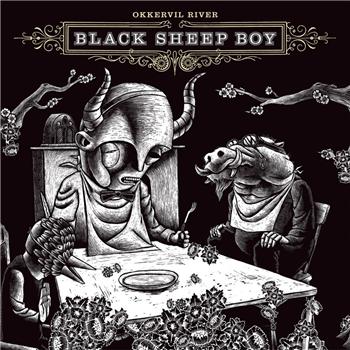
Minimalist San Francisco minstrel John Vanderslice then worked the boards for ‘03s truly accessible Down the River of Golden Dreams, which captivated high profile journalists and post-adolescent mope-rock devotees alike. Its startling pastoral imagery and mysteriously grotesque medieval intrigue matched the fascinatingly malformed artwork of William Schaff.

“Schaff’s an old friend I met through a drummer,” Sheff recalls. “He’s done art for Godspeed! You Black Emperor, Songs: Ohia, and Kid Dakota. We’d trade off making Kinko’s posters with collage clips. His aesthetic was the same as ours but effortless and memorable. I hope the art adds to my mystical approach. I’d given him increasingly detailed notes of what I wanted. Down the River focused on a water theme with its bizarre octopus-man creature.”

For ‘05s more abstruse Black Sheep Boy, Sheff felt extremely determined to further link Schaff’s disturbing images to the edgy revenge fantasies and prickly predicaments he’d designed. Sheff’s lucid intuitiveness draws inspiration from ancient post-modernist ideals, regaling in an epoch when paganism dribbled into Christianity’s vainglorious stronghold.

“I wanted to make an album which had all the songs written at the same time. It’s an attempt at straightforward wholeness. It’s also a coded account of the struggles we went through in 2004, a stormy year for me. I didn’t have a place to live, stayed on the road touring for half the year, and had some things in my life fall apart. So I wanted a messy, raw, intense record to match the times,” he claims.

Unrequited love filters the hushed “For Real,” bringing quiet desperation and echoed sensitiveness to the forefront in a manner resembling emo lynchpins Bright Eyes and Dashboard Confessional. “In A Radio Song” offers supple classical folk warmth in a gently melodious mode similar to distinguished pacific saps American Music Club and Red House Painters. But those are strictly vogue comparisons overall. On Sheff’s greatest vocal performance, “A Stone,” his cracked bari-tenor brood conquers the grandiose cold-hearted glint with utter conviction. He pretty much summarizes Black Sheep Boy’s destitute oeuvre best with grievously soured stanza: ‘I know the bitter dismay of a lover who brought fresh bouquets everyday when she turned him away to remember some knave who once gave just one rose, one day, years ago.’

“It’s a dark record but there’s tenderness and playfulness. But people may never get that and instead think I’m angst-ridden and bleak,” he chuckles. “The phantasmagoric (titular) story is submerged with rejection. Yeah…‘Look at me, I’m a tormented self-pitying person.’ Like the Smiths, some think they’re funny and clever, others take them seriously. But I love to be pretentious, wide-ranging, and epic, biting off more than I could chew. So I countered that with the overblown, pompously perverse, five syllable wording of “So Come Back, I Am Waiting.”

Assuredly, Leonard Cohen’s influence slips into the grooves. Yet it’s tragic folk contemporary Tim Hardin’s moody composition, “Black Sheep Boy,” that serves as the vindicating overture.

“I love Tim Hardin’s first three records. Heroin led him down a path of diminished returns. He became a sad train wreck. I’d admired the compact wisdom of “Black Sheep Boy.” He’d kicked heroin, went home to Eugene, Oregon, but began using drugs again and wrote that song. I identified with the sense of doing something bad, screwing up, and acknowledging it’s a personal decision.” Sheff succinctly adds, “People dive into things they know are wrong but lose themselves in the abandon despite the consequences. It’s a horrible and glorious attitude. I wrote its sequel, “So Come Back, I Am Waiting,” as a dare.”

Temporarily picking up the pace of the weary-eyed collection are the avenging “Black” and harmonically cinematic “The Latest Toughs,” scattering electric piano vibrato atop busier beat-driven arrangements. Elegant mandolin frames the dusky trumpet-saddled “A King And A Queen,” gaining a sublime violin-cello seduction perfectly suiting the heartrendingly quixotic lyrics. On the dulcet countrified duet, “Get Big,” Sheff’s croaked whisper and Howard Draper’s sonorous lap steel interval counter guest Amy Annelle’s enticingly wispy croon.

“I love duets – George Jones and Tammy Wynette; Gram Parsons and Emmylou Harris; Neil Young and Nicolette Larson. But I hadn’t coordinated the opportunity because it’s such a mad dash to get the records done. I was gonna get some famous female friend to condescend to one to give us massive sales, but I was too lazy,” Sheff laughingly divulges. “But Amy’s my favorite singer I’ve worked with. She has a fragile quality and had a cold the day we did “Get Big,” so her voice is real weak. It sounds like she’s crying.”

What Okkervil River will do next is anyone’s guess.

“Maybe we’ll do a new age record,” Sheff evidently kids.

True followers ought to seek out Spanish import, Julie Doiron & Okkervil River, an off-the-cuff 9-song dalliance with the former Eric’s Trip vocalist featuring congenial schizophrenic leftovers.

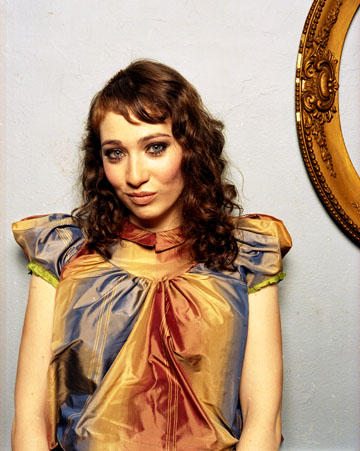
PERSPECTIVE INSPECTOR REGINA SPEKTOR’S ‘SOVIET KITSCH’

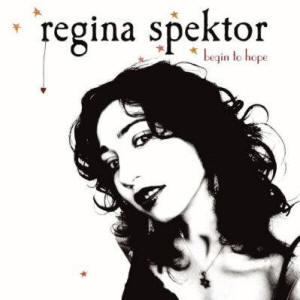
FOREWORD: Lilting mezzo-soprano, Regina Spektor, a Soviet-bred Classical pianist by trade, became friendly with future tour buddies, the Strokes, when they were making headway in 2001. Now part of the East Village’s still-thriving acoustic scene, I interviewed her just as ‘04s Soviet Kitsch caught on. By ’06, she’d return with the fine Begin To Hope. During summer ’09, her next album, Far, hit shelves and received justified plaudits.

Escaping Jewish oppression in former Soviet-ruled Russia, Regina Spektor landed in the Bronx at age nine alongside her scientist father and music professor mother. Learning Classical piano as a child, Spektor concentrated on the iconic workings of Chopin, Bach, and Tchaikovsky, but a decade thereafter the self-described “nerdy apartment hermit” with a serious jones for punk progenitors the Ramones would be exposed to Blues legends Bessie Smith and Robert Johnson while attending college.

Without a hint of sarcasm, Spektor recalls, “My first recording, 11:11, was a cringe-worthy school project gone awry featuring piano and upright bass. It was embarrassing, but people were upset I only made 1,000 copies.”

Her next project, ‘02s Songs, she claims, “was an accident waiting to happen. My friend Joe Mendelson (ex-Rise Robot Rise), part owner of the Lower East Side’s Living Room, where I’d performed, had a studio. He asked if anyone recorded my songs. Then, he had me archive material during Christmas – since we’re both Jewish.”

As Spektor developed her profoundly individual articulation, producer Gordon Raphael came a-knockin’ for the flexile girly-voiced marvel. Subsequently, the Strokes producer-confidant would hook her up with the famous Manhattan-bred combo, allowing the rhapsodic singer to become an improbable tour opener. His simplistic approach to recording rebukes humdrum studio sterility for the stirring spontaneity of live instrumentation and first take impulsiveness. Strokes vocalist Julian Casablanca lured the coquettish enchantress to do an alluringly dramatic Industrial duet, “Modern Girls & Old Fashion Men,” for the charmingly out-of-character b-side to “Reptilia.”

“When I went on the road with the Strokes, I was just excited to see their show every night. For them to run a practice to have me backup the band was cool. We recorded during a day off in a farmhouse studio while touring Seattle. When we’d get loud, a dog named Elevator would start barking while Julian and I had headphones on. Then, we’d have to re-record,” she laughs.

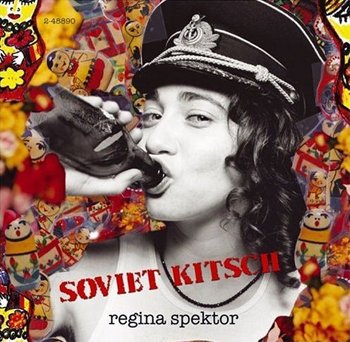
Signed to Seymour Stein’s estimable Sire Records, the resourceful Spektor embarked on ‘04s stunningly minimalist solo venture, Soviet Kitsch, with Raphael in tow. Its absurdist title spoofs Americans belief in media-fed propaganda concerning stereotypical Communist notions and came from a lyric in an as-yet unrecorded tune. On the front cover, she’s sucking down a label-less Heineken sporting the naval cap her grandfather wore de-mining the ocean during World War II.

Going from topical rainy day folk jaunt “Ghost Of Corporate Future” to clanked stammering bicker “Sailor Song” to twinkling ‘wocka wocka’ pianissimo lullaby “Carbon Monoxide,” the sentient soprano bends cabaret, ballet, opera, nursery rhymes, and traditional Hebrew incantations into ripened rudimentary arrangements with the stately eloquence of a seasoned maestro.

“I feel like I’m this little earthworm eating all this stuff and out comes songs. Some of it’s Classical, but the Beatles, Queen, and Nirvana also inform them.” But she admits, “I’m behind on pop culture. I only found out about David Bowie and U2 last year.”

Sympathetic strings frame pastoral ballad “Ode To Divorce,” a fictional account so tenderly relinquished and majestically heartfelt it seems firsthand.

Spektor counters, “I get angry that lyrics are so autobiographical because songwriters lives are so boring. They should approach a song from outside their lives like a movie script or fairytale. You could have empathy on a personal level. My heartbreak could add more weight, but it’d be dull to write from my perspective.”

Perhaps her greatest vocal showcase, the catastrophic cancer-clogged mini-opus “Chemo Limo,” shuffles across prancing hip-hop swathes, fanciful baroque serenity, and cautiously repenting verses, shifting tempo, mood, and style on the drop of a dime. Dark piano plinks and clacking percussion adorn “Poor Little Rich Boy,” nabbing a spare tranquility lounge-y bohemian minstrel Rickie Lee Jones possesses. For a clamorous rockin’ turnabout, Spektor retrieved punk band Kill Kenada to provide chicken scratch guitar feedback and propulsive drumming to the loose-limbed “Your Honor.”

“I found Kill Kenada through Gordon. We flew to London, had fun, and banged out a song. But I had a hard time fitting it into the album. So I put a little more context into it and had my younger brother whisper with me on a quiet intro. It put distance between the other music,” informs the chirp-y lass.

Contagious initial single, “Us,” soars skyward as torrential orchestral intensification infiltrates tumbling piano. A video made by Tom Petty’s daughter Adria finds Spektor receiving magical powers.

“Yeah. I had a sleepover at his house,” she delightedly reports. “I was eating his cheddar cheese. I only now know who he is. Afterwards, when I figured it out, I loved his music.”

Part of the easygoing curly-haired diva’s charismatic allure manifests itself in the vintage clothing she dons.

“Right now I’m wearing a white tutu with Signature Required written on it, a handmade Cracker Farm t-shirt, and huge puffy boots to protect me from the snow,” she elucidates. “It’s my homage to the wintry weather. Clothes should reflect the mood and be as thoughtful and fun as anything else in your life. Growing up, it felt sad to pick out garments others wore. It makes you feel less like an individual. I like combining old meaningful Classical dresses my grandmother wore with DIY punk stuff.”

So move over sensitive femme pianists Tori Amos, Fiona Apple, and Cat Power, ‘cause there’s a newly dignified player in town.

LOU BARLOW’S ‘EMOH’: VINTAGE INDIE ROCKER SAUNTERS ONWARD

FOREWORD: Considering the popularity of Emo bands ‘round the time Lou Barlow released his belated ’05 solo debut, Emoh (a supposed backward term for home), its nice to realize his down home sentimentality shamed all the suburban white boy self-pitying heard on the radio at that time. Speaking of being on the air, Barlow actually did have a freak pop hit in lo-fi side project, Folk Implosion – the drowsily penetrating meditation, “Natural One.” Despite his much-publicized ‘rocky’ stint in Dinosaur Jr. (back before Nirvana existed), Barlow returned to the fold for a series of club dates in 2005, but the reunion album, Beyond, received little fanfare. An ’08 reunion tour with Sebadoh followed. This article originally appeared in Aquarian Weekly.

Lou Barlow found notoriety in DIY lo-fi forerunners, Sebadoh, after a frustrated stint as bassist for Boston guitarist J Mascis’ distorto-rockers Dinosaur Jr.

Unguardedly secure in his position as reluctant indie rock elder statesman, Lou Barlow’s overdue solo entrée, Emoh, takes a wholly acoustical detour away from New Folk Implosion’s abstract leanings and Sebadoh’s schizoid pragmatism, detailing homeward bound vignettes with the sharp-eyed confidence and relished composure of a well-traveled bard. Living in the thriving art community of Silver Lake for the past six years, Barlow still strives to find contentment on the outskirts of the City of Angels.

“That’s the perspective. When I finished the record, I realized it was about making L.A. my home,” he shares with cautious optimism. “It’s a beautiful place. I’ve got a great house but being comfortable has been a struggle. Tumultuous changes in my life accompanied the move. With this record, and my wife due to give birth in days, I’m entering a different realm.”

In the past, Barlow’s most convincing decrees sometimes evaded perceptual closure, but inside Emoh’s concise ravine, he opens up a treasure trove of candid postulations. Capturing the same exquisite sentimentalism and pastoral brilliance tragic ‘70s cult artist Nick Drake once did, the desirous commencement “Holding Back The Year,” subsequent elegy “Home,” and ardent covenant “Legendary” hauntingly murmur.

Barlow contends, “I’d written Emoh’s songs during the last five years. I’ve been waiting to make a more acoustic based record and when Folk Implosion dissolved, it felt like the perfect time. I hear it as upbeat. That’s because it’s straightforward. I have no one like Jake (Sebadoh partner, Jason Lowenstein, who contributes some guitar) to play off of for the heavier stuff. There’s no band dynamic.”

Crisply produced by Mark Nevers (Lambchop/ Will Oldham), Emoh maintains a singular docile mood, mirroring the circumspect reservation underlying the overall essence. Anglo-folk chant “Royalty” and spindly cello-backed “Puzzle” retain a rustic Rocky Top purity Nevers may’ve helped expose.

He recounts, “Mark lives in Nashville so I recorded in his house. I slept upstairs and we did two sessions in a week and a half. It was real homey. He’s a mix of punk and traditional Country. When he started out, he recorded straight up Nashville stuff by George Jones, then found his way into the Lambchop crew.”

Arguably the most striking track, “Caterpillar Girl” adequately retrieves Folk Implosion’s hazy Pro Tools-derived execution, reliant on Barlow’s towering somnolent wail, meticulous fretwork, and dark piano undertow.

“I’d never expressed a sustained exclusive vision of what I wanted. I needed to bear down on my songs, do what I wanted instead of by committee. If I can get a little success and enough money to travel, I’d love to put together another electric-based Sebadoh record. Now that I’ve finally done this totally solo record, I’m starting to think about louder music again,” he shares.

Surprisingly, Barlow revisits, of all things, Ratt’s hair metal classic “Round & Round,” turning the arena rock staple into an intriguingly steely-eyed omen.

He concedes, “I always had an affinity for Ratt, Cinderella, and Motley Cure when I was a teenager. I was in Dinosaur Jr. immersed in the early grunge scene and noisy rock. But when we practiced, we’d watch MTV. When Ratt came on we’d un-mute the television and listen. We loved it. In concert, it gives people a break from hearing my life – breaking out a goofy cover. It’s good power pop influenced by Van Halen. I’d like to think I’m musically open-minded.”

But the biggest scoop is Barlow and J Mascis, not on speaking terms for a decade, may soon re-ignite their once-thriving band much like fellow Bostonians the Pixies recently did.

“J and I were talking about a Dinosaur Jr. reunion. Considering my relationship with J blossomed and died by age 22, that’s a long time ago. He greatly influenced me and I took a lot from him, but I would’ve been miserable if I stayed in that band.”

ROBBERS ON HIGH STREET TRESPASS BROOKLYN

FOREWORD: Robbers On High Street hit the ground running with ‘05s jolting jaunt, Tree City. For ‘07s passable Grand Animals, they hooked up with Italian film composer, Daniele Luppi, whose orchestral strings have been used by Gnarls Barkley and John Legend. This article originally appeared in Aquarian Weekly.

Never underestimate the utter perseverance of attentive individuals looking for commensurate acceptance parading a mischievously silly felonious moniker. Meeting in Poughkeepsie as green teens, Manhattan-reared singer-guitarist Ben Trokan and Brooklyn-raised guitarist Steve Mercado settled in Brooklyn around the turn of the millenium, forming the nucleus for cagey retro-rock combo, Robbers On High Street.

Getting signed to fresh boutique label, Scratchie Records, by semi-famous entrepreneurs Adam Schlesinger (Fountains Of Wayne) and James Iha (A Perfect Circle/Smashing Pumpkins), these scrappy euphonious bandits soon found favor amongst elite collegiate peers and older obsessive underground rock brethren alike. The foursome’s spontaneous debut EP, Fine Lines, was paced by abrasive guitar driven rockers such as the upbeat titillation “Hot Sluts Say I Love You,” which offset the paradisiacal devotional ballad “Opal Ann.”

“There was always music in my house when I was growing up,” Trokan recalls. “My mom had a great record collection I got into at a young age. My dad played piano and listened to opera at night. I started out playing drums.”

But he digresses, “Steve and I never got anything off the ground. We’d sit around in my basement figuring out songs. That’s as far as we got. I think we played a party once.”

Anyhow, the amiable duo’s timid tenacity would ultimately pay dividends. Affirmed Kinks, Beatles, and Who fans, the pair finally congealed as a whole when bassist Jeremy Phillips and drummer Tomer Danan came aboard under the tutelage of valued veteran musician-engineer Peter Katis (whose Interpol production and inconspicuous tenure leading indie rockers Purple Ivy Shadows and Zambonis should be duly noted).

“Peter had the role of getting the craziest sounds he possibly could. Our EP was more live-in-the-studio with few overdubs. But our songs are usually pretty much done before we enter the studio. I think I had some of those arrangements imbedded in my head for awhile,” Trokan divulges.

On ‘05s stylistically diversified 13-song full length, Tree City, Trokan’s lugubrious lyrical lather and pleading threnodies strike an insistently moodier tone, but the jilted lover perspective lingering above not only the darkest dimly din but also the hastening convivial turnabouts doesn’t necessarily appear to be of the personal variety.

“I didn’t have to suffer through the agony. The songs are almost all about other people,” Trokan politely maintains.

However, if there is any singular song Trokan admits may be a real life confessional, it’s the paranoiac escapade “Bring On The Terror.” A peppy piano stroll with reserved Brit-accented Ray Davies-littered flamboyance, its wickedly self-tortured climactic verse parsimoniously announces ‘sometimes I need a punch in the face/ sometimes I need a leg in the ass.’

“That’s the one song that may be based on my life out at college,” he sullenly declares. “I didn’t have a job so I guess it came out of that fear. I only went to City College to take advantage of their really nice recording studio.”

Then there’s the multi-harmonic inner city passenger train ode, “Hudson Tubes,” which begs comparison to Electric Light Orchestra with its easy rolling neo-Classical flow and reclining Jeff Lynne-indebted neo-operatic flights of fancy. After absorbing its tart firsthand observations, it’s quite obvious to presume Trokan has indubitably faced the arduous rush hour congestion of urban commuters crowding New York City’s steel rail underworld.

“I tried to make that an anthemic epic. You could practically sing (Mott The Hoople’s) “All The Young Dudes” to it if you wanted to, but it’s still about subway behavior, especially in New York, where people check each other out. It was a mini-anthem to the dude who pumps his chest out when a pretty girl gets on the train,” Trokan declares.

Copping to the Strokes on a swift New York shuffle, “Love Underground” keeps the subterraneous groove prescient, as Trokan struts and yowls Brit-spit over a simple spunky riff like a wired caffeine freak ready to explode. Analogously, the piercing 2-note blast “Japanese Girls” goes street level, hearkening towards early Kinks power chord ramblers more so than epitomizing today’s terminally angular garage-hewn independents.

Nevertheless, slumberous rainy day fare such as horn-struck contemplation “Spanish Teeth,” melancholic ELO sound-alike “Beneath The Trees,” dirge-y Lennon-esque piano stammer “Dig The Lightning,” ominous acumen “Descender,” and emotional vibes-soaked goodbye “Big Winter” prove to be ultimately anguished conundrums. Although truly suffused by overcast disconsolation with a dash of alienation thrown in for good measure, a joyous exuberance shines through the oft-times beguilingly buoyant procession.

Delicately delivered desolate lyrical wisp, “The Price And Style,” humbly hushes ‘I want it bad’ to an unnamed alliance, calmly slipping into sunset samba serenity. When asked about its germination, Trokan snickers, “I don’t know. I originally wrote and demoed it with a drum machine and it sounded like a slow R. Kelly band.”

But while Robbers On High Street currently gain much-needed live exposure and decent college airplay, don’t expect Trokan to be kowtowing to vogue Electroclash, No Wave, and goth-punk locals. “I wouldn’t say we go to bars hanging out with Interpol. The bands we play with from here are (discordant wounded sentimentalists) Natural History and (off-kilter majestic bizarros) King Of France. They’re great. We probably have more in common with them.”

So what’s the future hold for four faux Brooklyn bandits?

“I have half a dozen semi-finished songs,” Trokan notes. “I’m grateful to have this month (January) off to get my composing routine going. I have some up and coming Robbers songs in the jukebox going on in my head. So I could hear what things are coming together right and where it’s going. I’d enjoy working with additional sounds instead of just thinking ‘What can we do to this guitar tone?’ I’d like to expand our sound more. I’ve written some fairly concise pop songs and some that have more than three parts and may go longer than four minutes. I’ll take it as it comes.”

HOLY SALVATION! BUDDY MILLER GETS SPIRITUAL AWAKENING

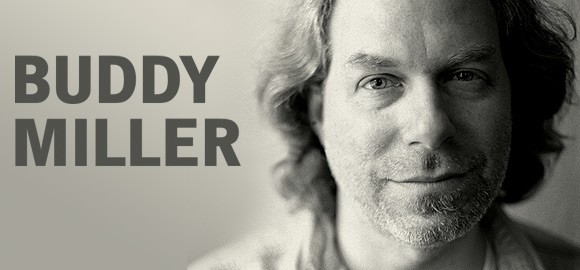
FOREWORD: It’s Miller time! Multi-faceted Country-folk artist, Buddy Miller, has played behind several first-rate modern traditionalists, written several top notch Western-styled tunes (covered by a wide range of artists), and occasionally hoisted up a few solo records. He’s also done a few recordings with his wife, Julie. In fact, ‘09s heartfelt Written In Chalk offers the same down home rural sensibility as Buddy & Julie Miller’s self-titled ’01 debut. I got to speak to the reluctant icon in ’04 in support of what may be his finest album to date, United Universal House Of Prayer. This article originally appeared in Aquarian Weekly.

While cheap, tawdry major label Country-pop throwaways rule Nashville radio these days, superior singer-songwriter, ace guitarist, and sought-after sideman Buddy Miller keeps delivering versatile self-produced solo projects gathering traditional Appalachian folk, brawny honky tonk, authenticated bluegrass, hootenanny shuffles, and breezy Americana without succumbing to slick homogenization. Moreover, the earthy Ohio-born, Princeton-raised bard spent eight years leading Emmylou Harris’ road band, had short stints with first-rate progressive Country icons Jim Lauderdale and Steve Earle, and alongside wife Julie, a devout Christian, made one sensational secular duo album thus far.

Miller’s early influences, West Coast psychedelia, soul, and folk-blues, indirectly reflect the wide-ranging material he so effortlessly combines.

“Radio in the ‘60s was just incredible. You heard everything. I loved it all. I got into playing guitar because I loved the freedom of that San Francisco hippie scene,” he recalls.

Out in South Pasadena, California, in the ‘80s, the Miller’s struggled paying rent, selling off gear to make ends meet before re-locating to cheaper confines. By the time they hit Nashville, L.A.-based Hightone Records fortuitously inquired Buddy about laying down tracks.

“I was Jim Lauderdale’s lead guitarist out West. But I thought if we move to Nashville, I could buy a house for the price of Los Angeles rent. Within months, Hightone asked if I had any songs. I said ‘Sure.’ But I didn’t. I only had song pieces.” Nevertheless, he concedes, “Nearly every song on that (’95) debut, Your Love and Other Lies, has been covered, by artists such as Brooks & Dunn and Dixie Chicks. It’s basic, but sweet. Then, I’d just joined Emmylou’s Spyboy band when we recorded (‘97s) Poison Love between tours. Emmy and the guys set up in the living room and she added rhythm guitar.”

Besides befriending, then working with, local Nashville cats Jim Lauderdale, Lucinda Williams, and Guy Clark, Miller’s done sessions with nasally C & W guitarist Jimmie Dale Gilmore, acid-Jazz diva N’Dea Davenport, and chirp-y voiced Creekdippers pal Victoria Williams. He even found time in ’04 to form roots-based touring outfit Sweet Harmony Traveling Revue with female peers Gillian Welch, Patti Griffin, and Emmylou Harris.

The now gray-haired troubadour explains, “Patty had a date at the Ryman Auditorium that Julie and I opened. Emmy came out and sang with Patty. Then, we were all together so it felt so right we took it on the road and continue having a blast.”

Meeting in Austin during 1976, Buddy and Julie Miller lived in New York City by ’80, got married, moved cross-country, settled down outside Nashville in ’93 at an old Victorian house, and built a four-room home studio, Dogtown Recording. Julie’s solo ’97 disc, Blue Pony, may’ve drawn lyrical stimulus from battles with depression and rheumatic disorder. Her flinty tear-stained honeyed twang uplifts the pair’s fervency quota on both solo and duo endeavors.

Miller divulges, “I love duet singing. The difference, to me, has to do with the melody and how the song feels. On Julie’s albums, they take a turn for the rock side. Mine are more basic Country-Blues. She grew up in Texas with so much Country she doesn’t like to hear it as often. There’s less fiddle going on with her records.”

Quickly, Miller established himself as one of Tennessee’s most legitimate songwriters, finding a modicum of success offering bigger stars sundry compositions. Meanwhile, his recording career kept growing at a relatively moderate pace.

More anguished than its sterling predecessors, ‘99s efficient Cruel Moon set the stage for further recognition. A few years hence, heralded ’02 gem, Midnight And Lonesome, would gain better critical notice. Half-written by spouse Julie, its masterful malleability allowed the Everly Brothers reverberating strut “The Price Of Love,” Jesse Winchester’s steel-laced sad road ode “A Showman’s Life” (a heartfelt Emmylou duet), and Percy Mayfield’s hushed ballad “Please Send Me Someone To Love” to coexist peacefully next to vibrant originals. Sly, slick, wickedly desirous come-on “When It Comes To You” makes great use of burbled optigan (a pipe organ-like instrument Jazz keyboardists Jimmy Smith and Walter Wanderly would’ve appreciated).

Between these serpentine pillars, ‘01s monumental Buddy & Julie Miller seized the moment perfectly, mingling gleamed countrypolitan charmer “Little Darlin” with swampy deluge “Dirty Water,” political folkie Bruce Utah Phillips’ sensitive “Rock Salt And Nails,” Dylan’s fiddle-addled barroom “Wallflower,” and a delectably streamlined version of Richard Thompson’s “Keep Your Distance.”

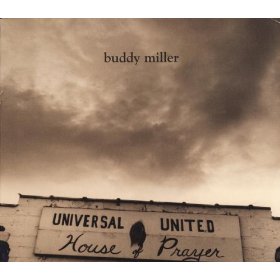
But a string of misfortune and political uncertainty weighed heavy on Miller’s mind. On ‘04s therapeutic Universal United House Of Prayer, Miller deals with untimely death and Gulf War blues while seeking deliverance from the almighty through revelatory testimonials, an underlying theme previous releases merely touched upon. Gospel singers Regina and Ann Mc Crary (Fairfield Four founder Sam Mc Crary’s daughters) add reverential medication to these devotional lamentations.

Dylan’s ’63 protest anthem “With God On Our Side” gets an elongated, slowly sweltering treatment and Louvin Brothers’ pious veneration “There’s A Higher Power” receives a durable acoustic-fiddle reprise. The Miller’s own piano-based “Shelter Me,” which compares favorably to Leon Russell’s Asylum Choir, and unhurried accordion-draped “Wide River To Cross” yearn for the Lord’s mercy in these troubled times.

“Religion’s always been a big part of my life. Dylan’s tune, “With God On Our Side,” seemingly uses God as an excuse for bad deeds and may be more relevant today,” he claims, citing worldly hostilities. “In the past few years, the Iraqi War started and my wife’s brother died. He was in a crippling motorcycle accident that left him partially paralyzed, then 20 years later, was struck by lightning in the same spot he got injured. Those things led me to believe there were dots to connect. The whole world situation left me with lots of questions. I don’t have answers, but politics and spirituality overtook me. Christian Contemporary artist Mark Heard died, but was a friend of mine. Like Julie, Mark wrote about things too heavy to be tied in a neat little box with a bow on top. That’s why I love starting the disc with one of his songs, “Worry Too Much.” He wrote that when the first Gulf War broke out. I engineered that record. It seemed appropriate.”

Miller admits enjoying the spontaneity attained by letting songs unfold and reveal themselves in the studio instead of overindulging ahead of schedule. However, that changed with Universal United House Of Prayer, a staggeringly prophetic powerhouse strengthened by godly worship.

“I wanted to make half the album with the Mc Crary’s and the other with Matraca Berg’s aunts, wonderful singers with a completely unique sound. But I had such a good time with Regina and Ann I never got to the other half. So I’ll save that for the next record.”

In the meantime, the Miller’s plan to begin work again on Julie’s new record, which was temporarily halted whilst her brother passed away.

“The songs are different, but it remains to be seen what happens. She directs things and she’s got some real ideas,” he concludes.

FOUR VOLTS JOLT BIG APPLE AND ‘TRIPLE YOUR WORKFORCE

FOREWORD: As of ’09, I haven’t heard a word from Four Volts since their brash 2005 debut, Triple Your Workforce, surfaced on worthy boutique label, Kanine Records. But I know they’ve still got the music in them. This article originally appeared in Aquarian Weekly.

Getting together in Half Hollow High School, guitarist-vocalists’ Brian Rayman and Danny Tieman began exploring musical possibilities within the confines of a Long Island basement. Soon after, with bassist Lisa Cuomo and drummer Theo Cataforis (replaced by Than Luu) in tow, Bunsen Honeydew (a moniker clipped from The Muppets) was born. When Muppets copyright holders Henson Corp. threatened legal action, the youthful quartet, whose Lower Manhattan gigs gained favorable attention, quickly changed their appellation to Four Volts, opening for venerable indie artists the Futureheads, British Sea Power, and Blur’s Graham Coxon.

On electrifying debut, Triple Your Workforce, Four Volts counter clamorous multi-harmonic deluges and cleansing melodic buoyancy with harsh 6-string distortion, fusing fuzzy shoegaze contortions to angelic sing-along mantras. Showing a great affinity for brutally raw ‘70s punk, the beat-driven “Rearrange Me” soars skyward with a bouncy ‘ba-ba-ba’ chant and screechy dual guitar blear while the adenoidal “Didn’t You Used To Be Invisible?” proves too extroverted for the emo pack’s piss-y suburbia moans. Indubitably, the neurotic anxieties and decadent romanticism of enduringly mod Brit-pop eccentrics Television Personalities truly inform Rayman’s muse.

“Growing up, I heard lots of Dylan and Simon & Garfunkle. I still respect them, but it doesn’t come through in my music. The Beatles influence my songwriting and the Buzzcocks and Modern Lovers do as well. But my all-time favorites are the Television Personalities,” Rayman admits. “They have a new recording coming out that I’m excited about. But I also love Joe Meek’s sound affect recordings (such as the Tornadoes’ classic instrumental “Telstar”). Syd Barrett got me into that stuff. He was Pink Floyd’s mastermind in the early days. But I still love (the post-Barrett) Dark Side of the Moon.”

Fiery feedback riffs enforce “Bedlam On The Beat” and “Hat Trick,” both bringing to mind late ‘80s shoegazers My Bloody Valentine and Jesus & Mary Chain as well as doomed post-punk contemporaries, the Libertines. But a more impressionable noise-pop source seems to be Sonic Youth and the Boredoms, whose former producer, Martin Bisi, worked on Four Volts debut.

“He’s a good friend of ours and an all-around great guy, born and raised in New York City. He started out working with Brian Eno in the early ‘80s, which inspired his style.” Rayman continues, “He records in an old concrete-walled war artillery basement with no foam or padding. That’s how he got the Sonic Youth and Swans sound. I think it’s impossible to record with Martin and not get that density and unwashed sound.”

Perhaps the buzzing “Way In” best represents Bisi’s technique, with its frantic static-y friction and off-key clattered chatter surrounding a lucid guitar figure in a tumultuous setting. Yet the super-perky cuddle-core power pop pearl “Heartworm” sticks out like a sore thumb thanks to adorably catchy ‘ooh ooh’ choral climaxes, bittersweet symphonic sweeps, and deliciously sanctimonious wing and a prayer philosophizing.

“I wanted a Ronettes-like melody line,” Rayman offers. “The song becomes more aggressive as its character darkens, dying to end it all screaming ‘it’s getting hard to sing this song’ then ‘it’s getting hard to see your face’ because everything fades as he leaves this world. So he says ‘go away, go away, we’ll all be dead but not today.’”