ERASE ERRATA WASTE NO TIME ARRIVING ‘AT CRYSTAL PALACE’

FOREWORD: I had a great time with San Francisco avant-punks Erase Errata in New York City during 2003. First, we walked over to Little Italy to eat dinner and pound drinks. Then, we headed back to the Bowery Ballroom, where they were headlining, cooked some hash, and had some good clean fun. I got to introduce the band onstage that night. While I did, vocalist Jenny Hoyston stuck her guitar between my legs and up into the groin area. Luckily, me and my penis survived the show.

Afterwards, celebrated Bikini Kill feminist punk, Kathleen Hanna (a friend of Erase Errata’s) appeared. She seemed demure, mature, and straight-edged, not quite what I’d expect. But she, as you’d figure, made great conversation and didn’t lack a sense of wry humor. Months later, Jersey guitarist, Sara Jaffe, left Erase Errata and they continued as a trio. In ’06, Nightlife found the post-riot grrrls in fine form. This article originally appeared in Aquarian Weekly.


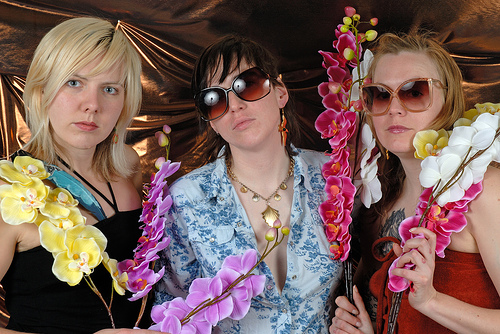
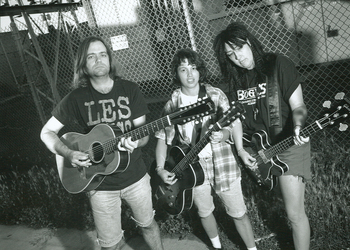
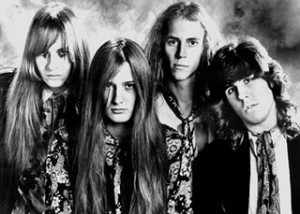
Captivating underground hipsters and riot grrrl enthusiasts everywhere, Erase errata’s stunning ’01 debut, Other Animals, was completed in a mere two-and-a-half days. Literally working spontaneously in the studio on perfectly scruffy tunes until the last minute, vocalist Jenny Hoyston, guitarist Sara Jaffe, bassist Elle Erickson, and drummer Bianca Sparta inadvertently seized the chaotic confusion and weary uncertainty of post-computer boom San Francisco.

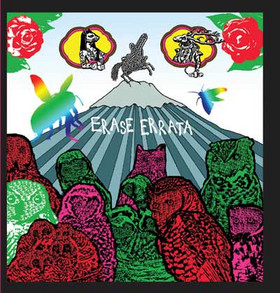
Still as abstruse, askew, and unpredictable as ever, Erase Errata have returned with the better produced, tightly arranged At Crystal Palace. The motivational “Let’s Be Active” nips Le Tigre’s scantily chanted tuck and roll style while Hoyston’s muzzled chatter on the nearly accessible “Suprize It’s Easter” recalls insouciant Japanese pop-punk pabulum. Jaffe’s skittishly cerebral six-string friction engulfs the frazzled “Ca. Viewing” and the jittery scorcher “Go To Sleep,” emulating a wild bronco for the skronk-y schism “White Horse Is Bucking” and imitating the ear-piercing scree of the ‘bird of prey’ reckoned on the howling “Owl.”

At Mulberry Street’s La Mela, Hoyston, Erickson, Sparta and I settle down for dinner with opening Wisconsin trio, The Numbers, during Manhattan’s San Gennaro Festival prior to headlining the Bowery Ballroom. As plates of appetizers and bottles of wine crowd the table, Hoyston and I shamelessly take control of the conversation.

As a young teen, the outgoing front-woman enjoyed commercial pop like Bryan Adams’ “Cuts Like A Knife,” though her conservative parents listened to Country stalwarts Willie Nelson, Waylon Jennings, and Jerry Jeff Walker. By high school, she lost interest in collecting radio hits and began perusing local record stores, picking up vinyl by abstract avant-garde artists Yoko Ono and Captain Beefheart. To find acceptance living an alternative lifestyle, she left Texas for the hilly terrain of stylish San Francisco.

“My parents are from Nacogdoches, the town where the space shuttle fell. Some shrapnel went on to their property, and when federal agents arrived, my father came out with a gun,” she offers. “Now business is booming down there since the media, government, and tourists are filling the hotels and restaurants.”

A statistice major, Hoyston admits her college degree had nothing to do with pursuing music as a career.

“I just wasted moiney while I could’ve been buying drugs, having fun, or getting a house,” she half-jokes. “The first day I moved to San Francisco with a car full of shit and no place to live, I go to an Italian restaurant and the waiter is like, ‘Did you just move here? I’m gonna give you the local beer. So I tried Anchor Steam.”

But living on the dole makes it difficult to afford finer brews, so she admits feeling hypocritical purchasing neo-conservative Adolf Coors’ sudsy Colorado brews due to its cheaper cost.

“When the band started I was really skinny and started drinking Coors Light. It was my favorite but I felt so bad supporting that company. I shouldn’t drink it because they’re anti-union and anti-choice,” the feisty 31-year-old says.

Despite her unrestrained leftist views, Hoyston’s lyrics skirt political and sexuality issues.

“I don’t think you should mix…I mean, there’s subtle things. Of course, I’m going to color everything with my personal beliefs, but I’ve tried to write meaningful things. But not meaningful because I’m trying to tell somebody what they’re supposed to think,” she claims. “I try to think about a situation and really describe it in a way that fits in with what the rest of the band is

REDD KROSS ALWAYS READY TO ‘SHOW THE WORLD’

FOREWORD: Redd Kross have been around since ’78 (as the Tourists). By the ‘80s, they were a leading independent L.A. pop band out of Hawthorne. I caught up with guitarist-vocalist Jeff Mc Donald in 97 to promote their second-to-last LP, Show The World.

My editor at Aquarian at the time, Michelle, hooked me up with him. After nearly a decade apart, the prime Redd Kross lineup reemerged for a few local ’95 performances. This article originally appeared in Aquarian Weekly.


“I guess disposable pop isn’t all that disposable,” insists Redd Kross guitarist/ vocalist Jeff Mc Donald when confronted with the suggestion. Along with brother/ bassist Steve Mc Donald, Hawthorne, California’s unflappable Redd Kross has survived various setbacks and lineup changes (Bad Religion’s Greg Hetson was an early member) since “I Hate My School” and “Annette’s Got The Hits” appeared on the 1980 three band sampler “The Siren.”

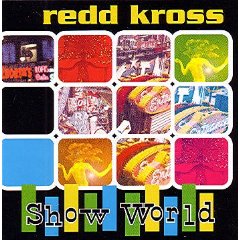
Inspired by legendary pop, punk, and no wave artists, Redd Kross continually attract underground club heads undisturbed by melodically bright, alluring landscapes and charming simplicity. Skillfully skirting the current L.A. glam-rock scene, these sugarcoated smoothies craft infectious songs, bucking trendiness by remaining unassuming and predictably consistent in their search for the perfect pop song. The bands’ ebullient first single from Show World, “Stoned,” an electronically radiant montage contrasting dissimilar female characters – a Venice hippie, a troubled low rider, and a speed freak punk squatter – should make High Times’ Pot 10.
How has Redd Kross evolved since forming in ’78?

JEFF MC DONALD: Certain things such as playing and singing were made easier simply because we could now play our instruments well. And through better technologically, we’ve been able to expand. For some bands, that could be bad. But for us, it was good. Now we are able to translate how our heads hear the music. When we started, we got away with not being able to play. So we’re better musicians. As for the music, it’s like asking someone how their face has changed in 18 years. I don’t have a full perspective on it.

Redd Kross has been on record labels such as Posh Boy, Smoke 7, Frontier, Big Time, and Atlantic. Have you changed labels frequently because they tried to constrict your sound?

JEFF: We’ve never had to compromise on our creativity at any level. We’ve always been able to take responsibility for the success or failure of each record. We’re very good at being passive aggressive; pretending to give the label what they want while doing what we want to do. We never stayed with a label for more than one record because the label either folded or we were dropped. It was always circumstances beyond our control. We’ve experienced every facet of the business on large, medium, and small labels. The indie labels were unstable and Atlantic dropped us because “Third Eye” didn’t sell a million copies. But what did they expect from a garage band out of Los Angeles. Happily, “Show World” is our second release from Mercury – following ’93’s “Phaseshifter.”

How tough was it to gain exposure when there was no permanent company releasing your records?

JEFF: When you’re in a cult band such as ours, there are no platinum hits or MTV exposure. But cult bands are dedicated to fun and are more mysterious. In a perfect world, we would have written some million sellers. But when our breakthrough album, “Neurotica,” came out in ’87, rap, Motley Crue, and Ratt’s “Round & Round” were getting airplay. We had no fantasy of becoming a platinum success. Then again, we’re still around. We just started touring internationally 4 years ago. Most of our peers did it for years but we never had the financial support. But we do have a small audience which spreads across the globe now.

What songs and artists inspired you most?

JEFF: Two of my favorite songs are the Beatles’ “She Loves You” and the Flamin’ Groovies’ “Shake Some Action.” I would say the Beatles and Stones form our basic foundation. And Iggy Pop, the Velvet Underground, New York Dolls, Merseybeat pop, and the Beach Boys are inspirations. My brother and I were into no wave artists like Teenage Jesus – whose first single was “Orphans” on Pink Records – and DNA during the late ’70s. They remain influences. But I also enjoy novelty records like Annette Funicello’s beach period albums “Muscle Beach Party” and “Monkey’s Uncle,” which were produced by Brian Wilson. Another novelty fave is Jimmy Osmond’s “Long Haired Lover From Liverpool.” And I liked Lesley Gore and the Monkees, too.

Wait a minute. Redd Kross, a pure pop band, was influenced by the atonal minimalism of DNA and Teenage Jesus?

JEFF: We always liked noise. In ’87, our live shows became very spontaneous. We’d take a two-minute song and stretch it out to 20 minutes like Sonic Youth or Jefferson Airplane. On the road, first we’d get bored, feel bad, and get tedious. Then we’d feel lively and get spontaneous. If the audience walked out during a long song, we’d chill out. But we were more self-indulgent back then. We actually haven’t played live in two years now. So in ’97, we’re touring Europe and then the States.

You attended Hawthorne High School over a decade after Brian Wilson and the Beach Boys did. Is there still a buzz out there for the Beach Boys?

JEFF: It’s 95% black now. I don’t think they care about the Beach Boys. Or, for that matter, Emmitt Rhodes of the ’60s pop band Merry Go Round. He also attended Hawthorne High. I hear Rhodes is currently living with his mother. Amazingly, I picked up his first solo album from a small girl while I was in Asia.

Redd Kross has previously recorded cover versions of Kiss, the Stooges, the Rolling Stones, Queen, the Beatles, and David Bowie. Were there any covers on “Show World”?

JEFF: Yes. We have one new cover called “Please Tease Me,” originally done by the Quick. They were an L.A. band produced by Kim Fowley.

Do you find there is a difference between East Coast and West Coast audiences?

JEFF: No, not really. Most people who enjoy Redd Kross are into the same things, whether they’re from Los Angeles or New York. They like the same books, movies, rock bands, and clothes. And we just communicate through the music. So it’s really mystical. While New York is more artsy glamour, Los Angeles is more power pop glamour. That’s probably because there was a huge explosion of glampop which began in the ’70s in L.A.

I heard your band originally got into trouble with the Red Cross because of copyright infringement.

JEFF: It was only a brief problem. We had played a local community picnic and someone snitched on us. So Red Cross located my brother Steve at school and told him they had the copyright to that spelling. They were really very cool about it. We chose it as just a dumb punk name. At the time we were rehearsing with Black Flag. It kind of stuck with us.

Are your songs generally fact or fiction?

JEFF: They are a little of both. Some are autobiographical and some are based on our own perception of reality.

Is the new album titled “Show World” because Redd Kross wanted to show the world how good it was or was it a spoof on ‘All the world’s a stage and we are merely players’?

JEFF: It’s definitely closer to the latter.

Those Rickenbacher guitars on the song “Mess Around” reminded me of the Byrds.

JEFF: Yes. But the melody, which was written in a car, has weird phrasing and was intended to sound like Chrissie Hynde doing that Kinks B-side “Stop Your Sobbing.”

“You Lied Again” has Beatlesque harmonies riding above murky organ and pulverizing guitars.

JEFF: I co-wrote that with our drummer, Brian Reitzell. We never had a drummer who didn’t worship Neil Peart of Rush. And I had never listened to Rush until I took acid with a friend a few years back and heard “2112.” We practically pee’d in our pants laughing. Geddy Lee’s gerbil tone was hilarious. And the lyrics are great. I hope “You Lied Again” is a smash so I could do a film version of “2112.” I’d make it into a movie without music and call it “Neil’s Vision.”

Give me the dirt on the hard hitting, snotty punk tune “Teen Competition.”

JEFF: I’m not sure what it’s about. But it’s co-written with Pat Fear, someone I know whose name is based on Pat Smear. We were dreaming up this cult where the Smashing Pumpkins’ Billy Corgan was a male Stevie Nicks figure. Like essential oil, Corgan’s the high priest and kids are trying to get his attention.

What previous Redd Kross album is your personal favorite?

JEFF: “Third Eye” may be my fave. But it alienated and annoyed a lot of people who thought it was slick. It made us instant pop lepers. Our old fans were freaked out and college radio wanted nothing to do with it.

What band truly changed your life?

JEFF: Definitely the Ramones. I was really into Black Sabbath until they released that shitty “Technical Ecstacy” album. Around that time, I heard the Ramones. They were like Black Sabbath, the Beatles, and the Beach Boys rolled into one.

Are there any stars who blew you away when you got the chance to meet them?

JEFF: Yes. Cher. I recently met her for an interview I did for Raygun. I found out she sang backup on lots of Phil Spector records like “Be My Baby” and “You’ve Lost That Lovin’ Feeling.” She was cool.

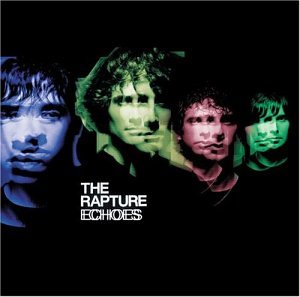
THE RAPTURE HEAR MIGHTY ‘ECHOES’

FOREWORD: I first heard of the Rapture when I was vacationing in Philadelphia, New Year’s Eve 2001, when a local college station claimed their EP was the number one album for the year. Their highly danceable tunes placed electronica and acid house elements into rockist structures without sounding overwrought or trendy. ’02 single House Of Jealous Lovers became their calling card. I interviewed the Rapture’s Vito Roccoforte in ’03 to promote their upcoming Echoes LP. ‘06s Pieces Of The People We Love was not quite as fascinatingly resourceful. This article originally appeared in Aquarian Weekly.


Growing up in a poor La Mesa neighborhood twenty miles east of San Diego beach, Vito Roccoforte met Hawaiian-born future band mate Luke Jenner in elementary school. They’d hang out, collect baseball cards, and by eighteen, started playing instruments.

Initially inspired by regional 91X alternative rock discjockey Mike Hollerin, who’d lived in England, then garage-soul mecca Detroit, before hitting sunny Southern California, the duo began listening to ‘80s Brit-pop obscurities Echo & the Bunnymen, New Order, and Jesus & Mary Chain, subsequently forming impervious dance rockers The Rapture.

Their debut single, “The Chair That Squeaks” backed with a cover of Psychedelic Furs’ “Dumb Waiters,” was recorded after tracks for Gravity Records ’99 EP, Mirrors, which had darker keyboard-driven tunes, less danceable rhythms, and more of a Krautrock feel, were already released.

Roccoforte explains, “We were into German bands Can, Kraftwerk, and (British fusion tape-loop experimentalists) This Heat, but Mirrors came off way noisier than that and was recorded in our friends’ living room. We were living in San Francisco then but had San Diego friends with little studios. So we’d book mini-tours going south to Santa Cruz, Santa Barbara, and then San Diego. Gravity Records was the main hardcore label. We were the first non-hardcore band they offered studio time. At the same time, another friend started a label and put out “The Chair That Squeaks” in ’98.”

Moving temporarily to Seattle for six months, percussionist Roccoforte, guitarist Jenner, and bassist Christopher Relyea got signed by Sub Pop Records, decided the Pacific Northwest wasn’t to their liking, bought a used van with a few thousand dollars advance money, and hauled equipment and records to New York City. Though the Big Apple offered no immediate job security, happily Brooklyn-based noise-rock band, Black Dice, put them up in their house.

“If we made $100 a show, we thought we were golden,” confesses Roccoforte. “It took awhile for shit to happen. We had no money, planned poorly, and were homeless. I’d sleep in the van sometimes. It took three months to get on our feet. By September ’99, I finally had enough money to live in some guys living room. I built a wall out of bookcases and made my own space. Jimmy, our bassist then, left when we reached New York so we had no functioning band. We were miserable, but I liked the city’s energy. At the end of ’99, Luke, a new bassist (Mattie Safer), and me began doing shows. In Spring 2000, we did the Out Of The Races and Onto The Tracks EP.”

Recorded in one day using few overdubs, the penetrating EP efficiently cross-pollinated urban dance culture with chic ‘80s new wave signifiers, girding chunky metronome rhythms against jaunty guitar cadences. Retaining a pure independent rock aestheticism, The Rapture uncannily cracked freeform college radio while concurrently swaying foot-shuffling discotheque patrons to catch the mighty buzz.

“It’s weird. The two worlds are becoming closer, especially in America. When we play live, we’re rockers, but doing dance songs. So the indie kids get into it and it’s not a huge shift,” Roccoforte concurs. “We’ll get kids at shows that like dancing, but the difference in the audience isn’t that obvious. However, we played the Winter Music Conference in Miami at the Ultra Festival and that was pretty extreme on the dance side.”

Oddly, the peripheral Out Of The Races exodus, “Caravan,” leaned towards prog-rock aspirations, a proclivity left unexposed by ‘04s sensational full length, Echoes.

“I’d love to explore that side again,” Roccoforte confirms. “That was made in our baby stage. It’s interesting. People either love or hate “Caravan.” But “Confrontation” moved closer to Echoes with its sniping guitar riffs, dense percussion, and spare setting.”

Helping The Rapture gain early acceptance was the developing Brooklyn scene spawning Radio 4, Interpol, Walkmen, and Yeah Yeah Yeah’s. Lower Manhattan’s now-defunct Brownies gave these disparate artists timely exposure. Opening for Radio 4 at that Avenue A club one night, The Rapture came in contact with James Murphy, the soon-to-be DFA proprietor alongside partner Tim Goldsworthy. Although Jenner and Murphy originally butted heads over the specific sound they sought to create, the meritorious union proved fruitful.

Concerning the prolonged struggle, Roccoforte says, “It was more of a personal conflict. They’re both very controlling people. But without those great producers, we might not have gotten that great DFA drum sound. James and Tim recorded Radio 4’s Gotham, Primal Scream’s “Blood Money,” some David Holmes tracks, sundry remixes, and assembled LCD Soundsystem. So we got to record at DFA’s renowned Plantain Studio.”

On-stage at a packed Roseland Ballroom in March ’04, The Rapture dressed casual and maintained a hard-working blue-collar ethic, discarding flashy modern dance glitz for flaky pale-faced exuberance. Wearing t-shirts and jeans, these stylish chameleons jumped from the bouncy bleat-beat bass-throbbed “I Need Your Love” to the expediently elastic “Echoes” (with its fleeting vocal break-ins), sustaining a loose-limbed carefree attitude galvanized from constant non-stop touring. The majestic intoxicant, “Heaven,” with its naked choral count-off intermittently breaking up its jarring tribal rumble, served as a major highlight.

As Roccoforte pounded skins with tom-toms and drumsticks, Jenner thrust himself center stage, aiming pleading sentiments directly at the crowd, flinging the mike side to side. Atop muscular grooves, Jenner’s aching, serrated tenor flailed like The Cure’s Robert Smith. For the dirgey piano turnabout, “Open Up Your Heart,” Jenner struck a few Jesus Christ poses.

Roccoforte admits ‘80s no wave denizens such as ESG, Delta 5, and Liquid Liquid seep through The Rapture’s overall oeuvre, but claims that connection took time to develop. Echoes’ minimalist disco-pop masterpiece, “House Of Jealous Lovers,” molds these spectral influences into an instantaneous hip-shaking anthem. Its fascinating video, constructed by animator Shynola (check out Radiohead’s “Pyramid Song”), captures the band jamming inside superimposed flyers modeled after old punk show ads, seizing the attention of MTV2.

He recounts, “For lack of a better term, I was seriously into those bands a couple years before we started writing Echoes. We wanted to go a few steps further to find their broader based influences. We used guitars so it came out like Liquid Liquid. It was more of a subliminal or subconscious thing. A band like Public Image Ltd. was drawing from dub music. I liked no wavers DNA and Arto Lindsay’s full on Latin take. So we draw from all those influences. But with Echoes, we really tried to make straight up house music. The vocals to “Olio” sound like The Cure, but we were trying to emulate early Chicago house records with the 909 drum machine and 202 bass machine.”

Then again, techno-derived ecstasy-riddled late ‘80s Madchester hipsters the Happy Mondays also proved to be effectual instigators. Just listen to the drug-addled acid house provocation “Heaven” for solid proof. But what The Rapture may have benefited from mostly was the British rave scene’s uplifting devotional unity. Deciding to give co-writing credit to each member proved advantageous since many bands prematurely break up over publishing rights. This even split gives recently acquired saxophonist Gabe Andruzzi, sparsely utilized on Echoes, equal footing.

“We decided everyone in the band works hard contributing beyond songwriting. Sometimes Luke comes in with melodies or I’ll come in with a bass line or drum beat and we’ll write around that. It’s always different,” Roccoforte admits.

Now that they no longer need to live like destitute out-of-town vagrants and have experienced a modicum of international fame, hopefully The Rapture’s less volatile lifestyle won’t negatively affect future endeavors.

Roccoforte insists, “We’re different people now. Our personalities change. We’re never too comfortable and always push ourselves. I’ve been into ‘80s funk lately, like Sexual Harassment’s stripped down “I Need A Freak.” I’m on a huge Prince kick, too. I just saw him on an awards show with his band and they were great. He’s an amazing musician. And I’ve been feeling Michael Jackson’s classic pop dance music from Off The Wall and Thriller. It’s awe-inspiring.”

PROMISE RING HANDLES A ‘VERY EMERGENCY’

FOREWORD: Back in the late ‘90s before emo got all sensitive on your saggy asses, there were a few really good semi-popular post-hardcore bands around that could rattle some bones without crying about the aftermath in song. Promise Ring was one of ‘em. Started in ’95 by Cap’n Jazz member, Davey von Bohlen, as a side project, Milwaukee’s Promise Ring hit on all cylinders for ‘99s Very Emergency, one of the key emotional hardcore recordings of its time. ‘02s wood/water fared less well, so von Bohlen and drummer Dan Didier began Maritime with Dismemberment Plan dissenters. This article originally appeared in Aquarian Weekly.

Influenced by DC hardcore (Fugazi, Minor Threat, Rites Of Spring) and conveniently lumped in with emo-core bands Jets To Brazil, Burning Airlines, and Dismemberment Plan by critics, Milwaukee’s Promise Ring gained widespread attention with their sophomore set, Nothing Feels Good. Their ascension continues with ‘99s provocative Very Emergency! (produced by former Jawbox leader J. Robbins).

Filled to the brim with swooping harmonies that tug at the heartstrings and cushion-y melodies that add tremendous emotional resonance, Very Emergency! slips gently from soft and vulnerable to loud and abrasive. Depressed post-teens will devour anthemic slacker ballads like “Jersey Shore,” “All Of My Everythings,” and the desolate “Living Around” (which offers the solemn chorus “it’s the end of the world today” and the verse “dropped a bomb on my birthday”).

On the upbeat side are the joyous celebration “Happiness Is All The Rage,” the urgent power pop blast, “Happy Hour,” and the Weezer-derived new wave ditty “Skips A Beat (Over You),” which features Tsunami’s Jenny Toomey on backup harmony. Another fave, the candy-coated kiddie-core come-on, “Arms And Danger,” is a cuddly rocker happily reminiscent of the Pixies or Jules Shear.

I spoke to guitarist/ vocalist Jason Gnewikow prior to the Promise Ring’s vibrant Knitting Factory set.

Is there a vital Milwaukee scene?

JASON: Yeah. The heyday was two years ago. (laughter) Most bands have been around the scene for years. They’re our age or older. There’s Compound Red. They broke up and then became Condition. Milwaukee is smaller and mellower than Chicago and New York City. When we go home, we’re lucky not to get surrounded by industry. On tour, with 500 or 600 fans per night, we see the affects of it. But no one knows us at home. There’s no fanfare. It’s pretty laid-back.

Does That ‘70s Show resemble real life in Wisconsin?

JASON: All those sitcoms like Happy Days and a few t.v. movies are set in Wisconsin. I guess it’s central America, the great median.

How did J. Robbins’ production affect Very Emergency?

JASON: He’s real good and easy to work with. He’s talented both musically and as a producer. Our personalities got along well. He brought out the best in us. It’s a combination of getting better and more prepared in the studio. We demoed songs and sent them to him beforehand. Instead of using big amps, he got us to use one speaker combo amps for parts we wanted to bring up, like percussion.

He seemed to bring up the vocals.

JASON: He worked on vocals for Davey (von Bohlen), getting him to do stretching exercises. I should add that Davey’s a brilliant writer. There’s a lot of artists who have the ‘eye.’ He’s one.

How did the siren title, Very Emergency, come about?

JASON: That came about as a matter of chance. A friend of ours got a phone call from someone who said, “It’s very emergency you call me back,” which was weird. When we picked song titles, we felt it was clever. The record feels ‘very emergency’ with its upbeat quirkiness. The song, “Emergency! Emergency!,” was one of the last songs we did. It was re-structured at the last second. I never thought it would turn out to be so good.

Along with your touring partners, Dismembership Plan, Burning Airlines, and Jets To Brazil, you are reluctant to be classified emo-core. Each band seems to share influences, but there are striking differences. Dismembership Plan seems to take more chances and be more experimental than Burning Airlines and Jets To Brazil, for instance.

JASON: They are our friends, our peer group. From our perspective, we just do whatever we do and let people have their perspective. Some bands are more similar or dissimilar. Your history brings you together more than the sound of your music. On a basic level, most bands do songs they think are worthy of being recorded and throw away what they don’t like. I went to a Francisco Clemente exhibit at the Guggenheim with a photographer friend recently. She was saying we know all these musicians and artists in our scene but it is possible when they are older, people will look back on their music like Warhol and Ginsberg. But those people know each other by chance. The public’s perception is different from those who created it. That’s what makes hero worship – crazy icons.

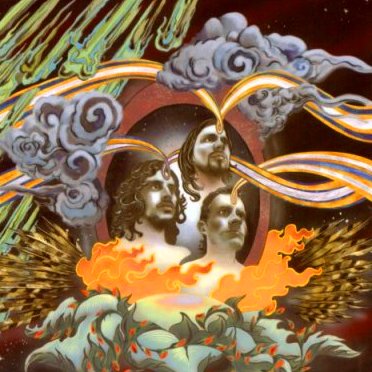
PRIESTBIRD ARRIVES ‘IN YOUR TIME’

FOREWORD: Priestbird’s cutting edge stoner rock-imbibed Chamber metal really caught fire in ’07 with ‘experi-metal’ entrée, In Your Time. At Mercury Lounge, they put on a stunning performance, displaying intrinsic skills and sharp dexterity. This article originally appeared in Aquarian Weekly.

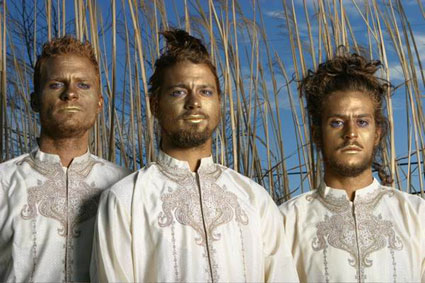
The intellectually curious architects embodying experimental Brooklyn troika, Priestbird, originally met through the advice of mutual friends. Though hobbled by a premature breakup then untimely change from spidery to faux-spiritual appellation, they increased articulate sensitivity while elevating the satiny symphonic salience transfiguring their petulantly grinding hardcore compulsion. Despite past traumas, they’ve come back stronger than ever.

After the untimely breakup of New York instrumental outfit Tarantula AD, Gregory Rogove (percussion-flute-piano-glockenspiel), Saunder Jurriaans (guitar-bass-sarod), and Danny Bensi (cello-violin-guitar) soon reconvened as Priestbird. Aside from newfound harmonic serenity and better collective musicianship, the threesome’s inceptive reliance on Epicurean chamber music and moody escapist dreamscapes remains intact.

Priestbird’s encouraging debut, In Your Time (Kemado), brims with tumultuous anxiety. The dramatic hair-triggered opener, “Life Not Lost,” cuts through dusky tension with knife-edged precision, fusing foreboding whispered verses to grizzled post-grunge choruses, incrementally imploding as bashed drums provide formidable kick. Ultimately, its structurally detailed arrangement combines Fugazi’s oppression-deriding D.C.-rooted militancy with Nirvana’s maniacal grunge furor.

“Once you pass that entrance, there are all these other colors we try to bring out – not many bright colors, except “Last To Know” (its whirled baroque upwelling and gaunt utterances reminiscent of the Beatles psychedelic swirl “Blue Jay Way”) and “Jackyl” maybe. The latter’s a little yellowish purple,” Rogove snickers.

At cozy Bowery beer joint, d.b.a., Rogove wears the pointy-topped Russian army wool hat he got in Moscow and wore during a recently attended New York show. “I learned at a liquor store today it’s for head balance,” the gregariously lanky mouthpiece shares whilst quaffing a margarita spiked by sneaked-in tequila (as his comrades plow Southampton Stouts). A rebellious Lancaster native out of step with his conservative Pennsylvania Dutch brethren, the hobnobbing Rogove is assuredly the most athletic, demonstrative, fearless, and conversant member. He praises the work of brawny Led Zeppelin drummer John Bonham as well as Ornette Coleman’s pioneering timekeeper Ed Blackwell.

“Music was a chance to communicate things I wanted to do that I was refused to elsewhere. In this realm of connecting with people, I’m now finally allowed to say almost anything I want and people hopefully have their own time and place to listen. Instrumentally, you could say what you want without it being in English, Spanish, or Italian – way beyond normal language,” he concedes.

Spending time in arty dance-punks The Flesh (a one-time Gern Blandsten signing) provided an auspicious experience. “They’re still going. They take all the good stuff in R & B and rap and fuse it with punk. I applaud and respect them.”

Meanwhile, turned-on tuned-in brown-haired gremlin, Jurriaans, grew up smack dab in the middle of Seattle’s grunge era, cherishing native icons Mudhoney, Pearl Jam, and Nirvana, then attending Rhode Island School of Design for a year. He joined abstract uber-prog groove masters, Gruvis Band, before linking with Tarantula AD. His menacing proficiency on a specially made double-neck guitar-bass furnishes surreal tonal variances.

Jurriaans recalls being inspired by Zeppelin axe virtuoso Jimmy Page and his disparate peers. “I owe it all to my big brother. He got me into Zeppelin, Pink Floyd, and Grateful Dead. But I only like the Dead’s songs, not the wasteful jams. I loved their (illustrious) cover artwork, but hated the hippie poser fans.”

Born in Copenhagen, Denmark (“near death metal dudes”), Classical-trained wiry-haired facilitator Bensi spent youth in England and Germany prior to attending Northwestern University. “My brothers’ friend gave me Iron Maiden’s Life After Death on vinyl and my whole life changed. In Germany, it’s hard to get your hands on good stuff. I was getting fed metal and had to find a way to bring cello in. I wanted nothing to do with the Classical world. The only place to find good Classical music is in film scores and those few new composers are never popular. I went to Boston, did stuff there as a steppingstone, and in Tarantula, only used cello in the beginning.”

“Saunder was in Brooklyn, I was in Long Island City, Queens, and Danny was in Manhattan when we originally met,” Rogove recollects. “In Tarantula, it was more back and forth, hard and soft, big and small. Then, we checked out the environment to see where we could go. So we coalesced Tarantula’s ideas and formed them more fully and now live in a world that will create longer, more expansive compositions.”

When they’re done fucking around, leaving askew messages on my tape recorder (as I buy a round of drinks), we discussed their latest venture over some sweet herbage.

Rogove explains, “There’s a time for this music and we hope it’s now (hence the precipitously impulsive In Your Time title). Tarantula was more obtusely instrumental and harder for people to reach. As Preistbird, we want to communicate better and become closer. When I was in The Flesh, I only did background harmonies. Now, I’m expressing inner feelings up-front.”

“Classical is usually too artsy, not catering to beautiful melodies. It’s more intellectual, which takes it farther away from public consumption,” Bensi chimes in. “Some Far East elements that creep into our music come from the keys we use for melodrama. It could be done cheesy, but when done right it’s meditative and uprising.”

Though contemporary comparisons to Queens Of The Stone Age, Mars Volta, and, on the doom-y slo-mo requiem “Hand That Draws,” fellow fowl-named combo, Pelican, are understandably fathomable, it’s also justifiable to assimilate them with seminal prog-rock progenitors King Crimson, Yes, and Soft Machine.

“One of the best records ever is In the Court of the Crimson King, but I’d never reference that with our music. Some people have. There was real development during that late ‘60s period,” Rogove says before acknowledging how he endured a Frank Zappa phase years hence. “This era is confusing. Back then, it wasn’t trendy. It was revolutionary. Now it’s so hard to find anything revolutionary near the mainstream.”

Onstage at Mercury Lounge in May, Priestbird gave each live rendition the same diligently detailed concision In Your Time’s spellbinding intricacies deserved. Diverse percussive elements, intermittent cello, and ghostly harmonies abound, providing provocative mood twists to the more celestial evocations. Classical, Middle Eastern, and Far East complexities offer timely relief to swiftly shifting, savagely downtrodden, loudly metallic rampages. Thankfully, their recurrent heavy metal thunder lacks the laughable histrionics many lesser purveyors rely upon.

Besides, Priestbird’s gloomier minutiae are exercises in temperance and restraint, sometimes resembling the cryptic art-rock transience Pink Floyd’s more perplexing pieces assumed, though countered by fertile blasts of full-on thrashing guitar (less distorted and subterranean than equally impressive label mates, The Sword, devise). Be-stilled piano dirge, “In Your Time,” time warps the preening futuristic spell Alan Parsons zapped ‘72s monumental Dark Side Of The Moon with. And Sierra Casady (from luminous duo CoCo Rosie) adds bewitching soprano threnodies to resurrected Tarantula AD instrumental, “Empire,” for good measure.

So how’d they come up with the mysterious Priestbird moniker, dare I ask?

“It’s a creature that takes care of bird spirits in the afterlife,” submits Rogove.

LIFE IN THE FASTBACKS LANE

Not as financially and commercially established as Seattle’s top grunge artists, but more experienced in terms of playing, the Fastbacks never amassed an arena-sized audience but really should have. Strangely, in the early ‘90s, the Fastbacks snappy straight-ahead approach went against what the mass media (radio, MTV, ads) gave access to. So as grunge’s popularity went through the roof internationally, efficient power pop bands saw a slight decline.

As a point of fact, it turns out the Fastbacks are one of the most generous and respectful band you’d ever meet. At Roseland Ballroom in ‘96, my friend Al and I spent the entire pre-show backstage hanging out, drinking beers, and eating food with ‘em. Ironically, they were opening for the Presidents Of The United States Of America (whose drummer, Jason Finn, spent time in the Fastbacks). What was surprising about the Presidents was they were a novelty pop band that was also from Seattle and somehow got lucky and bucked the grunge trend and actually still found commercial success with singles like “Kittie” and “Lump.”

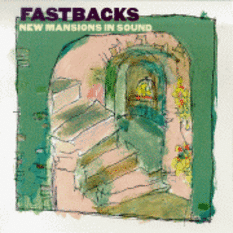
The Fastbacks disbanded in 2001, but Bloch continues to put out infrequent Minus 5 records and, by ’08, began playing in Robyn Hitchcock’s touring unit. As you’ll read below, Eddie Vedder of Pearl Jam kick started the sessions for ‘96s New Mansions In Sound (one of their final recordings). This article originally appeared in HITS magazine.

Seattle’s insouciant Fastbacks were formed way back in ’79, releasing their debut EP, Fastbacks Play 5 Of Their Favorites, in ’82 on then-fledging local label, Sub Pop. Guitarist-composer Kurt Bloch splits time in way-pop combo, Young Fresh Fellows, and recently produced grunge architects, Mudhoney, and hard-driving rockers, Gas Huffer. Along with bassist Kim Warnick, guitarist Lulu Gargiulo, and new drummer, Mike Musberger, the Fastbacks practically invented the indie-pop genre.

The band’s non-stop repertoire at NYC’s spacious Roseland Ballroom included a cutesy cover of the Raspberries frisky ’72 smash, “Go All The Way.’ For three-quarters of an hour, Bloch hopped and bopped across the stage while displaying exuberant guitar riffs that jettisoned from the speakers like lush ear candy.

Opening for close friends and current pop sensations, The Presidents Of The United States Of America, their lubricated lolli-pop recalls the Golden Age of ‘60s AM radio. The bands’ charming new LP, New Mansions In Sound, picks up where the critically acclaimed ’94 set, Answer The Phone, Dummy, left off. The Farfis-dominated “No Information,” and the contagious “Just Say” beg pop lovers to try another flavor as Bloch and Warnick kick up some dust.

What was Seattle’s music scene like before Nirvana broke things wide open?

KIM WARNICK: There was a time in the early ‘80s when nobody cared and venues were limited. Nobody ever imagined major labels would one day start signing up these local bands. But what has happened in Seattle has only helped us, even if we didn’t get mass exposure.

What music did you listen to growing up?

KIM: The Beatles, Sex Pistols, cheesy metal bands. One of my favorite singles was the Archies “Sugar Sugar.” It’s amazingly pure, simple bubblegum similar to 190 Fruitgum Co. I even remember talking to Kenny Laguna about his days with Tommy James & the Shondells. We did a cover of “Ball Of Fire” which remains unreleased. Kenny helped write that song. But my favorite band of all time is the Muffs. Kim Shattuck is a hit machine.

I hear you’re friendly with Hole’s Courtney Love?

KIM: Oh yeah. She showed up unexpectedly at one of our recent shows. I’m always amazed at the Phyllis Diller-like one-liners she uses. Her best line was when she told security, ‘My face is my backstage pass.’

How did the recording sessions for New Mansions In Sound work out?

KIM: Kurt thought the record was too weird. He went over the edge producing other projects and it breaks his heart when he can’t fully invest his heart and soul in something. He stayed up all night trying to get tracks down. But Pearl Jam’s Eddie Vedder showed up and changed Kurt’s attitude immediately. Almost instantly, we were finishing tracks in one take. Eddie even sang on “Girl’s Eyes.” He’s a big fan of The Who. So we ended up fucking around with some Keith Moon song while we were in a drunken state.

What song do you enjoy most from the new disc?

KIM: I love “Just Say” because it reminds me of Joan Jett. I’ve been a fan of hers since she was in the Runaways. We toured with her during the Bad Reputation days.

You mentioned a documentary film concerning the Seattle scene.

KIM: Doug Pray, this graduate of L.A. film school came up to Seattle in ’91 in order to document the newly discovered scene. In the film, bands like Nirvana, Green River, Soundgarden, Screaming Trees, and the Presidents talk offhandedly about their mutual friendships. It’s full of funny stuff. You’ll be rolling on the aisles laughing. But the footage of the Gits’ Mia Zapata, who was brutally murdered a few years ago, will absolutely break your heart.

I heard you met Sean Lennon while you were in New York on your previous tour.

Sean was at one of our concerts talking about his mom and dad. He asked me if I’d like to meet his mom. And I was like, ‘Ohhh, I don’t think I can do that.’ Fuck! It’s hard enough talking to you. But he’s such a well-balanced kid and I think he’s got a great singing voice.

(At this point in our conversation, Kurt walks in with Dave Dederer of The Presidents Of The United States Of America, who have returned from performing on the David Letterman Show.)

KURT BLOCH: People wanted me to sign autographs because they thought I was in the Presidents.

DAVE DEDERER: I had a great rock and roll moment on Letterman. I tried to throw my guitar at the drum set, but as I let go, it got caught in my shoulder and neck and went ‘boing!. There it was just hanging off my back.

KURT: Did you hurt yourself? The other night, I tried to do that and I hit myself on the back of the head.

(As things get back to normal, I talk to Kurt for a few moments)

Tell me some interesting background stuff.

KURT: I went to an alternative private school, where I worked on some electronic projects. I bought 45’s every week until 1973. Then I got excited about ‘70s rock. We had a radio station in high school which allowed us to rock out after 6 o’clock.

What concerts did you attend while you were still in high school?

KURT: The first actual rock concert I saw was Procol Harum’s Grand Hotel tour in ’73. I always liked their pomposity factor. The second concert I went to was Robin Trower – then Blue Oyster Cult. They played in Seattle all the time.

What type of response do you expect to get from your audience?

KURT: We don’t mind if they throw shit at us; as long as we’re getting feedback we’ll be o.k. There are always some ten-year-olds in the front row sitting there saying, ‘Play that one good song.’

STATIC X/ POWERMAN 5000 @ ROSELAND BALLROOM

Static X / Powerman 5000 / Roseland Ballroom / Feb. 18, 2002

Face it, heavy metal is back better than ever. Minus the extraneous guitar noodling, masturbatory jams, needless drum solos, and superego bombast of yore, several prodigal sons have expanded the usually restrictive confines with an infusion of economic riffs, newfound nihilistic punk attitude, and unapologetic techno-derived metronome beats.

The newest challenger for the title of King of Metal is big-haired vocalist/ guitarist Wayne Static, leader of Wisconsin’s demonic Static X. Prancing like an uncaged animal, his savage groans and spasmodic maneuvers kept ecstatic fans bobbing heads and shakin’ fists in the air while rampant body surfers got passed overhead to the security-protected area in front of the stage. Dedicating the gut-bustin’ “He’s A Loser” to “all the people who’ve been called losers” bonded Wayne with all the angst-y, hard-headed teen outcasts feeling out of place and inadequate in our corporate-decayed society. Throughout, axe grinding Koichi Fukuda’s bludgeoned three-chord riffs, diabolical Tony Campos’ shotgun bass, and Ken Jay’s muscular skins gave each thunderous eruption an inescapable, in-yer-face thrust. Nothing fancy – just a piledriving sonic blitzkrieg unmatched by better known competitors. Anyone with a hankering for prime, state of the art metal should immediately score a copy of the quartet’s claustrophobic masterpiece, Wisconsin Death Trip.

When fluorescent yellow-haired singer Spider screeched loudly in a hoarse-throated moan, “this is what it’s like when worlds collide!” before sliding into Powerman 5000’s most enthusiastic number, pierced teens took that as a sign to slam-dance in a last ditch, orgiastic free-for-all frenzy which matched the bombastic implosion of the lyrics’ myopic, decadent savagery. While Rage Against The Machine profoundly pledge allegiance to righteous revolutionaries, Spider’s prophetic indulgences and lethal ruminations offer no concrete societal resolutions for the New World Order he exploits so terrifyingly on Tonight The Stars Revolt! So when he begs the question, “Are you ready to go?,” avid fans swirling in an uncontrollable tizzy fail to grasp the prospect of such carelessly Apocalyptic mayhem.

And while it’s difficult for Spider to step out of big brother Rob Zombie’s dark, sprawling Goth-metal shadow, his limber gyrations and the bands’ full throttle propulsion bring each catastrophic theatrical extravaganza to a glam-rock climax just a shade lighter than Zombie’s Halloween-ish spectacles. Spider’s kitsch-y sci-fi mutterings may be sociologically insignificant, but his vulture-like delivery and the dual guitar sear of Adam 12 and M.33 assault the senses with confrontational affirmation. To their legion of loyal fans brave enough to get “in the pit,” Spider dedicated the thrilling concert staple, “Car Crash.”

More visually captivating and less musically substantive than Static X, Powerman 5000 continue to improve their dynamic live shows with spirited Kiss-like execution, a consolidated repertoire, and flashy, retina-burning laser lights.

STAR SPANGLES GOT A LOADED ‘BAZOOKA!!!’

FOREWORD: New York’s lethal Star Spangles like to get rowdy and party down. I met up with them for some drinks in ’03 to help promote the anthemic power pop album, Bazooka!!! We drink like fish and herb was cooked on Avenue B in Lower Manhattan. They took a few years to finally release ‘07s Dirty Bomb, which found ‘em in fine form. This article originally appeared in Aquarian Weekly.

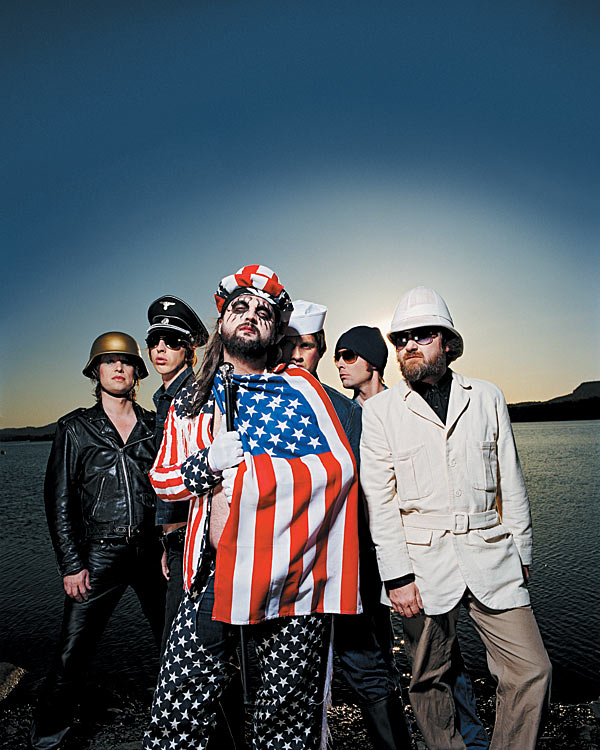
Wholly accepting rock and roll’s legendary reckless lunatic posture, insubordinate New York City-based quartet the Star Spangles truly embrace the seedy lifestyle, unlimited freedom, and lowly compensation such flickering dalliance affords. Blue collar suburban-raised bums fashionably attired in ‘60s Carnaby Street threads on-stage, the Star Spangles may not be the typical patriotic red, white, and blue flag wavers their name suggests, but they certainly aspire to the do-it-yourself creative spirit guiding freewheeling dreamy-eyed aesthetes all over America. It’s no surprise during their first day in Virginia Beach to record ‘03s firy full length debut, Bazooka!!!, these proud pagans spent time “getting fucked up” with renowned manic punk demons the Candy Snatchers.

As we gather at a small, loud Avenue A pub in Manhattan one rainy September afternoon, lead vocalist Ian Wilson seemingly jokes, “We had Mc Donald’s for lunch and washed it down with White Russians to settle our stomachs.”

Bassist Nick Price chimes in, “Yeah. And those poppers I took really make my asshole loose.”

Such is life with a pack of wildcards this doggedly decadent, casually unrefined, and pleasurably frivolous.

Originally, Wilson and guitarist Tommy Volume formed the band in upstate Brewster with a different rhythm section, releasing the formative “I Can’t Be With You” 45 R.P.M. on boutique Spanish label, Munster Records. Around that time, Volume was collecting welfare and Wilson was virtually homeless.

“Welfare was great,” Volume insists. “It was actually Social Security Insurance for disability. I did some time in the booby hatch.”

On close inspection, the unkempt primary duo recalls a youthful Jagger-Richard. Volume’s gaunt facial features and rugged appeal draw comparisons to the Glimmer Twins drug-addled axeman while Wilson’s got the Rolling Stones frontman’s big pouty lips, sharp jawbone, and wily swagger.

“Yeah. But I’m not an unapproachable douchebag like Jagger,” Wilson quips.

“When we started, it was just me on guitar and Ian would sing,” Volume remembers. “Our old drummer was a stooge and the bassist was a rich guy. They were from the city. The rich guy tried to take over. Our first single came out on pink, red, and black vinyl on a bootleg label. It was raw rock and roll. Our first gig on the road was at (platinum-haired photographer-promoter) Leee Childers of the Heartbreakers birthday party. He gave us our break back in ’97. He was our first mis-manager. We were 18 hanging in a bar and Leee came over and asked who we were. We said, ‘We’re a rock band.’ He asked if we wanted a gig.”

Soon after, Price and Jersey Shore-via-Czech Republic drummer Joey Valentine were recruited.

“Price admits, “I listened to the 45 before joining the band. The sound was shitty, but I couldn’t believe they got it together to record something. I was like ‘Wow!’”

Influenced by early ‘80s Minneapolis punks such as the Replacements, Husker Du, and Hoodoo Gurus (whose stunning “Get Her Back” gets covered on Bazooka!!!), instead of current local raves the Liars, Ex-Models, and Yeah Yeah Yeahs, the Star Spangles give a shout out for a litany of little-known, but highly praised, up-and-comers.

“We’re connected to New York bands, just not the ones you read about in the paper,” Volume says. “There’s a handful of bands like the Little Killers, Some Action, the Weekeneders, and Mz. Pakman. We’ve played with established punks Jayne County and the Dictators also.”

Though signed to major label, Capitol, the Star Spangles were able to keep their original unpolished tracks intact. Steve Baise, from retro-rock combo the Devil Dogs, recorded the proceedings while Daniel Rey, former Ramones producer, mixed the results, keeping the rough-hewn edginess and unbridled inertia up-front.

“Daniel did it on spec during free time ‘cause he’s our friend. We told him what we wanted and he did it. We don’t have regular jobs so how can you expect us to mix a board,” Price advises.

Valentine surmises, “Daniel’s like the big brother of the band. He really helped us out. We used to have fun hanging out with Tommy and Dee Dee (Ramone) before he died. Dee Dee’s last book, Legend Of A Rock Star, was funny, but the others he wrote were lame.”

On Bazooka!!!, the spitfire exertion “Angela” and the passionate ballad “In Love Again,” summon leathery antecedents the Ramones’ scurvy Rock And Roll High School days. The blazing “Crime Of The Century,” borrowed from ‘70s punk vets Johnny Thunders and Wayne Kramer, fondly captures the naïve broken-hearted scourge of yesteryear. “Stay Away From Me” revisits the electrified bubblegum pop purge of the Replacements, the glam-chanted “I Don’t Wanna Be Crazy Anymore” unwittingly yields to Ian Hunter’s “Cleveland Rocks,” and the sturdy medley, “The Party,” gets drunk on the Fleshtones garage-rock spunk.

Better still, the surging “I Live For Speed” is a timeless sonic guitar anthem, riotously unruly in its raspy rapidity. Nearly as good, the wordy pyromania “Which One Of The Two Of Us Is Gonna Burn This House Down” hurls lunging Paul Westerberg-inspired vocalizing above a scathing melodic din.

“We like classic rock and roll and a lot of power pop, but the garage revival stuff I never got, although I loved the Real Kids,” Price maintains. “I’d take the Fleshtones or the Shoes over half the bands nowadays.”

Wilson agrees. “We like the Nuggets stuff, Nils Lofgren’s Grin, and early rockers like Chuck Berry, Little Richard, and Buddy Holly.”

“Live, we do (Anglo-folkie) Richard Thompson’s “Feels So Good,” (‘60s political composer) P.F. Sloan’s “Been To The Family,” (‘50s rocker) Eddie Cochrane tunes, and something by (cowpunk progenitors) Rank And File,” Price imparts.

As we finish our drinks and get ready to depart the jovial foursome threaten to show me their nuts, then conjure the benefits of cotton candy-flavored soda and speculate upon mixing Grand Monet with Ny-Quil. And no matter what Price thinks, they’re not “mellower than Jack Lemon.” Contrarily, the Star Spangles are probably wackier than a barrel of monkeys.

Wilson concludes, “It’s a yearning to have fun. It’s about driving down the road going crazy. We got that.”

TROEGS FLYING MOUFLAN BARLEYWINE

Closer to a fruity IPA (or Troegs Nugget Nectar Red Ale) than its barleywine style indicates. Sturdy 9.3% alcohol surge has calming affect on nerves as ‘candi-sugared hops’ blend into bright cherry-peach-pear-apple tang and spiced raisin-date conflux. At midst, piney grapefruit rind bitterness counterbalances sweet melon-cantaloupe-mango melange, chewy rum-soaked caramel-toasted molasses malting, and syrupy spruce sash. On tap, mild hop-charred ice coffee bittering seeps into oats-toasted fruit-dried cherry-blueberry conflux.

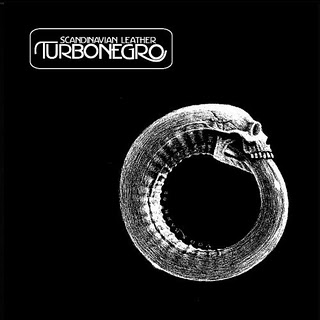
TURBONEGRO DRESS TO THE NINES IN ‘SCANDINAVIAN LEATHER’

FOREWORD: Nihilistic Norwegian punks, Turbonegro, got their start in ’89 and conquered Europe while developing only a cult audience in America. By time I got to interview them (minus singer Hank Von Helvete), they were promoting ’03 comeback, Scandinavian Leather. It seems Turbonegro needed the five-year break so Hank could get clean and be treated for depression. They followed up with ‘05s Party Animals and ‘07s Retox, two albums that relegated the punk for newfound hard rock obsessions. This article originally appeared in Aquarian Weekly.

Place energetic Norwegian combo Turbonegro in that all-important category of ‘must see live bands.’ Finding their name (an automotive term for darkest shade of black) spray-painted on a wall, Turbonegro’s high-powered battle cries march forth with full-throttled aggression. Formed in ’89 by bassist Happy Tom, keyboardist Pal Pot Pamparius, and rhythm guitarist Rune Rebellion, this demonic sextet combine hard rock ranting with unbridled punk intensity – a winning formula fully exploited and expertly executed.

At a crammed Bowery Ballroom show, glam-rock-informed lead singer Hank Von Helvete is in rare form despite being hit in the head by a bottle from some asshole the previous night at an aborted gig in Lower Manhattan’s smaller Mercury Lounge. Entering the stage with black top hat, walking cane, and exposed flabby belly, the face-painted Von Helvete vehemently belts out frenzied remedial English lyrics with the adolescent rage of upstart punks half his age. Members since ‘98s renowned Apocalypse Dudes, lead guitarist Euroboy and drummer Chris Summers fill out the furious racket with uncommon precision.

The rip-snorting exhortation, “Don’t Say Motherfucker, Motherfucker,” and the fist-pumping crowd-pleaser, “Good Head,” got the moshers bashing. Then, the glitzy “like it, love it” chanted encore, “Get It On,” climaxed in a toxic combination of Motorhead sludge and AC/DC spunk. Before Turbonegro could escape, the jam-packed club denizens broke into an impromptu “woo ooo ooo/ I got erection,” prompting Von Helvete to instruct the audience to split up the first and second verse in a show of gleeful sophomoric banter. True fans should check out ‘99s thrilling Darkness Forever, which captures the band live in Oslo and Hamburg.

Turbonegro truly hit greatness with their third record, ‘96s Ass Cobra; its shimmering maxi-zoom sheen hardened by an ebony-studded metallic crust. The disturbing homophobic mock, “The Midnight Nambla,” bludgeoned hardcore chant, “Deathtime,” and a few glittery rave-ups form the nucleus.

‘98s much-anticipated follow-up, Apocalypse Dudes, benefited from newfound dramatic intensity. A nifty suburban pocket symphony perfectly mistaken as some newfangled rock opera, it bridges theatrical skullfucking with ‘70s hard rock bravado.

On ‘03s plush Scandinavian Leather, Turbonegro’s more refined arrangements and neo-orchestral touches never sacrifice the scintillatingly steadfast sizzle. Still obsessed with party anthems while retaining a scatological anal fixation (the catchy “Wipe It Til It Bleeds” and the vehement “Turbonegro Must Be Destroyed”), they “Remain Untamed” boho mofo’s willing to “Fuck This World” while “Drenched In Blood.”

Featuring headlining tour mates Queens Of The Stone Age, plus Supersuckers, Therapy, Satyricon, Nashville Pussy, and Kylie Minogue, ‘01s tributary Alpha Motherfuckers compilation salutes Turbonegro.

On Scandinavian Leather, Turbonegro move beyond 3-chord rock for a few dramatic orchestrations.

HAPPY TOM: We wanted to make a grandiose record without sounding like Apocalypse Dudes ‘cause everyone was like, “How could they follow that album?” It’s more like a subversive symphony. It’s about feeling.

Who are some early influences?

CHRIS: Surf groups like the Beach Boys. David Crosby. Black Flag. New York hardcore like the Cro-Mags.

PAL: Just really hardcore stuff. But I listen to everything. Anything goes.

HAPPY TOM: Black Flag, the Rolling Stones.

Was Turbonegro only playing Scandinavian countries initially?

HAPPY TOM: Back then, it was just a hobby project. The first show we played was in Copenhagen. Someone there played the first Mudhoney 12″ and that was very similar to what we’d come up with. Then we got tired of that and wanted to have our own genre. We were into death punk on Hot Cars And Spent Contraceptions – our first real album. It was very primitive. We had lineup changes, got Hank in the band singing. Then, Chris and Euroboy came in and changed the sound. That was afterThe Hot Cars & Spent Contraceptionsfffff Ass Cobra. So this lineup has been together for seven years. Our main Scandinavian influence was Union Carbide Productions, which became Soundtrack Of Our Lives.

Turbonegro’s moodier textures remind me of Soundtrack Of Our Lives.

CHRIS: That’s a good thing.

How has Turbonegro’s live show improved since ’89?

HAPPY TOM: We were just this punk band. We got all this shit from German punks because we didn’t look alternative enough. So we thought, “Let’s see, what’s the alternative of that. Let’s see what they think of a homo band.” Plus, at the time we were from the part of Norway where black metal bands were from and at the time they were burning down churches and killing each other with pitchforks. We thought, “How could we go beyond that and scare those guys? What’s worse?” The only thing that scares those guys is homos.

PAL: The British media called us the Pillage People ‘cause they’re still sore the Vikings tore down their country in the old days.

Is there a decent Norwegian scene?

HAPPY TOM: Swedes have always been clever at pop culture, but Norwegians are not. Maybe that’s a good thing. We say we’re rock and rollers from Atlantis, the lost island. We don’t want to be labeled as Scandinavians.

Do Scandinavian bands try to be more vicious, brutal, and noisy than vintage U.S. punks for better shock value?

HAPPY TOM: You’re probably right, but there’s still some good American bands. We want to reach the level where we’re getting blinded by rock. One of the things we’re best at doing is like when you hear the outro of the Stooges “Search & Destroy,” the guitar has a certain pitch. James Williamson, the lead guitarist, reaches unconsciousness… You know, instead of how the Ramones had a pinhead, we talked about having an old roadie dressed in a big old coat with a hat and dark glasses come on-stage with a cane and pretend to be blind.

You like to rip apart cultural taboos.

HAPPY TOM: In Europe, culture is an oppressive idea. If you’re into contemporary music in the States, its because you’re into contemporary music. What’s different is the culture. In Europe, you’re into contemporary music because you want to distance yourself from the masses. Now we’ve got a song, “Ride With Us,” which is a liberation song for people who work in the service sector. Literally speaking, it’s because denim jackets have blue collars, too.

CHRIS: The Hives always wear white collars. (laughter)

How’s the US tour going?

HAPPY TOM: Shows have been great. We played for 75,000 people in three weeks with Queens Of The Stone Age. We gained a couple fans. We did a lot of pyro in Europe, but after what happened at the Great White show (98 people died in a fire), Hank put a little sparkler in his ass the other night. He did it the first night in the States. It’s not a rocket, just a tiny little shitty kid’s sparkler. But after we did it the club people were almost crying. They were so angry. You can’t have lit objects on-stage anymore because people get paranoid.

Have you made any videos?

HAPPY TOM: We made one a month ago with the National Romanian Ballet for “Fuck The World” and we’re gonna make one in L.A. with Spike Jonze after playing three shows for “Sell Your Body.”

Were Hank’s face painting and stage maneuvers influenced by ‘70s shock rocker Alice Cooper?

HAPPY TOM: We’re all Alice Cooper fans. Actually, a Swedish journalist talked to Alice Cooper and told him about us. But the journalist said, “They ripped off your hat, eye makeup, hair, and cane.” But he sounded really excited about it and thought we sounded great and thought it was funny.

Ever cover one of his songs?

HAPPY TOM: Ten years ago we covered “The Ballad Of Dwight Fry.” We did it only one night.

THE THRILLS GOLDEN STATE CELEBRATION ‘SO MUCH FOR THE CITY’

FOREWORD: Impressive Dublin quintet, the Thrills, deserve better American recognition. I never even heard their ’07 album, Teenager. But in ’03, the guys took off from Ireland for sunny California seeking musical stimulation. The result, So Much For The City, brought critical plaudits. ‘04s Let’s Bottle Bohemia (featuring Van Dyke Parks idiosyncratic orchestral input) was nearly as good. This article originally appeared in Aquarian Weekly.

Growing up as neighborhood friends in damp, urban Dublin, Ireland, singer-songwriter Conor Deasy and guitarist Daniel Ryan earned their stripes in novice high school bands coined the Legal Eagles, which Deasy claims “lasted three hours,” and the Cheating Housewives. But after bumming around working ponderous day jobs, the duo plus fellow schoolyard chums Kevin Horan (keys), Padraic Mc Mahon (guitar), and Ben Carrigan (drums) took summer trips to sunny California in ’99 and 2000 to invigorate their weary post-adolescent souls and revitalize their musical passion as the Thrills.

Despite having to snub scurvy local label meddlers early on, the Thrills luckily caught the ears of famed ex-Smiths pop icon Morrissey, Oasis’ co-founder Noel Gallagher, U2’s Larry Mullen, and finally, Virgin Records. Rush-released in autumn 2003, the stunningly Country-licked So Much For The City proved to be a magnificent achievement, earnestly celebrating and glorifying the Golden State with a keen outsiders’ perspective. Though they carefully retreat to ‘60s influences such as the Beach Boys, Byrds, and Bacharach, there’s no denying the timeless oceanic splendor and lilting laid-back lull these breezy beachcomber portraits reflect on this humbly confident debut.

In a quivery hushed tenor, Deasy yearns for the Left Coast with plaintive restraint on the supine surf city serenade “Santa Cruz (You’re Not That Far).” Heading further South past Monterey, the banjo-fortified “Big Sur” strolls through a “steamboat show” nearby desert rock renegades the Shins and Beachwood Sparks would appreciate. Before “One Horse Town” comes stumbling in with its lusciously uplifting harmonic crescendo and vibrant Who-like guitar signature, Deasy’s at his most succulently seductive on the slow piano illumination, “Deckchairs And Cigarettes.”

The beautiful symphonic ballad “Old Friends New Lovers” – delivered in a sinewy croon similar to Grandaddy frontman Jason Lytle (ironically or not, a California native) – almost slips into Lee Hazelwood’s spaghetti Western James Bond theme, “You Only Live Twice.” Beyond the snuggly sunset sedation of “Hollywood Kids” and the equally dusky bedtime lullaby “Just Travelling Through,” the Thrills trek eastward for the fleeting love tryst “Your Love Is Like Las Vegas.” And I’ll be damned if guest Sneaky Pete Kleinow’s steel guitar on “Say It Ain’t So” doesn’t conjure memories of the high plains Country-folk he created with Gram Parsons in the Flying Burrito Brothers.

Who were your formative influences?

CONOR DEASY: Daniel (Ryan) and I grew up with rock and roll, raiding our parents Simon & Garfunkle, Beatles, and Beach Boys collection. He grew up next door. We’d swap records all the time. As we got older, Country unconsciously crept in. It dawned on me that many of my favorite Rolling Stones songs were “Wild Horses” and “Honky Tonk Women.” I remember picking up Neil Young’s Harvest purely because I knew the album cover so well. I thought, ‘Surely this has got to be good.’ These artists are connected like a family tree. You got to Buffalo Springfield, Crosby, Stills & Nash, Johnny Cash, and Gram Parsons.

Parsons lived out West. His music seems to inform the Thrills California muse.

CONOR: We were all pissed off growing up in one place waiting to see someplace else. We moved to San Diego and had an incredible four months living on the beach, picking up little jobs to keep a money flow. We found a naïve internet music club giving away free CD’s. We made the best of the situation, came back to Ireland, and threw ourselves back into the band.

What part of San Diego did you live at – Mission Beach?

CONOR: Yeah. We were in a house behind Tang Records, a punk vinyl store. We learned to body surf.

“Big Sur” reminded me of driving down scenic Route 1A from San Francisco.

CONOR: We used to drive down from San Francisco when we lived in the Castro section temporarily a year later. We’d get a Rent-A-Wreck car, drive down to Santa Cruz, then Santa Barbara. “Big Sur” is the kind of place you can imagine spending time in and never getting over it. The barren beaches that aren’t overly commercialized caught our attention. The song is about someone dwelling in the past, which is something we’re guilty of. You should be looking forward to life instead of reliving the past. Many people hang on to the ‘60s myth. That’s why that Monkees line is in there. It summed up the mood even though it cost us 15% for publishing. (laugh)

Was the somber “Deckchairs And Cigarettes” your first California-inspired track?

CONOR: That and “Don’t Steal Our Sun” were written in San Diego. “Deckchair” is a simple end of summer Blues song. All the optimism that goes with one of those great summers of your youth you think will never end, but then realize you have to deal with real life and all that boring shit. In our case, go back to rainy, cold Dublin. So it’s a sad song.

The lush ballad, “Old Friends New Lovers,” features gorgeous strings.

CONOR: That one string arrangement was an amazing experience. We got David Campbell, an amazing arranger who’s worked with Marvin Gaye and Michael Jackson. The melodies and little bits were already done, but he accentuated it with beautiful strings that never veered into that crass, pompous Goo Goo Dolls orchestration. It was subtle, mixed in with no overkill, capturing the songs’ mood.

Amazingly, The Thrills opened for Morrissey at Royal Albert Hall. I’d thought he quit music.

CONOR: He’s recording at the moment. He was without a record deal for five years and decided to tour to get interest going. New songs like “Mexico” and one about a Mexican gang in New York settling a rivalry are amazing. He had a place in west Ireland’s Cork, came across our demo, and loved “One Horse Town.” He came to see us in our tiny practice room. It was a bizarre experience. He offered a support spot in America but we couldn’t afford it. We hadn’t had a deal by 2001. Then, he came back weeks later and said, ‘How’d you like to support me in Royal Albert Hall?’ We were a couple weeks away from making the record in America. We hadn’t played in front of more than 100 people. We expected our first London show to be in a swaggy little Camden club with cynical gin-soaked industry-types. Instead, we got to play in front of 5,000 Morrissey maniacs.

Compare American versus U.K. audiences.

CONOR: Venues were smaller when we did our first ’03 American tour. The problem with upcoming U.K. bands is many have success out here, then have to re-pay their dues in America. That’s too much of a dent to their rock star ego. But we don’t care about the venue size as long as the crowd is up for it. I’ve done big gigs where the atmosphere wasn’t there. I’ve done small American clubs that were packed, sweaty, and real good.

How’s the Dublin scene?

CONOR: For ten years, there’s been many manufactured boy bands which haven’t taken off in America. In Europe, they’re huge. So the perception of Irish music hasn’t been great lately. But homegrown artists such as Damien Rice are getting through. David Kitt and Gemma Hayes – who’s on tour with the Counting Crows – are good. Rough Trade signed Irish band Hal, whose debut comes out in ’04.

Take me through The Thrills video catalogue.

CONOR: We’re on our fourth single here, but in America, we’re on our first, “One Horse Town.” We did a lo-fi black and white video the day after the record was done so we were all worse for wear and hungover. The record company wanted us to do an expensive video, but we stuck to our guns and our friend shot a simple video with a Super 8 camera. Then, we did a bigger one with Diane Martel, who’s done NERD videos for “Rock Star” and “Provider.” We were one of the first guitar bands she’d worked with. We were pushed into a pool and ended up in a hazy surreal setting. Then, we did a video for “Santa Cruz,” which involved us in a strip tease with girls watching us play songs, get carried away, smash glasses, and mob us. Lastly, we did “Don’t Steal Our Sun” in L.A. We had these great basketball players on the court kicking our asses, but halfway through we get into our flow and pull off these crazy moves.

Next album?

CONOR: It’ll be edgier. It’d be phony to write the same type of songs. Once a band parodies itself, it’s not interesting. Records should document what’s going on in your life at that time, which our debut does. The flavor of the debut will be there, but twisted more. Lyrically, it’ll lean in a different upbeat direction.