RUFUS WAINWRIGHT’S GAY MESSIAH SURE TO ‘WANT ONE’

FOREWORD: I’ve spoken to Rufus Wainwright on several occasions at other musicians’ shows. He’s friendly, polite, and was reared by two semi-famous musical parents. So I was looking forward to speaking to the stylishly serenading tunesmith when the gorgeously orchestrated Want One dropped in ‘03. When we left off, the environmentally conscious gay-rights advocate was hoping to become more politically aware in order to rebuke fascist Republicans. After ‘04’s Want Two, Rufus came up with ‘05s splendid guest-filled Release The Stars and ‘07s Rufus Does Judy At Carnegie Hall (a ripe tribute to the late, respected Judy Garland).
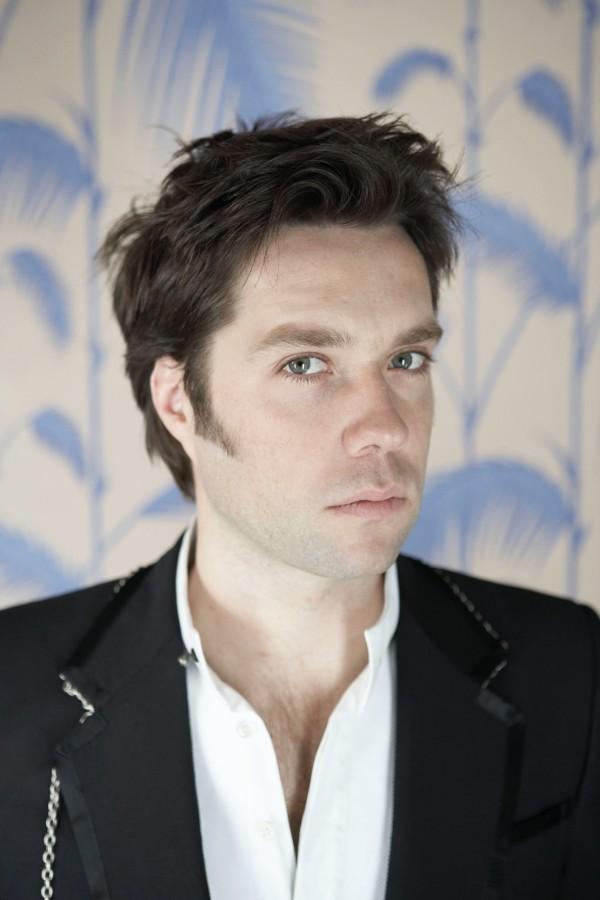
Chasing away personal demons to rid deep depression becomes cumbersome, but soon skies brighten and beams of sunshine re-invigorate lost souls. Happily, composer Rufus Wainwright overcame the trauma of alcohol indulgence and speed abuse to return stronger than ever. Musically gifted son of satirical singer-songwriter Loudon Wainwright III and folk romanticist Kate Mc Garrigle (one-half of Montreal’s resplendent Mc Garrigle Sisters), the resurrected Rufus reconvened his recording career after a short October 2002 rehabilitation.

Learning to play piano at age six, Rufus Wainwright toured with the Mc Garrigles alongside sister, Martha (also a respected performer), by thirteen, getting nominated a year hence for the equivalent of a Canadian Oscar with the composition “I’m A Runnin.’” By ’98, his self-titled first album of original ‘modern standards’ turned heads due to its oblique pre-rock leanings, baroque elegance, Chamber pop twists, and informed Classical nuances. Recondite string conductor-producer Van Dyke Parks (fresh from his ’95 Brain Wilson collaboration Orange Crate Art) and French Canadian multi-instrumentalist Pierre Marchand (who’d scored hits with crooner Sarah Mc Lachlan) lent a hand, as did veteran rock sessionmen Jim Keltner (drums) and Benmont Tench (keyboards). The gorgeously yearning serenade, “April Fools,” found radio daylight, securing an eclectic audience for the eccentric, seductive tenor.

For ‘01s evocative Poses, Wainwright’s baritone gained further assuredness as he nailed leftover material from his promising debut. Now living in New York City’s Chelsea District, the fragile artist succumbed to reckless self-destructive behavior by the time 9-11 shook the foundation surrounding his pacific neighborhood. While finalizing rehab, Wainwright began drafting “Want,” the auspicious titular theme framing an exciting new chapter.
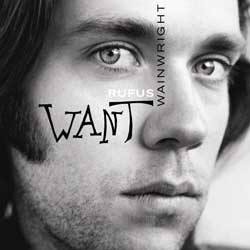
Linking ecstasy, passion, and pain, the Manhattan transfer courageously exposes his most vulnerable lyrics on the reflective Want One (a second installment, Want Two, is expected shortly). Experienced producer Marius deVries’ rich orchestral tapestries – whose embellishments adorn the works of top-notch pop artists such as Madonna, Bjork, Massive Attack, and David Bowie – give a sweeping dramatic splendor to Wainwright’s thoughtful vistas and complex arrangements.

The hymnal bolero “Oh What A World” drifts through childhood remembrances, the New York skyline, and Broadway show tune “Memories,” building to a plush string crescendo. “Movies Of Myself” embraces more innocent recollections, gaining sturdy guitar resilience from guest Charlie Sexton while comparing favorably to Todd Rundgren’s best beat-driven Something/Anything tracks (ironic, considering both albums were made at Woodstock’s soon-to-be-closed Bearsville studio). Penned as a lovingly bitchy lament to his Boston Public father and featuring his mother on accordion, the gently swaying “Dinner At Eight,” confronts heartbreaking rebelliousness compassionately.

How did Want One shape up?

RUFUS WAINWRIGHT: I definitely pulled out all stops for this record and its follow-up, Want Two. I went into the studio, none of this was planned, and the war was starting in Iraq. Marius is an extremely efficient, polite, diplomatic producer. I had dealt with some major personal issues. We just started working and shot out thirty tracks. We ended up with two records. At first, I wanted to do a double LP. The record label was weary and I don’t want my listener’s heads to explode. So I thought of an installment deal because it reminds me of a Victorian novel. In terms of marketing, we didn’t want any strikes against Want One. There are certain songs my fans know from concert, like “Gay Messiah,” that are on Want Two. I didn’t want to edit, cut down, or bleep anything and I wanted to get into Wal-Mart, at least the first part. Then, the second part, you could sell at Barnes & Nobles.

Are you the “Gay Messiah”?

RUFUS: No. I’m Rufus the Baptist. I won’t be the one baptizing in come. It’s my take on religious right wing attitude towards the politics in the world. I can’t even enter into the debate because in terms of those religions, gays don’t exist. So I created the “Gay Messiah,” who rectifies the situation.

Were you brought up religious?

RUFUS: I was never baptized, but I was brought up in a very Catholic environment and school – not so much household – but I had to go to church. I wasn’t allowed to take Communion. I wasn’t allowed to do Confession. I think my mother wanted to put me through extreme hell. (laughter) In a weird way, I wasn’t part of the church, but the Bible stories are pretty amazing. I’m happy I went now. At least I know the enemy.

Your mother and Aunt Anna have angelic hymnal voices. Did they sing church choir?

RUFUS: Quebec is haunted by the Catholic Church as a province of mind. There was a cultural revolution in the ‘60s – no, that was China. It was maybe the Silent Revolution. It was real anti-Catholic. They went from having the highest birthrate in the world to the lowest. So the church haunts everyone.

Did the circumstances of 9-11, rehab, and other adversities play a part in Want One’s development?

RUFUS: It did. You’re right. I don’t think it’s necessarily adversity so much as dealing with adversity, getting out of adversity, and realizing life is worth living and regaining hope. This record’s positive in many ways – on the upswing. I was practically born onstage. My first crib was a guitar case and I always associated performance with love and songwriting with social standing. For many years, I wasn’t aware I was a person like everybody else. That person who was ignored came back and whipped me in the ass when I hit thirty.

The flourishing orchestral dirge “Go Or Go Ahead” resonates with personal defeat.

RUFUS: That song was a gift from hell. I definitely had to pull in a lot of favors from a vast amount of mythological tales or lessons taught by my father. I had to grab all those things in my life to keep it together. That song encapsulates much of that.

On the other hand, radiant piano and prominent horns give “14th Street” a celebratory feel.

RUFUS: That’s the triumphant return. I was recently in Paris. They put me up in the Arc of Triumph, and that reminded me a lot of that song – a big triumphant arch. The knight returning home from battle.

The vocal arrangement for “Vicious World” reminded me of Todd Rundgren.

RUFUS: That’s in homage to Brian Wilson. Hats off to Brain for the harmony parts.

Pure vocalists are hard to find nowadays.

RUFUS: I like Thom Yorke (of Radiohead). Beth Orton is great. I also love Edith Piaf, Serge Gainsbourg. Then again, I’ve been listening to Chicks On Speed’s “We Don’t Play Guitars” for fun.

Cole Porter has been mentioned as your mentor.

RUFUS: He’s the man in terms of molding lyrics and music into one big fat punch. I definitely love Cole Porter’s ability to on the one hand be dry, calculating, and economical and on the other, really rip your heart out – which I think, is completely lost these days.

Besides Schubert, who are Classical influences?

RUFUS: I’m enamored with Schubert because he was basically the first songwriter ever, especially on the piano. He took the song form out of the folk realm and made it into a powerful epic journey. He performed a lot of his songs alone at the piano. He’s the seed or plant I grew out of. I owe him a lot. There’s more emotion, guts, and beauty in one moment of his music than there is in entire operas by other composers. He has these little supernatural gems in his music. So I aspire to him. But my main love is Russian, French, and German opera by Puccini, Verdi, Wagner, and Strauss. It literally happened overnight. I relate to opera in terms of my life as a teenager because when I was 14 I knew I was gay and AIDS was making its first big noise. Being gay was related with death. So I related to that desperation.

How do Van Dyke Parks string arrangements on your debut compare to deVries work on Want One?

RUFUS: Van Dyke Parks basically wrote string arrangements for the first album. He’s responsible for me being signed. He heard my tape through a friend and said, ‘This guy has to be signed’ and went straight to Lenny (Waronker-label exec). I owe everything to Van Dyke. Marius, after many debacles, became the perfect producer for me. I have lots of ideas before going in the studio. I just spew out tangles, which some producers hated, or were intimidated by. Marius was excited by what I had to say and enjoyed the process. I’d get my rocks off and go away, he’d do his thing, and by the end, we’d get out big machetes, chop stuff out, and make a sculpture.

What hobbies do you have outside music?

RUFUS: I go to the opera and enjoy cross-country skiing. I read more to get smart so I could argue better against Republicans.

Have you read Al Franken’s Liars and the Lying Liars That Tell Them?

RUFUS: I just bought that book. I think it’s all out war next year against the bad guys in the Bush administration. It’s important to have certain ideals; otherwise they’ll be taken from you.

If you need satirical sociopolitical advice, go to your father, Loudon.

RUFUS: (laughter) I probably will. He’s living in L.A. now.


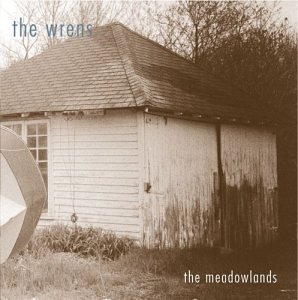
WRENS WINNINGLY SALUTE ‘THE MEADOWLANDS’

FOREWORD: Here’s a great local Jersey crew I’ve been friendly with since ’96. I remember taking Jerry Mac Donnell out to look for a place when I did real estate by day. Unfortunately, the owner thought it was wiser to rent to an old lady instead of a few young kids.

But it sure took the Wrens a long time to get the respect they so rightly deserved ever since they started home recording in the mid-’90s. Their formative ’94 debut, Silver, showed promise, but ‘96s splendid Secaucus, admired by underground plaudits, failed to connect beyond cult status. Happily, ‘03s masterful The Meadowlands reached a wider audience that paid concert dividends. Since each member maintained a regular job when we hooked up to promote The Meadowlands, that’s undoubtedly the reason the release of their fourth LP has been delayed.

This article originally appeared in Aquarian Weekly.

Maintaining integrity, purpose, and a sense of humor while defying the adverse temptation to call it a day becomes the vexing dichotomy many ripened musicians face. Against all odds, durable New Jersey quartet, the Wrens, persevered. Despite getting kicked out of the basement-flooded house they rented (accounting for the domicile title to ‘96s 19-song masterwork Secaucus), fleeing to Fort Lee for five years (sans married father, drummer Jerry Mac Donnell), and receiving lukewarm response by shifty label scouts, the vexed combo managed survival. Moreover, the closely-knit crew hadn’t dropped new material since ‘98s nifty Abbott 1135 EP and thereupon defiantly erased fresh tracks seemingly readied for release at a drunken ‘02 celebration.

“Do you quit your dream or continue to push forward? You don’t have to be a tortured artist to feel neglected. Our active reality is we have real day jobs,” singer-bassist Kevin Whelan surmises as we pound down two-for-one beers at the back patio of teensy Avenue A bar, Boxcars.

Seven years his senior, brother Greg Whelan (guitar-vocals) insists, “In the early ‘90s, it was hard to get a gig. Everyone wanted to hear punk-metal and we played geeky rock. We thought someone would discover us at every show.”

Befriending the band during their Secaucus daze, I feel a part of the Wrens admirable history, having conducted an earlier interview at the dank home studio built inside their former humble abode and later taking Mac Donnell out to look for rental housing prior to their Fort Lee move.

Way back in ’89, the Wrens first unveiled a formative demo and tried to open for new wave leftovers the Fixx, but the gig was up when Randolph club Obsessions cancelled the date due to lackluster ticket sales. Lady luck finally struck when Grass Records’ Camille Sciara got them signed, garnering fair attention for ‘94s commendable debut, Silver. As utterly timeless as better known post-Nevermind underground benchmarks including Liz Phair’s Exile In Guyville, PJ Harvey’s Dry, Guided By Voices’ Bee Thousand, and Jack Logan’s Bulk, the sprawling 23-song, 68-minute marathon hints at the compositional brilliance and melodic intrigue its impending sequels would expedite. The anxiously fastidious “Napiers” and siren guitar blaster “Darlin’ Darlin’” carry the torch passed on from local suburban ‘80s minimalist pop legends the Feelies.

Highly independent mutually bonded brethren, the Wrens truly exposed genuine bohemian spirit on the fertile Secaucus, a veritable magnum opus that disturbingly slipped below media radar. Distressingly, Grass folded into mega-millionaire Alan Meltzer’s Wind Up Records (responsible for ham-fisted rockers Creed), which stopped promotional support because the band rejected one-sided contract terms.

Guitarist-singer Charles Bissell admits, “After Secaucus, we made Abbott 1135 for Camille’s short-lived Ten 23 label. We were finished with our label and needed money generated so we could tour. So we decided to put out an EP. People latched on to the story songs so we figured out what we needed to do. The EP was like one giant story told five ways with different perspectives and characters.”

Initially slated for longtime advocates Richard and Stephanie Reines’ bustling Drive Thru Records, but wary of MCA’s corporate distribution, the Wrens overdue The Meadowlands finally found refuge at trusty chum Cory Brown’s tiny Absolutely Kosher. Trading the naïve innocence and playful insouciance of Secaucus for the assured candor and structural cohesion of its intricately detailed long-play follow-up, the Wrens once again stepped into public access.

Reliant more on delicately entrancing acoustic gems than fast-paced romps, The Meadowlands’ ethereal soft focus dreamscapes divulge deeper revelations in a compelling manner past endeavors only attempted. Incisively thoughtful lyrics and technically brilliant production replaced the adolescent exasperation and amateur DIY enthusiasm of yore.

“The House That Guilt Built” gushes ‘It’s been so long since you’ve heard from me/ got a wife and kid that I never see,’ an opening salvo which may only specifically ring true for Mac Donnell. But the overstated melancholy of the next couplet, ‘I’m nowhere near what I dreamed I’d be/ can’t believe what life’s done to me,’ toils in the nagging anguish most spurned artists endure.

“Jerry was a busboy at a casino. His wife got pregnant and he decided to step it up. We didn’t see him much during the making of the record. He laid down his tracks, left, and that’s what we used – the same drums from five years ago,” the younger Whelan explains.

“Which is why it took so long to write a record,” his older brother comments. “There’d be five, six versions. Your hands are still tied when you have to use the drums, but you change the melody and chord progression, especially now that it’s an entirely different song. It was a completely backward way to do things. You could lose your perspective after awhile. We try to mix in different songs and have the whole record tie in.”

It’s a trilogy,” Bissell jokes before seizing seriousness. “We changed “Miss You,” which went from a loud cock rock guitar explosion to a demure thing with much better vocals. Then, we did that to all the songs.”

Kevin adds, “It was crazy. We worked on the songs for four years, changed them almost completely, and said ‘fuck it.’ We thought what we’d done was a piece of shit. We’d lost perspective on what we wanted to do. But no one could tell we drifted up our own butts.”

As per The Meadowlands’ titular Garden State swamp roots, Greg infers, “It’s about writing what you know and the shit that goes down in our home state. We give so much credit to Jersey, but we get no respect. (The small town bruised romanticism of) “Thirteen Grand” celebrates Jersey. We talk about Cape May (where the Whelan brothers originated). “She Sends Kisses” (a neo-Classical respite) is about South Jersey. There’s one (the ticking dirge “13 Months In 6 Minutes”) where I’m meeting someone at Newark airport.”

In a similar vein, the jittery fuzz-toned flank, “Per Second Second,” matches perfectly inaudible blurbs to nightmarish Weird New Jersey gloom.

“That song bedeviled me,” Bissell testifies. “At the end, the guys said to make it an instrumental. It was literally a dream I had, top to bottom. Jesus pulled up from his car and I was dead and we gathered other dead people.”

“No. That’s real. This is a dream,” Kevin abruptly teases.

To roundup, Bissell’s bitter, twisted lullaby “Ex-Girl Collection” juxtaposes typical broken-hearted sentiments by fucking over the lass at hand. But fiercer still is the surefire sonic scrambler “Faster Gun,” a zooming stratospheric buildup contrasting, at least in sound, the sedate longing of “Happy” and the plaintive desperation of “Boys, You Won’t.”

Ironically positioned as warm-up act for long-time Omaha buddies Cursive, whose popularity recently surged with ‘03s magnificent The Ugly Organ, the Wrens kept a curious Bowery Ballroom crowd attentive mid-September. Though leaning on the compulsive hard driving numbers biting at the heels of appreciative fans, they varied tempos, fully surrendering to earnestly introspective sedatives when the mood struck. While the rest of the band concentrated on the song at hand with business-like acumen, wily Kevin took the edge off by acting the clown on-stage, jumping from speakers, giddily pilfering overused ‘60s rock maneuvers, and babbling quirky between-song innuendoes.

“Live, when you do the slower songs, you sometimes have to hit someone over the head to wake them up. So we rely on faster ones,” Kevin reckons.

As for future endeavors, he urges, “We don’t wanna make a Don Henley record where we’re boring people to tears,” perhaps referring to “Hole In The World,” the Eagles brooding comeback single. “We’ve moved into our next house and a large cloud has been lifted.”

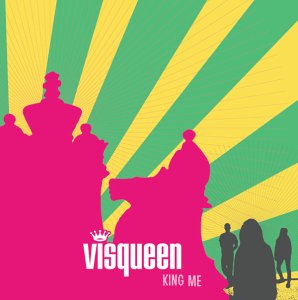
VISQUEEN’S ‘KING ME’

FOREWORD: Visqueen’s lead voice, Rachel Flotard, rifles through hard rockin’ blazers with the best of ‘em. Her fiery declarations on ‘03s King Me capture lusty heart-wrecked emotions with first-rate furor and passion. On ’04 follow-up, Sunset On Dateland, Visqueen reliably bashed through another fine batch of high-energy tunes.

They opened for Cheap Trick and the Donnas, gaining some underground hype. I caught ‘em at Maxwells in Hoboken for a brisk ’03 headlining set. Afterwards, Ronnie Barrett, who backed another powerhouse female vocalist (the Muffs’ commanding Kim Shattuck), replaced ex-Fastbacks bassist Kim Warnick (who was then supplanted by the bands’ producer, Barrett Jones). But ’09s Letter To Garcia was released on a small boutique label and I haven’t heard it in full. This article originally appeared in Aquarian Weekly.

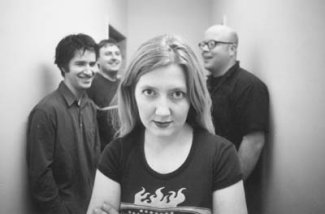
Growing up in Creskill, former Jersey girl Rachel Flotard escaped high priced Bergen County for the more affordable, affable Seattle during the ‘90s. It was there the neophyte rhythm guitarist got her first job at fabulous Pike Brewing before hooking up with drummer Ben Hooker and two femmes in local favorites, Hafacat. After a few respectable recordings, Hafacat disbanded, leaving Flotard and Hooker to find common ground with trusty bassist Kim Warnick, whose impressive decade-plus musical collaboration with Kurt Bloch in the Fastbacks had come to a close.

Taking their deviously regal moniker from a protective mobile home tarp, Visqueen quickly gained regional airplay with their inaugural 7-inch single, “Vaxxine,” an engine-driven guitar stinger backed with “His Way” – written for Flotard’s soul music-loving construction working father. In fact, the raucous A-side opens their frothily frenetic long-play debut, King Me, with a bang, as denim-clad Flotard’s excitable echo-drenched alto reverberates above clamorous instrumentation.

Recorded over a busy weekend, the whip-smart trio hired grunge producer Barrett Jones (Nirvana/ Melvins) to work on its ten truculent tracks, which perfectly combine spontaneous garage-rock spunk, cocksure molten metal crunk, and ramshackle adrenaline-fueled punk. Best blared loudly, each perky number rumbles through the cranium, hitting so hard it’s almost possible to feel the perspiration dripping off the clever combo’s collective brows.

Flotard disperses desperate exasperation on the boisterous “Last To Know,” exorcising skidmarks on her heart by heaving out the cantankerous choral climax ‘falling apart at the seams.’ Better yet, the bustling blast of ruffled riffs, “Zirconium Gum,” zooms through sociopolitical lyrics concerning black-lunged African diamond miners while the spectacular turbo-charged whirlwind, “Sailor,” spins out of control, crashing into a magnificent ascending ‘millenium’ crescendo.

Touring with vital underground luminaries such as the Supersuckers, the Muffs, and Mr. T Experience has provided valuable exposure. When I catch up with Visqueen, they’re enjoying the bucolic splendor of Mendocino, California’s wine country following a 12-hour ride from Eugene, Oregon on the way to a Los Angeles gig. During downtime, Flotard, Hooker, and Warnick hope to ride mules across the Grand Canyon.

Did you expect King Me to receive such critical acclaim?

RACHEL: We put this record out thinking our mom’s would hate it and our neighbor would be the only one to buy it. But it’s gone farther than we expected.

Who were your formative influences?

RACHEL: I listened to New York radio while living in suburban Jersey. It was the late ‘80s – Anthrax, Metallica – everything hot guys would listen to. I bought tapes and CD’s from Bob at Flipside in Closter. I loved ‘80s pop, new wave, Elton John, Led Zeppelin, and Classic Rock. I also enjoy hip-hop. That ‘80s rock-rap thing Run DMC and the Beastie Boys did was cool and Monie Love was great. It’s music that moves your ass. Anyway, the guys from Dog Eat Dog went to my school so I thought I’d love to play guitar. I learned from an ex-boyfriend, kept playing, moved to Seattle after a girlfriends’ wedding out there, and couldn’t believe people could actually afford to live in a house out there with a good size yard for $1,000 rent. I thought if I never saw Route 4 and 17 again, I’d be fine. If I ever get dragged through Filene’s Basement again with my mom, I’ll kill myself. So I sat in my Seattle basement apartment with a knife under my pillow in the safest neighborhood in the world. I made great friends and answered an ad for a rhythm guitarist in a hilarious band. It was the first time I played standing up in fron tof people.

Afterwards, Ben and I were in Hafacat with two other girls. It was your typical Runaways punk rock. This girl, Mandy, wrote the songs. Then, I learned about structure and arrangements. But I didn’t have that edgy willfulness that punk rockers had. I was like, ‘Let’s listen to Blue Oyster Cult and Boston, go out in a field, and get high.’ So between Mandy and I, the punk became more melodic. I started writing songs myself, trusting my voice, and not being afraid to look like a complete jackass. Then, Hafacat broke up and I learned about recording from my friend, Barrett Jones (Nirvana/ Melvins/ Foo Fighters), who produced Visqueen. Ben and I got Kim to join.

There aren’t enough female rockers getting proper representation.

That’s true. There’s a few times you feel like, ‘Where is everybody?’ It’s like Planet of the Apes. Guys come up and say we sound like Veruca Salt or the Muffs, comparing us to any girl band because they have no reference to base it on. That’s annoying. But there’s such a limited vault of female bands. Then again, people think we’re a punk band. I don’t think so. We have the attitude. We’re going for it when we should know better. But I don’t know a lot of female fronted bands besides Pretenders, Go-Go’s, Patti Smith Group.

What else are you exposed to mainstream-wise? Someone compared Visqueen to melodic ‘70s punk bands Rezillos and Buzzcocks.

Sure. That’s in a similar vein. I don’t use guitar pedals. It’s straightforward, simple. I love singing more than I ever have. You can play a song that has basic chords, chuck them around punk style, but my trick is to find the melody and pull it out of a note that might not come to you originally. Then suddenly, it’s the only chord that fits there. That’s the ultimately satisfying finishing-a-crossword-puzzle kind of feeling. Find something that works where it couldn’t possibly.

The beauty is your terse songs encapsulate multiple moods in mere three-minute modules.

Thanks. I hope we don’t get boring. We’re getting ready to do a record in March ’04.

Will Barrett Jones produce it and will it be a slight departure?

I’m not gonna go all “Every Rose Has A Thorn” on you (referring to Poison’s balladic metal hit) We’ve got a year under our belts. Our song structures are a bit different but it’s still rocking. We’re trying different things. We want to record with different people to make each record unique. We’ve been talking to Phil Ek (Built To Spill). He’s from our way. Phil’s view may be different and he’ll have some tricks up his long, gangly sleeves. We’ve been playing four or five new tracks live. Some are in pieces in the closet.

Rumor is you re-recorded King Me because the initial version lacked spontaneity and energy.

Yeah. We’d done a killer demo with Barrett. But did you ever see Small Wonder with the robot girl who lives with the family from 20 years ago? It sounded like that chick recorded it. So we did it again. Barrett said, ‘Fuck this! We’ll do this over the weekend by just rolling tape for three hours.’

How’d the boutique label Blue Disguise get to release King Me?

Pete Hilgendorf, an artist-designer friend of ours, started it around our debut 7″ single. He came to a Visqueen show and said one of our songs reminded him of the Kinks “Better Things.” He thought one of our songs mentioned blue disguise, but it was ‘bluest eyes.’ He’s taken other local bands and started working the same formula for them.

I hear you like reading gossip on the road.

It’s hilarious. Fucking J-Lo and Ben Affleck need their heads checked. Once you get to the point where you’re living in an alternate universe, reality is forever gone. If I were Britney Spears living in hicksville Louisiana before being famous and got millions of bucks I’d flip out after a couple years. She ended up marrying someone for 55 hours. Dude, Chris Rock said it best: here today, gone today. Could you imagine the scumbags around Britney? I mean, I’m still trying to find a booking agent.

-John Fortunato

THE REPUTATION READY ‘TO FORCE A FATE’

FOREWORD: Another band that had so much potential but fell apart too soon. The Reputation, led by wailing soprano, Elizabeth Elmore, was rapidly touring to reach maximum accessibility on influential Green Day-sponsored pop-punk label, Lookout Records. But when Green Day left the label, Lookout’s money revenue dried up and the Rep called it quits after two potent albums. Elmore, who was working on a law degree at the time we spoke in ’04, no doubt pursued legal work after her bands’ untimely 2006 demise.

Growing up in a conservative Champaign, Illinois, family, The Reputation’s Elizabeth Elmore became politically savvy at an early age.

“I grew up knowing a lot of Republicans. So it’s easier for me to avoid the whole demonizing thing because my parents were socially liberal moderate Republicans,” left-leaning Elmore offers.

Happily, the prideful Democrat’s music interest gave her the emotional release needed to counterbalance Northwestern University law school studies. During the ‘90s, she fronted superb Chicago band, Sarge, recording three critically acclaimed sets: Charcoal, The Glass Intact, and Distant. Caressing engaging power pop melodies filled with pulsating hooks, Elmore’s provocatively pristine soprano flings volatile vitriol towards former acquaintances, eloquently elucidating inviting clear-toned harmonies that gain easy access to your heart before tearing it apart. A scrappy cover of Nancy Sinatra’s liberating “These Boots Are Made For Walkin’” convincingly emancipates Elmore. When Sarge broke up, the singer-guitarist-keyboardist subsequently recruited another batch of musicians christened The Reputation.

Quicker tempos, sharper trebly resonation, richer guitar radiance, and if possible, a more luxuriant sheen, mark The Reputation’s positively intoxicating ’02 self-titled debut. As with Sarge, the general upbeat tone gets beautifully contrasted by abrasively defiant verses.

For their tidy second disc, To Force A Fate, Elmore enlisted local pal Sean Hulet (guitar), Joel Root (bass), and Matt Espy (drums) to surround the abject remorse and seductive vulnerability she so desirously verbalizes. Slightly more diverse than its predecessor, To Force A Fate winningly blends fresh-faced streamlined pop (vibrant opener “Let It Rest”), triumphant orchestral laments (such as the homeward bound “Bone-Tired”), and shimmering acoustic retreats with profoundly enhanced confidence.

Tumbling piano anchors the steely-eyed conviction of the anguished “Follow-Through Time.” Stinging guitar momentum fires up the cranky love-scorned “Bottlerocket Battles” and shiny guitar jangling amplifies the soothingly constraint complaint “The Lasting Effect.”

I caught up with Elmore at her Chicago home following An ‘04 national tour to promote The Reputation’s latest work.

Compare To Force A Fate to The Reputation’s debut.

ELIZABETH ELMORE: I don’t listen to my own records. I’m too anxious and critical so I don’t have proper distance or perspective. There were bigger rockers on the first album. But I’m proud of the slower stuff on the new record. To Force A Fate was more collaborative. The bass-guitar lines are stronger. I like working with detail and nuance in the studio. On “Follow-Through Time,” Sean wrote the bass line and I wrote the rest of the song around it. I’d never done that before – writing around other people’s parts. But live, I like to do the faster songs.

How’d you meet Sean?

E.E.: He was in the band Marino when I got to know him. They had Hum-like undertones. Sean sings backup live. I’ve been pushing him to sing more since he left Marino. He was in a really heavy rock band and I got him to sing “The Lasting Effects” with me. He’s like, “Great. I’m singing on the wussie, touchy feely song.” On “Bottlerocket Battles,” we sing all the vocals together. It’s about us fighting. It provides really good release onstage every night because we could yell back and forth at each other.

How’d you get John Davis of Q And Not U to offer up the accusatory elegy “March”?

E.E.: We’re long suffering 4-track tape traders working under the name Cosmopolitan making geeky ‘70s light rock songs for the past five years. When the Rep started touring initially, we only had five songs of our own, so we covered friends’ songs. That one was never recorded and kids were asking for it so we decided to do it. It’s a pretty song.

You don’t sound like Liz Phair, but she’s also from the Windy City, independently free spirited, lyrically provocative, and intellectually expressive. Was she influential?

I was a huge Liz Phair fan. I got Exile In Guyville when I was 17. Within two months, I got to meet her at a Champaign bar and talk to her for a half-hour in ’93. She was lovely to me. That was a few years before I started writing. Her more provocative, dirty lyrics may be a little sensationalistic, but I have a high girly voice. So even though I have a tendency to sing what I think, I’m not that filthy. (laughter)Who else influenced you?

In college, I spent time listening to Jawbox and Shudder To Think. But I grew up on old Country and bluegrass. My dad would play guitar and there was a great alt-Country Chicago scene that exposed me to more stuff. I played Classical until I was 18 on piano. I didn’t discover nor have any concept of punk until I was 17. There’s some Sarge stuff that’s reminiscent of Velocity Girl or Small Factory. But I got into cheesy ‘80s classic rock and Fleetwood Mac. Everyone in Sarge liked Journey and I’d bitch about that. Finally, I gave Journey love. It’s good driving music.

Getting back to Fleetwood Mac, I think your soulful earnestness is similar to Christine Mc Vie’s, though your lyrics are more cutting.

The weird thing is many people think my lyrics are about romance. But only half the songs were. The last Rep record, there were only three romantic-type songs. For this one, there are only one or two specifically about romanticism. Some transcend it. Only “Follow-Through Time,” “Lasting Effects,” and maybe “Cartograph,” are about anyone I had a relationship with. I tend to have intense relationships with men that are problematic on many levels. But if you’re a girl and there’s a ‘he’ in the song, everyone thinks it’s romantic.

“The Ugliness Kicking Around” is an interesting neo-Classical dirge.

We cover (Elvis Costello’s) “Almost Blue” on the first record. That’s similar going into three minutes of French horns and strings. So for “Ugliness,” I’d just got a keyboard from Wilco’s Jay Bennett. I had it in my room and I’d go home drunk after the bars drinking beer and smoking and that song came pretty fast. Joel was an upright bassist originally. He did the string arrangement, which adds a lot.

You should give that tune to Rufus Wainwright. (laughter) After that, you end the album with “Bone-Tired,” a traveling ode with trumpet, tenor sax, and trombone.

We didn’t think we were gonna put that on the record because it had no lyrics. We weren’t comfortable with it and hadn’t played it live. Finally, we took it to the studio thinking we’d strip it down and save it for an acoustic version. I said, “Let’s try it. If it sucks, I won’t use it.” But we got a cool organ sound and the vocals down and everyone loved it. I thought “Ugliness” was such a dark song that I wanted “Bone-Tired” to lighten the mood. I didn’t think anything else would work.

What did producer Mike Hagler bring to the recording?

Mike had worked with Wilco, Neko Case, and other amazing stuff (by Billy Bragg, Handsome Family, New Pornographers). I thought he’d push us in the studio. He plays a mean tambourine and looks funny doing it. But since I haven’t listened to the record, I’m not sure how I feel about it. He was saying how big amps sometimes sound smaller in the studio. So literally every guitar track but one was done through vintage 10 to 15 inch combo amps. That was cool because I wanted the guitars to be more diverse and rangy. It’s sleazy to use Pro Tools, but I got to take parts from different things and punch them in.

Will you ever revisit Sarge’s material?

No. They were a totally different band. If I play solo, I’ll do those songs. Otherwise it’s disrespectful to the Rep. The first couple tours, someone would yell out for a Sarge song and I’d have to go, “I think you’re thinking of another band. Sorry.”

What will you be doing with your law degree?

I graduated four months ago. I got three weeks off. Then I have to get licensed in October. As long as the band is still going, entertainment law may be something I’ll do privately. I do have law school loans and I need money that isn’t going to come from the Reputation. I’m a big artists rights freak. I had a triple concentration on Civil Litigation and Dispute Resolution, Social Policy & Assets, and Public Interest. So functionally I’m interested in litigation. I can do the sleaziest litigation and be happy because I’m made to be a trial attorney. But I’d like to work in social policy.

-John Fortunato

ROONEY ‘CALLING THE WORLD’ VIA CALIFORNIA POP

FOREWORD: Saw Rooney at the Meadowlands’ Izod Center March of 2008, opening for Jersey-born Disney idols, Jonas Brothers. My daughter, Nicki (a huge Jonas Brother fan) and I got to sit front row. I always thought I got special treatment that evening because the Jonas’ remembered me from an Irving Plaza interview. As for Rooney, their catchy hand-me-down pop really won me over before the screaming girls took over the arena for the latest teen dreams. This article originally appeared in Aquarian Weekly.

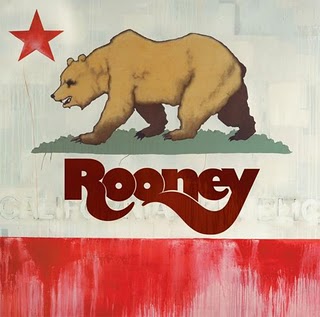
Sharing a mutual admiration for classic rock and roll at Winward High School, Rooney front man Robert Schwartzman and classmate, bassist Matthew Winter, honed their craft alongside Santa Monica Crossroads student, guitarist Taylor Locke. Son of Rocky actress, Thalia Shire (‘yo Adrian!’) and younger brother of famed actor (and Phantom Planet drummer) Jason Schwartzman, Robert learned to compose at age 16 when his mom bought him a 4-track demo machine.

On Rooney’s dazzling eponymous ’03 entree, the green California quintet sported mop-top Beatles haircuts, came off refreshingly naïve and slightly unpolished (compared to their next project) conveying a tangible ecstatic buoyancy elevating their urgent adolescent emotionalism, contagious retro hooks, and beaming flights of fancy. Mod Fab 4/ ELO-styled harmonies shored up indelibly posh neon signpost, “Blueside.” Throughout, Ned Brower’s sturdy elemental drumming and Louie Stevens’ varicolored keyboard textures efficiently girded the guileless effort.

Keeping pretty boy pretensions in check, these gleaming ‘70s-obsessed pop spires sculpt embracing melodic tunes full of scrutinized love-struck choruses countering heavy issues with cheery elocution. Fluctuating easily between fast-to-slow tempos and hard-to-soft tonal variance, Rooney’s transitory multihued mood shifts tidily in accordance with the expressively traversed elegies put forth. The long delay between their debut and belated ‘07 follow-up, Calling The World (Cherrytree), proved prudent, bolstering Schwartzman’s ebulliently restive self-examinations while reinforcing the immaculate totality threefold.

Calling The World’s convincing balladic title track opens the estimable set with solemnly climactic sensitivity, recalling serpentine Beatlesque knockoffs such as Klaatu and the Rutles. Earnest bass-thumped guitar-clipped orchestral, “When Did Your Heart Go Missing,” nicks Phil Spector’s Wall Of Sound. Teenybopper anthem, “Love Me Or Leave Me,” nips at the Cars familiar new wave keyboard riffing to energize its desirous intent while heavenly blissful trinket, “What For,” drapes “My Sweet Lord”-derived slide above a cozy retreat.

Though preciously smoother slow songs may turn off rock snobs, syrupy sympathetic allegory “Tell Me Soon” fervently drips sticky saccharine sweetness atop veteran conductor Steve Lu’s eloquent string arrangements and befuddled cry-in-your-soda tearjerker “All In Your Head” pleads for absolution. Piano-tinged violin-laden neo-Classical closer, “Help Me Find My Way,” also merits mainstream girly action.

Adorably heartfelt moderate-paced mini-opus, “I Should’ve Been After You,” an arty prog-leaning departure in which Stevens’ keyboards seem redolent of Kansas and the euphoniously uplifting voices resemble prime Raspberries and Big Star, manages to tug heartstrings as well as shake tail feathers. Just as charmingly lithesome, “Don’t Come Around Again” aims for straight-up pure pop nirvana, tossing Locke’s sunny arena rock styling next to insinuating T. Rex glam-rock harmonizing.

Devoutly, Rooney sends auspicious ‘thanks’ out to fabulously insouciant pop crusaders Weezer, Maroon 5, Pete York, Sloan, and Simon Dawes. In the ‘70s, these worthy artists would be contemporary lynchpins, but these days rigid radio formatting prefers lamely generic fare. Plus, if you missed out on less renowned ‘90s pop challenger, Jellyfish, don’t let these young turks slip into the ether.

I originally discovered some of Rooney’s latest tracks online via an acoustic radio performance done on a boat in Green Bay for radio contest winners. The stripped-down versions spoke volumes lyrically and melodically.

Who were your early musical influences?

ROBERT SCHWARTZMAN: I always loved my mother’s Broadway show tunes. My grandfather was a conductor and traveled with an orchestra. So I was always into emotional music with wild visual arrangements painting a picture. Lyrically and musically, Broadway tunes told a story. My favorite pop artists early on were girl groups, the Shirelles, Crystals, and Shangri-La’s. “Be My Baby” was one of the best pop songs ever. Phil Spector’s sound was huge. I loved Geffen-King compositions. I used to listen to oldies radio driving to school. We’ve covered Del Shannon.

How’d you and Taylor hook up?

ROBERT: Taylor, since he was 11, had interest in being a rock star. His passion for that spilled into my life. I only wanted to be a movie director. But my brother had a band I loved watching. So I began to like being able to write songs on my 4-track demo and listening back instantly. Taylor and I started jamming in his garage. We booked a show with my brothers’ band. By then, I enjoyed being onstage. Beforehand, I was afraid of going onstage.

How’d the long break between albums come about?

ROBERT: We’d spent a few years touring and promoting the debut. Then, a combination of not finding the right producer and the songs being too different from the first record, befell us. Some bands win over people changing the sound up, but we did it too quickly. We actually made three different albums with different material and producers and kept starting all over again. There’s all the demos that didn’t make it. I can’t remember them all. They’re blurred together. It was a frustrating, challenging period. It’s hard when you don’t have a record out. But we kept touring and explaining to the audience what happened. The label told us they weren’t happy with the initial recordings. We felt the material suffered from over-thinking. It was hard to overcome and I fought myself mentally and emotionally. The record we made that was supposed to come out in 2006 was never released. Then we made a whole new record in three weeks faster and cheaper. It was more spontaneous and came together in the studio, not pre-production. Songs should dictate production, not the other way around. We were so enamored with production, the songs suffered.

Your lyrical romanticism rings truer on Calling The World.

ROBERT: With every (unreleased) record, I had different relationships. When you’re going through hard times, you take it out on the girl. The first record’s stories were fictional creations. This record was written from experience. Lyrically, “I Should Have Been After You” had a cocky attitude. It’s about not finding the right girl to go out with until an ex’s friend proves best. Which pissed off my old girlfriend when she heard the demo after we broke up. She questioned if I liked her all along and it got me in a little bit of a pickle.

Dhani Harrison sang backup on “Calling The World.” Did that enable you to cop the “My Sweet Lord” slide guitar licks for “What For” from his dad, George Harrison?

ROBERT: (laughter) Taylor’s a huge George Harrison fan. He’s good at mushing and combining influences and making them his own. Many big rock bands, their tones and playing don’t have much character. “What For” survived our long delay unlike other unreleased tracks.

How’d John Fields production enhance the songs?

ROBERT: Before John, we worked with a credible engineer who’d worked with Beck and Brit-pop bands. He let bands do what they wanted. But, we wanted the producer to step in, have an opinion, and push us. The next producer was very mainstream big time. He wanted a paycheck the minute he walked in. John, conversely, was a fan. A friend gave me his number. I had some demos readied, told him I had a record we didn’t like, and his attitude was good. He knew where we were coming from musically. His thoughts were dead-on. We worked fast, sometimes using first takes, and felt he blended a big pop sound into something very organic.

You played Michael Moscowitz, the crush-worthy best friend’s brother in Princess Diaries. Will you seek future film roles?

ROBERT: That came out of nowhere. I was a high school senior. We were playing after school shows. I went for a reading, went back, and unexpectedly got this part. The movie became big while I was at college. Other people would’ve loved the opportunity, but acting isn’t something I was passionate about as much as music. I may re-enter the acting realm, but it’s hard when you’re pushing forward as a band. Maybe there’ll be time to explore other creative options in the future.

VET D.J. VIN SCELSA PLEADS ‘AIRWAVES BELONG TO THE PEOPLE’

Vin Scelsa became a freeform New York radio legend at the old WPLJ and now-defunct WNEW-FM during the ’70s and ’80s. He continues to endure with his highly-praised Idiot’s Delight show. This article originally appeared in  Aqaurian Weekly in 2000.

“Whatever happened to the airwaves belonging to the people?,” long-time free form discjockey Vin Scelsa wonders as we discuss the demise of commercial radio. While trendy playlists and stale programming have dwindled radio’s mainstream audience to the lowest common denominator, free form crusader Vin Scelsa’s Idiot’s Delight program continues to endure. Amazingly, he remains the only significant New York personality given complete control to chose what songs get played over the airwaves.

A pioneering music culture enthusiast, Scelsa’s WFMU show, The Closet, first aired at West Orange, New Jersey’s Upsala College in November 1967. When the conservative Lutheran college realized its fund-driven station was catering to the entire ‘60s countercultural upheaval (Viet Nam protests, drug culture, freedom of expression), Scelsa left to join independent-minded public affairs station WBAI prior to getting hired as Production Director/ discjockey by WPLJ consultant Larry Yurdin in ‘71.

At first, WPLJ flaunted an open ended avant-garde approach, allowing d.j.’s to mix free jazz with progressive rock and other subgenres. But as an increasingly restrictive format crept in, Scelsa left to join WNEW-FM, becoming Music Director before taking over the late night spot formerly belonging to the late, legendary “Nightbird” Alison Steele.

In ‘85, his well received Idiot’s Delight program debuted on K-ROCK. An informative show featuring an endless stream of records, live studio performances, interviews, and monologues, Idiot’s Delight catered to serious music junkies. By ‘96, WNEW (which recently changed its format to mostly ‘all talk’) acquired the informative music program which now airs Sunday evening from 8 PM to 2 AM.

Recently, Scelsa brought his free form show to the internet. Live At Lunch (http://www.artistent.com) airs from Tuesday through Thursday from noon to 3 PM.

Also worth noting is the fact Scelsa wrote humorous memoirs for this publication, Aquarian Weekly, during the early ‘80s.

Although Idiot’s Delight is now aired on WNEW, the station’s daytime programming switched to ‘all talk’ in ‘99. Why?

VIN SCELSA: Scott Muni fought against formatting NEW. He kept the formatters at bay because the station was highly successful. By the early ‘80s, the ratings were starting to slip and there was pressure on him to rein in the d.j.’s. Granted, we never went as far out as non-commercial stations or old PLJ did. We were mainstream on the countercultural, instead of Top 40, side. In ‘82, NEW had a management change. The d.j.’s who didn’t grow with the times were now becoming restricted by Richard Neer’s playlist. He was trying to make it work in a commercial way without altering the spirit of the station. They were going to format me, so I left. The presence, power, and influence of Scott Muni had kept the station loose. But the station went through a period of being bought and sold. Each time it was bought, new management and owners understood less of its heritage. So the image got eroded. By the mid-’90s, there was no soul left, but there was good will amongst the New York audience. It became misdirected instead of being adult, intelligent, interesting, educational, and a station that respects the music, instead of filling in the blanks between commercial breaks.

When I was a college discjockey, I felt the need to segue songs in thematic fashion. You’ve made an art of that with Idiots Delight.

VIN: The whole idea with free form is to take a variety of rock, Classical, folk, and Rhythm & Blues and blend them in a way where each song comments on the other and shows a relationship. There’s world music you could listen to and I defy you to tell me whether it’s from Ireland or China because the instrumentation and rhythms are similar. In addition, since so many songs are about emotions, you could tell a story with the lyrics and have the subject matter comment on each other. The whole becomes larger than the sum of its parts. My job is to take other people’s art and rework it – not the way Moby does with samples – and put it in a context that’s different from its original context.

Right. That’s how you advance the listeners tastes. I’ve heard you segue from Jay Z’s “Hard Knock Life” to the Broadway musical “Annie.” At the time, few hip-hop heads knew Jay Z took the songs’ chorus line from that stage production.

VIN: I have knowledge and a library. I’m able to bring a broad overview to the music. I could take Beck and Kurt Cobain and show where those guys got their influence from. When Kurt sings “In The Pines” from MTV Unplugged, it’s important to know it comes from Leadbelly. Kurt knew it so why shouldn’t fans know it. Back in the ‘60s and early ‘70s, when the Rolling Stones were being influenced by R & B, it was important to play Muddy Waters, Sonny Boy Williamson, and Blind Lemon Jefferson since they influenced the English bands who were recycling the stuff. I mine eight decades of music that’s available to us and blend it together in an entertaining, informative way. I’m a filter for the people. Unless there’s a radio station guiding you, how do you find the music of Jimmie Dale Gilmore or Belle & Sebastian. My job is to be an informed tastemaker who will wade through the music. You may not like everything I play, but if we’re kindred spirits, you’re going to like a lot of it. Which is why I’m so successful.

I’ve held on to the belief that commercial radio began to suck around ‘77, when programmers missed the vital punk explosion.

VIN:Top 40 radio never played that stuff. There became a clear cut distinction between Top 40 and progressive rock. There was some crossover in the ‘60s with the Beatles and the Stones. But the Grateful Dead, English art-rock bands, and the San Francisco scene were huge and never received top 40 play. So when the punk explosion happened, both formats missed the boat. After all, progressive stations were filled with grandiose art-rock like Yes and Emerson, Lake & Palmer. That’s what the punks rebelled against. When the Ramones came along, most of the d.j.’s at NEW were insulted by them. There became a split in the staff between those who embraced the new stuff and those who were opposed to it.

I guess the graybeards became snotty musical retards. That led to the current Catch 22 cycle where only eight major corporations own nearly every commercial station and they play only the bands on the five major record labels.

VIN: Yes. It’s restrictive and insulting. Radio has become this enormous business that’s about real estate, ad dollars, setting up billboards. As radio became more formatted, serious listeners turned it off. It’s difficult to get these people back because they’ve gotten out of the habit of listening to radio. The younger generation listen to MP3 and Napster; older people listen to sports and news. Radio tries to capture the Lowest Common Denominator, like NEW’s male dominated Howard Stern-like shows. So you can’t say ‘fuck’ on the air. Is that all the FCC is interested in? How about the public trust? Government doesn’t care that radio doesn’t serve the public.

Tell me about your internet show, Live At Lunch?

VIN: The idea was to go back where I was in ‘67, when we were faced with a distinctly unfriendly radio environment to music. Now, it’s even more unfriendly. If you look at WABC’s Top 40 playlists in the ‘60s, they look brilliant because so much exciting music was being made. You’d go from Motown to the Beatles to Sinatra to the Temptations. It’s extraordinary what AM radio was. But that was unable to capture the whole underground scene. When Dylan finally got on radio it was when he went electric with “Like A Rolling Stone.” They weren’t going to play “The Times They Are A Changin’,” the folk Dylan. They weren’t going to play Leonard Cohen, Joan Baez, Jefferson Airplane. Now there’s a variety of music made that’s no longer reflected on radio. Luckily, we have the new internet world waiting to be utilized. Live At Lunch is an extension of Idiot’s Delight. Right now, you have to be tethered to your computer to get it. In the future, that’ll change. Internet audio will become available on devices not tethered to computer. Now, we’re an original station available to the whole world. The downside is there are millions of websites.

Will you do advertising?

VIN: We don’t have a budget for ads. We’re relying on word of mouth. Peter Wolf does an on-demand pre-recorded Hour Of The Wolf show every few weeks. Todd Rundgren will launch PatroNet, where you could subscribe through the internet for $50 a year.


RATATAT TAPS INTO ORCHESTRAL ROUNDABOUT

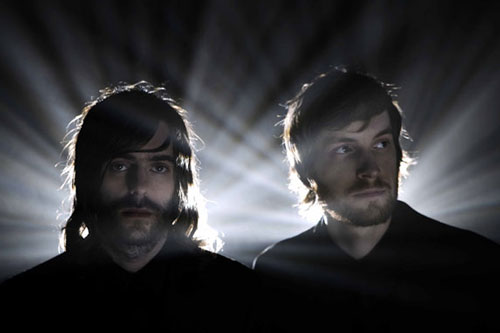
Growing up in Shelton, Connecticut, 15 minutes outside New Haven, guitarist Mike Stroud, experimented with 4-track recordings during high school, frequented local shows, and went to New York City whenever possible to catch cool bands. He attended Skidmore College, met Cleveland-raised keyboardist-programmer Evan Mast, and by 2001, they’d conceive formative band, Cherry. For legal purposes, the sprouting twosome soon reconvened under the snappier appellation, Ratatat (an alarming discharged firearm connotation), and by ’04, released a promising eponymous debut boasting one massive breakthrough tune.

Recorded in Mast’s small Brooklyn-based Crown Heights apartment, the Teutonic techno shuffle, “17 Years,” earned Ratatat early recognition when it was used on a British ‘Accessorize’ Hummer commercial. Its success led to an opening spot on Daft Punk’s high-profile tour where the transplanted Brooklynites began impressing audiences pronto.

“Evan had a tiny bedroom with a laptop setup. We had one guitar, a distortion pedal, and we borrowed a bass from his roommate,” Stroud says. “It was totally minimal and we banged out “17 Years” in one day. We got pretty lucky receiving exposure. Our A & R guy from London found our webpage and got in touch with us.”

Having leveraged their initial rockist attitude and rave-cultured leanings a tad for ‘06s multi-dimensional investigation, Classics, Ratatat brought an ambitious soulful aesthetic closer to the surface. By ‘08s daringly expansive LP3 (XL Records), they’d discovered the joys of pan-ethnic resourcefulness.

“The first two we did in Evan’s apartment only had a couple sounds – guitars, keyboards. We did this one in a real studio with more instruments, adding strings, Grand piano, and organ tones. There were some cool World music elements like tablas. People think I only play guitar, but I did harpsichord, piano, and get annoyed when everyone thinks Evan’s the big genius who plays everything else,” the snickering Stroud informs.

Influenced by conceptual guitar wizard Robert Fripp and Queen’s bellwether axe-man Brian May as well as Jimmy Page’s acoustical solo endeavors, Stroud’s heavily processed and headily manipulated six-string constructions transfix or transcend the tidily detailed arrangements. The use of mellotron on LP3 serves to open up the savvy synthesized symphonies.

On the eloquent “Mi Viejo,” mellotron nuances thread the neo-Classical Spanish guitar melody, entwined autoharp coils, and swirled tribal percussion. A comparable tropical rhythm inundates “Munitaz Khan,” where pan flutes, pipes, and bongos bedeck sequenced guitar electrodes, creating a bizarre Bollywood landscape hipper Hindu films first formulated back in the silent era. Using a similar Eastern Asian template, Pakistani bhangra breakbeats swarm through the calliope-swiped keyboard loops, Nintendo game bleeps, and zooming Frippertronic mechanics consuming “Mirando.” Despite its apparent Anglo-Saxon auspices, “Flynn” flaunts an echoplex dub reggae groove.

Whimsically, song titles such as the latter are inconsequential, goofy derangements meant to provoke chuckles.

“The titles don’t have to mean anything,” Stroud chuckles. “Lots of times we’ll have funny working titles that stick.”

For instance, the soothing Baroque-inclined harpsichord-laden closer, “Black Heroes,” doesn’t necessarily venerate the uniquely salient African-American experience. Instead, its drifting mellifluent flutter is better described as pale-faced ambient seduction. Then again, Ratatat’s crafty pair is never hesitant to express admiration celebrating hip-hop’s wide-angled black-faced appeal.

“We both listen to a lot of hip-hop, especially Evan, who makes the beats,” Stroud admits. “My favorite rapper ever is Ghostface. I loved the first Raekwon record and all the descendant Wu Tang Clan ventures. I saw Wu a few months back and Raekwon did some ace freestyling. But I don’t listen to hip-hop as much now. I feel it’s kind of fucked. RZA’s the only one who seems to know the business.”

Perhaps more profoundly, the melodious Classical rock techniques of Electric Light Orchestra become motifs for several triumphal numbers. The glistening introductory gamma rays penetrating noir-ish opening dirge, “Shiller,” friskily pilfer ELO’s magnum opus, “Fire On High.” And swaying oscillated interlude, “Brulee,” would fit nicely next to the best atmospheric illuminations on the Brit-pop combo’s late-‘70s Out Of The Blue escapade.

“I love ELO, but I didn’t have them in mind for “Brulee.” I remember the first night Evan played me a couple of beats and that stuck out in my mind. I thought we were gonna go a different route with it but we put these happy sounding chords over it and it sounded kind of funny,” Stroud claims. He then deduces, “We wanted a psychedelic reggae-ish vibe.”

Just as intriguingly retrospective, “Gipsy Threat” beams in like an alien transmission from outer space, re-imaging Joe Meek’s fascinatingly innovative vacillating cybernetic flanges – magnified to perfection on the Tornadoes futuristic ’62 mega-hit, “Telstar.” Nonetheless, don’t expect any gypsy-cultured references beyond its intimidating designation.

Notwithstanding such interrogative ambiguousness, the delineation between real life Egyptian yank “Munitaz Khan” and the source material embodying the previously perused homage seems well suited for a friendly rug salesman’s theme.

Stroud explains, “We’d walk into Catskill – an upper New York town where there was nothing. It’s secluded – a half-hour from the original Woodstock concert. We took a walk on Main Street and found an Indian rug store. We visited it a lot while recording. The owner would invite us back to his office, give us free huge Indian dinners, and tell us crazy stories. We took its title from him.”

He goes on to say, “There was an instrument in the studio that you could put on a record – thin vinyl – with samples of organ and there’s an organ where you can play them. So we put a bunch of these records on top of each other and ended up with a bunch of organ-moog sounds. To me, it relates to Bollywood. And it has a “Hotel California”-like guitar solo.”

In the live setting, Ratatat enlists the help of Stroud’s pal, Martin, to handle organ, augmenting and magnifying their already illusionary musicality. Accordingly, future recordings and live shows may get other people involved. But a radical departure in style does not appear imminent. Maybe they’ll find some guest vocalists to spark up new musical ideas. Commendable remixes for a diverse array of artists including old school rapper Biz Markie, weirdo Icelandic diva Bjork, and sly Brit-rockers Television Personalities are already available to consume.


PROTEST THE HERO’S METALLIC ‘FORTRESS’

FOREWORD: Got to speak with mushroom-headed metal-edged Protest The Hero composer-bassist, Arif Mirabdolbaghi, during late ’07. He only had ten minutes to speak over the phone before a show, but he set me straight about his bands’ bohemian ways. This article was refined and reedited for HighTimes.

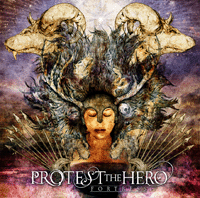
Drubbing older hard rock peers with cocksure instrumental adeptness and stunningly synergetic craftsmanship, Protest The Hero sought to broaden the complexities rendered on staggering ’06 debut, Kezia. Riveting follow-up, Fortress, finds the empirical post-adolescent quintet continually jettisoning masturbatory 6-string wankers and regaling agitated smash-mouth metal minions with concise phantasmagoric requiems.

Expansive compositional prowess, taut time signature changes, and cataclysmic mushroom-clouded lyrical insight foment PTH’s conceptual prog-Goth designs. Despite lead vocalist Rody Walker’s tungsten steel toughness, his harrowing shaman-like exhortations and operatic wails rely more on punk radicalism than heaving metalloid insurgency. Stouthearted bassist, Arif Mirabdolbaghi, penned each allegorical verse under the influence of hallucinogenic psilocybin mushrooms, entangling his experiences ingesting the “friendly psychotropic vegetable” with surreal mythological grandeur.

Growing up in a sequestered Ontario suburb where boredom led to torrential narcotic experimentation, Arif snubbed conventional religiosity for paradoxical goddess worship and the ancient Celtic tradition of hunting down red-capped white mushrooms Vikings once consumed. Imbuing feminine deities, “Limb From Limb” furiously scampers as Tim Millar and Luke Hoskin’s caliginous scale-climbing axes set the stage for Walker’s murderously howled lamentation chiding a preying huntress.

Musty Iron Maiden-laden shredder, “Bloodmeat,” gets thematically threaded to schizoid heretical mordancy “The Dissentience,” conceived while Arif vaporized herb at Toronto hemp haven, Kindred Café. Then, flailing riff shards pierce sinewy “Bone Marrow” before sweeping harmonies erupt from the dungy din of molten existential mantra “Palms Read,” a riotously ranted Mother Earth genuflection. Perhaps Arif’s right about “youth culture someday being permeated by shrooms; taking rationality to the edge.” Revelatory, if not wholly revolutionary, PTH’s ambitious assault is undeniable.

POSIES BLOOM THEN ‘PLUG IN’

FOREWORD: Got chummy with fab pop melodicists, the Posies, at Maxwells in 2000. I first met ‘em a few years earlier at Mercury Lounge’s backstage basement. Talk about mainstream radio missing out on an exuberant straight-ahead rock band. In the ‘70s, they’d kill for the Posies. Then again, Big Star died on the vine at the time.

Nonetheless, charismatic singer-songwriter-guitarists’ Jon Auer and Ken Stingfellow, who’d met at the University of Washington, never met a contagious pop hook they didn’t like or try to enthusiastically emulate. The dynamic pop duo, who’d go on to shelve the Posies name for awhile, finally reunited in the studio for the first time in seven years for ‘05s reliable Every Kind Of Light.

Since then, the married Auer has laid low while Stringfellow continues to make efficient solo records like ‘97s This Sounds Like Goodbye, ‘01s Touched, and ‘04s Soft Commands. I’ve included my 2000 interview supporting a live Posies disc and an ’01 phone interview with Stringfellow concerning Touched. Both articles originally appeared in Aquarian Weekly.

Prior to Seattle’s ‘91 grunge explosion, retro-minded pop-rooted bands such as the Young Fresh Fellows, the Fastbacks, and Hammerbox seemed poised for large-scale success. Born out of a burning desire to re-create the fertile era of post-Beatles rock and roll, these highly charged individuals maintained an ambitious DIY spirit that indirectly rubbed off on 4-track lo-fi home recording heroes such as Sebadoh, Liz Phair, and Pavement.

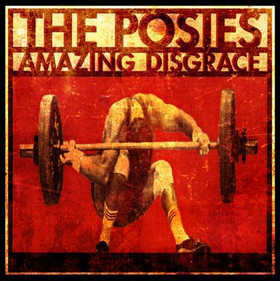
Coming on like some long lost Hollies tribute band, the Posies, led by multi-instrumentalists Jon Auer and Ken Stringfellow, seemed like the perfect harmony-related combo to break out of the cozy confines of the Pacific Northwest when their second release, Dear 23, hit the shelves. But besides the benefit of having an enormous rock radio staple with Frosting On The Beater’s catchier-than-hell “Dream All Day,” the Posies never managed to break out of the box like most of their grunge peers. Yet despite being somewhat overlooked, the Posies went on to deliver the more visceral Amazing Disgrace and its ironically titled ‘98 follow-up, Success.

But how did one of the most revered underground pop treasures originally form?

Auer fondly recalls, “Ken and I were involved with different bands and we’d always make fun of the bands we were in. Eventually, all those people fell by the waste side and there was just the two of us left.”

Done on a whim, the live In Case You Didn’t Feel Like Plugging In succinctly refines some now vintage studio favorites for a small, encouraging hometown crowd at Seattle’s Showbox, inspiring an appreciable acoustic tour that followed. Featuring a nifty version of “Grant Hart,” the sensitive “Every Bitter Drop” (dedicated to “all the alcoholics”), and a pure, stripped down take of the shoulda-been a hit, “Flavor Of The Month” (which gains subtle strength from its tear-stained vocalizing). Interestingly, the earthy harmonies on “Believe In Something Other (Than Yourself)” could be mistaken for prime David Crosby and Graham Nash.

Taking advantage of their large catalogue of original songs, Stringfellow and Auer recently played and sang for nearly two hours at Maxwells in Hoboken. FYI: On his own, Auer recently released a single and an EP while Stringfellow recorded the “Saltine” EP. I spoke to the duo about the Posies past and present over dinner prior to their set.

Did the early ‘90s grunge explosion in Seattle inform Frosting On The Beater? That album was much harder-edged than its ‘89 predecessor, Dear 23.

KEN STRINGFELLOW: The difference was we worked with British producer John Leckie for Dear 23. He gave us a lush sound. There was a real dichotomy between how we sounded as a band. Since he was in charge, he put in his influence. Whereas, on Frosting, Don Fleming’s production was closer to how the band sounded naturally. He gave us a weird sonic landscape.

The next album, Amazing Disgrace, had a venomous tone. Did that reflect disillusionment felt by the Posies for never receiving full-scale recognition like scenesters Nirvana, Soundgarden, or Pearl Jam achieved?

KEN: I think we were probably edgier people at that point. We were probably mad at each other. We’re always as honest as we can be.

Tell me about the last Posies studio set, Success. I missed that one.

KEN: That was a record we made after we decided this is where we get off. Most of those songs were recorded for other records or we had done live. It was time for something different. We didn’t do a lot of touring for that record.

What was it like hitting the road as members of Alex Chilton and Jody Stevens’ re-incarnated Big Star during the ‘90s? Chilton had been a very volatile character prior to that.

KEN: He stopped drinking during the ‘80s. When Frosting came out, that’s when I started playing with Chilton and Stevens in the re-formed Big Star. It was at Columbia, Missouri, April 27, 1993, I believe.

Tell me about the 4 CD box set, At Least…At Last, coming out soon on Pop Llama Records.

KEN: There’s nothing from previous albums on it, except maybe demos that turned into album tracks. Box sets are fun. It makes us look like we’re important. It’s not like they’re bad songs. They just couldn’t fit on our other records.

How about the acoustic live set, In Case You Didn’t Feel Like Plugging In?

KEN: There’s a fine version of “Grant Hart” on it. Our songs were written as acoustic pieces. So this is how they were before the band got a hold of it. Plus, it’s easier to travel without a band.

Was it your love of ‘60s pop music that brought both of you together?

JON AUER: Sometimes we try to deny stuff about our influences. It gets annoying. But when CD’s first started coming out, and they were re-issuing Beatles albums my parents had owned, we bought Rubber Soul and Revolver. It was the first time we had listened to the British versions all the way through. Ken and I were sitting there listening intensely. Then, through that and knowing people working at record stores, we got into Odessey & Oracles by the Zombies, The Move, Left Banke, and Small Faces. At this point, we’ve got all of that in our collections. But we also relate to early New Wave and Goth like the Smiths. They were really great songwriters. On the Posies’ Failure debut, I was only sixteen. You look at the back cover and it looks like we could be the Cure. You’ll probably cringe when I say this, but Depeche Mode had a record called Black Celebration which was all written on guitar. Anyway, the songs sounded great. My point is a good song is a good song is a good song. It doesn’t matter. As for the Hollies comparison, we got so baked with that. But it’s totally fair. We did a version of their song, “King Midas In Reverse.” We’re just good music fans.

Did you ever feel cheated because the super catchy “Dream All Day” didn’t become a bigger mainstream hit?

JON: It doesn’t bother me that it didn’t sell a lot of records. What bothered me was DGC Records predicted we’d sell all those records then dropped the ball. They had Nirvana and Sonic Youth. I thought we had a lot of worthy singles. During our European Teenage Fanclub tour, we were debating what would be the next single. And it never happened. We got a big fan base out of it and I haven’t had a day job since I was sixteen. I travel, produce music, and make music when I want to. When the blitz of alternative band signings happened in ‘91/ ‘92, everyone thought bands like the Posies and the Afghan Whigs were going to be huge. But they pumped money into all these bands and then just gave up.


——————————————————–


KEN STRINGFELLOW GETS ‘TOUCHED’


Dressed casually with hair dyed red, San Francisco-born singer-guitarist Ken Stringfellow sits conspicuously at a piano and then proceeds to illuminate Manhattan basement club, The Fez, by running through nearly a dozen new songs and a nifty take on the Beach Boys’ “Good Timin’.” Though between songs he’s self-deprecating discussing his skill at tickling the ivories, this co-founder (along with Jon Auer) of charming Seattle power pop combo, the Posies, plays elegantly as he sings along with utmost passionate and sincerity.

Besides revealing his most penetrating lyrical observations, Stringfellow’s belated solo debut, Touched, also unleashes his most flexible vocals. Whether whispering amorously, swooning majestically, or gliding gracefully, his fragile tenor celebrates joy and ecstasy or, conversely, exorcises dark anxieties and internal strife. Though he snickers about “looking like Edward Scissorhands” on the cover drawing for Touched, he goes on to say how music remains a lifetime compulsion he just can’t shake.

Stringfellow’s feathery vocal mellifluence caresses the solemn “This One’s For You,” a lightweight highlight layering Cathedral organ drones above Hammond-styled pipe organ blurbs. His gorgeous multi-harmonies layer the absorbing “Find Yourself Alone.” Guest Ron Preston’s pedal steel decorates the Country-licked heartfelt confession, “Down Like Me,” Melodee Karabin’s cello soothes the coil-y guitar confection “Spanish Waltz,” and Stringfellow’s harpsichord underscores the semi-Baroque grandeur of “Uniforms.” Only the chuggy folk acoustic “One Morning” and the orchestral toast, “Here’s To The Future,” lean on the usual six-string strum.

Somehow, during his busy schedule of solo piano performances, acoustic and electric sets with Auer, and the formation of the short-lived band, Saltine, Stringfellow has also found time to produce Damien Jurado’s critically acclaimed ‘99 album Rehearsals For Departure and temporarily join R.E.M. as a backup singer-instrumentalist.

Touched indirectly reminded me of ‘70s singer-songwriters such as Carole King, James Taylor, and Cat Stevens with its sensitivity and personal revelations.

KEN: I certainly didn’t think of it that way. I don’t analyze myself that way. I would say I’m not attached to only one era. I listen to all kinds of music. I’m not particularly focused on one, but it’s all in there. I’d agree these are my most sensitive and open songs. One of the over-arching themes of this record is people having real emotions. That’s why the album is called Touched, to some degree. It hopefully helps people locate their most real feelings.

There’s a kind of relaxation that happens when you indulge yourself to the greatest degree. You’re free to go in any direction when you’re on your own. It’s hard to find a band situation everyone could indulge themselves 100%. You run out of space.

How does this compare to the “Saltine” EP you released last year.

KEN: That was just a 7″ with two songs. What’s interesting is both songs, “Reveal Love” and “Find Yourself Alone,” appear on this album in different form. The problem I had with Saltine is things were limited. It was guitar alternative music and I was thinking a little more broad. Hence, “Reveal Love” doesn’t have much guitar on the album version.

I thought “Find Yourself Alone” might have had something to do with your newfound solo status.

KEN: Yeah. Where is everybody?

Were there difficulties recording solo – having your ass on the line.

KEN: I didn’t encounter any problems. The whole thing was easier. I didn’t worry about hurting anyone’s feelings. When you’re in a band, you’re stuck with your role and some rules. You could be flexible, but to a point. It was great to have a huge amount of freedom. It was a relief. Tony Shanahan, a New Yorker who’s worked with Patti Smith, laid down some great bass on half the record. The drummer, Eric Marshall, is from North Carolina and Mitch Easter introduced me to him.

What did producer Mitch Easter add to Touched?

KEN: Technical skills. I wouldn’t say he produced the record. The main conceptual directions were from me. But he was the perfect technician and recordist. I’d have an idea how I wanted something to sound and he did it through different methods. He was dead on and did a superb job. There’s no way I could record myself like that.

“Uniforms” has one of the best hook lines you’ve ever written.

KEN: Awesome. It’s an interesting song about the ability or bravery of how we present ourselves and how much that could get compromised. It takes place in Germany in the 1930’s and he’s a military officer with a boyfriend. He thinks everything is going along great until the political thing gets ugly and he’s put in a situation where he has to make this total compromise and put his boyfriend to death.

Wow. Tell me about the new Posies EP, Nice Cheekbones & A Ph.D.

KEN: The title is an inside joke. Jon and I were talking about what every woman wants and what we don’t have. (laughter) The music is an interesting hybrid of being totally acoustic and being electric. There are really no drums per se, just some drum machine. It’s an in between band and duo type thing. We did it as a present to a friend of ours in Spain who’s celebrating the anniversary of his label. It was recorded in one day in Spain. Taking on a full length album comes across as being real serious, which I can’t be now due to time.

Do you ever feel cheated by pop radio never exposing the intrinsic pop of the Posies?

KEN: I don’t take it personally. When I was younger, these things seemed more important. But it’s not a reflection on the music. It would be nice if there were more outlets for music. We need an outlet in the middle of commercial and college radio.


PONYS NOISY SQUALOR ‘LACED WITH ROMANCE’


Image result for PONIES JERED GUMMERE

FOREWORD: Sure did have fun with the Poys during their ’04 Maxwells in Hoboken stopover. Lotsa drinkin’ and cavortin’ and jokin’ ‘round. Who could ever forget that annoyingly disruptive drunken bitch that insulted bassist, Melissa? That was precious. (read below) These noisy shoegazin’ Chi-town neopunks returned for ‘05s more uniform but slightly less exuberant Celebration Castle and ‘07s polished-up Turn The Lights Out. This article originally appeared in Aquarian Weekly.

Playing alongside Detroit’s finest garage bands – the Henchmen, Sights, Go, Dirtbombs, Soledad Brothers – has helped make Chicago quartet the Ponys one of ‘04s great underground discoveries. So don’t let their laid-back demeanor and genuine warmth fool you into thinking they can’t rock your world with the primitive fury, daring commotion, and steely eyed assurance of the best street punks.

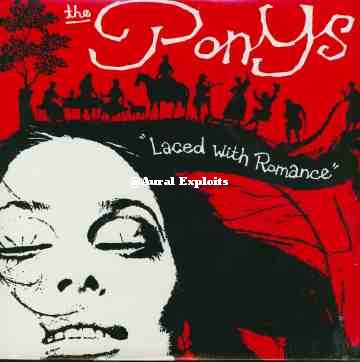
On their fascinating debut, the wryly-titled Laced With Romance, singer-guitarist Jered Gummere, guitarist-singer Ian Adams, bassist-keyboardist Melissa Elias, and drummer Nathan Jerde prudently construct an efficiently eclectic array of noisy DIY throw-downs, raging psychedelic blues, and readymade spangled pop.

Originally in dirty balls-out punk band, Guilty Pleasures, Jered learned to play drums, then guitar, as a teen, becoming infatuated with the Misfits before leading high school band the Defilers (whose white t-shirt he sports). While the Ponys wholly respect punk progenitors the Heartbreakers and Ramones, Jered and Ian (ex-Happy Supply) also share a deep affinity for Link Wray and pre-Beatles surf music.

“It’s amazing. The guitars from that period (1959-1963) are loud as fuck, blowing out the speakers for that tape-distorted surf-y sound,” Jered shares as we sit in Maxwells basement an hour preceding their fiery show.

When I mention surf lynchpin Dick Dale, whose Deltone single “Let’s Go Trippin’” informed the West Coast vibrato tremolo wave, Michigan-raised Ian seems somewhat dismissive.

“Dick Dale thinks he invented everything. He’s so arrogant. He thinks he taught Hendrix guitar and claims to have discovered metal,” Ian opines. “I love everyone who copied him from that era more. I like the Fender 4, Eddie & the Showmen, and Jim Messina’s first band (prior to Country-rockers Poco and ‘70s pop duo Loggins & Messina), the Jesters. It’s way heavier than anything Dick Dale did. And Link Wray had a tighter sound and more ideas. After that, I got into (raw-boned ‘80s rockers) the Milkshakes and Thee Headcoats.”

Though those influences merely scratch the surface of the Ponys muse, drummer Nathan’s inspirations, including Detroit legends Iggy Pop, MC5, and Alice Cooper, are more obvious. Initially in long-lived straight-ahead rockers, the Mushuganas, led by gruff-throated vocalist Cookie Monster doing Rod Stewart covers, Nathan solidifies the tense rhythmic thrust Melissa weaves her bass through.

With big green eyes glaring my way, Melissa tells me cadaverous psychobilly combo the Cramps, art-damaged trio Suicide, and surrealistic amblers Spaceman 3 consumed her teen listening.

“I’ve also been influenced by Sonic Youth’s Kim Gordon and…,” Melissa reflects before disruptive solo opener, Birdbrain, whose pill-popping drunkenness matched the screeching guitar-vocal shrillness of her patience-testing set, aims this immodest tidbit at her when I suggest women in bands oft-times get short-changed: “She’s probably fucking one of the guys in the band.”

Misunderstanding my intention, Birdbrain then utters aimlessly, “You don’t respect Kim Gordon?”

The Ponys remain mild-mannered despite the unexpected interrogation, but enjoy my innocently hurled comment about Birdbrain looking like a septuagenarian’s beautician wearing the black garbage bag that she’ll soon don onstage.

With that (un)pleasantness out of the way, we begin discussing Laced With Romance, a delectably neurotic celebration seemingly snidely snickering over serious and silly observations. Take the suicidal put-on, “Let’s Kill Ourselves,” which surges forth with such inherently gleeful exuberance humorless emo fans may mistake its jaundiced facetiousness for self-righteous mutilation. Or, better yet, the shamelessly cheeky Ian-sung “I Love You ‘Cause (You Look Like Me),” a self-absorbed vignette worthy of The Fall, which provides farcical relief stashed between the darkly bluesy early Rolling Stones pilfered “I’ll Make You A Star” and the jingled vilification, “Virus Human.”

Perhaps the most resourceful slice of retro Stones fungus, “10 Fingers 11 Toes” co-opts Jered’s fierce “Street Fighting Man” lead-in with Ian’s jangled Rickenbacker guitar melody; revealing a passion for CBGB touchstones Television and Richard Hell whilst summoning ‘70s glam-rock predators, the New York Dolls, in the process. Meanwhile, Jered’s mewl-y hiccuped yelps express disheveled desperation.

“That’s just about being different,” Jered concludes.

Conceding he was “no jock,” maybe Jered felt misunderstood during his awkward adolescence, affecting the wittingly divulged lyrical dichotomies expounded in the maniacally vituperative “Sad Eyes.” A ticking espionage scheme ripping through “Secret Agent Man” uncannily provokes Devo’s maddening high wire tension or X.T.C.’s duskier moments.

Jered laughs at my “Sad Eyes” critique, casually offering, “Every little twangy guitar thing has been done at some point, but people grab on to that. We’re drawn to that echoey sound so that ends up being utilized.”

Despite purging emotional anxiety in the truest punk fashion, happily he still finds time to completely loosen up, as on the puckish Velvet Underground-ish parody, “Little Friends.”

“It’s about our house pets. We have a cat who pisses everywhere,” Jered explains. “I’m interested (in writing about) shit going on around me daily. I get most of my ideas from the television, crazy people walking down the street where I live, or from traveling.”

When asked how the Ponys arrangements reach fruition, Nathan interjects, “Some songs, especially lately, someone will come up with a riff and everyone finds a way around it. If we have something cool going on, Jered will start mumbling stuff to get to the essence of the song.”

“Sometimes it’s a big collaborative frenzy,” Melissa adds.

In fact, Melissa gets to sing lead on a new tune they worked out, “She’s Broken,” at Maxwells this evening. Delivering blues-drenched lyrics in a ravaged manner, she recalls the urgency of a snarling Patti Smith. One of the highlights for tonight’s crammed crowd is the ascending garage rocker, “Trouble Trouble,” where Melissa’s murky organ signature invades the sticky soulful beat, rendering a psych-garage fervor mindful of the 45’s or the Greenhornes.

“Some of the early songs we hadn’t committed to the debut were more blues-based,” Jered admits. “But we wrote so much new stuff we liked that we stuck with them. We still may go back and flesh out some of those tracks. They may resurface in a different form.”

For this night’s encore, the Ponys employ the sonic “Only One,” a thrillingly spewed electroclash bash with a visceral edginess the Yeah Yeah Yeahs would recognize and enjoy. During its blustery performance, Jered does his best to wring dissonance out of his axe, bending its neck backwards on the floor and letting the distortion bounce off the nearby floor speaker. For a second, I thought he’d destroy the six-string in malevolent Pete Townshend fashion. But alas, Jered’s probably too content and well balanced to go that far.

“I like that song. It’s fun. But the whole time I’m thinking about how much radical noise I’m gonna make at the end,” Jered confesses.

Following the Ponys sweat-drenched program, I overheard Jersey underground rock maven Bob Bert (Sonic Youth/ Knoxville Girls) say they were the best new band he’s seen in awhile – a promising endorsement, indeed!

As I’m leaving I hear a voice calling from behind at a distance. As I look back, lanky Jered appears amongst the fog, rain, and oak trees he’s nearly as tall as.

“I just want to thank you for coming out,” he sheepishly avows as if I was doing his eager and talented assemblage a favor.

PIPETTES READY TO INVADE AMERICA

FOREWORD: The Pipettes are an early ‘60s pop geek’s wet dream – adorable dolled-up chicks doing synchronized dance routines fronting a sturdy melodic rock band that’s not afraid to get dirty. At the Gramercy Theatre, late November ’07, they rose to the occasion, getting fans to dance along and snicker at their sassy teen brashness. This article originally appeared in Aquarian Weekly.

Go back in time to rock ‘n roll’s musically conservative ’62-thru-’63 timeframe, a period dissolved by JFK’s assassination and preceding the Fab Four’s impending British Invasion of an unwittingly abstinent America. It was a safe haven ruled by harmless harmonizing archetypes such as pre-eminent West Coast surf-rockers, the Beach Boys, and serenading New York street corner popinjays, the Four Seasons, parentally approved softies pushing aside the putative erotic perils mid-‘50s icons Elvis and Chuck Berry once provoked. Joyously re-creating those cautious pre-Beatles years, enticing English effigies, The Pipettes, conjure the innocently charming uptown soul girl groups the Ronettes, Shirelles, and Crystals imparted and streetwise toughies the Shangri-Las emulated ‘64-‘66.

True, the Pipettes adolescent retro-rock love tokens similarly unveil yearning heartfelt melancholia, familiar multi-harmony swoops, and wintry Phil Spector-like Wall of Sound imagery. Yet despite such seeming reverence, they manage to stay real, committing to ‘90s riot-grrl empowerment while having loads of fun donning polka-dot party dresses, applying black eyeliner, sporting high-heel stilettos, and choreographing dance maneuvers.

Though many Pipettes tunes endearingly utilize the rhythmic finger snaps, unison handclaps, syncopated beats, synchronized go-go gyrations, and vivaciously cheerful chants of yore, there’s always a vixen-like nastiness juxtaposing the overwhelming affability on winning ’07 entree, We Are The Pipettes (Cherry Tree).

Guitarist ‘Monster Bobby’ Barry (pilot of 4-man instrumental contingent, the Cassettes), and original singer, photographer Julia Clark-Lowes, assembled the Pipettes in 2003. Sweet-faced flaxen-haired, RiotBecki, and cutesy brunette, Rosay, soon came aboard. When Lowe departed, enthusiastic bleach blonde Welch fan, Gwenno Saunders, entered the picture.

Bursting forth with the kittenish extraterrestrial transmission, “We Are The Pipettes,” a smirking braggadocio lead-in boasting catchy choral cheekiness, kitsch-y melodic illumination, and seeping keyboard swing, the perky septet jump stylistically like a wild serpentine fire on their sparkling debut. Cabaret hip-hop rock-sopped shout-out “Pull Shapes,” sympathetic call-n-response orchestral chime “Why Did You Stay,” and plucky B-52’s-careened “Dirty Mind” show off the diverse range of this happily juvenile outfit.

Euphoric teenyboppers will embrace the blissfully lighthearted elementary fare. Suspiciously harmonizing in excitedly chopped-up Anglo linguistics like Japanese pop idols Pizzicato 5 and Shonen Knife, flirtatious “Your Kisses Are Wasted On Me” dribbles Jerry Lee Lewis’ “Great Balls Of Fire” four-chord staccato riff over faux-strings and jingled bells, conveying strange white soul. Snazzy kid-rhymed ditty, “ABC,” a deliciously ‘1-2-3 XTC’ patty-wack, glows in its groovy downloadable animated video.

More soulfully struttin’ than Bananarama and, of course, the Spice Girls, harder hitting than cheerleader Toni Basil’s giddy one hit wonder “Mickey,” but not as tauntingly libidinous as early Bangles, the Pipettes energize the future while looking towards the past. They may re-imagine Phil Spector’s dynamic echoplexed creations on lascivious “Be My Baby” homage, “Sex,” and spaghetti Western-tinged “Tell Me What You Want,” a truly mesmerizing’70s Philly soul cop grooving to the Delfonics, but their snippy lyrical conceits maintain a chic mod elan.

That said, on several contagious tracks, keyboardist Seb proves to be enamored by pioneering “Telstar” producer Joe Meek’s conceptualist overdubbed ‘50s/’60s recordings, girding a few arrangements with astral Casio swirls and cosmic synthesizer ripples.

Before accusing the Pipette gals of being mere eye candy, be aware that the hooky songs delivered are constructed proportionately with backup crew, the Cassettes, in egalitarian fashion.

“It’s a very utilitarian process of seven people,” affirms Rosay. “One person may come to rehearsal with words or chords. We jam around to see what fits, have our own in-house editing team, and try to be as open as possible shifting things around and have gotten better as a band because our confidence is growing. Anyone who gives a song to the band knows it’s owned by all of us. It’s important to have a shared voice.”

Rosay’s broad range of influences extends from folk singer-songwriters Joni Mitchell, Tim Buckley, and John Martyn to the Beatles and Stones. Her mom, a Motown-reggae fan, bought Rosay a piano at age seven. She was initially attracted to the Pipettes autonomous nature.

“We were formed for a concept. That’s the bands’ foundation,” she says. “We all care for each other and fight like siblings. What’s great is there’s no individual egos. It’s about working towards fulfilling an idea and not worrying who’s gonna sing lead more or be a front person in pictures. That’s what attracted us to the band, especially when Gwenn joined. That was already set in stone. It’s quite a liberating experience.”

The Pipettes emancipated front women exist on their own terms, verifying feministic redemption through music.

“We’re not trying to be righteous. We’re reflecting what young girls feel about things and the lyrics are quite conversational,” Rosay explains. “That’s perhaps inherently political. We made a careful decision not to have three girls play instruments onstage, raising the question of what value people put on women in bands. We’re constantly undermined because we don’t have guitars strapped around our necks so how could we be musicians. They think there’s a male Svengali behind it all and we’re just silly girls dancing in dresses and surely don’t write songs. Everything we do is very deliberate, comfortable, and natural.”

Furthermore, she deems, “There’s a horrible trend where girls have to play harder and faster than boys to validate their position. That’s bullshit. Just do it exactly as you want. Let’s celebrate being feminine. I wear a dress onstage because I like to. It’s not that I want you to fancy me or I want to fuck you. Fact is it’s a male dominated industry. It’s important women know how far they’ve come in music and shouldn’t be stopped from doing what they want.”

Unfortunately, the Pipettes were devastated when British staple, Top of the Pops, came to an end recently. Along with former tour mates, the Go! Team, another fledgling pep-rallied coed Brighton-based clan, the demise of television-related programs showcasing seductively charismatic performers hurts their chances of superstardom, negating the full impact of zestful videos such as the one done for “Pull Shapes,” where the footloose Pipettes bash a square’s banquet.

Rosay believes the entire enterprise is overrun by boys with guitars, lowering the potential for talented starlets to receive larger exposure. Still, prime time outlets for pop performers of all stripes have been on the wane since vibrant ‘60s pillars Hullabaloo, Where The Action Is, Ready Steay Go! and Shindig went bye-bye.

She clarifies, “I reckon the entire industry needs a resurgence. We’re really into performance and want our shows to be as exciting as possible for our fans. We want our audience to dance. We can’t convince them to dance if we’re just standing there. We’re not interested in looking cool or posing. We made up these dance routines. Gwenn and Becky had dance training, but it’s all meant to be simple, interpretive, engaging, and physical with the music we’re making. After a song’s complete, we’ll dance around in our living rooms and if it makes us laugh, we usually keep it.”

So let’s hope the Pipettes and Go! Team’s thrilling retro-pop revivalism gains solid rep. If all goes well, they’ll boost the relevance small seaside resort community Brighton deserves.

“Brighton’s open to ideas and has venues who’ll put you on. There’s not a particular scene. It’s just very eclectic. Certain sensibilities run parallel. People, luckily, responded to us,” Rosay assents. “There’s actually a campy cabaret tradition there which fits in well with our slightly tacky act.”

PERNICE BROTHERS PROCLAIM ‘THE WORLD WON’T END’

FOREWORD: Joe Pernice and I go back a-ways to his days in bucolic Scud Mountain Boys. I had done a piece on them for cool underground mag, Oculus, around ’95, and saw them play at my pal Mike’s former Avenue B club, Brownies. Then, as leader of the Pernice Brothers, I attended three different New York shows (two at Mercury Lounge and another at the old Fez) and wrote a few more articles praising the guy.

My friend, Shirley Halperin (Smug mag entrepreneur and former Rolling Stone/ US Weekly scribe), ended up marrying Joe’s producer-bassist, Thom Monahan. And Joe went on to release a few more excellent albums: ‘03s Yours Mine & Ours, ’05 Discover A Lovelier You, and Live A Little. This article originally appeared in Aquarian Weekly.

Between the last Pernice Brothers record, ‘98s orchestral pop masterstroke, Overcome By Happiness, and the recent, The World Won’t End, singer-songwriter-guitarist Joe Pernice remained busy recording under two ‘very’ anonymous pseudonyms. In ‘99, he released the beautifully understated, but lost-in-the-shuffle, Chappaquiddick Skyline, then followed it up with the yet-to-be-released in America, Big Tobacco (featuring songs originally intended for the Scud Mountain Boys, Pernice’s former Massachusetts-based rural Country-folk band).

Although gripping stanzas of apprehension, sadness, and fear cast a lyrical dark cloud over most of his work, Pernice’s impeccably precise pop arrangements retain a heart-rendering warmth and rarefied poignancy only a truly gifted musician could express so earnestly.

On The World Won’t End (Ashmont Records), he’s still willing to show on uneasy heart of darkness. And as usual, his honey-dewed, come-hither voice crests and falls with a balmy buoyancy, conveying a fervent serenity to the pastoral tranquillity multi-instrumentalist-producer Thom Monahan, percussionist Mike Belitsky, keyboardist Laura Stein, guitarist-percussionist Peyton Pinkerton, and Joe’s brother, guitarist Bob Pernice so elegantly provide.

I caught up to Pernice while he was doing some freelance work editing a Cosmopolitan spin-off. True pop fans will want to check out the Pernice Brothers live shows.

I heard you recorded the elegant strings for The World Won’t End at Smug Magazine’s spacious former headquarters on Canal Street?

JOE PERNICE: We were pressed for time and scheduling was madness. We had to get together string players and band members and (producer) Thom Monahan was making records with other people. We had a small two-day window to do strings or delay the record six months. Shirley (Halperin) from Smug had wide-open space and when they weren’t working during the weekend, we brought in the top notch recording equipment.

I must admit, your new song, “Let That Show,” caught my attention because of its similarity to Electric Light Orchestra’s ‘70s Chamber pop.

JOE: (laughter) That’s exactly what we were hoping for. I was just over in England and a guy who works on our label there said, “I don’t know the name of that song. It’s the ELO string thing.” It’s a disco flourish.

Is there a major difference between the Chappaquiddick Skyline and Big Tobacco side projects?

JOE: Big Tobacco will be out in America in October. It has different songs I wrote to be on the next Scud Mountain Boys record that never came. But I had just gotten out of my record deal and that was recorded during time off. I didn’t release it in America because I didn’t want to release two LP’s between the Pernice Brothers records. In Europe, they’re less concerned about the name. In America, I got this Palace Brothers comparison. I didn’t think musically they were anything like us.

Some spare Scud Mountain Boys songs were reminiscent of Palace Brothers. But you use more instrumentation now.

JOE: A lot of Scud songs from Dance The Night Away and Massachusetts could have been fuller. But that band existed for only a couple years and made three records in 18 months. We were just flying. We didn’t know what the fuck was going on.

What’s with the sarcastic The World Won’t End title?

JOE: What do you mean? I find it to be openly hopeful. (laughter)

Don’t give me that crap! (laughter) The songs sound upbeat, but the lyrics are bleak.

JOE: It matches the theme.

The aura reminds me of Brian Wilson of the Beach Boys when he was living in the sandbox following psychedelic drug misuse.

JOE: That’s because he was all hopped up on pills.

I’m just drawing shit out of you. I hope your personal life isn’t as depressing as these songs.

JOE: Oh no. It’s great making records. Who could ask for a better life.

Does it get easier to construct songs as you get older and wiser?

JOE: I don’t think about it being easier or harder. It’s about enjoying it. I articulate better. When I do it a lot and get in the zone, I get lost in it. I enjoy writing more than performing. It’s about trying to find the time while traveling so much. My schedule of writing everyday has been disrupted.

You’re able to write about mundane subjects like fear and love loss with renewed flare and new topicality on each album.

JOE: Thom and I realize we’ve recorded about 90 tracks together. We were counting them. I wrote them on a napkin and we were laughing.

Are you still writing songs on acoustic guitar?

JOE: Yes. But I’m thinking of writing on piano. I have a bunch of songs I want to record that may work better that way. But I don’t want a radical change, just a different angle.

Are you an avid reader?

JOE: I’m reading a Nick Hornby book now. When I was making the record I only had snippets of free time. So I read lots of poetry. I like reading about woodworking and I love the Hockey Encyclopedia’s stats.

So you’re a hockey fan, eh?

JOE: I’m a Boston Bruin fan. I was psyched watching the games late at night while I was in London. Ray Bourque (former Bruin) won his Stanley Cup finally. I didn’t think the Colorado Avalanche had a chance. New Jersey was better, but they caved. They got one goal in the final two games against Patrick Roy.