Category Archives: United States Brewpubs

HIGH POINT BREWING COMPANY

Image result for high point brewery

BUTLER, NEW JERSEY

German philosopher Friedrich Neitchze’s timeless adage, ‘whatever doesn’t kill you only makes you stronger,’ seems appropriate describing High Point Wheat Beer Company’s steady rise in the face of a thankfully bygone era when generic lagers ruled the roost, crowded store shelves, and saturated indiscriminant guzzlers.

Creating its inaugural Bavarian-styled beers under the RAMSTEIN banner a few years before the majority of impressive brewpubs started penetrating America’s rank and file, owner Greg Zaccardi’s small Butler brewery became the first all-exclusive German wheat beer enterprise in America during 1996. But now High Point’s Ramstein beer line goes way beyond German tradition.

In hindsight, the founding investors took a mighty risk marketing European flavored brews to a homogeneous public filled to the gill with Bud and Miller. Though Ramstein has grown beyond its German-styled hybridization into Americanized ales and lagers, Zaccardi’s award-winning lineup still utilizes preferred German ingredients.

Before Blue Moon Brewery gained a foothold in the burgeoning wheat beer trade, Ramstein had already shown the way with more distinct, flavorful, and robust offerings at a time when the ever-popular, less savory, weaker-bodied Hoegaarden Witbier commanded mainstream attention. Though High Point’s distribution may currently be limited to New Jersey, its Maibock, Amber, and Blonde brews have won prestigious medals in Hudson Valley competitions while its Winter Wheat took a local Suzie Q People’s Choice Award.

Yet Zaccardi admits the humbling educational experience initially took on a ‘make or break’ dilemma that could’ve sunk the brewery prior to its opening. Learning different bar’s dynamics and indoctrinating the unenlightened proletariat was extremely important to bringing cloudy banana-clove-flavored suds such as Ramstein Blonde to a previously prohibited populace confined to cheaply macro-brewed pilsner-lagers.

A spunky University of California-Santa Cruz chemistry major, the Montclair native learned his post-collegiate craft while brewing in Germany. He may’ve stayed out West in ’89, but San Francisco was shook by an enormous earthquake that affected the regions job market (pre-Silicon Valley computer boom).

History – High Point Brewing Company, Inc

Zaccardi recalls, “There were two Santa Cruz brewpubs back then. So I was used to great-tasting beer. When I returned to the East Coast, it was a barren wasteland for beer. Brooklyn Brewery was just a small brand. If you went to any decent place like Passaic’s Loop Lounge, the best you’d get was Sam Adams – which was rather unknown. Molson was considered exceptional, unique beer at that time.”

The eager zymurgist soon began home brewing, joining New York City’s Homebrewers Guild thereafter. He watched as the microbrew industry advanced eastward through Colorado, then Chicago, and finally, the Big Apple.

“I thought this might be something I wanted to pursue since I had the chemistry degree,” he says. “My wife’s family, at the time, were from Germany. She came from five generations of Leibinger brewers in the town of Ravensburg. German brewers are very regional. They did 100,000 barrels a year, a larger production output then that of Ommegang. So I went to Germany and got an apprenticeship brewing at Edelweiss specializing in wheat beer. They were the sister brewery of an Austrian company and don’t import to America.”

Pulling out a souvenir bottle of Farny, the Edelweiss family’s namesake hefeweizen, Zaccardi then explains the difficulties of prepping a neoteric Jersey brewery.

“In ‘93/ ’94, we put together a comprehensive brew plan for America, working with Rutgers Business School, where one of my co-founders went. We had a hip focus group comparing five different beers to select the best. Our Blonde Wheat was consistently chosen near the top. The feedback we got was it tasted like a beer some had tried at Germany’s American-run Ramstein Air Force base.”

Opening in 1996, Zaccardi initially favored property in High Point at the top of Route 23, a gorgeous landscape reminiscent of Germany’s hilly vistas. But converting cornfields to a production brewery wouldn’t be cost effective. So he chose nearby Butler as its locale, picking an industrial-bound red brick building with firm structure, existing utilities, and superior water source. He continues to use authentic Bavarian ingredients since the grain quality’s supposedly better and America’s malting houses aren’t as good.

“Sources of richer grains are concentrated in Europe. German hops are more delicate and floral whereas West Coast hops have a resinous, piney intensity that’s not conducive to keeping the balance and flow of wheat beers and lagers. The yeast we use, especially for the weiss beer and blondes, is unique and authentic. You have to use the proper yeast to get that taste. Butler’s soft water matches up well against German Rhine water. Soft water’s a blank canvass. You could adjust water to make a stout via sodium bicarbonates or calcium carbonate that mimic the style. But when you use hard water, it’s nearly impossible to economically rid the harsh mineral flavoring. We have an exclusive spring-fed reservoir and could pretty much do any style we want,” he proudly exclaims.

But Zaccardi admits High Point’s 5,000 square foot warehouse is too modest to drift into broad-ranging small batch beers. Though all Ramstein beers are available on tap, only two regular (Blonde/ Classic Wheat) and one seasonal (Winter Wheat) are currently bottled.

As we converse about Ramstein’s excellent tap-only Eisbock, Zaccardi’s former brewer, Paul Scarmazzo, a whimsically charming maibock-loving septuagenarian, joins in.

“Women love the Eisbock,” he claims. “They drink it like it’s soda. They don’t realize it’s 12% alcohol.”

Scarmazzo had gotten laid off an engineering job and just came back from a German vacation when he initially discovered Ramstein’s brews. Now retired, he spent nine years manning Zaccardi’s tanks. He began as a keg cleaner, tank sterilizer, and bottler, becoming the brewer when the position opened up. Within two months, he’d learned the art of brewing, resigning after nine years so a “younger, healthier full-timer came aboard.”

Ramstein’s newest brewer, Brian Baxter, a local musician with a superb low-key acoustical 9-song Simple Is Beauitful CD to his credit, subsequently took the reigns. The bearded, bespectacled brewmeister claims the first beer he ever tried was Genesee Cream Ale on an ice-fishing trip with his father at age sixteen. Thereafter, he home-brewed, then begged Zaccardi for a job, cleaning tanks until Scarmazzo had a stroke. Now in charge of brewing operations for six-plus years, Baxter completed a two-week brewing school program at Chicago’s respected Siebel Institute of Technology and will get further schooling in Germany later this year.

But several recent economic concerns pose a modest threat to High Point’s profitability. Prices of imported grains and raw materials have increased due to the weakened dollar versus the Euro, a wavering factor that pales next to temporarily high fuel costs and empty bottle surcharges. Plus, quality distribution is terribly important for getting fresh beer to the consumer, especially since 80% of High Point’s beer is on draft.

However, Scarmazzo envisions an unexpected benefit to higher import costs.

“There’s an upside,” he reckons. “The more expensive it gets to send ingredients from Germany, the less imported beers will be able to compete, helping local American brewers grow. Beer drinkers never had it so good. Besides, every single German beer’s been weakened over the years. It’s lighter beers in smaller bottles.”

Though High Point doesn’t make its own stout right now, they do contract brew increasingly popular new-sprung indulgence, Boaks Imperial Stout, for native Jerseyite home brewer, Brian Boak. Zaccardi acknowledges getting requests to brew a smoky German rauchbier and occasionally, he co-sponsors India Pale Ales for home brew competitions at Ridgewood’s The Office.

“We like to have a diversified portfolio going from light to dark and soft to heavy beers. I don’t see us making 18% alcohol headbangers since most are overwhelming and time consuming to create. As for local brewpubs, I’ve been supportive of West Orange’s Gaslight and Berkeley Heights-based Trap Rock. I’d like to journey to Newark’s Port 44,” Zaccardi divulges as I quaff a seven-ounce glass of amiable crystal-malted citric-peeled dry-hopped Northern Hills Amber Lager.

While Zaccardi’s “aspired benchmarks” include Ayinger, Weihenstephan, and Augustiner brews, he also enjoys Oregon’s Deschutes output and Sierra Nevada’s Celebration Ale – though this years’ model he found “harshly fresh-hopped.” He’s not the slightest bit tempted to make fruit beers or lambics any time soon. But he’s grateful for the converted dumptruck outside the brewery that boasts Ramstein’s insignia.

“We were running out of room in our dumpster, over-producing spent grain for West Milford farmers. So we went on Craigslist and sold spent grain,” he says while pouring me a sample. “A Verona man with an upstate farm in Monticello, who picks up manure from Lyndhurst’s Medieval Times and used to get grain from Newarks’s Anheuser-Busch plant, was looking for grain and needed a spot to keep his truck. Now we have a place to dump spent grain.”

On tap, robust Dortmunder-styled Revelation Golden Lager, a billowy white-headed yellow-bellied dry body, revealed an earthen peat fungi soiling not unlike a proper English Extra Special Bitter. Its wheat-cracked barley-corned graining comforts moderate wood-dried grassy-hopped bittering and teasing citric twang to toasted bread base.

As I prepare to leave on this brisk winter day in early March, Zaccardi pours me a newly brewed Maibock straight from the serving tank. An earthen leafy-hopped gourd-like autumnal crispness spreads across abundant red-fruited apple-spiced sweetness and tempered caramel malts countering a peppery rye-dried lip-smack. Less malt-sweetened than a typical Octoberfest, this superb maibock already receives first-rate consideration amongst provincial connoisseurs.

Things look up for High Point’s Ramstein line of brews right now. At least four customers have come and gone to fill up growlers and sixtels during my brief stay. So let’s have a toast for this admirable 3,500 barrel-a-year 5,000 square foot microbrewery stationed in a former rubber company space. Go to


www.ramsteinbeer.com for more pertinent info.

DU CLAW BREWING COMPANY – BEL AIR

Image result for du claw brewing bel air
DU CLAW – BEL AIR

Situated inside a red-bricked, green-trimmed mall center, DU CLAW BREWING COMPANY’S inaugural Bel Air pub opened 1996. Locations in Bowie, Hanover, and BWI Airport’s Southwest Terminal came into prominence post-millennium and continue to flourish. As for my three-hour January 2011 Bel Air fling, I examined the efficient soft-hopped alacrity of ten tangibly diverse brews, meeting Du Claw’s owner, Dave Benfield, while enjoying a few untried libations alongside some previously reviewed fare.

The high ceiling interior, centered by a huge wraparound bar, included front and side dining areas with multiple TV’s (and a billiards table to far right). An enclosed front patio near the front entrance suits sunny day feasting. The clean Industrial setting draws sports fans, businessmen, and party people. A separate dining area to the left satisfies families with children and the char-broiled burgers are damn tasty.

Newly discovered gems included peculiar fish-oiled hop-frisked Exile Belgian Pale Ale, with its mild orange-dried date souring receiving latent honey glaze. Red-orange-fruited perfume-wafted nicety, Old Flame Old Ale, enjoined fig-dried crystal-caramel malting to tingly hop spicing. Buttery smooth Serum Double IPA snubbed brisk stylistic bitterness for sugar-spiced peach-apricot-grapefruit tang and pine-combed maple malting.

Chocolate lovers will unite over two wonderful dessert treats. Euphoria Toffee Nut Brown Ale worked toffee sweetness into rye-malted chocolate-browned almond-pecan cluster coupling vanilla, cocoa nibs, crème brulee, and coffee ice cream illusions above astringent hop bitterness.

Better still, velvety smooth Black Jack Imperial Stout drenched brown-sugared oatmeal cookie theme with macadamia-hazelnut pleasantries, Blackstrap molasses sapping, black chocolate richness, espresso milking, crème brulee sweetness, and raspberry-blackberry souring.

While previously tendered Venom Pale Ale retained aggressive orange-peeled grapefruit-skinned bark-dried bittering, its supplemental nitro version maintained soft-watered caramel-malted creaminess and delicate spicing for mild grapefruit-juiced Mandarin orange prod.

Misfit Red Amber Ale upped the caramel roasting and Bad Moon Porter increased the stove-burnt coffee-roasted creaminess and dark chocolate malting from initial Fells Point sampling. And best selling Bare Ass Blonde Ale developed a lemon-soured floral peach briskness and peppery hop tingle since inceptive ’05 offering.

The following tasting notes were from initial ’05 visit of defunct Fells Point brewery:

Du Claw’s well-detailed brews showed tremendous diversity. Lightweights will adore citric-sweet cereal-grained Bare Ass Blonde Ale, caramelized barley-roasted apple-persimmon-spiced Misfit Red, tangy soft-fruited Ravenwood Kolsch Ale, and blanched Australian-hopped stone-fruited golden lightweight Kangaroo Love Lager.

Ripe quince-peach-melon tang, spiced Bosc pear sugaring and tart lemon-hopped bittering braced Venom Pale Ale.

Robust dessert treat, Bad Moon Porter, weaved roasted coffee and toasted hops around addictive Godiva dark chocolate sweetness.

More sophisticated tastes will lean towards expressive coffee-toned Naked Fish Chocolate Raspberry Stout (sporting a raspberry seed-ripened mocha-sweet hazelnut-walnut confluence). These are only some of the more than dozen selections available at any given time.

 www.duclaw.com

BARE BONES GRILL & BREWERY

ELLICOTT CITY, MARYLAND

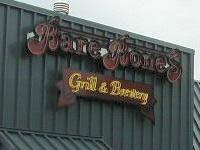
Located at Ellicott City’s St. John’s Plaza mall on bustling Route 40 since 1996, I visited BARE BONES during two-day January 2011 jaunt to Baltimore vicinity. (Note: A second Bare Bones facility is in Stuart, Florida.)

Not necessarily a brewpub, since brewing operations ceased when tanks were removed circa 2008, but a clean blue-collar sportbar specializing in ribs and reasonably priced pub fare (if not diversified beers and ales).

Perched west of Baltimore City, its wood entry with green awning leads past waiting area to low-ceiling central bar sidled by right side dining and elevated left seating. A separate family-styled dining space was off to the far right.

During early afternoon visit following one-hour Ellicott Mills Brewery stopover, I downed a crock of white chili (skinless chicken with navy beans, herbs, and spices) alongside seven contract brewed house beers crafted by Oliver (Pratt Street Brewery) and Clipper City Brewery. Great classic rock by Yes (“Siberian Kutra”), The Who (“Join Together”), and Alice Cooper (“No More Mr. Nice Guy”) played in the background as I dipped into my sampler tray.

Best of the middling light-to-moderate-bodied ales was probably approachable red-orange-fruited licorice-perfumed spice-hopped Old Frederick IPA. Other mainstream standard fare included distantly floral-pined orange-lemon-apricot-teased Tiber River Red, Saaz-hopped crystal-malted lemon-limed wheat-corned hop-fizzed pilsner-styled Patapsco Valley Gold, and citric-blanched maize-dried soft-hopped white-breaded cardboard-like astringency Hunt Valley Light.

Though Savage Mill Porter lacked typical robust nature, its slick oily-hopped nut-charred ashen-backed mocha malting might appease milder thirsts not ready for prime time porter-stouts. Perhaps the soft-buttered nuttiness and minor hop-charred spicing of pecan-fig-rigged Chesapeake Brown Ale would better suffice.

Mild lemon-fizzed pepper-hopped malt-toasted Old Ellicott Ale (an English pale ale) and lemon-wedged apple-spiced lime-lined white-breaded Seven Hills Hefeweizen were clearly mediocre (with the latter beer in need of banana-clove injection).

 www.barebonesgrill.com

NEW JERSEY BEER COMPANY

New Jersey Beer Company - CHICPEAJC

NEW JERSEY – NORTH

Trying to open a viable brewery isn’t as easy as it seems. First, there are a number of antiquated state laws to abide by, some of which are too stupid to believe. Presently, in New Jersey, brewers who bottle and can are not allowed to use facilities as a brewpub that serves food and alcohol on a daily basis. But things have improved slowly over the course of time.

Ever since President Carter signed into law a rule making home brewing legal (circa 1980), many brewpubs and microbreweries have sprung up, taking a percentage of business away from feckless macrobrewers such as Budweiser, Miller, and Coors. However, each state’s individual law requirements must be adhered to before any small brewery or brewpub could set up distribution.

The latest Garden State brewer, NEW JERSEY BEER COMPANY, began operations in May 2010. Though their bottling line broke down (possibly beyond repair) a short time after, the North Bergen-based enterprise still managed to put out eighty to one hundred barrels of beer per month. Most keg barrels go to statewide bars, but some could be found in liquor stores for private consumption.

NJ Beer Co | NJCB | Your resource for beer in New Jersey

New Jersey Beer founder, Matt Steinberg, originally went to Cornell University to become an engineer, but soon found he’d rather have a profession that would better hold his interest. At college, the Manhattan native found some appeal in the elective courses that concentrated on food, beverage, and hotel management. But he didn’t want to become a prep chef for the next fifteen years so he started home brewing during free time in his basement to create excitement.

Located in a drab commercial industrial zone on 42nd Street off Tonnelle Avenue, New Jersey Beer has found its niche amongst regional customers. In fact, local teachers and their former students have found a place to reunite at the raw space.

A small bar section inside the brewery provides instant access to each on-site brew. There are eight stools plus a large and regular screen TV at the black-walled bar area. Behind the stools, a medium-sized living room area with couches, leather recliner, microwave, and carpeting, allows for cozy comfort. The company’s gold and red insignia, reminiscent of Jersey’s biggest educational institute, Rutgers University, is centrally located.

Yet despite the apparently obvious state school affiliation, Steinberg claims, “That’s completely coincidental. Those are also the colors of North Bergen High School. I have college friends who have a designing company in Brooklyn. I gave them very little direction. I couldn’t comprehend all the logo’s branding strengths. But I found smart people to do their own thing.”

Another person of interest whom Steinberg befriended was head brewer, Pete Velez, who’d worked in South Carolina for one of Gordon Biersch’s affiliated German-styled brewpubs. Though New Jersey Beer competed in Denver’s lauded Great American Brew Fest recently, its beers were in strict categories that nearly undermined the stylistic submissions Steinberg’s troupe created.

Their Hudson Pale Ale was entered in the ever-widening American Pale Ale category alongside stronger hop-headed West Coast varieties and the 1787 Abbey Single had to dubiously go head-to-head with headier Belgian-styled dubbels and tripels (reviewed in Beer Index).

As Steinberg pours me samples this late November afternoon, he mentions, “We wanted an approachable Pale Ale that’d be comparable to Sierra Nevada or Bass Ale, not Oskar Blues heavier, alcohol-strengthened brew. And the generic Belgian category at the Fest needs to be expanded.”

Settling in for a two-hour sojourn, the first libation tried, 60 Shilling Mild, a traditional English pub ale made from “the stripped down second runnings” of the brewery’s excellent Wee Heavy, worked well as an apropos moderate-bodied lead-in. A faint orange compote waft emanated from the coppery liquid, followed by a mild earthen fungi tongue and milder peat-smoked pale-crystal malting. Root vegetable notes lined its soft Columbus hop bittering. It was a nice opener for mid-afternoon consumption.

Next up, 1787 Abbey Single scoffed the traditional Belgian candi-sugared mode for what Steinberg labeled “a golden sessionable ale that’s like a witbier without the wheat to take on a sunny day boat cruise or to try alongside light dishes such as sautéed whitefish and freshly barbecued scallops.” Its grassy-hopped white-peppered herbal spicing lingered through rye-malted burnt orange, banana bread, and extracted vanilla illusions given a teasing ethanol burn.

Steinberg applauds my flavor profiling, but cautions, “Depending on what you eat, the same beer could taste a bit different from one day to the next. Garlic or onions have a strong presence on one’s tongue and may affect the palate. I’ve had beers I hated one day and thought were great the next. Crackers are usually neutral enough not to affect the taste.”

Touché, my husky new friend!

Nonetheless, I explain to Steinberg that cold water between swigs of beer usually sufficiently cleanses my palate and makes proceeding sips fresh as a daisy. We agree, then get ready to try the next worthy libation.

Probably the truest-to-style New Jersey-brewed concoction, Weehawken Wee Heavy Scotch Ale brings expectant mesquite-smoked Scotch malting, coarse resinous hop roasting, and dewy peat graining to surging fig-dried date-sugared cocoa sweetness. Its backend alcohol burn reinforces the sullen whiskey musk, subsidiary stone fruiting, and tertiary dried tobacco drift.

“I made a small batch of a bacon and Scotch-smoked malt beer,” the experimental-minded Steinberg recalls. “The smoky mesquite and hickory soaked into a mixture of Scotch and water to impart a peat-Scotched aroma. But I didn’t know if it was too weird and couldn’t figure how it’d play out. It smelled delicious.”

Though the best-selling New Jersey brew, Hudson Pale Ale, was unavailable upon my initial visitation, I shed no tear (since it’d be ready for consumption within a week and obtainable at Ridgewood’s The Office post-haste). Besides, after quaffing a busy dark ale such as the Weehawken Wee Heavy, a richer alternative would better suffice.

Arguably NJ’s best beer, the mahogany-hued mocha-defined Garden State Stout never sought to overwhelm casual drinkers even if it’s roasted hop char and espresso-coffee leanings had a sharp impulse. A milder alternative to robust stouts, its brown-sugared oatmeal raisin cookie theme deluged oily-hopped tar-like molasses bittering, sappy anise goo, and black chocolate-y cherry puree undertones.

Although experienced drinkers may lean towards ‘bigger’ beers such as Garden State Stout and Weehawken Wee Heavy Scotch Ale, Steinberg admits it’s the lighter-bodied brews such as Hudson Pale Ale that reach a wider audience of mainstream consumers used to simpler American pilsner-lagers. But there will always be a small percentage of consumers willing to take a step up and at least try the fulsome variety of fertile options ‘beyond the pale.’

Steinberg concludes, “Take Brooklyn Brewery. They’re not making money off (higher profile brews) Black Ops and Sorachi Ace. They’re making money on Brooklyn Pils. That’s why they’re successful. That allows them to make crazy beers like Cuvee Noire – which are the ones I drink. But I’m only getting that chance because tons of people buy Brooklyn Lager.”

In order to draw more local denizens to New Jersey Brewing’s on-site bar, Steinberg offers the Founders Reserve Club, an affordable option for repeat visitors. Club membership is $100 for one growler of each four seasonals (before general public marketing), plus 20% off all tasting room pints, merchandise purchases, small-batch release samples, and T-shirts. On top of that, club members will receive invitations to all exclusive brewery events.

The Garden State has continually proven its brewpubs and microbreweries could compete nationally against the toughest competition. And goddamn, the competition has improved so much in the past twenty years that it has European brewers quaking in their boots as imports suffer to maintain sales versus the heightened stateside challengers.

www.njbeerco.com

PORT 44 BREWERY

Photo of Port 44 Brew Pub - Newark, NJ, United States. There you go. That's the sign.

NEWARK, NEW JERSEY

The city of Newark is currently undergoing its greatest revitalization. New entertainment spots have sprung up recently, including the Prudential Center Arena, New Jersey Performing Arts Center, and Riverfront Stadium, allowing for increased cultural arts, sports, and restaurant revenue. In accordance, Port 44 Brew Pub opened May 2010 (and closed 2017), serving Newark’s first craft beers in nearly 100 years by July. Unfortunately, this worthy pub closed down in September 2011. Nevertheless, the following descriptions will enlighten those happy clients that perused the ill-fated Port 44.

Tucked inside Commerce Street’s industrious downtown neighborhood, the ample three-story pub enjoins retired Newark police officer, Greg Gilhooly, with ex-Orange fireman, John Feeley, as co-owners.

Newark boasted 27 pre-Prohibition breweries, most established by German and English immigrants commemorating Europe’s longstanding heritage. Though each is long gone, Port 44 restores New Jersey’s most populated city’s once-proud brewing tradition.

Visited September 2010, the wholly refurbished watering hole featured three standard brews (plus two specialties), fine continental cuisine, $3 happy hour house beers, and an affordable 20-ounce mug club ($55 per year for decorative personalized glassware, drink-food discounts, and more). The brick-walled stone-tiled oak-furnished street level’s central octagon bar (with six TV’s) services several black-chaired tables. Four front-windowed 15-barrel fermenters occupy the concrete red-floored left side. Right side stairs lead to a second floor oak bar with more seating and copper-kettle tanks. The unfinished third floor will become a conference-banquet room. In the basement, a foam-insulated walk-in cooler holds more brew tanks while a raw keg storage space will soon be correctly pitched for sub-pumps.

Established brewer, Chris Sheehan, wearing a classic Krueger Beer T-shirt celebrating America’s first canned beer, greets me at high noon. Originally from Buffalo, the self-proclaimed ‘metal head’ started as a home brewer before heading West to join California’s revolutionary microbrew hotbed. He attended an intense week-long brewing course at UC-Davis to learn microbiology, sanitizing, and tasting, working part-time at Berkeley’s historic Triple Rock Alehouse prior to moving across the bay to San Francisco’s bigger 20 Tank Brewery as a full-timer. He landed at Manhattan’s now-defunct Neptune Brewery (located above Chelsea Market) for three months, then Chelsea Brewing thereafter (accepting several national awards).

Recruited to craft newfangled libations for Port 44, Sheehan understands the local impact a brewpub could have on a community. He’s aware of Newark’s extremely diverse cultural populace and realizes each pub should have its own identity, even if it’s as multi-faceted as the Brick City’s heterogeneous community.

“To a certain extent, we wanted a nice pub feel. Prevalent use of wood décor, stone tiling, and up-front tanks add an Industrial feel. We didn’t want to be a full-blown sportsbar, but wanted to accommodate and focus on the Devils fans three blocks away at Prudential Center. So we had to have a sports appeal for the fans we anticipate hosting,” Sheehan explains as I quaff his lightest offering.

Named after Jersey’s state bird, the soft-focus Goldfinch Ale will please pilsner fans. Its tannic lemon-spiced dry-hopped bitterness and parched wheat bottom counter sweet cereal-grained crystal malting.

Sheehan adds, “It has the mentality and attitude of a pilsner, yet it’s top-fermented and treated as a hoppy golden ale at warmer temperatures. A sack of light caramel pils gives it a subtle sweetness you’ve perceived as crystal malts. It’s been described as lemony, attributed to a generous dose of German-hybrid Mount Hood hops.”

Next up, grassy-hopped grapefruit-peeled wheat-dried, American-styled Siren’s Wheat, retains a mild juniper-embittered lemon zest.

“That’s a very fair description,” Sheehan approves. “25 cents of every pint goes to a charity scholarship for children of injured policemen, firemen, and EMT workers.”

Still experimenting with Siren’s recipe, he divulges, “I didn’t want it to come out as hoppy, but the pleasant surprise about the system we’re using is the pronounced hop utilization. In this case, it pumped up the hops too much. I want to back off a bit to make this a truer expression of an astringent American wheat. It’s too similar to Goldfinch right now, which is going to run out. I’m a one-man show trying to catch up. So Siren’s got to pick up the slack.”

Soft-watered butter-spiced orange-soured quince-flinched Devil’s Red scatters grapefruit-embittered Simcoe hops across roasted Vienna malts. A short alcohol burn accompanies the tart yellow-fruited finish.

“Citric notes are a good descriptive for American hops, in general. Obviously brewed to appeal to Devils fans without plagiarizing the franchise, I like using chalkboard imagery to invoke the legendary Jersey Devil as well,” the brewmeister points out.

Robust dry-bodied hop-charred coffee-roasted Longy’s Black Market Stout (just tapped today) brings mild espresso-cappuccino sedation to cedar-seared black-tarred anise gunk, finishing comparably to a mochacchino. Named after Prohibition mobster, Longy Zwillman, it’s not dissimilar to Sheehan’s award-winning Chelsea Black Hole XXX Stout.

“This one’s closer to an American-styled stout with aggressive Centennial hops and milder coffee. Black Hole’s a foreign-styled stout, stronger (8% alcohol) with super-intense malt roast. Longy’s will continue to evolve. Flavors will mature, round out, and the rough-edged harshness will dissipate,” Sheehan says.

To close my session, 13-day-old Catskill Hop Harvest, still embryonic, proved worthy. A fruitful creamy-headed rust-hazed wet-hopped ale, its tropical rain-watered pineapple-mango-papaya-cantaloupe sweetness, floral hibiscus-heather whisk, and caramelized sugar malting juxtaposed salty earthen hops.

Anyone doubting Sheehan’s serious-minded brewing techniques should know he drove to Upstate New York to collect Catskill’s homemade wet hops, describing its character as a bit British with earthen-floral nuances.

Feeling strongly about preserving Newark’s historic 19th century brewing reputation, the native Buffalonian realizes Newark’s tap water helped many pre-Prohibition breweries prosper. He’s been fortunate to work with great water in San Francisco, New York, and now, Newark, taking advantage of the situation whereby it’s not necessary to use salts for eliminating bacteria.

In the near future, Sheehan hopes to craft a German doppelbock, since he owns up to being intrigued by Ayinger’s esteemed Celebrator Doppelbock and Spaten’s equally fine Optimator. Admitting he learned more in ten months visiting Europe after high school than he would’ve attending four years of college, the seasoned brewer confesses the trip was not necessarily done to ascertain ancient European brewing techniques, but instead to peruse the continent as a relative greenhorn readying for the world. Now teamed up with former Jersey public servants, Gilhooly and Feeley, the spirited trio has rescued Newark’s long-dormant brewpub scene.

As Jersey’s newest brewpub, Port 44’s ultimate success will hopefully enable other local brewers to create friendly competition. It took time, but Brooklyn Brewery inspired craft beer newcomers Sixpoint and Kelso after a decade of prosperity. So here’s a toast for Newark’s reawakened beer barons.

POST-SCRIPT: During March 2011 sojourn, discovered four more intoxicating beverages. This time, Sheehan joined in as I consumed his fab fare, listed from frisky pils to Irish Stout.

Easygoing Penalty Box Pils brought lemony orange tartness to subtle spiced hops, herbaceous whim, limestone chalking, vegetal astringency, and sawdust reminder. Pomegranate concentrate and lemongrass fueled Pomegranate Wheat, a dry-bodied delight with lemon-seeded raspberry vinaigrette acidity, sour cherry pucker, and blanched white wheat base.

Sheehan’s pleasantly “unorthodox” The Cailleach Scotch Ale tickled the nose with prickly hop spicing and placed peat-smoked caramel toasting at a distance.

Best bet: dry hop-charred barley-flaked Black Bodhran Irish Stout, a mocha-driven St. Patrick’s Day offering with kiln-roasted coffee entry given milk chocolate, Belgian chocolate, and chalky cocoa creaminess topping peanut-shelled walnut, Brazil nut, and hazelnut subsidy.

Upon May 2011 reinvestigation, I found Sheehan standing at the bar alone ‘round noon and started bustin’ his balls. But he wasn’t real lonely. He was entertaining a friend he’d met going to Denver’s Great America Beerfest who’d temporarily gone upstairs to check out more of the provincial oak-furnished stone-tiled ambience.

Alongside Sheehan, I consumed two newly crafted brews and one oak-aged rendition. In its oaken version, The Cailleach Scotch Ale gained complexity, affixing an earthen peat-smoked whiskey sentiment to raisin-pureed black cherry, prune, vanilla and chocolate sweetness.

Sheehan’s latest fave, Ziegelstadt Alt, retained a sharp dry-hopped orange compote resolve above dark-roasted caramel malts and light wheat husk, picking up tertiary boysenberry, red gooseberry, and evergreen lingonberry niche.

Creamier than most in its stylistic range, mellow Newark Bay IPA brought woody grassy-hopped dryness, tannic grape tartness and mild juniper bittering to orange-candied peach, apple, and pineapple illusions.

By time I exited, several cute Seton Hall law students from down the block were celebrating graduation with lighter-bodied suds such as citric-spiced Goldfinch Ale and grapefruit-peeled dry body Siren’s Wheat while the local business crowd arrived in full force.

www.port44brewpub.com

BROOKLYN BREWERY

Image result for brooklyn brewery

BROOKLYN BREWERY

The bulk of New York’s beer elite converged upon Williamsburg’s eminent Brooklyn Brewery early September to promote 2010’s 3rd Annual NY Craft Beer.

It’s no surprise Brooklyn Brewery held NY Craft Beer Week’s press party at the old matzo ball factory they’ve occupied since ’96. There are few national competitors that boast such an arsenal of finely designed brews. Gathering at the tasting room for the pre-festival jaunt were several industry hotshots such as Yankee Brew News editor, Gregg Glaser, Shmaltz Brewing entrepreneur, Jeremy Cowan, and our devoted toastmaster, Garrett Oliver.

Oliver alluded to Brooklyn Brewery’s inconspicuous opening after an informal meet-and-greet. The pioneering brewer recalled his days at a defunct Manhattan brewery a decade after New York’s stalwart Rheingold and Schaefer breweries shut down. Though humbled at being part of Williamsburg’s recent arts renaissance, the cordial Brooklyn brewer warrants merit.

Alongside an ascending indie rock scene that’s second to none, he’s clearly revived the Big Apple’s brew crew. In 1900, 48 breweries existed in New York City, but Prohibition reared its ugly head, by 1980, none were left. However, new-sprung brewers, Kelso and Sixpoint, have helped Brooklyn’s revitalization.

“In 1994, nobody was on the streets. Tumbleweeds were rolling by,” Oliver reminisces about the once-dangerous neighborhood that’s now part of north side King County’s booming reawakening. Entering via a side entrance door, large brew tanks welcomed guests to Brooklyn’s brick-walled taproom, where exposed wooden beams and ducts provide a rustic warehouse feel tripled by the recently acquired 14,000 square foot space next door (adjacent to prevalent multi-venue Brooklyn Bowl).

Getting to the event early, I casually relished four inaugural host brews before the mad rush began. My complimentary glass captured four excellent Brooklyn brews. Mexicali-styled orange-spiced wood-hopped Sabroso Light Pils, placed mild orange-oiled lemon zest above dark floral nuances and herbal spices.

San Diego-styled pine-sappy red-fruited Detonation IPA retained a creamy brown-sugared red-fruited pine sapping reinforcing alcohol-whirred juniper-embittered pear-apricot-pineapple fruiting, tangy red apple juicing and herbaceous undertones.

Dortmunder-like Octoberfest brought soured cocoa and roasted chocolate to vegetal fungi, sugared fig, orange compote, and marmalade illusions.

Perhaps best of all, Cookie Jar Porter deconstructed an oatmeal raisin cookie recipe. Frothy brown-sugared Baker’s chocolate sufficiency and soft-watered peat-malted rye wheat spine amplify scrumptious chocolate-milked cookie dough theme thickened by sharp hop-charred fig-juiced raisin-pureed burgundy-dried stewed prune depth.

After munching down a hot dog (supplied by nearby Meat Hook) and cheesy comestibles supplied by Murray’s Cheese, I quaffed several newly discovered brews soon to be featured at New York Beer Craft Week (and reviewed fully in Beer Index section).

First, representing the South was Florida’s Cigar City Jai Alai IPA, a pine-spruced pear-browned apple-spiced bitter. Out of the Midwest came Goose Island Fleur, a soft-watered prickly-hopped hibiscus-flowered high-end Belgian knockoff.

Exemplifying the Northeast were Pennsylvania’s Victory Saison du Buff (an herbal Stone-Dogfish Head collaboration delegate Bill Covaleski claims will take your mind on an excursion); Maine’s Allagash Black Belgian-Style Stout (a dramatic chocolate-spiced tar-charred espresso alternative); and Cooperstown’s Ommegang Cup O Kindness (a malt-smoked meat-cured Belgian-styled Scotch ale curiosity.

At the top of America’s current Craft Beer Movement, Brooklyn Brewery has just started returning New York City to the glorious pre-Prohibition beer hall days by educating locals about interestingly diversified libations. And there’s always a few limited edition specialty brews waiting to be quaffed at the commodious tasting room.

www.brooklynbrewery.com

FEGLEY’S ALLENTOWN BREW WORKS

Fegley's Brew Works | LinkedIn

ALLENTOWN, PENNSYLVANIA

Perched up in the Lehigh Valley just a few miles from older sister brewpub, Bethlehem Brew Works, FEGLEY’S ALLENTOWN BREW WORKS opened 2007 in the center of an old industrial steel town still reeling from hard times but definitely on the rebound.

A cavernous upscale midtown restaurant-brewery known for good food and fine beer, this pristine four-story facility features a prominent 16-seat right side bar with large brown-gold trimmed glass mural and two TV’s, several scattered brew tanks (front-windowed and bar sidled), L-shaped blue metal lodge terrace, and umbrella-decked Der Biergarten.

Aluminum-lettered brown-outlined sign greets patrons to café-styled tavern area (where pictures of President Obama quaffing an amber-hued brew on premises during the campaign trail are showcased). Banquet space and lounge areas consume the upper floors.

Amongst old brick buildings scrunched together, Fegley’s currently supplies nearby Coca Cola Ballpark with original brews. A small bottling machine with several house brews serves take-out patrons and local delis.

Alongside Americana lunch consisting of hummus and crusted chicken potpie, my wife and I consumed brewer Beau Baden’s lighter offerings for starters.

Dry lime-peeled lemon-puckered soft-hopped blue agave-finishing Loco Lime Light Lager, phenol grassy-hopped maize-dried grapefruit-embittered vegetal-grazed Pig Pen Pilsener, and soothing moderate-bodied Belgian-styled Curacao orange-peeled chamomile-herbed coriander-spiced Steelgaarden Wit were dainty openers.

Sweetly soured blueberries consumed tart raspberry-cranberry fruiting and cracked wheat spine of Blueberry Belch, a light dessert treat more approachable than lemony lime-puckered brimstone-soured lemongrass-grouted raspberry spritzer, Space Monkey Raspberry Saison.

Better choices included lemon-wedged fizzy-hopped banana-soured clove-sweetened Hefeweizen and soft-watered hop-roasted oats-toasted coffee-burnt cocoa-dried Pawn Shop Porter.

West Coast-styled hop-head delight, Hop Explosion, brought pine-barked grapefruit rind bittering to tart candi-sugared lemon-dried sourness.

Best bet: creamy brown-sugared caramel-malted tropical-fruited Hop’solutely Triple IPA, a less bitter stylistic changeup dousing floral-spiced apple-candied peach, pear, mango, and tangerine fruiting above resinous hemp-hopped nuttiness.

Bought bottled versions of Fegley’s Bagpipers Scotch Ale, Monkey Wrench Saison, Insidious Imperial Stout, and above-mentioned Space Monkey Raspberry Saison for the road (reviewed in Beer Index).

 www.thebrewworks.com

BERWICK BREWERY


Brewery Review: Berwick Brewing (Berwick, PA) - Breweries in PA

BERWICK, PENNSYLVANIA

Located on the northwesterly side of the Poconos uphill from the Shenandoah River, BERWICK BREWERY (formerly One Guy Brewing) takes up nearly half the space of an old red brick-warehoused bakery in a sleepy light industrial village. An hour down Route 80 West off exit 256, at the Poconos northernmost range uphill from the windy Susquehanna River, the sleepy industrial village of Berwick maintains a blue collar Industrial setting.

Bordering a used car dealership, its main attraction is the large wooden pavilion Biergarden overlooking the river and idle railroad line (hosting live entertainment on weekends). Inside, a small tasting room with right side bar served brewer Kyle Kalanick’s beer recipes and local Spyglass Ridge Winery’s peach, pear, blueberry, and Reisling wines. Brew tanks in a staging area behind the bar stored four suitable suds and one fantastic IPA.

I initially visited this dank cafeteria-styled watering hole on the Fourth of July, 2010, settling in at the large wooden pavilion behind the small tasting rooms. Brewer Kyle Kalanick’s favorable beer recipes went well with delicious homemade pizzas and local Spyglass Ridge wines sufficed.

Enjoyed creamy, tropical-juiced, grapefruit-peeled Atomic Punk IPA, orange-bound, banana-cloved Front Street Wheat and rye-breaded, pumpernickel-loafed Hondo Keller over resinous citric-fizzed Arden Amber.

Sitting in Berwick’s tranquil Biergarten on the Fourth of July, 2011, I enjoyed a few delicious homemade pizzas with my wife, youngest son, Chris, and Long Island cousins while imbibing each sample (also available on tap at several Philadelphia area bars).

Doughy caramel-malted wheat-honeyed citric-dried hop-softened Berwick Lager and citric-dried hop-resinous rye-molasses-finishing Arden Amber Ale sufficed.

Better were two German-styled offerings: rye-breaded pumpernickel-loafed fungi-earthen floral-accented Hondo Keller Bier and wispy fizz-hopped orange-sliced cider-splashed banana-clove-softened hefeweizen, Front Street Wheat.

Highly recommended Atomic Punk IPA perfectly countered creamy caramel malting and surging peach-pear-pineapple tang with piney alcohol-burnt grapefruit-peeled juniper bittering.

Returning to Berwick on a misty springtime mid-afternoon April ’11, my wife settled into lemon-spiced, honey-creamed, orange-candied mainstay Berwick Lager while I delved into three moderate dark beers. Due to nightshift construction, the brewery’s recently been opening at 6:30 AM.

A few stragglers are finishing up as we imbibed three dark ales at one of the dozen elongated orange tables. Dark roasted malts consumed coffee-stained, cocoa-dried, oats-charred Grumpy Bill’s Porter, milk chocolate-y, coffee-burnt, Kahlua-tinged Barleytown Irish Dry Stout, and coffee-oiled, cherry-soured, mocha-chalked Foxy Stout. All together, another nice go-round at this discreet little dive.

NEW ENGLAND BREWING COMPANY

See the source image

WOODBRIDGE, CONNECTICUT

One of Connecticut’s first craft breweries (1989), NEW ENGLAND BREWING COMPANY moved across the street to its much bigger Woodbridge digs in 2013. Just off the Merritt Parkway, the silver silo-bound NEBC needed the larger white aluminum facility for its multiple fermenters, increased beer production and experimental research department.

The red brick interior features an overhead-doored pub with copper-top bar, pipe railing and reclaimed wood siding serving the epoxy-floored barrel and table seating from three separate draught stations. A crowded equipment-laden gray-walled brewroom to the left supplies the rangy elixirs.

My wife and I grab seats outside at the black metal-furnished, canopy-topped front patio to down nine previously untried suds, August ’21.

Stegosaurus - New England Brewing Co. - Untappd

Caramel-spiced dried fruiting, earthen mineral grains and leafy hop moisture appeased Large Farva, a dewy soft-toned Vienna lager.

Lemon-doused Pilot Belgian White Ale made a stylistic turnabout with its expectant coriander-spiced mandarin orange tartness overrun by Huell Melon-hopped white grape esters, hefe-like banana/clove sweetness, mild grapefruit zesting and salted herbal whims.

Lactobacillus-cultured Berliner Weisse, Strawberry Rhubarb Trash, forged ahead with its tart lemon-soured strawberry piquancy greeting sharp cranberry-licked rhubarb pucker and chalked lime parch.

Salted raspberry tartness led Trash Berry, a flattish Berliner Weisse with lightly lemon-soured cranberry and pomegranate pucker.

Dry orange desiccated lemon rot and salty white-peppered herbage melded into raw-grained barnyard acridity for Scrumtrulescent Saison, a slightly phenolic farmhouse digression.

Like a dewily dry English IPA crossed with tropical New Zealand hops, Dose plied tart guava-passionfruit-papaya souring to mild floral herbage and wispy pine tones.

Offshoot Prickly Pear Dose placed easygoing prickly pear tartness alongside peachy grapefruit tanginess as well as subtle passionfruit-melon-pineapple snips.

Another India Pale Ale, bright and fuzzy Mosaic-Citra-Azacca-hopped Stegosuarus flashed spicy orange-peeled grapefruit, pineapple and peach tanginess as well as mild passionfruit, grapefruit and melon illusions above rich pale malt sugaring.

Cold-conditioned Italian espresso roast introduced molasses oats-smoked oatmeal stout, Revelations, picking up mild nut-charred cocoa beaning.       

ORIGINAL MAY 2010 ARTICLE

Not necessarily a brewpub originally, though there was always a few taps running in the reception area, NEW ENGLAND BREWING COMPANY has grown into one of the East Coast’s best microbrewers since its humble 1989 inception. On top of that, their increasingly diversified libations are canned for mass distribution. At the forefront of modern beer and ale canning, they became the first East Coast microbrew to deviate away from bottling (second in America after Colorado’s Oskar Blues).

Situated in a red brick building on a back road industrial center behind a mall five miles south of New Haven, I visited this excellent small brewery, May 2010. A nice beer can-bottle collection lines the walls around the reception and garage area and a statue of Elvis Presley oversees the aluminum brew tanks in the rear. Owner Rob Leonard, its initial brewer,  bought and relocated the Norwalk-based brewery to Woodbridge in 2001.

New England Brewing’s most impressive brews have become specialty strong ales such as New England Wet Willy Scotch Ale and New England Ghandi-Bot Double IPA, plus limited bottled selection includes superfine Imperial Stout Trooper (all reviewed in Beer Index).

BEST CONNECTICUT MICROBREW STORE-  One of the best places to find a great selection of microbrewed craft beers is at Gordon’s Yellow Front Wine, just off Route 95 in New London. Featuring many of the finest national and international beers and all the finest local product by New England Brewing, Olde Burnside, Thomas Hooker, City Steam, and Cottrell’s, Gordon’s serves Connecticut’s beer elite better than any other state store I’ve come across since ’97.

www.newenglandbrewing.com

CARSON’S BREWHOUSE

NEWINGTON, CONNECTICUT

Five miles south of Hartford lies residential township, Newington, where CARSON’S BREWHOUSE began business in ’09, but closed down by 2011.

A former HOPS brewpub, this freestanding brown-tanned restaurant-brewery (with flat-slated base) served simple blue-collar fodder for nearby mall rats and mid-scale locals, May ‘10. Its open mid-sized interior featured a center rectangular bar with twenty seats and two small TV’s surrounded by sided dining space. Windowed kitchen served Americana steak-seafood-burger menu including recommended French onion soup with Aegean Salad (feta cheese, tomatoes, onions, oregano, and red onions).

Rear glass-encased brew tanks served mainstream fare such as popcorn-fizzed maize-dried raw-honeyed Carson’s Light, astringent citric-vegetal corn-oiled phenol-hopped Golden Lager, and best-selling mocha-fruited Carson’s Amber Red.

Better were coffee-dried chocolate-seeded resin-hopped peanut-shelled walnut-embittered Brewhouse Porter and seasonally available honey-buttered lemon-dropped wheat-paled Honey Bock.

www.carsonsbrewhouse.com

JOHN HARVARD’S BREWHOUSE – MANCHESTER

MANCHESTER, CONNECTICUT

Opened 1997, Manchester’s JOHN HARVARD’S BREWHOUSE may’ve been the best franchise brewpub in the Northeast chain. But it closed in the summer of 2011 and was replaced by Tullycross Tavern & Microbrewery in November. 

Visited May ’10, this freestanding mustard-hued maroon-trimmed pub was located across Manchester’s Plaza at Buckland Hills. Typical pub fare such as appetizers-pizza-burgers and expanded Americana dinner menu went fine with brewer Frank Fermino’s well-crafted stylistic libations emanating from rear glass-encased brew tanks. Rectangular center bar with opposing TV’s served wood-furnished side dining booths, pews, and roundtables.

I enjoyed ‘Pick-A-Pair’ clam chowder and Cuban half sandwich with lighter fare such as snappy Saaz-hopped corn-dried vegetal-soured Harvard Light, funky earthen-grained grape-soured bourbon-burgundy-whirred Black Lager, and pallid spice-hopped red-fruited tea-like John Harvard Pale Ale.

Better were hand-pumped cask-conditioned water-softened fungi-wafted coffee-creamed butter-nutty English Brown Ale, resinous bark-dried pine-needled lemon-seeded peach-toned pekoe tea-like C n C IPA, and chocolate-soured walnut-charred ESB.

Creamy cascade-headed caramel-malted yellow-fruited green-hopped English Pub Ale stayed milder than ESB.

Dark ale fans will enjoy hop-charred grain-roasted peat-malted Shovel-Head Porter, with its cedar-burnt hazelnut, walnut, and Baker’s chocolate illusions adjoining port-burgundy wining.

www.johnharvards.com

CASCADE BREWERY / RACCOON LODGE

Image result for raccoon lodge beavertown
PORTLAND, OREGON

At the hilly southwest outskirts of Portland in Beaverton’s Raleigh Hills section lies freestanding hunter green stable-like restaurant-brewery, RACCOON LODGE, which conveniently houses CASCADE BREWERY’s enthusiastically experimental beers. Visited 11 AM, December ’09, this immaculate ‘sour ale mecca’ truly is on the verge of widescale popularity (and closed 2024).

Going from the covered backyard patio into the side door, patrons experience ‘The Den,’ a downstairs pool hall sportsbar with full bar service, billiard tables, dart games, and TV screens opposing left side glass-encased brewery set-up full of fermenting wood barrels storing mostly lactic oak-aged sour ales.

Brewers Ron Gansberg and Curtis Bain have also been busy assembling a warehouse down the street for more barrel-aged offerings. Cascade’s unique sour ales have become highly sought-after commodities so it was a pleasure to share some suds with Bain after lunch. By keeping the vinous brettanomyces yeast in check, the sour ales never get mired by ethyl alcohol acidity.

Upstairs, the Raccoon Lodge’s green-walled main space featured a high ceiling, wood furnishings, and cafeteria-styled dining, reminiscent in some ways, of a ski lodge. An open kitchen served clam chowder, grilled Cajun Caesar wraps, sausage-pepperoni pizza, and burgers. At the left side bar, a large TV entertained lunchtime customers while the bartender, originally from cross-country Long Island, served up several large samples.

The most exulted libations on tap this brisk clear-skied December ’09 afternoon were unsurprisingly barrel-aged selections. Happily, several stylistically popular brews were also spot-on.

Firstly, highly anticipated Vlad The Imp Aler proved grandiose. Its soft whiskey setting received sharp barnyard-funked red wine pucker, tart cider sparkle, tingly peach-pear-apricot seduction, and unripe blackberry souring to magnify caramel-vanilla-spiced rum raisin ice cream finish.

Heady Belgian-styled double porter, Bourbonic Plague, had more of a white-wined Sauvignon sourness with oaken chocolate nibs nipping at chestnut-date-mulberry conflux. An older vintage Bourbonic version placed dry bourbon, burgundy, and Riesling wine illusions below fig-date-soured chocolate-vanilla malting.

Tried tapped versions of Cascade’s bottled oak-aged Belgian-styled beers (buying 22-ouncer of fantastic Cascade Kriek for the road). Oak-soured peach-tannic Cascade Apricot Lambic, dark-fruited Belgian tripel/ Flanders Red mix Cuvee Du Jungleur, and lactic white-grape-parched Cascade ‘The Vine’ were endlessly intriguing. In a similar vein, tap-only Autumn Gose had a salt-hopped cherry-cranberry sourness abutting advertised orange peel bittering, cinnamon-nutmeg spicing, and tertiary lemon-soured cider acidity.

Better still, vinegary gueuze-like Flanders Red sour ale, Nightfall, a busy blonde wheat ale, brought eye-squinting blackberry-embittered theme to cranberry-limestone tartness and Sauvignon Blanc elegance.

Crystal-watered sour ale sparkler, Apricot Ale, dovetailed green grape, white apricot, and cranberry tartness into tangy tangerine-orange segue.

Bringing some more warmth to this cold wintry day, Cascade’s seasonal Frostkiller pleated chocolate-spiced fig-sugared hazelnut into rich molasses malting.

An as-yet-unnamed Stout offered chocolate-spiced hop-grained macadamia-walnut illusions. Those same macadamia-walnut illusions firm up peanut-shelled cocoa-seeded molasses-tinged stove-burnt coffee thrust of chocolate-stained Cascade Porter.

Chipotle-jalapeno-spiced rye-breaded malt-roasted Celtic Copper Ale broadened stylistic approach.

Less adventurous brewhounds should try citric-peeled coriander-spiced lemon-honeyed licorice-tinged Spicy Blonde, corn-dried wheat-honeyed orange-fruited grassy-hopped Vienna-malted Cascade Pale Ale, hop-spiced fruit-dried mocha-backed Tap Ten Amber Ale, and peat-malted sesame-seeded pumpernickel-breaded cola-nutty O-Rye-On. Woody dry-hopped India Pale Ale forfeited stylistic fruity malt spangle for orange pekoe tea-embittered herbage.

www.raclodge.com