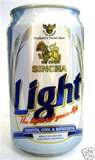
 Impossibly pale-toned lightweight with sugared rice-corn sweetness wracked by skunked cabbage nosing and compost-addled sorghum funk still betters chemically altered ‘lite’ macrobrews.
(PHILADELPHIA) NEWBOLD INDIA PALE ALE
 Aggressively floral-hopped copper-hazed moderate-bodied IPA lacks necessary fruiting and expectant sharp bitterness but retains crisp cleanness. Resinous woody hop char minimizes grapefruit, orange, apricot, and pineapple tartness substantially as stiff alcohol burn increases above toasted caramel malting.
(PHILADELPHIA) KENZINGER ALE
 Tenuous moderate-bodied ‘golden session ale’ lacks sufficient Kolsch styling. Politely embittered lemony grapefruit-spiced hop pep counters buttered corn sweetness to slim white breaded spine. Vegetal nuance lowers appeal.
(PHILADELPHIA) FLEUR DE LEHIGH GOLDEN WHEAT
 Perfumed floral-herbal highlights enliven sunny Seltzer-fizzed lemon glaze, tart blueberry midst, and orange marmalade reminder. White-peppered jasmine-lavender floridity bolsters ancillary eucalyptus, cardamom, and ginger herbage. Evergreen-fresh mint julep and mojito illusions provide further peculiarity.
LAUGHING DOG DOGZILLA BLACK I.P.A.
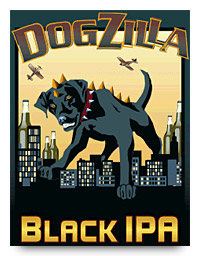 Pour slowly nebulous cola-hued tan-headed medium-full body or risk foamy froth. Unspecific dried fruiting battles back ashy pine-like bittering and coarse nuttiness to acidic phenol finish. Wavered prune-fig illusions and snippy grapefruit-pineapple tang lost amongst tart coffee-stained cocoa-soured black cherry midst. Astringent black licorice remnant and light metallic twang create further disarray, but appreciable mocha malting provides depth to muddled befuddlement.
LAGUNITAS RUBEN & THE JETS DOUBLE IMPERIAL STOUT
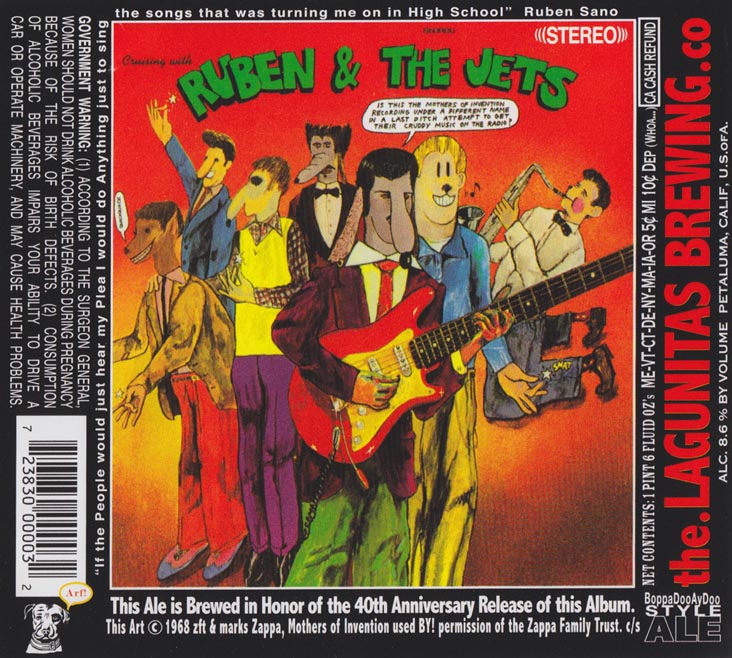 Complex 8.6% alcohol-doused full body celebrates 40th anniversary of ’69 Frank Zappa album. Chewy molasses-soaked cookie-doughy chocolate malts pick up raisin, black cherry, and raspberry puree sweetness above wintry nutmeg-cinnamon-allspice holiday spicing. Vanilla-soaked bourbon-burgundy-whiskey boozing enriches coffee-roasted barleywine finish.
KIRIN LIGHT LAGER
 Palest straw-hued 95-calorie softie with dry popcorn-maize acridity maintains sugar-fizzed rice cake sweetness that betters most boring chemically augmented light beers.
(ERIE) FALLENBOCK
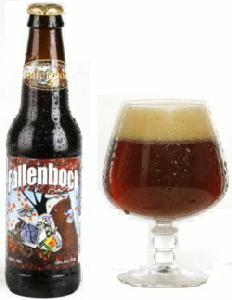 Simply too light and arid for prestigious doppelbock class. Smoked chocolate malting and dried cocoa dusting, reminiscent of black ale styling, fades into wispy raisin-plum-fig spell to earthen dry-hopped barley-toasted bottom.
CISCO THE GREY LADY (WIT)
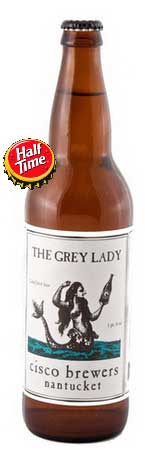 Peculiarly refreshing yellow-hazed Belgian-styled witbier blends spices, herbs, and fruit nuances in silkily bizarre manner. Musty raw-honeyed banana souring grazes white-peppered spearmint-jasmine-ginger freshness and clove-coriander-chamomile-anise spicing, but advertised tropical fruiting is overrated. Quirky champagne-fizzed bruised apple, rotted apricot, white peach, and putrefied lemon illusions not as unpleasant as it sounds. Photo courtesy of www.halftimebeverage.com
BOUNCING SOULS BACK TO JOUNCE ‘HOPELESS ROMANTIC’
FOREWORD: I remember hitting dense traffic in Manhattan driving down the East Side Highway and being half-hour late for my Bouncing Souls interview at a tiny West Village bar. By that time, lead singer Greg Attonito had left. But the rest of the band was cordial and drank a few beers as we spoke. At the cusp of Jersey’s hardcore post-punk resurgence, this New Brunswick-based quartet was in top form in ’99 when Hopeless Romantic was released. ‘01s even better How I Spent My Summer Vacation, ‘03s Anchors Aweigh, and ‘06s The Gold Record followed. A tremendously entertaining live band, the Bouncing Souls have thus far survived. This interview originally appeared in Aquarian Weekly.
Buddies since they went to junior high in south Jersey, the Bouncing Souls continue to solidify their pop-punk-hardcore reputation on their fourth and most focused disc, Hopeless Romantic (Epitaph Records). More secure in the studio and tighter as a unit, vocalist Greg Attonito, guitarist Pete Steinkopf, bassist Bryan Kienlen, and drummer Shal Khici spit out catchy, boisterous, oft-times comical, high-gloss confections like it’s ’87 all over again.
The Bouncing Souls mine the spirit of punk-y antecedents, proudly wearing their badge of courage. I witnessed the Bouncing Souls at Tramps the first time, Thanksgiving Eve ’97. There was more fan nudity, comedic banter, and stage diving than at the recent May ’99 gig. But the quartet came off better than ever the second time, thanks to an ever-expanding repertoire, sharper instrumentation, and more melodic chant-alongs. The band not only got great response from the rambunctious “East Coast, Fuck You” and other well-worn staples, but also a pertinent version of Oi! Classic, “Ole” and rip-snortin’ new originals like the Brit punk-spiked “Fight To Live,” the bohemian football-styled chant “Bullying The jukebox,” and the jittery “Hopeless Romantic.”
I spoke to Pete, Bryan, and Shal a few days before their latest, and last, Tramps show.
What did the Bouncing Souls try to achieve with Hopeless Romantic?
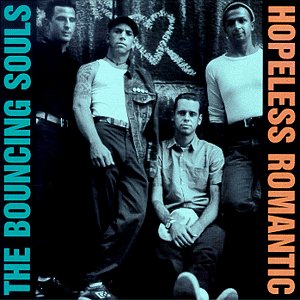 BRYAN: We wanted to satisfactorily express ourselves and pull it off. Our songs have their own personality, and we try to tweak whatever knobs to make it right.
You’ve used Thom Wilson as producer for the last three studio albums. Why?
BRYAN: He has become part of the inner circle as a non-performing fifth member. He knows us on a deep level.
SHAL: He knows our music well. Like a best friend, he’ll tell us, ‘you could do better than that.’ We had this instrumental with a cool groove we thought was ready. Thom thought it was half-written because it was just a riff and a drumbeat. Meanwhile, we were satisfied already. We were gonna call it “Rinaldo,” after the Brazilian soccer player.
BRYAN: We’re like ‘watch our licks.’ Thom was like, ‘all right you lazy bastards, why don’t you write some fuckin’ lyrics.’ So we added guitar licks and came up with “Undeniable.” The songs that seem less characteristic of us happened spontaneously, like “The Whole Thing.” Thom was like, ‘That’s an idea. Now develop it.’ Sometimes we’ll smoke a big fat joint in the studio, play our instruments, and get on some kind of wavelength. That happened a few times on Hopeless Romantic.
PETE: Thom helped us get relaxed to the point where we could expand our songs.
Unlike most punk bands, the Bouncing Souls genre-hop through pop, hardcore, and hard rock with no ill effects.
BRYAN: We like all those styles, except we’re not afraid to be everything we like. Nobody likes just one thing. We respond to honest music with pure integrity.
The song “’87” reminisces about hardcore’s peak year.
BRYAN: I think the first wave of hardcore was best since it came from somewhere within humans. Forever after that, a second wave of people only imitated that. We don’t imitate anything, The bouncing Souls have developed a unique approach.
PETE: Everyone in the band has different influences. They all show up in the music.
But how could four middleclass Jersey suburbanites embrace visceral punk firsthand?
SHAL: I think I could speak for everyone when I say everyone’s had messed-up stuff happen in their life. Regardless of what economic bracket, it doesn’t matter. Everyone’s had crazy experiences to develop angst.
BRYAN: I was a pissed off kid with a bad attitude. I don’t know why.
Have kids become more conservative since ’87? How has the hardcore audience changed?
SHAL: It’s just different. Kids are a bit more conservative since the market crashed around ’87. Hardcore shows change as much as our perception has changed. My version of hardcore in the late ‘80s was going to CBGB’s matinees. I thought it was totally dangerous and everyone was gnarly. There were a shitload more fights, but I was younger and smaller, and everything seemed bigger and more dangerous. It’s a whole different scene now. MTV is guilty of squashing the entire underground as any kind of threat. Instead of kids rebelling, they made the underground into a marketing tool. So there’s no political threat and it’s safe.
Do you make videos for any songs?
BRYAN: I like making videos for the art of it and for kids with cable stations and home video use. Our motto is: we draw the line with MTV. We dislike that shit. It sucks.
PETE: You turn it on and think, ‘This is everything I hate.’ Except Celebrity Death Match. That’s creative.
BRYAN: Otherwise, it’s like watching watered down Jerry Springer for frat boys. I’d rather watch VH1 Legends and Where Are They Now. When MTV took the revolution concept and put it on television, they snipped the balls off and re-sold it. Bouncing Souls aren’t kidding ourselves into thinking we’re a political threat. Our thing is the music we deliver on a person to person basis. If we could make one kid feel good about their life, then maybe he’ll overthrow the government. (laughter)
Tell me about “Bullying The Jukebox.” That song could rival the Dropkick Murphys with its in-your-face attack.
BRYAN: Yeah. I could see that. It’s sung like a pirate.
SHAL: It’s a true story about this one weekend where we were at a bar trying to bully the jukebox by putting $20 worth of coins in for one hour of play.
How’d you come up with the sordid Hopeless Romantic?
BRYAN: I was in bed with my girlfriend and wrote it in the middle of the night. It was directed at her, but not in a vicious way. There’s highs and lows of relationships. My point was, you put your heart on a plate and serve it to a girl like an idiot. That makes me a hopeless romantic while she’s a hard brick wall. Also, “Hopeless Romantic” is about romanticizing good ‘80s pop. We still feel its presence. It goes out to all the kids with big hearts. As ninth graders, we fell in love with music’s power.
Hardcore shows sometimes get out of hand because of misguided anger and misunderstandings amongst young, crowded fans. How could that be avoided?
BRYAN: Kids go to hardcore shows to let out aggression. My personal vibe is, be free to do whatever you want without bullying other kids or running the pit. If that happens, then you speak up. Otherwise, there should be an element of danger and an element of chaos with kids going ape shit, losing their minds, and looking scary.
PETE: It has to be positive. You could tell from onstage when you look out and see someone kicking a kid and acting like a redneck. It’s embarrassing.
Your nine-song live disc, Tie One On, was recorded in bootleg quality at the Continental. Why leave in chatter, missed notes, and unwanted distortion?
BRYAN: You play a live show and chances are you’ll go out of tune, break strings, and fuck up. It’s live. When you make a studio record, you make sure it sounds perfect. But in a live show, whatever happens, happens. We spent no money enhancing the live record. It’s an honest, cheap, punk-y show. And it’s sold cheaper than a normal CD. Any kid has his chance to tape it off a friend for free if they think they won’t like it. It’s not glorious, glamorous, or well produced. And it ain’t pretty. Anything goes. We feed off the crowds’ energy. It’s how we’ve lived for the past ten years.
What advise would you give to kids interested in starting a punk band?
BRYAN: Anyone could do it, but you can’t be a pussy and chicken out when the times get rough, because people throw obstacles at you from day one when you start a band. So few people make it. You have to have a song inside you and the guts to sing it. We blew off college and disappointed our parents. But now they accept us and think it’s cool. Remember, if you fill the world with bullshit, you’re doing a disservice. Find out who you are, and then be it.
DANIELSON FAMILE CHIP OFF OLD ‘CHOPPIN’ BLOCK’
FOREWORD: Beginning their career as innocent religious teens hooked on popular secular music, Danielson Famile (shortened to Danielson) have become challenging art-pop architects with an appreciable cult audience. Led by falsetto-voiced guitarist, Daniel Smith (now a Rutgers grad), they gained a good underground rep mostly due to the small-scale success of ‘97s super-fine Tell Another Joke At The Ol’ Choppin’ Block. Grunge producer was recruited to record ‘01s Fetch The Compass Kids and Smith went solo for ‘04s Brother Is To Son. By ’06, the entire Danielson crew got back in the studio for hard rockin’ masterpiece, Ships. This was luckily the one and only impersonal fax interviews I ever had to do (in ’98). This article originally appeared in Aquarian Weekly.
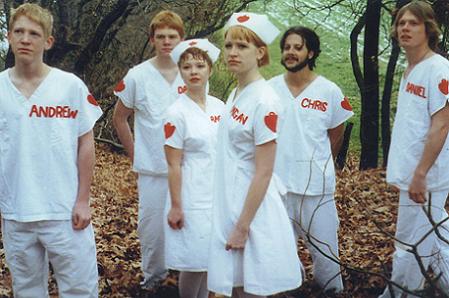
Refreshingly reaching out to teenyboppers and serious music fans alike, Clarksboro, New Jersey’s fresh-faced Danielson Famile conquer unexplored pop territory on the striking masterpiece, Tell Another Joke At The Ol’ Choppin’ Block (peculiarly released by metal-edged label, Tooth & Nail). Combining lighthearted humor and cuddly harmonies with a hardcore commitment to God, family, and close relationships, this wondrously enigmatic, wholly ambitious sextet (made up of Smith siblings Daniel, David, Andrew, Rachel, and Megan, along with keyboardist Chris X) tug at the heart and challenge the mind. They tear down generational gaps through insouciant originals.
Though dressed in surgical white outfits at live shows, the Danielson’s songs never resort to campy novelty. While their rudimentary instrumentation, casual nursery rhymes, and innocent childlike appearance make them safely accessible to pre-teens to enjoy, their sophisticatedly twisted arrangements distinguish them as serious musicians. Rarely has such purity and wholesomeness been so successfully combined with clarity of vision, sense of purpose, and sheer enthusiasm.
Idiosyncratic New York underground legend, Kramer, supplies unobtrusive, even-handed production for the simple to intricate pop structures. Piercing falsettos and lovely sopranos rise above twinkled bells, stately piano, and strummed acoustic guitar on swell compositions such as spiritually enlightened “The Lord’s Rest,” matrimonial dreamscape I Am My Beloved’s,” conscientious-minded “Me To Datee,” and organ-soaked “Deviled Egg.” “Flesh Thang’s” youthful vigor and charged up refrains seem to recall the Talking Heads “Up All Night” while the expansive, improvised whirlwind, “Jokin’ At The Block,” could be a baptismal retreat.
Fronted by compassionate 24-year-old guitarist-vocalist Daniel Smith, the Danielson Famile provide joyous stimulation for a complicated world wracked with uncertainty and pandemonium.
The following are comments provided by Daniel via fax from Norway, where the band had begun an early ’98 European tour.
Who were some of your favorite musical artists while growing up?
DANIEL: In order of time from 1975: The Beatles, Peter Paul & Mary, Eddie Rabbitt, Top 40 radio, Def Leppard, U2, Bob Dylan, ‘80s new wave.
How do most of your songs come together lyrically and instrumentally?
DANIEL: I discover the songs with my acoustic guitar, lyrically and structurally. I then – depending on what the song calls for – show them to my family and they play accordingly. They are very good at it.
How did Kramer’s production help? How eccentrically weird is he compared to some of his obtusely abstruse works?
DANIEL: Kramer is good at making us sound like we were recorded in heaven. He has been very kind, and helpful, not weird at all.
As Christians, what are your opinions on abortion, pre-marital sex, and drugs?
DANIEL: We believe in a life of pure love, relationships, and creativity. The High Spirit makes it happen.
Why are you so proud to be a Jersey band?
DANIEL: New Jersey is finally gonna get the respect it deserves. New York hates it. Philly hates it. New Jersey itself is split into north and south. South resents the north. New Jersey needs support internally. We will no longer be laughed at and I am proud to say I’ve always been here. Let the New Jersey creative force begin.
Who are your favorite local bands?
DANIEL: My friend Don Zimmerman is a brilliant songwriter. We just finished recording his new album in my house. Scientific, Chris P., Superbeast, and of course, our dad, Lenny Smith, are faves. We are South Jersey. It’s a different world down here.
What does each individual member bring to the Danielsons that is truly distinct?
DANIEL: I can’t say what we are doing in the overall spectrum of music. I’ll let others decide that.
THE CLEAN @ KNITTING FACTORY
The Clean / Knitting Factory / June 5, 2002
Despite originally breaking up within 18 months of existence, preeminent first wave New Zealand punks, The Clean, became local legends when their infectious carnival-esque ’81 single, “Tally Ho!,” hit number one and a string of now vintage follow-up singles informed an entire generation of lo-fi pop bands from Down Under.
But while vibrantly loopy offspring such as the Bats, Tall Dwarves, and noisy Sonic Youth-styled drones Bailter Space gained attention, the durable Dunedin combo kept intermittently coming back, belatedly releasing their full-length debut, Vehicle, in ’90. The ensuing folk-skewed Modern Rock came four years hence. Then, ‘96s adventurous Unknown Country dropped.
After wallowing away the ‘80s in Kiwi underground folklore, the great-lost band has once more recaptured cerebral rock listeners. Righteously,’01s illuminating Getaway not only reached its aging post-punk American cult, but also cool collegiate coeds half their age, as proven by the large assemblage of admirers this rainy night at Manhattan’s Knitting Factory.
Guitarist-singer David Kilgour (whose solo albums are worth seeking out), his drumming brother, Hamish (concurrently involved with the fabulous Mad Scene), singer-bassist-high school buddy Robert Scott (ex-Bats frontman), and percussionist Danny Tunick (ex-Guvner) dug deep into their extensive catalogue recently compiled on Merge Records’ stunning Anthology.
Beginning with the instrumental Western guitar motif “Fish” (reprised mood-wise on the similar, busier “At The Bottom”), The Clean unloaded swampy pseudo-psychedelia, resilient neo-symphonies, and hazy pastoral retreats nearly flawlessly. Kilgour’s spangled guitar poured out angular riffs while his of-times lost-in-the-mix shy voice took lead on a third of the performances. Scott sang in a more expressively assured baritone, exhibiting a casual temperance perfectly reflected by his winsomely melodic two-minute tunes. Some drifted into the background barely noticeable, lingering through a steady stream of casually terse trinkets, but building to a climactic crescendo on the Velvet Underground knockoff, “Safe In The Rain.”
As the generous set came to a dramatic conclusion with the translucent “What Are You Fighting For,” plus a similarly serene stripped-down stroller and the dusky hook-filled “Whatever Do Right,” the appreciable gathering hit the damp streets completely satisfied. As for The Clean, they’ll be getting ready to tour America and gain some new fans with Jersey friends, Yo La Tengo.