QUASI LIFT UP ‘THE SWORD OF GOD’

FOREWORD: Ex-husband-wife team, Quasi, deliver the tastiest fuzzed-out organ-droned orch-rock you’ll ever wanna hear. I saw them live at Maxwells and got to interview Sam Coomes to promote ‘01s enthusiastic The Sword Of God. ‘03s Hot Shit! wasn’t bad but ‘06s When The Going Gets Dark found a certain sameness creeping in. This article originally appeared in Aquarian Weekly.
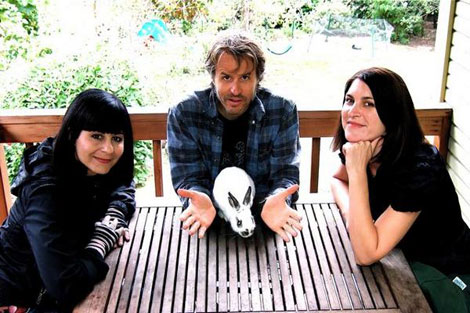
Seasoned Portland, Oregon-based duo Sam Coomes (ex-Donner Party and Heatmiser) and Janet Weiss (Sleater-Kinney’s drummer) continue weaving a spectral array of melancholic minor key indie rock orchestrations with undaunted success. Their self-titled Early Recordings (‘95) and R & B Transmogrification (‘97) found the then-married couple in formative mode, hitting upon a few perfect beats and expressing some fearful joyousness, high strung desperation, and downcast revelations, but struggling to avoid the pitfalls of over-indulgence.

A divorce prior to Featuring Birds (‘98), a solid collection examining further Coomes fatalistic insecurities, set the stage for Field Studies, which took another step forward in crafting a signature Roxichord sound combining low end percussion with vintage harpsichord and organ electronics.

Beginning with the faux-majestic put-down, “Fuck Hollywood” (linking Grandaddy to Procol Harum with its dirgey voice-keyboard fragility), The Sword Of God hits stride.

Buzzy fuzz-toned dynamo, “Genetic Science,” pitting Jesus and eternity against the motto of “a few good years are good enough for me,” comes before “The Sword Of God” impales its forceful guitars into the sternum like only the Pixies best tunes used to do. After the impromptu fun of “Seal The Deal,” jangly Rickenbacher guitar anchors the Byrdsian “From A Hole In The Ground” and Halloween-etched “Goblins & Trolls” pastes the Doors’ “Waiting For The Sun” organ pulse to Black Sabbath’s Gothic drone with fine results.

Though perhaps unknowingly or unwillingly, Quasi continues to lift cool hooky melodic riffs from the past. They dabble with ‘80s new wave via Eurythmics, Human League, and Orchestral Maneuvers In The Dark while copping fractured organ rumblings from hard rockin’ late ‘60s leftovers Mountain, Ten Years After, and Steppenwolf (though I’d imagine Coomes-Weiss would disagree with that last assessment and give credit to Edgar Winter’s White Trash instead).

The Sword Of God seems to lure you in with its playful, eclectic opening tracks before getting more serious-minded taking chances by the middle.

SAM COOMES: In a way that’s true. I don’t know if it was conceived that way. Both of us were probably in a better mood than we were for the last album. You have ups and downs. Circumstances conspire to keep you down at times. Now I’m feeling the whole range of human emotions and not just negative feelings. That’s why this album seems more varied.

There are still many downcast revelations to behold.

SAM: Yeah. But like I said, hopefully there are more aspects of emotions you feel through life.

You get sociopolitical on “Genetic Science,” pitting conservative mentality against bohemian spirit.

SAM: It’s hard for me to get into what that song is about. I don’t even know myself half the time. Usually what happens is I’ll think of a song, sing it later, and then write it down. That song is about two or three different things.

I’d imagine you relate more to the free thinking boho rather than the God-fearing rule player.

SAM: Probably. I don’t advocate sticking to the rules of conformist, science-based viewpoints of how we’re supposed to live our life.

One of my faves, “It’s Raining,” meshes the familiar stutter beat of the Beatles’ “Oh Darling” with an Electric Light Orchestra vibe.

SAM: There’s an Irma Thomas song “It’s Raining” that I didn’t blatantly steal, but that’s where it came from. It’s got a Fats Domino-type thing going on. By the time we work things out, it tends to sound different from the original impulse of the song.

By mentioning blues belter Irma Thomas and R & B legend Fats Domino, you show an obvious affinity for rock’s ‘50s roots. Did you listen to AM radio as a kid?

SAM: Yeah. I’m not really old enough to have been around when Irma and Fats were getting prime airplay. (laughter) But I listened to the radio.

I tend to side with the bitter sentiments expressed in “Fuck Hollywood.” Its big screen orchestration seems to mock epic movie grandeur. Where’d that song come from?

SAM: That was one we normally hadn’t played live. It came together in the studio. A lot of Hollywood movies began shooting here in Portland, disrupting my life and bothering me on some level. So I had the idea in my head – fuck Hollywood. I couldn’t cross the street because they were doing Bruce Willis chase scenes. We do our own thing, record our own records, and that’s our fuck-the-Hollywood-mentality of big corporate propaganda and cultural manipulation via entertainment.

Portland has such a varied cultural scene. You played with Elliott Smith in the hard rocking Heatmiser prior to Quasi’s inception.

SAM: Portland is a small town compared to New York. San Francisco and Seattle seem much larger than Portland. So most of the musicians know each other better. There was no camaraderie for local musicians in San Francisco. Here, musicians support each other and people in town are appreciative of the local bands. There’s not a lot of tolerance for pretentiousness.

Your first two records were recorded cheaply at a home studio. Then, you ventured into professional studios for the next two. But with the recent availability and affordability of better home equipment, The Sword Of God benefits from improved audio quality.

SAM: The studio we did most of the recording in was a small 16 track studio and not state of the art. But we learned a lot about basic things we didn’t know on our first two records. I didn’t even set levels on the tape deck for the first album. We just turned it on and started playing.

You certainly made a lot of fun noise with that broken down Roxichord. Plus, your songs get more hook-filled and concentrated as you go long.

SAM: In reality, the actual Roxichord on the first few records broke around the time we did the last record. Now I use a Roland keyboard with a Roxichord sampled into it. The Roland has less Roxichord sounds than the original. So it might be time to step away from the Roxichord world.

Well. I heard you were banging the Roxichord at shows, knocking into it, and slamming it with shit. No wonder it broke!

SAM: Yeah. It broke numerous times, but now it’s beyond repair.
JOSH ROUSE FEELS RIGHT AT ‘HOME’

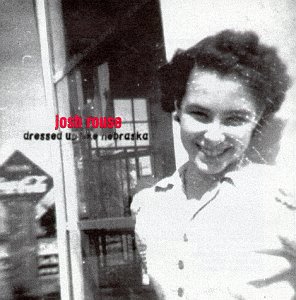
FOREWORD: Josh Rouse hit the ground running with ‘98s excellent debut, Dressed Up Like Nebraska. ‘01s Home was nearly as good and ‘03s magnificient conceptual singer-songwriter era paean, 1972, showed off skillful pop hooks. ‘05s Nashville found Rouse staying in stride while ‘06s Subtitulo didn’t fare as well. Look forward to his next work. This article originally appeared in Aquarian Weekly.

Spawn from America’s wide-open heartland terrain, Tennessee-bound Nebraskan singer-songwriter-guitarist Josh Rouse delivers homespun confessionals with strikingly meditative melancholia. But beneath the subdued resignation, down-hearted somnambulance, and brooding nature of this articulate balladeers’ muse lies a confident, self-assured artist.

On his alluring ‘98 debut, Dressed Up Like Nebraska, Rouse’s bittersweet acoustic retreats formed the crude basis for what was to come. Rouse teamed with Lambchop linchpin Kurt Wagner for the rustic Chester EP, then decided to custom fit his next batch of tunes with more elaborate orchestral arrangements. The fully realized result, Home, goes further adrift, eliciting chills with a gray atmospheric moodiness and fleshed-out reflectiveness closer in tone to underground pop icons Freedy Johnston and Ron Sexsmith than the lo-fi sensitive male sect.

An understated melodic subtlety pervades “Laughter,” the celestial “Parts And Accessories,” and the soothing “Hey Porcupine.” “Afraid To Fail” drapes honey dew guitar notes across a beat driven, cello-imbibed arrangement. Thanks to trumpeter Dennis Cronin and trombonist Roy Agee, the dirgey “Little Know It All” recalls the obtuse brilliance of deceased underground legend Benjamin (of Opal Foxx Quartet). On the jangly “Directions,” Rouse lambastes a procrastinator: “stay out all night and get high with your friends/ wonder why you don’t get one thing done.”

Some of the musicians on hand to support Rouse are noted Nashville guitarist Will Kimbrough, Lambchop vibraphonist Paul Burch, co-producer/ bassist/ cellist David Henry, violinist Ned Henry, and keyboardist Steve Allen. While on tour with the Cowboy Junkies, Rouse played acoustic sets accompanied by guitarist/ harmonizer Pat Sansone of New Orleans band Swan Dive.

AW: Are your introspective songs based on personal crises?

JOSH: They’re things that come into my head. I don’t think about them too much. When I write the songs, there’s a little zone I go into for a half hour. I work on them and put it on to a tape recorder. I don’t edit them too much. What you’re getting is pure subconscious thought coming out of my head. I don’t know theory. I just come up with melodies for all these songs.

Where’d you get the inspiration for “Marvin Gaye”?

I wrote that song in the van while listening to Marvin Gaye’s “What’s Going On.” There’s a line in the song that goes “who really cares?” It’s also a line he uses in his little between-song rants. I looked at the song and thought it could have been about a part of his life. He had a series of successes and failures. So I’m just a big fan who thought the title suited the song.

What other artists inspired you?

Tom Waits is probably my favorite. I fell in love with his music and bought all his records. He’s probably the best songwriter I ever heard. He’s on another level on his own planet. What’s Going On, U2’s Joshua Tree, and Fleetwood Mac’s Rumours are some of my favorite classics. Their songs flow without abrupt changes.

Some songs seem inspired by the rural Nebraska area you grew up in.

Those rural leanings probably affected the first album. But it wasn’t done purposely. I’m from a town of 500 people in a farming community in the middle of Nebraska. I grew up in the corn rows. By traveling around on tour, the new album has more of an urban feel. I didn’t use acoustic guitar as much. I substituted vibes, trumpets, and trombones. I’ve lived in eight different states. My father was in construction so I changed schools a lot. My uncle showed me how to play (Crosby, Stills & Nash’s) “Ohio.” Then I went out and bought a guitar at a pawn shop and started writing my own stuff. My grandfather was in a band in the ‘50s that played the blues. Some of my inspiration comes from there.

How’d you hook up with Kurt Wagner of Lambchop for the 5-song Chester EP?

Kurt and I are good friends. We listen to a lot of the same stuff and it rubs off. I told him I had some really cool music I had no words for. I wanted him to add funky words. Basically, I’d hum into a cassette tape and give him the music. He’d get six or seven paragraphs of words and I’d edit him down. We got my 8-track, went to my friends’ studio, set it up, and got Malcolm Travis from Sugar to play drums. The whole EP is mostly live and knocked out in one day. Kurt just said, “That’s good. That’ll work.”

Do you mind getting lumped in with sensitive male singer/ songwriters such as Smog or Will Oldham?

I love Will Oldham. I think he’s fantastic. I don’t mind being compared to them, but the image that pops into your head is some whiny guy. My songs are more open-ended and stream of consciousness. I’m not really going, “oh my girlfriend left me.” A lot of my songs deal with love. They’re about different situations and relationships that don’t deal with that. But I don’t want to be lumped in with Duncan Shiek or Counting Crows. I do make up songs but I’m not a storyteller-type like James Taylor, Bruce Springsteen, or Leonard Cohen. They write these beautiful stories and tales. It doesn’t work for me because it’s too laid out for everybody. I like to keep it a mystery, which is fun.

Is it easier to relate honest feelings as you grow older and wiser?

Yeah. I guess if I thought about it too much I’d be self-conscious worrying what people think of me. Even my relatives or wife try to read into the lyrics. That’s when it gets uncomfortable. It’s like if you had a dream. You wouldn’t want someone to know your own deal. It’s strange to talk about them and have someone analyze your dream.

Did you enjoy the Cowboy Junkies tour?

I did about 24 dates opening for them. Usually on a tour like that half the shows are good and half you’re better off back at the hotel because people aren’t paying attention until the band they paid $20 to see goes on. After I’d play, the Cowboy Junkies would ask, “How’s the audience tonight?” They played a prank on me and initiated me the last night of the tour by putting carbonaro sauce on the microphone. I’m up there singing and my lips were burning and eyes watering. I thought it was some weird shock. So after the first song, I look back and their tour manager was on the ground laughing.

DESCENDENTS COME BACK JUST ‘CAUSE ‘EVERYTHING SUCKS’

FOREWORD: Got to hang out with ‘80s post-punk marvels, the Descendents, in late 1996. Singer Milo Aukerman had a severely sore throat and was coughing up blood so I couldn’t get quotes from him prior to a resounding Coney Island High show. But his long-time band mates filled me in on Everything Sucks and past endeavors at a Manhattan hotel. Soon after, the Descendents called it a day. But not before leaving a trail of noisy hardcore behind. This article originally appeared in Aquarian Weekly.

Before Nirvana erupted in ’91, America’s hardcore scene had been on the decline after peaking around ’83. Iconoclastic bands such as Husker Du, the Replacements, Black Flag, and Minor Threat dwindled, then disappeared, while lame faux-metal hair bands such as Ratt, Winger, and Poison assaulted conservative Reagan youths.

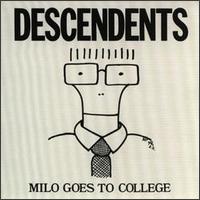
Even teenage sensation Milo Aukerman and the Descendents seemed to fade into oblivion with his hardcore brethren after ‘82s furiously juvenile Milo Goes To College and its quintessential punk follow-up I Don’t Want To Grow Up. Fellow Descendents Bill Stevenson (drums), Karl Alvarez (bass), and Stephen Egerton (guitar) then joined ex-Dag Nasty vocalist Dave Smalley (replaced by Scott Reynolds) in the still functioning All. But they haven’t achieved the critical underground notoriety the Descendents once amassed.

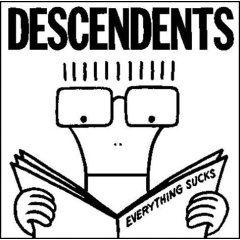
After receiving his Ph.D in biochemistry, Milo became anxious, yearning for the hyper-kinetic release only his purging quasi-political combo could offer. And on the newfangled Everything Sucks, the re-formed Descendents maintain the crisp clarity and less guttural approach favored by All. Milo’s venomous lyrics are now easier to comprehend; forsaking any puerile tendencies previously encountered. The frantic rush of “This Place” blasts through with a mighty fury while roaring complaint “Everything Sucks Today” and tongue-in-cheek “Sick-O-Me” unleash inner rage. Anarchic Sex Pistols knockoff, “Suburban Home,” mockingly retaliates ‘I wanna be stereotyped/ I wanna be classified.’

Plagued by throat problems stemming from the previous night’s show, Milo shakes hands with me, then dismisses himself before heading off to the hospital for treatment.

Band mate Stevenson explains, “Our vehicle broke down in Kansas after the first show. We’re a bit rundown. The mechanics of touring sucks. The hour-and-a-half onstage is great, but I’ve been riding in the back of a U-Haul with no heat.”

While Stevenson denies that any pre-calculated sociopolitical implications or global concerns affect the Descendents muse, they clearly indict Clinton for criminal drug activity in “Caught.” Reactionary square pegs edging close to suicidal fascination, this crusty quartet disassociates itself from MTV fashion, trendy airheads, phony hardcore mediocrity’s, and hypocritical authoritative figureheads.

“We started young, barely able to play our instruments, and weren’t interested in finding a musical direction. The record industry is in direct conflict with making pure, innocent music. We kept hands on with our approach and didn’t get caught up with the tedium of being classified,” Stevenson retrospectively observed.

“Recording blows. It’s sterile. We now make simple, straight-ahead music in our studio, but it’s a tedious process. We’re so anal retentive it becomes a big detail fest,” he says. “With Milo Goes To College, we were fully rehearsed and prepared, but I Don’t Want To Grow Up was more off-the-cuff with more loose ends. At that juncture, we were just getting back to playing after Milo’s college hiatus. But with our new album it was full speed ahead since it’s just an augmented incarnation of All. We only had to get Milo up to par.”

After former original guitarist Frank Navetta and his replacement, Ray Cooper, left the Descendents, agile Utah-bred axeman Karl Alvarez came aboard. Listening to a stock splattering of hippie rock (Hendrix, Santana, Zappa, and the Beatles) and avant-Jazz (Thelonius Monk, Ornette Coleman, and Miles Davis) while growing up, Alvarez then became infatuated with the awesome punkenergy of the Germs, Black Flag, and the Descendents.

“The Descendents and Black Flag dealt with real situations which I could specifically identify with: “I’m A Loser” and “Jealous Again.” Ultimately, it became imperative to play songs about personal experiences. In Salt Lake City, the capital of Mormon-dom, there’s sufficient precedence to wear a blue mohawk. And through lack of acceptance in school my punk interest manifested itself. I just wanted to play out, kick ass, and help punk get hyped,” Alvarez infers.

“But the reasons to get involved have changed. I enjoyed the family approach of hammering out songs and taking them to the streets each night. Back in the ‘80s, record labels worried about punk’s accessibility. Now, the scene is bigger and it has caught a wave of interest. But many bands play the same stuff. It has become a qualification to suck in order to get famous,” he adds.

When asked why Milo decided to leave science and reinvigorate his musical career, Alvarez admits, “He had a hankering for science, moved to Wisconsin, and finished his doctorate. But he needed the release only a band could bring. In science, it’s one on one with the elements. You can’t interact and that becomes frustrating.”

The following night, the Descendents hit the Coney Island High stage. Milo, after coughing up blood the day before, takes a few songs to get adjusted. Balancing old songs with new, they please the sweat-drenched audience with nary a moment’s rest. And while some skeptical fans may’ve doubted the Descendents integrity and purpose, clearly this wasn’t a lame comeback attempt a la the Sex Pistols and Kiss. And the reason is because Milo and company still write vibrant, simple songs etched in the spirit of disgruntled youth.

BUDWEISER SELECT LIGHT LAGER

Thin ultra-dry straw-paled light body with only 99 calories fails to ignite. Unleavened white bread barrenness and washed-out Seltzer-fizzed white aspirin chalkiness made worse by drab maize-rice finish. Faintest sweetness evaporates on impact. Inoffensive. Horrid canned version sucks more, allowing tinny metallic acridity to completely nullify barren corn-husked astringency and unbuttered popcorn spell.  


ABITA BOCK

Drab sunset-hued Mardi Gras fave fails to impress from its washed-out pale amber hue to its ridiculously inappropriate mildness. Astringent honey-soured caramel malting, musty orange-banana-cherry trickle, phenol spicing, and caraway seeding make for ineffectual Maibock or Helles bock traits.


THE THE’S MARK JOHNSON COMPELLED TO REVEAL ‘NAKED SELF’

FOREWORD: Brooding The The brainchild, Mark Johnson, made some of the catchiest indie pop you’ll ever hear. After spending the ‘80s and ‘90s garnering college radio attention, he drifted into obscurity after ‘00s Naked Self (promoted by the following piece) and ‘02s less worthy 45 RPM. This article originally appeared in Aquarian Weekly.

Currently living above a laundry shop in Lower Manhattan’s Chinatown, The The mastermind Matt Johnson is a self-described “restless, nomadic person wandering the world in anonymity.” A veritable musical chameleon, he has constantly re-invented himself through a series of scattered albums drenched with dark political themes, melancholic despair, and bleak desolation.

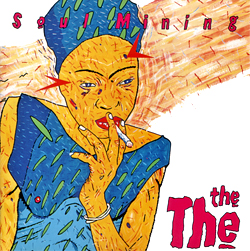
On The The’s ‘83 breakthrough, Soul Mining, Johnson’s bass throbbing Goth melodrama “The Sinking Feeling” captured the abandonment, detachment, and moodiness which has blanketed his entire life, cynically lambasting “I’m just a symptom of the moral decay that’s gnawing at the heart of the country.”

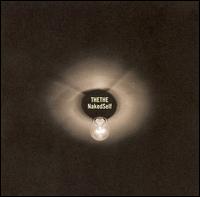
After ‘86s Industrial beat-driven Infected secured further US club exposure, former Smiths guitarist Johnny Marr came onboard to enhance ‘89s downcast diatribe, Mind Bomb (featuring the apropos “Armageddon Days Are Here Again”), and ‘92s compelling, yet confounding, Dusk. Following an impressive leftfield tribute to Country & Western legend Hank Williams (Hanky Panky), Johnson had to deal with record label fiascoes before bringing ‘00s blustery implosion, Naked Self, to Trent Reznor’s Nothing Records.

Joined by Iggy Pop guitarist Eric Schermerhorn, MC 900 Ft. Jesus drummer Earl Harvin, and bassist Spencer Campbell, Johnson’s latest entourage pits burbly electronics against acoustic retreats and eruptive guitar noise against hypnotic dreamscapes. Lyrically, Naked Self condemns manipulative corporate greed and advocates individualism. Johnson’s at his passive-aggressive best when he takes up the cause of the oppressed proletarian, dispatching a vigilant streak of palpable emotions and hushed anxiety.

Brooding, cacophonous dissonance unsettles the melodic acoustic bed of Naked Self’s first single, “Shrunken Man.” “Swine Fever’s” brusque aggro-techno resilience contrasts soft-spoken verses with loud, resonating choruses in a manner similar to Nine Inch Nails. And the urgent “Voidynumbness” crawls out of “Weather Belle’s” ethereal slumber into a deluge of manic mayhem.

I spoke to Johnson via the phone.

Naked Self seems mired in bleak desolation, perhaps detailing a post-Armageddon world.

MATT JOHNSON: There’s an optimistic undercurrent running through it though, which is important. I believe in embracing your demons in order to release the goodness. One can only look at one’s life to understand the different insecurities and fears, as well as hopes and desires. We’re all different, but underneath it all we’re more similar than we think we realize.

In “Global Eyes,” you sing of “Kentucky fried genocide.” Does this relate to the stock market and multi-national corporations manipulating and corrupting individuality?

MATT: Absolutely. I think we’re facing a world of the corporation versus the individual. Corporations are becoming more powerful than entire nations. There are no rules and regulations to police them because they’re shifting money around the world to get the best tax break. Whenever they shift production around the world depending on whims and doing favors for other countries, they’re completely undemocratic and unaccountable. I think we’ve got to start limiting how powerful these entities can become and start breaking them up, particularly when you add into the equation the latest advances in genetic engineering and biotechnology. I think it’s alarming that there’s this company that’s trying to patent the human gene map. It will probably reach a situation where you’ll have to apply for a royalty every time you want to have a child. That’s taking it to an extreme level, but it’s heading in a strange direction and big business is too influential, particularly in America with its corrosive lobby system.

Does “Voidynumbness” intentionally reflect the insensitivity of corporate phonies?

MATT: It’s about the layers of insulation people surround themselves with and not being able to face the cause of their pain by numbing themselves through alcohol and sex and isolation. My favorite line is “you got to know your pain by its real name.” Pain manifests itself through many disguises – depression, jealousy, and anger. It’s important to cut through the layers, like the layers on an onion, to find out what’s at the heart of what you are.

Do you feel more secure than you were in ‘81 when your debut, Burning Blue Soul, came out?

MATT: I feel pretty positive now. “Phantom Walls” and “Soul Catcher” have a lot of hopefulness. To me, Naked Self is an ‘up’ record. But perhaps I have peculiar taste compared to some people. I’m 38 now and I’m happier now. I had difficult teenage years and had a very lonely period of my life. I’m more stable.

Naked Self is probably closer to Burning Blue Soul than any other album though. I’m really going back to my roots. I come from the British post-punk industrial movement of the late ‘70s/ early ‘80s, like the bands Cabaret Voltaire and Throbbing Gristle.

Are any of Naked Self’s songs from the unreleased Gun Sluts album from a few years back?

MATT: Just “Diesel Breeze.” Gun Sluts is an album I completed between a ten month period when I was out of contract with Sony Records. That will come out on my own label, Lazarus, next year. It’s slightly more dissonant and unstructured than Naked Self.

What lyricists and poets inspired you as a teen?

MATT: More than anyone else, John Lennon is my biggest influence. Sylvia Plath and Yeats were poets I enjoyed. Songwriters I liked were Hank Williams, Robert Johnson, Bob Dylan, and Bob Marley.

You mentioned Hank Williams. Is that why you assembled the Hanky Panky album?

MATT: Instead of trying to copy the originals, it’s a real challenge to see how elastic songs could be and push them in different directions. If people cover my songs, I want them to be radical with them. It was a real pleasure working on Hank Williams’ songs. His daughter wrote me a letter saying, “My daddy would be proud with what you did.” I plan to do LP’s of John Lennon’s and Robert Johnson’s songs in a series that began with the Hank Williams album.

What have you been listening to lately?

MATT: Japanese flute music or Classical music. Japanese flute music is very calming to hear in the background.